From a Single Prompt to an AI Product: Starting Is Easy, Shipping Is Hard
From a Single Prompt to an AI Product:…
AI startups start with a prompt, but turning that idea into a real product takes far more work than most expect.
Every AI product begins with a simple prompt, but the journey from idea to shipped product is vastly underestimated. This article breaks down the full path — from model selection and fine-tuning, to production engineering and data pipelines, to UX design and business model validation — revealing why a low barrier to entry doesn't equal a low barrier to success in AI entrepreneurship.
It All Starts with an Idea
Recently, a short reflection on Twitter sparked widespread discussion across the AI community. The author wrote: "It starts with a prompt — it's a whole lot of work to get here — but it starts with an idea."
The tweet congratulated Yousef and his team on their achievement. While the specific product details haven't been fully disclosed, the statement itself perfectly captures the core logic of AI entrepreneurship today — the starting point is light, but the journey is heavy.
Prompts: The New Starting Point for AI-Era Startups
In the age of large models, the "prompt" has become the fundamental unit of human-machine interaction. Whether it's ChatGPT, Claude, or any other AI application, every conversation between a user and AI begins with a prompt.
The concept of prompts entered the mainstream with the explosion of ChatGPT in late 2022, but its technical foundations trace back to the earlier GPT-3 era. In the traditional machine learning paradigm, developers needed to collect dedicated datasets and train specialized models for each task. Large Language Models (LLMs) fundamentally changed this workflow through the "pre-training + prompting" paradigm. Users simply describe their intent in natural language, and the model reasons and generates based on knowledge learned from massive text corpora. This gave rise to the emerging discipline of "Prompt Engineering" — the study of how to guide models toward high-quality outputs through carefully designed instructions, contextual examples, and constraints. From Zero-shot to Few-shot, from Chain-of-Thought to the ReAct framework, the evolution of prompting techniques is itself a microcosm of the democratization of AI applications.
But this tweet conveys something far beyond the technical level. It reveals a deeper entrepreneurial philosophy: every great AI product originally stems from a simple idea. It might be a thought like "What if AI could do this for me?" or a use case described in natural language.
This stands in stark contrast to traditional software development. In the past, going from idea to product required a long journey through requirements analysis, architecture design, coding implementation, and more. Under the AI-native development paradigm, a single prompt can serve as the starting point for a product prototype — and this is the fundamental reason why the barrier to entry for AI startups has dropped.
From Idea to Product: The Vastly Underestimated Amount of Work
The phrase "it's a whole lot of work to get here" in the tweet is equally worth reflecting on. In the AI space, outsiders often fall prey to an illusion: since AI is so powerful, building an AI product should be simple.
The reality is exactly the opposite. The gap between a single prompt and a truly usable AI product is far larger than most people imagine.
Technical Challenges
- Model Selection and Fine-tuning: Choosing the right foundation model, optimizing for specific scenarios, and balancing performance against cost
Today's AI entrepreneurs face an unprecedentedly rich landscape of model choices. On the closed-source side, there's OpenAI's GPT-4o, Anthropic's Claude, Google's Gemini, and more. On the open-source side, there's Meta's LLaMA series, Mistral, Qwen, and others. Selecting a foundation model is only the first step — fine-tuning for vertical scenarios is the key to building a technical moat. Fine-tuning techniques are also evolving rapidly: from full-parameter fine-tuning to Parameter-Efficient Fine-Tuning (PEFT). For example, LoRA (Low-Rank Adaptation) injects low-rank decomposition matrices into model weight matrices, requiring only 0.1%-1% of the original parameters to be trained while achieving results close to full fine-tuning — dramatically lowering the compute barrier. Additionally, RAG (Retrieval-Augmented Generation) technology, which combines external knowledge bases with large models to inject domain knowledge without modifying model parameters, has become a standard architecture for enterprise AI applications. The combination and trade-offs among these technical choices form the most critical decisions in designing an AI product's tech stack.
- Production Engineering: Transforming a lab demo into a stable, scalable production system, solving for latency, concurrency, fault tolerance, and more
Productionizing AI involves a systematic set of practices known in the industry as "MLOps" or the newer "LLMOps." A demo that runs well in a Jupyter Notebook is worlds apart from a production-grade system. First, there's inference latency: a single inference call to a large model can take seconds or even tens of seconds. Techniques like model quantization (e.g., GPTQ, AWQ), inference engine optimization (e.g., vLLM, TensorRT-LLM), and KV Cache management are needed to bring latency within acceptable limits. Then there's cost control: API call costs for GPT-4-class models can escalate rapidly under high concurrency. Teams need to find the sweet spot between model capability and inference cost — which is why many adopt a "large-small model cascade" strategy, using smaller models for simple requests and only invoking the large model when necessary. Furthermore, observability of AI systems presents a new challenge: bugs in traditional software are deterministic, but AI "hallucinations" and output quality fluctuations require dedicated evaluation frameworks and monitoring systems for continuous tracking.
- Data Pipeline Construction: Building high-quality data collection, cleaning, and labeling workflows — often the most time-consuming part of the process
In AI product development, the "Data Flywheel" is the core mechanism for building long-term competitive advantage. The logic works like this: after a product launches, it collects user interaction data, which is cleaned and labeled to iterate on the model. The improved model attracts more users, generating more data, creating a virtuous cycle. However, building this flywheel faces multiple challenges. On data quality, the industry widely acknowledges the "Garbage In, Garbage Out" principle. High-quality labeled data is extremely expensive to obtain — the cost of human annotation per data point ranges from a few cents to several dollars, and labeling consistency is hard to guarantee. Synthetic Data technology — using large models to generate training data — is becoming an important tool for alleviating data bottlenecks, but how to avoid "Model Collapse" remains an active research topic. Additionally, data privacy compliance (such as GDPR and China's Personal Information Protection Law) adds extra complexity to data pipeline design.
Product-Level Refinement
- User Experience Design: AI outputs are inherently uncertain. How you design error-handling mechanisms and manage user expectations directly determines product reputation
AI product UX design is giving rise to an entirely new design paradigm. Unlike the deterministic input-output of traditional software, AI system outputs are probabilistic and unpredictable, requiring designers to rethink how user trust is established. The industry has already distilled several best practices: "Progressive Trust" — start by having AI handle low-risk tasks and gradually expand to high-risk decisions; "Human-in-the-Loop" — retain human review at critical checkpoints; "Transparency Design" — show users the AI's confidence level and reasoning basis rather than presenting a "black box" result. Anthropic's "Constitutional AI" concept and OpenAI's Alignment research are both working to improve the controllability of AI outputs at the foundational technology level. But at the product level, how to gracefully handle AI errors, how to set reasonable user expectations, and how to strike the right balance between "AI feel" and practical utility remain topics that every AI product team must iterate on repeatedly.
-
Scenario Adaptation: The same idea may require completely different implementations across different scenarios — generic solutions are rarely good enough
-
Business Model Validation: Technical feasibility doesn't equal commercial viability. You need to find the value point that users are actually willing to pay for
Business models for AI startups are evolving rapidly, with several mainstream paths currently emerging. The first is "AI-native SaaS" — products like Jasper (AI writing) and Midjourney (AI art generation) that charge end users through subscriptions. However, they face the platform risk of foundation model providers "entering the arena" — every capability upgrade from OpenAI can potentially render a batch of wrapper-type applications obsolete. The second is "Vertical Industry AI Solutions," which go deep into specific domains like healthcare, legal, and finance, building moats through domain data and industry know-how. These command high average deal sizes but have long customer acquisition cycles. The third is "AI Infrastructure" — products like the vector database Pinecone and the AI observability platform LangSmith that serve the AI developer community. The "value capture problem at the AI application layer," raised by investor Marc Andreessen, has sparked widespread discussion: as underlying model capabilities continue to strengthen and converge, where exactly does differentiation at the application layer come from? The current consensus is that data moats, depth of workflow integration, and network effects will be the most enduring competitive advantages for AI application companies.
Stacked together, these challenges form the most difficult stretch of the AI startup journey — the gap between prototype and scale.
Core Lessons for AI Entrepreneurship
This seemingly simple tweet actually conveys the two most important insights about AI entrepreneurship:
First, lowering the barrier to entry doesn't mean lowering the barrier to success. AI tools allow anyone to quickly validate ideas, but the distance from validation to scale may test a team's comprehensive capabilities more than in any previous era — technical depth, product intuition, and business judgment are all indispensable.
Second, the value of ideas is being redefined. In the AI era, the ability to precisely articulate problems and clearly define requirements is itself a core competitive advantage. Behind a good prompt lies a deep understanding of user pain points and an accurate grasp of technology's boundaries.
Final Thoughts
"It starts with a prompt" — this statement is both a congratulation to Yousef's team and a microcosm of the entire AI startup wave.
In this era, anyone can start with an idea, but only those teams willing to put in "a whole lot of work" can truly turn ideas into reality. For entrepreneurs and developers exploring the AI space: don't underestimate the power of a good idea, and don't underestimate the effort required to turn that idea into a product.
The starting point can be light, but the road to the finish line is never easy.
Related articles

Alibaba Launches Happy Shrimp: AI-Powered One-Click Complete Song Generation
Alibaba launches Happy Shrimp, an AI music generation tool that creates complete songs with lyrics, melody, arrangement, and vocals from natural language descriptions. In-depth analysis of its core features, differentiation from competitors like Suno, and industry impact.
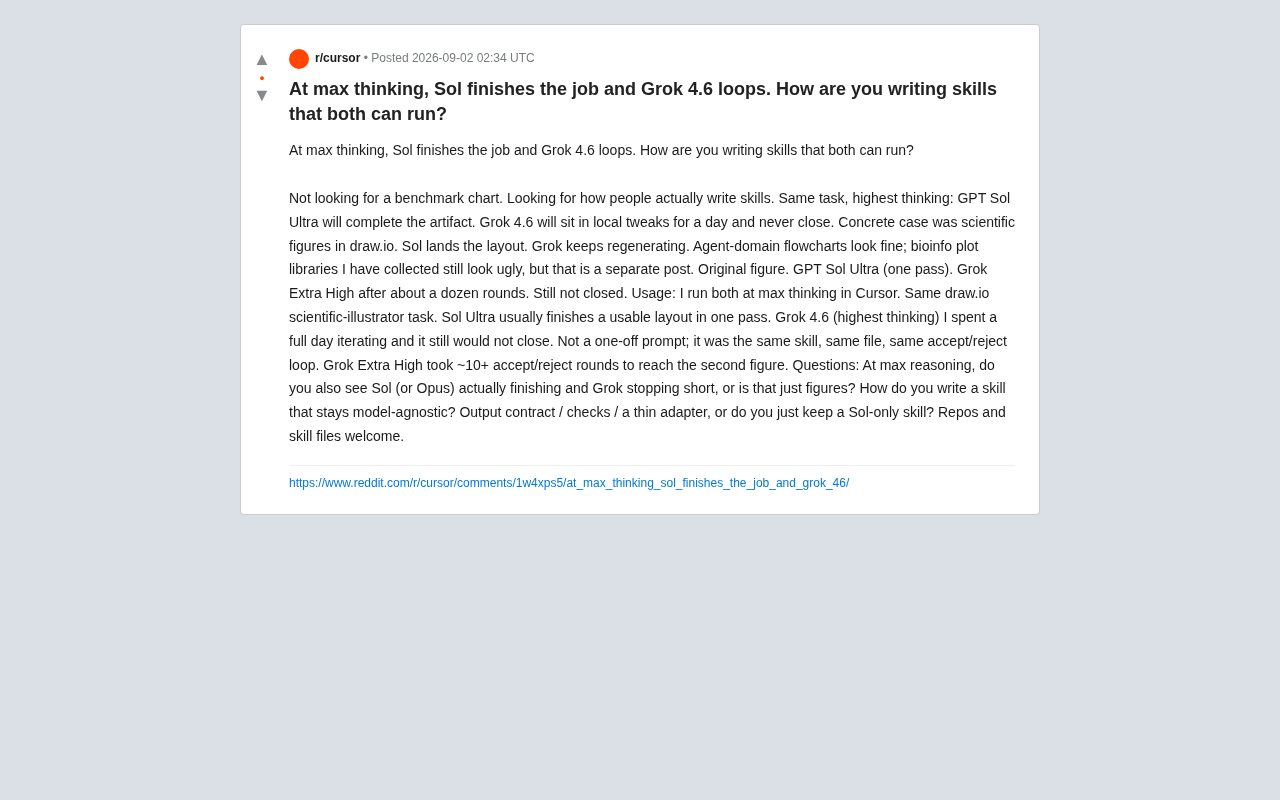
GPT Sol Ultra vs Grok 4.6: Real-World Task Completion Benchmark in Reasoning Mode
Developer benchmark reveals GPT Sol Ultra completes draw.io scientific diagrams in one iteration while Grok 4.6 fails to converge despite maximum reasoning mode, exposing that reasoning depth ≠ task delivery capability.

OpenAI Authorship Dispute: The Battle Over Academic Boundaries in the AI Era
OpenAI disputes authorship with mathematician Tristan Buckmaster over Navier-Stokes research, raising ethical questions about AI involvement in science.