From Chat to Tasks: How Agents Are Reshaping AI-Driven Automated Testing
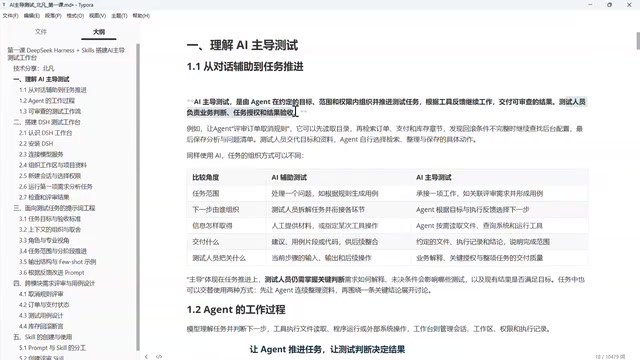
AI has evolved from conversational Chat to tool-using Agents, shifting testing from manual handoffs to human-AI collaboration with humans controlling boundaries and acceptance.
Based on a Bilibili DeepSeek Harness automated testing tutorial, this article explains AI's shift from conversational Chat to task-oriented Agents. Agents plan, invoke tools, judge results, and iterate—but since correctness is self-determined, human acceptance review is essential. The article contrasts AI-assisted testing (humans connect steps) with AI-led testing (AI drives the whole task, humans become boundary controllers and reviewers), clarifies key concepts, and addresses job anxiety.
From Conversation to Tasks: The Qualitative Shift in AI Capabilities
A recent DeepSeekAd Harness (DSH) automated testing tutorial circulating on Bilibili explains the concept of "AI-led testing" quite thoroughly. Before diving into specific tools, it's important to understand what has changed about AI itself. According to the tutorial, the first wave of AI, represented by ChatGPT, centered on Q&A and conversation—purely text-based communication that ended once the chat was over. Today's AI can take on complete tasks, having advanced from "Chat" to "Agent."
This shift means AI now has "hands and feet," able to translate conversations into concrete results: designing posters, developing code, reviewing requirements, designing test cases, and even executing automated tests. AI-led testing is built on this level of technological maturity—it's not a concept pulled out of thin air.
Agent is a key concept in the current AI landscape, referring to AI systems that can perceive their environment, make autonomous decisions, and take actions to accomplish specific goals. Unlike traditional chatbots, Agents can not only understand and generate language but also actually influence and change the external world by invoking external tools (such as search engines, databases, code execution environments, etc.). Their core capabilities include: task planning (breaking complex goals into executable sub-steps), tool use (calling APIs or software to perform specific operations), result evaluation (judging whether execution results are correct), and iterative looping (adjusting strategies and retrying based on feedback). This characteristic of Agents transforms them from "passive responders" into "proactive executors," and is the key technical foundation for AI's upgrade from an assistive tool to a task leader.
How Agents Work: Tools, Loops, and Boundaries
To understand why Agents can lead testing tasks, you first need to see how they work. The tutorial uses an intuitive arrow diagram to break this down: after a task is proposed, the Agent first plans—should it search the web, query a database, or write code directly to verify; then it invokes tools to actually execute, rather than just talking about it; after getting results, it judges whether they're correct, and if not, adjusts its approach or tool usage and tries again. This is a continuous loop that only ends when the Agent believes it has obtained the correct result and delivers it.
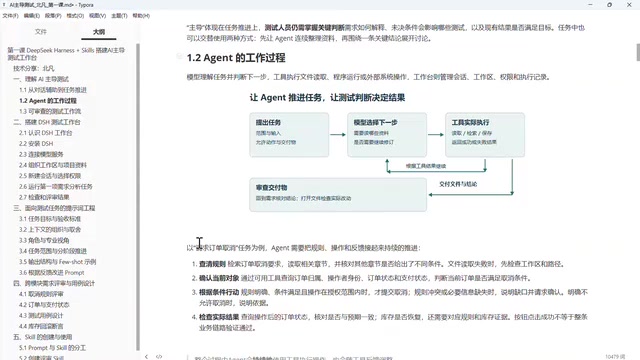
In this loop, tools are key. The tutorial uses an elegant analogy: the main difference between humans and animals is the creation and use of tools, and the same is true for the distinction between Agents and chatbots. When autonomous driving decides it should brake, it can make the car stop; when an Agent decides it needs to check an order, it can actually connect to the database and execute the query.
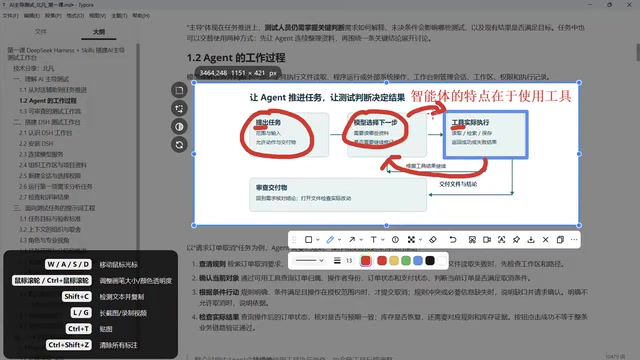
But there's a question mark that must be raised here: what counts as a "correct result"? The judgment is made by the AI itself—it stops when it thinks it's right. This is precisely why human acceptance review cannot be skipped.
The Divide Between AI-Assisted Testing and AI-Led Testing
The tutorial presents a comparison table to distinguish the two stages. In the past era of AI-assisted testing, AI was only responsible for answering questions, handling individual problems, or generating content, with humans connecting the steps: whether to do something and how to do it required testers to have a clear approach first, then feed AI-generated content into the system, or feed system output to the AI—humans served as the intermediary.
In today's AI-led testing, AI drives the entire task—the sequencing, information gathering, and final delivery are all organized by the AI itself. The tester's position shifts accordingly, from intermediary to boundary controller and result reviewer. The tutorial specifically clarifies: "led" here refers to task progression and absolutely does not mean the AI has the final say. Whether requirements are understood correctly, whether the focus of test case design is reasonable, and whether business priorities align with reality—these key judgments still require testers to make.
Collaboration Model in the Testing Workflow
Mapping the Agent's working model onto testing work produces a clear division of labor: defining tasks and providing context is done by humans; phased progression is done by AI; reviewing results is done by humans; revising tasks based on feedback is done by AI. This is essentially human-AI collaboration—humans assign tasks, humans verify results, humans control boundaries, and AI autonomously advances within those boundaries.
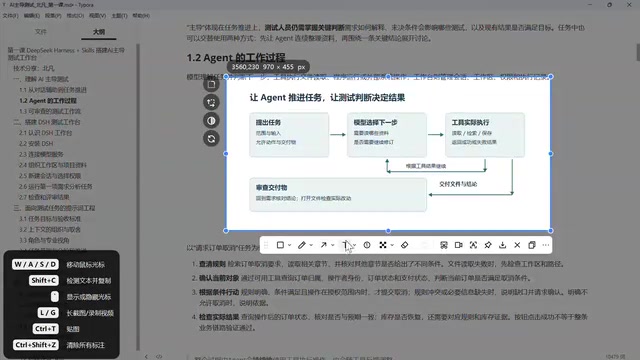
The tutorial demonstrates this process using "canceling an order" as an example: the Agent doesn't directly modify the database state; instead, it first checks the cancellation rules, determines whether the order should be canceled, executes, and then checks the result; if the order doesn't exist or is already completed, it decides the next step based on the actual state rather than forcibly creating an order to complete the cancellation. Throughout the process, the AI continuously uses tools and continuously adjusts based on feedback—fundamentally different from the back-and-forth of a chatbot.
Concept Clarification: Models, Prompts, Tools, and Agents
The tutorial also clarifies several easily confused concepts. The large model acts as the brain, responsible for thinking, reasoning, understanding, and decision-making; the Prompt is the task, instructions, context, and materials that humans provide to the large model; tools allow AI to actually access or change the external world; and the Agent is the ensemble that frames together the model, tools, Prompt, and other elements. DSH (DeepSeek Harness) is a specific Agent software under this framework, and subsequent learning and application cannot avoid these foundational concepts.
Prompt is the input instruction a user provides to a large language model, typically including task description, background information, constraints, and expected output format. The quality of the Prompt directly affects the accuracy and usability of the model's output. In Agent systems, Prompts are not only used for single-turn Q&A but also to guide the Agent's planning, tool selection, and result judgment—making well-designed system prompts crucial to Agent behavior. Tool in the Agent context refers to external functional interfaces that the model can invoke, such as web search, database queries, code interpreters, API calls, etc., which extend the model's capability boundaries, enabling it to obtain real-time information or perform actual operations. The term Harness originally referred in software testing to a test framework or test harness (i.e., scaffolding for automated testing); here, DeepSeek Harness (DSH) extends to mean a software platform or framework that carries Agent capabilities, providing task orchestration, tool integration, and runtime environment.
Addressing Job Anxiety
The tutorial doesn't avoid a real question: if AI can do everything, will testing jobs still exist? The answer is yes, but the structure will change. Most work being handed to AI means testing teams may no longer need as many people, and those who remain must be able to embrace new ways of working and possess stronger competitiveness. In the tutorial's words: don't be the tester whose methods get crushed by AI.
This also explains why "human-in-the-loop" cannot be skipped. Just as in autonomous driving, a human's judgment to brake takes priority over the AI's conclusion to accelerate; the Agent's final delivery likewise requires human acceptance. AI-led testing, after all, advances under human control.
One-line Summary
AI has advanced from conversational Chat to Agents that can use tools to complete tasks, driving testing work from manual handoffs to human-AI collaboration, with humans responsible for boundary control and acceptance.
Paragraph Summary
Based on a Bilibili DeepSeek Harness automated testing tutorial, this article outlines the qualitative shift of AI from conversational Chat to task-oriented Agents. Agents advance tasks through planning, invoking tools, judging results, and iterating—but since "correctness" is self-determined by the AI, human acceptance review cannot be skipped. The article contrasts AI-assisted testing (humans connect each step) with AI-led testing (AI drives the entire task, with humans becoming boundary controllers and result reviewers). The testing workflow forms a human-AI division of labor: humans define tasks and acceptance criteria, while AI advances in phases and revises based on feedback. The article also clarifies concepts such as models, Prompts, tools, and Agents, and addresses job anxiety—testing jobs remain, but the structure changes and requirements rise.
Related articles
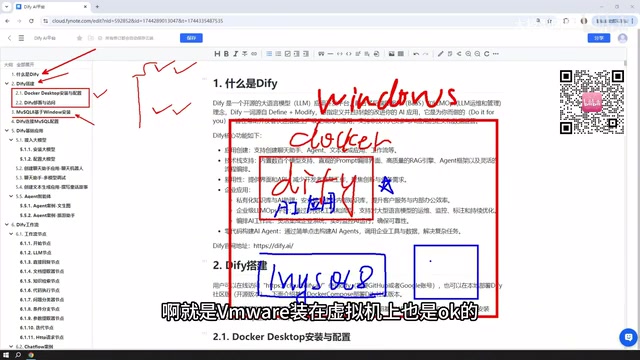
Dify Workflow in Practice: A Guide to Local Deployment and Private Knowledge Base Agents
Based on a Bilibili Dify course: Windows Docker local deployment, MySQL connection setup, five app types and workflow node cases, external LLM integration choices, and the complete path to publishing apps as sites or APIs.
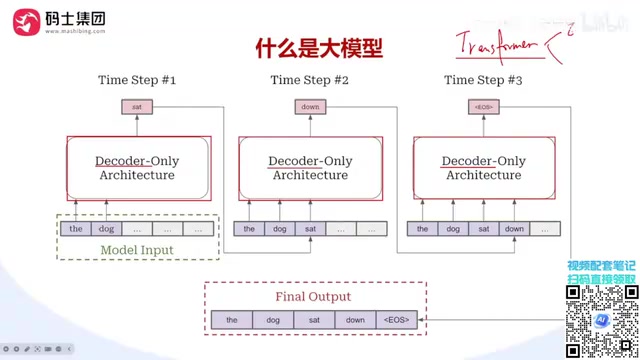
A Complete Guide to Distributed LLM Training: DP/TP/PP/SP Explained
Starting from the single-GPU memory bottleneck, this guide systematically explains DP data parallelism, TP tensor parallelism, PP pipeline parallelism, and SP sequence parallelism in distributed LLM training, covering their splitting dimensions, communication costs, and hybrid parallelism selection logic.

DeepSeek Harness Step-by-Step Guide: From Installation and Setup to Plugin Practice
DeepSeek Harness step-by-step guide: Node.js setup, client installation, and three plugin installation methods to get you started fast with this open-source AI Agent framework.