From MCP to Skill: A Guide to Extending Capabilities in Next-Gen Agent Development
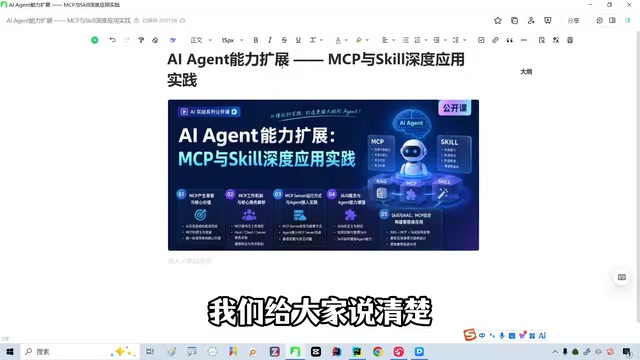
A clear breakdown of MCP, Skill, and RAG to help beginners make smarter agent development decisions.
This article explains three core concepts in AI agent development from a beginner's perspective: MCP (Model Context Protocol) is Anthropic's standardized protocol that bridges closed LLMs with external tools and business systems; Skill packages task-specific workflows into reusable specialized capabilities; and RAG enhances a model's knowledge by retrieving from external sources. The rule of thumb: use RAG to help AI know more, MCP to help AI take action, and Skill to give AI reusable expertise. The article also shows how integrating MCP and Skill on top of an existing LangChain Agent is the typical path for next-gen agent development — no need to rebuild from scratch.
Why MCP and Skill Are Suddenly Everywhere
Recently, two concepts have been dominating conversations in the AI development community: MCP (Model Context Protocol) and Skill. Many developers who are new to agent development share the same confusion — they keep hearing about MCP and Skill but have never actually used them, and some haven't even encountered the terms before. What exactly are these two things, why are they generating so much buzz, and which one should you use in which scenario? That's the core question this article aims to answer.
The prevalence of this confusion points to something important: as the capabilities of large language models continue to expand, connecting models to external tools, business systems, and real-world data has become an unavoidable part of agent development. Understanding MCP and Skill is fundamentally about understanding how to turn AI from a chat tool into an agent that can actually get things done.
What MCP Actually Is
If you start with the definition — MCP is a protocol that enables large language models to call external tools, business systems, or traditional development interfaces — most people will immediately glaze over. You understand grammatically that it's a protocol, but what it actually does and what problem it solves isn't clear from a one-liner definition alone.
To truly grasp the value of MCP, you need to look back at decades of software development history. Before large models arrived, the software industry had spent decades accumulating mature interfaces, systems, and business logic. The problem is that large language models are inherently "closed" — they can only generate text based on training data and cannot proactively call a weather API, query a database, or interact with an enterprise's internal systems.
This is precisely where MCP comes in. It provides a standardized protocol that allows large models to interface with these external capabilities in a unified way. In other words, MCP acts as a bridge — connecting a closed language model to the open real world. This is why MCP is considered a critical component in Agent development.
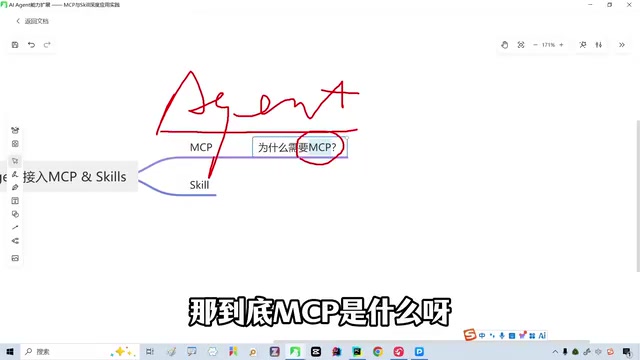
From a technical architecture perspective, MCP was proposed and open-sourced by Anthropic in late 2024. It uses a client-server model: LLM host programs (such as Claude Desktop or agent frameworks) serve as MCP Clients, while various external capabilities (database queries, file systems, web search, enterprise APIs, etc.) are packaged as MCP Servers and exposed externally. The two sides communicate via a standardized JSON-RPC message format. The core value of this design is "build once, reuse everywhere" — developers only need to package a tool as an MCP-compliant Server, and any model or framework that supports the MCP protocol can call it directly, without needing separate adapters for each model. This is conceptually similar to the USB interface: a unified standard eliminates the repetitive work of building custom tool integration layers for every AI application. Leading agent frameworks such as LangChain and LlamaIndex, as well as products like Claude and Cursor, now natively support MCP, and the ecosystem is expanding rapidly.
The Differences Between MCP, Skill, and RAG
Many developers are not only fuzzy on the boundary between MCP and Skill — they also tend to conflate them with RAG (Retrieval-Augmented Generation). All three extend the capabilities of large models, but they address completely different problems.
Core Differences at a Glance
- RAG: Solves the knowledge problem. By retrieving external documents and knowledge bases and feeding relevant content to the model, it enables more accurate answers. Primarily suited for information lookup and Q&A scenarios.
- MCP: Solves the tool-calling problem. It enables the model to connect to and operate external systems and interfaces, giving it real "hands-on" capability. Best suited for scenarios that require interaction with business systems.
- Skill: More focused on capability packaging. It bundles the processing workflow and expertise for a specific type of task, giving agents reusable, specialized abilities for particular scenarios.
The key to deciding which to use is understanding the nature of your requirement: use RAG if you need AI to know more; use MCP if you need AI to call tools and take action; use Skill if you need AI to master a set of reusable specialized capabilities. Clarifying this distinction resolves most technology selection headaches in development.
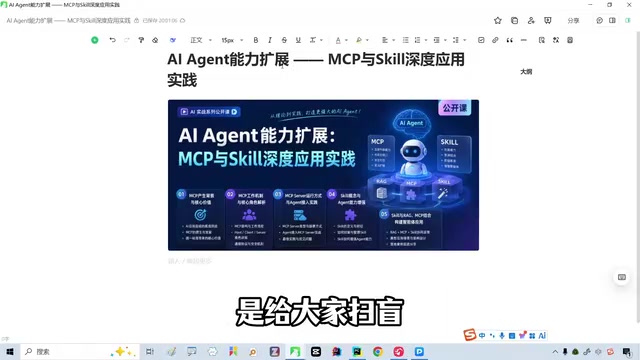
RAG (Retrieval-Augmented Generation) works like this: before the model generates a response, it first retrieves the most relevant passages from an external vector database or document store, splices those passages into the prompt context, and then passes everything to the model to generate an answer. It is fundamentally an enhancement to the model's input side — the model itself does not proactively initiate any network requests or system operations. MCP, on the other hand, is an output-side extension — during inference, the model can actively decide which tool to call and what parameters to pass, then incorporate the tool's return values into subsequent reasoning. The entire process is dynamic and multi-turn. The boundary of Skill is comparatively blurrier and varies slightly by framework: in a broad sense, it refers to specialized processing capabilities that have been solidified through prompt engineering or fine-tuning (such as code review or contract summarization) — think of it as a "pre-configured task template". In some platforms (such as ByteDance's Coze), Skill specifically refers to functional plugin units that can be invoked by an Agent. These three approaches are not mutually exclusive; mature agents typically use all three in combination.
Adding New Capabilities on Top of a LangChain Agent
The core use case in this practice session is integrating MCP and Skill services on top of an existing LangChain Agent. For developers already familiar with LangChain, this is an additive exercise — layering the ability to call external tools and specialized skills onto an existing agent framework.
This kind of additive capability extension is the defining pattern of next-generation agent development. You don't need to start from scratch. Instead, through standardized protocols, you progressively equip your existing Agent with stronger action-taking capabilities. When an Agent can acquire knowledge through RAG, call tools through MCP, and reuse specialized skills through Skill, it genuinely approaches the vision of an intelligent assistant that can comprehensively improve work efficiency.
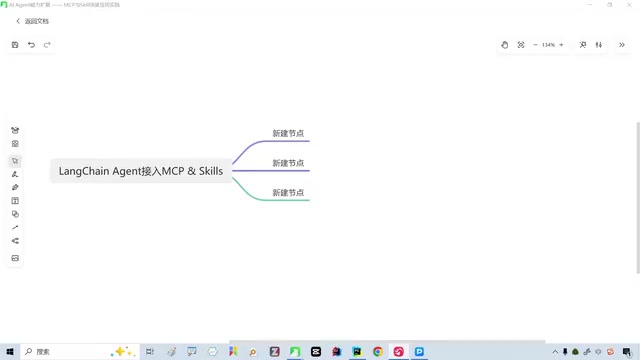
LangChain is one of the most widely used LLM application development frameworks today. Its core abstractions are Chain (workflow orchestration) and Agent (autonomous decision-making with tool calls). LangChain Agents operate on the ReAct (Reasoning + Acting) pattern: the model first reasons about what needs to be done, then decides which Tool to call, processes the result, and continues reasoning until the task is complete. Integrating MCP on top of this means registering MCP Servers as Tools that LangChain can recognize, allowing the Agent to dynamically select and call external systems during its reasoning process. This combination is powerful because LangChain handles workflow orchestration and multi-step reasoning while MCP handles the standardized tool connectivity layer — each doing its job, cleanly decoupled. For teams with existing LangChain projects, the migration cost is low: you only need to introduce an MCP Client adapter at the tool layer. The existing Agent logic, memory modules, and prompt templates all remain untouched.
Final Thoughts
For developers new to agent development, the first step to understanding MCP and Skill isn't rushing to write code — it's getting clear on what problem each one solves and where their boundaries lie. When you can confidently answer "should I use MCP, Skill, or RAG for this scenario," that's when you've truly entered the world of next-generation Agent development.
It's worth noting that this article is adapted from the opening segment of a public course, so it leans toward concept clarification and technology selection thinking rather than implementation details. For specific integration code and hands-on walkthroughs, it's recommended to dive deeper into the official documentation and complete tutorials.
Related articles
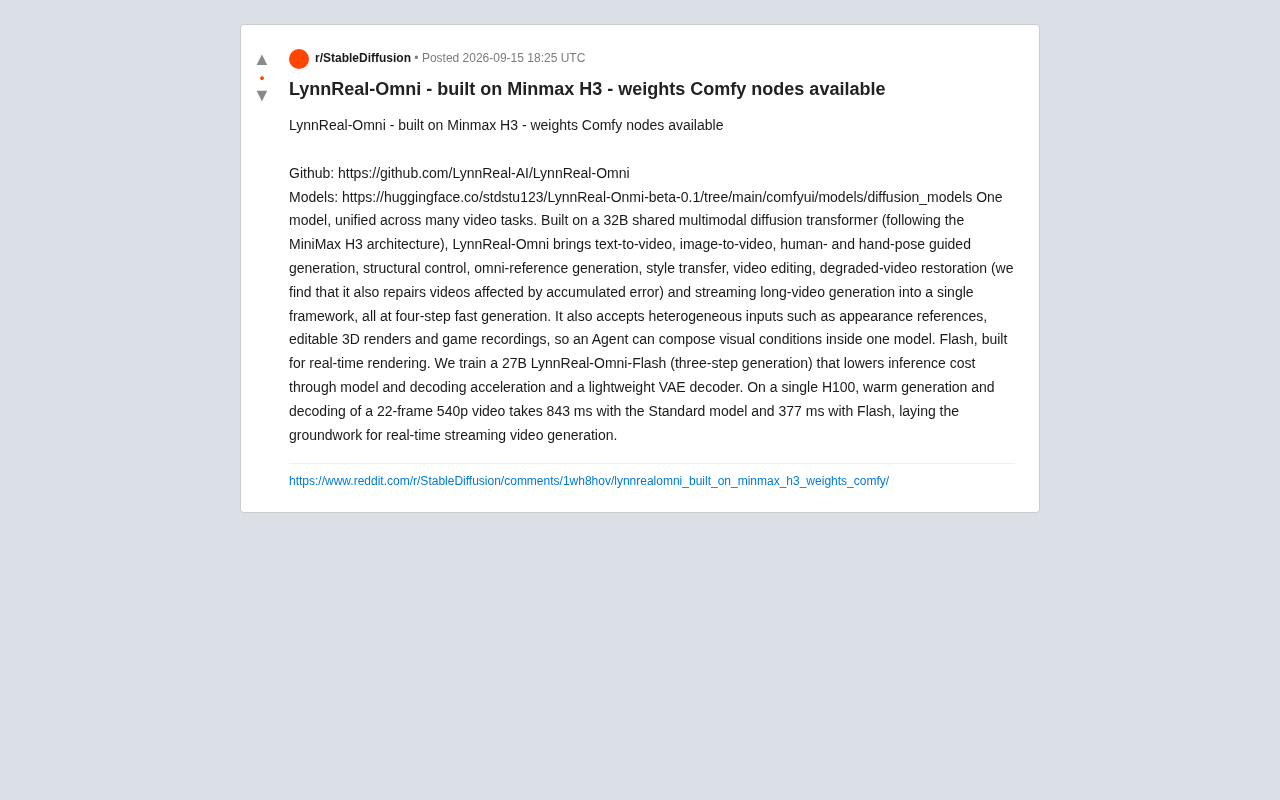
LynnReal-Omni: 32B Unified Video Diffusion Model Goes Open Source with Multi-Task Coverage in Four Steps
LynnReal-Omni is a 32B unified video diffusion model on MiniMax H3, covering text-to-video, pose guidance, style transfer, restoration in 4 steps. Flash version generates 540p video in 377ms on one H100.

Anthropic Co-Founder: AI 'Kill Switch' May Need to Be Mandatory by Law
Anthropic's co-founder tells the BBC that AI 'kill switches' may need to be legally mandated. We analyze the industry logic, technical challenges, and the tension between regulation and innovation.

The AI Data Center Boom Is Colliding With Cities Scarred by Heavy Industry
The AI data center boom is clashing with post-industrial communities. Philadelphia's case reveals structural conflicts between AI growth, energy use, water, and environmental justice.