From Python to Machine Learning: A Complete Learning Path Guide for Beginners

A complete roadmap from Python proficiency to machine learning, covering math, courses, projects, and internship prep.
This guide maps out a clear learning path for Python programmers looking to break into machine learning. It covers filling in essential math foundations (linear algebra, probability, calculus), choosing core courses like Andrew Ng's ML Specialization, moving into hands-on practice through Kaggle and fast.ai, and advancing into deep learning with PyTorch. It also addresses common pitfalls and provides a practical timeline for landing an ML internship.
Introduction: A Typical Career Transition Dilemma
In Reddit's machine learning community, a sophomore posted a highly relatable question: he had already mastered Python basics (including NumPy, Matplotlib, and Seaborn), along with SQL and other foundational CS courses, and his goal was to land an AI/ML internship over the summer. But faced with an overwhelming number of online courses, he didn't know how to systematically get into machine learning without wasting time going down the wrong path.
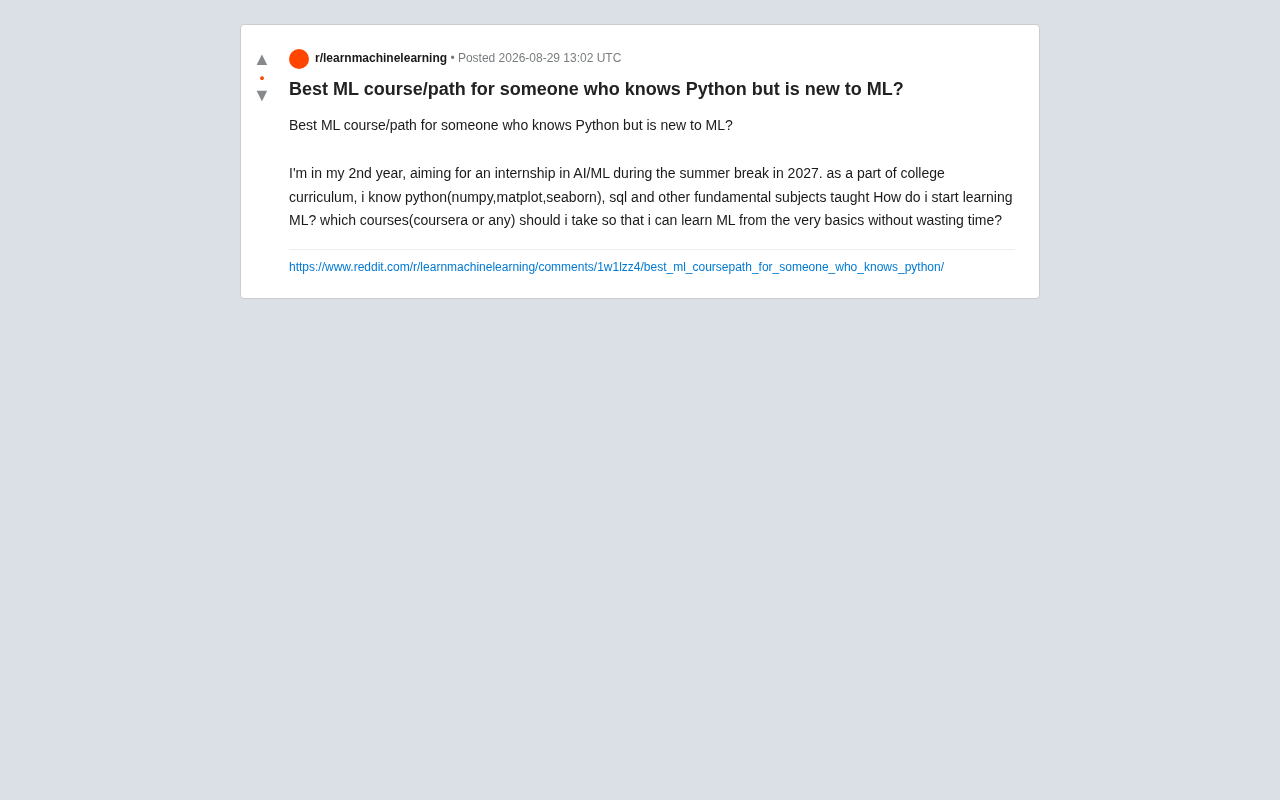
Behind this question lies a common anxiety shared by many beginners: Once you have programming skills, how do you efficiently break into the machine learning field? This article combines community consensus and industry best practices to lay out a clear progression path for learners at a similar stage.
Know Your Starting Point: What Advantages You Already Have
First, recognize that having Python and its data science ecosystem (NumPy, Matplotlib, Seaborn) under your belt means you've already cleared the most time-consuming hurdle in getting started with machine learning. Many beginners get stuck on programming and data processing, so if you've already built a solid foundation there, you'll be able to ramp up much faster.
Math Foundations You Need to Fill In
At the core of machine learning are three mathematical pillars:
- Linear Algebra: Matrix operations and vector spaces — essential for understanding neural networks and dimensionality reduction algorithms
- Probability & Statistics: Bayesian thinking, probability distributions, and hypothesis testing — these run through virtually every ML model
- Calculus: Gradients and derivatives — must-have tools for understanding optimization algorithms like gradient descent
The good news is that you don't need to become a mathematician. For a practical, internship-oriented goal, understanding the intuition and applications of these concepts matters far more than grinding through formal proofs. Khan Academy and 3Blue1Brown's visual videos are excellent resources for building that mathematical intuition.
Recommended Core Course Path
Phase 1: Build a Systematic Understanding
The classic introductory course repeatedly recommended across the community is Andrew Ng's Machine Learning course. It has been updated on Coursera as the Machine Learning Specialization, which replaces Octave with Python compared to the original version, making it much more aligned with real-world workflows. The core value of this course lies in:
- Explaining key concepts of supervised and unsupervised learning in plain language
- Covering foundational models including linear regression, logistic regression, neural networks, and decision trees
- Emphasizing practical engineering skills like hyperparameter tuning and error analysis
For learners aiming to land an internship offer, this course can help you build a complete machine learning knowledge framework within 3–4 months.
Phase 2: Get Your Hands Dirty
After the theoretical groundwork, you need to move into hands-on practice as quickly as possible. There are two mainstream paths here:
- Kaggle Projects: Start with beginner competitions like Titanic and House Prices to force yourself through the full pipeline of data cleaning, feature engineering, modeling, and evaluation
- fast.ai Course: Uses a "top-down" teaching approach that lets you build working models first before diving into the underlying theory — especially suited for people with existing programming skills who want quick wins and a sense of accomplishment
Phase 3: Dive into Frameworks and Specialized Domains
Once you have a solid grasp of foundational models, it's time to get into mainstream deep learning frameworks. PyTorch currently dominates both academia and industry and is a frequently tested skill in ML internship interviews. You can learn it through the official tutorials or Andrew Ng's Deep Learning Specialization, which covers core architectures like CNNs, RNNs, and Transformers.
Common Pitfalls to Avoid
Don't Fall into the "Course Collection" Trap
Many beginners sign up for five or six courses at once and end up finishing none of them. The recommendation is to pick one main course track, complete it, and then branch out horizontally. The biggest time waster usually isn't choosing the wrong course — it's constantly switching between resources and never producing any actual projects.
Push Theory and Practice Forward in Parallel
Just watching lectures without writing code makes it nearly impossible for knowledge to truly stick. After learning each model, immediately find a small dataset and implement it from scratch. The projects you accumulate on GitHub will become the most convincing portfolio when applying for internships.
Build the Habit of Reading Primary English-Language Sources
The machine learning field evolves incredibly fast, and the latest breakthroughs and papers are almost always published in English first. Developing the habit of reading English documentation, papers, and technical blogs will keep you at the cutting edge — and it's a bonus point in interviews that demonstrates your learning ability.
Internship-Oriented Timeline
If you're currently a sophomore with plenty of preparation time before summer internships, here's a reference plan:
- Months 1–6: Complete Andrew Ng's ML course + fill in your mathematical intuition for linear algebra and probability/statistics
- Months 6–12: Participate in 2–3 Kaggle projects, systematically learn PyTorch, and gradually build your personal portfolio
- After 12 months: Go deep into a specialized area (e.g., NLP, computer vision, or recommendation systems), read related papers, and try contributing to open-source projects
- Approaching internship season: Grind LeetCode algorithm problems + prepare for common ML interview questions, and organize your project experience systematically
Conclusion
The transition from Python programmer to machine learning practitioner is essentially an upward spiral of "building conceptual frameworks → hands-on practice → deep specialization." If you already have a solid programming foundation, the most important next step isn't finding the "perfect course" — it's starting as soon as possible and consistently producing output. As the community consensus puts it: the best way to learn is always by doing. Drive every step of your learning with a clear internship goal in mind, and your sense of direction will naturally become clearer over time.
Related articles

M&M's Spent Millions Replacing Artificial Blue Dye — Why Is It So Hard?
Mars spent millions trying to replace artificial blue dye in M&M's with spirulina, but thick material clogs pipes and residue risks mold, forcing a full production-line rebuild. Here's the engineering behind the reformulation.
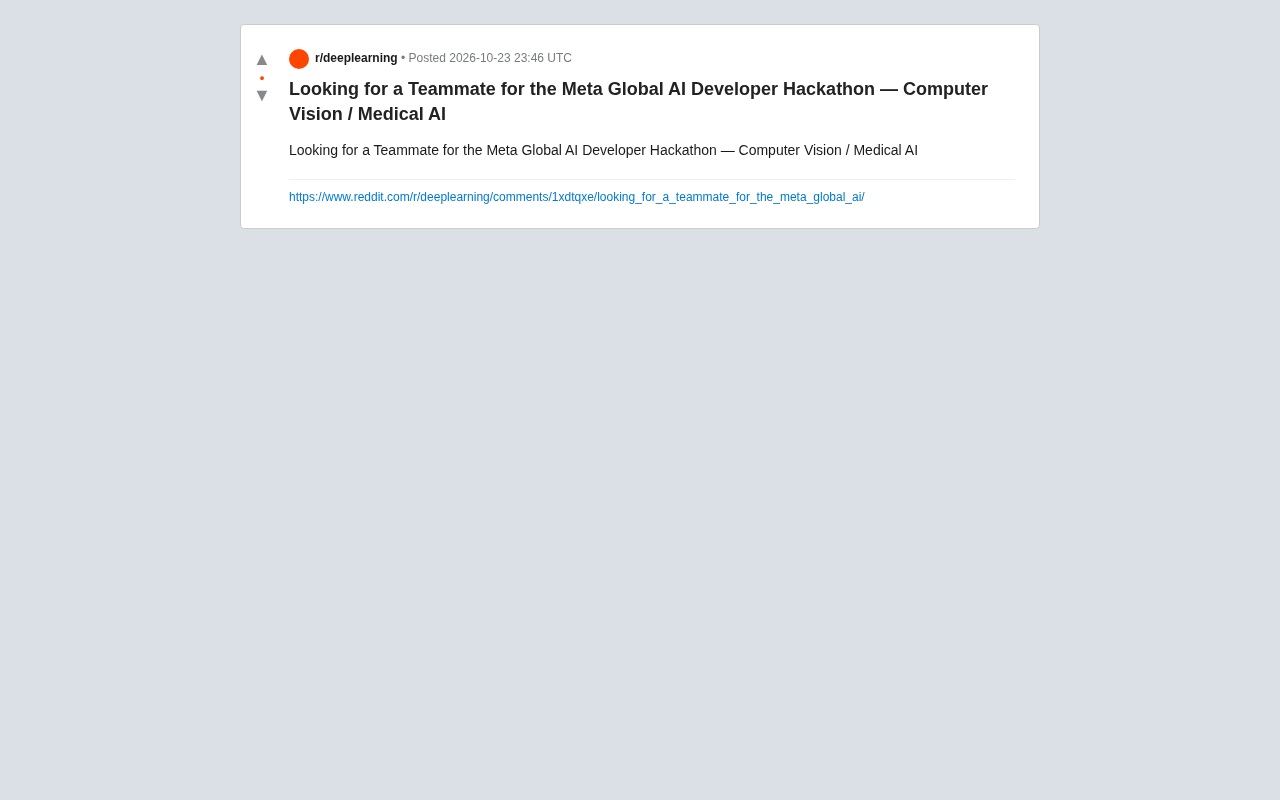
Teammate Wanted for Meta Global AI Developer Hackathon: Computer Vision & Medical AI
A Reddit developer seeks teammates for the Meta Global AI Developer Hackathon, focusing on computer vision and medical AI. This article analyzes the track logic, skills-complementarity needs, and topic selection strategy behind this teaming signal.
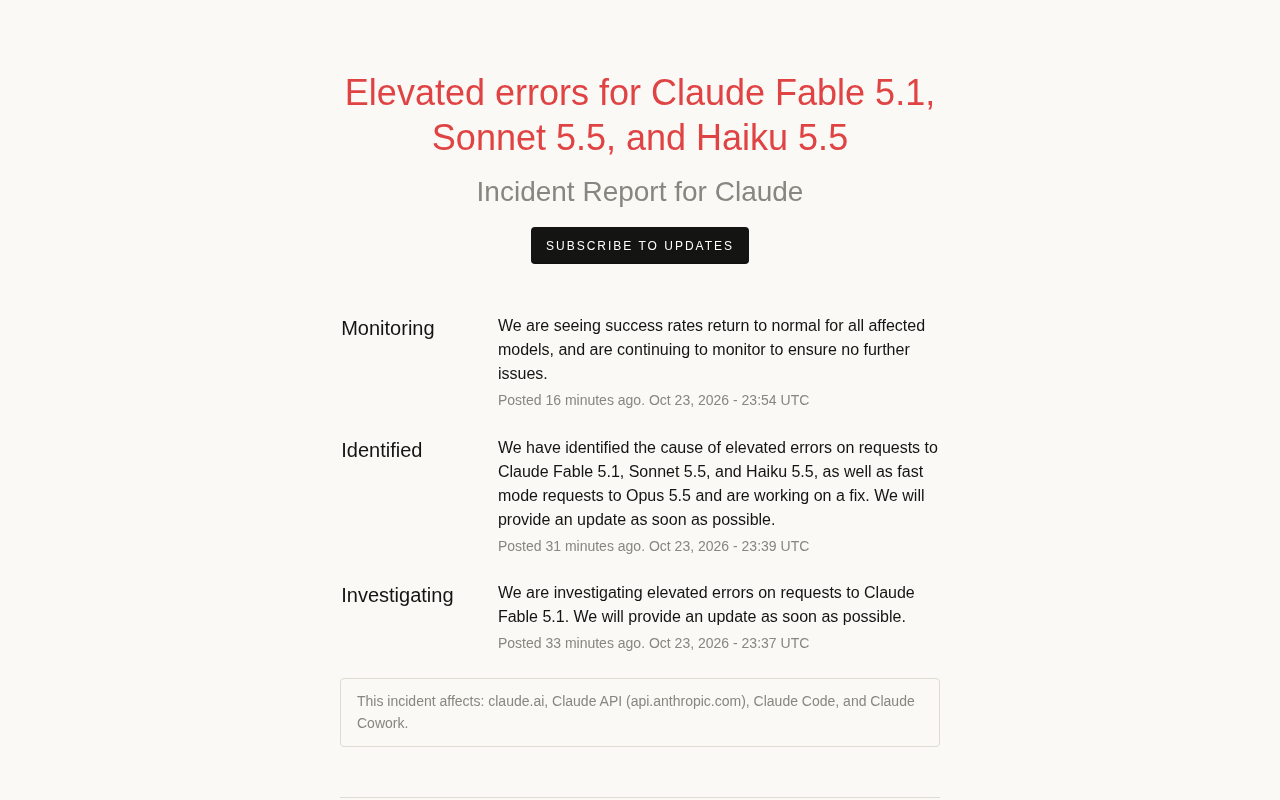
Multiple Claude Models Hit by Errors: A Postmortem of Fable 5.1, Sonnet 5.5, and Haiku 5.5
Claude Fable 5.1, Sonnet 5.5, Haiku 5.5, and Opus 5.5 fast mode saw elevated errors; Anthropic identified and resolved the issue in 17 minutes. This postmortem covers the timeline, the technical reasons for the multi-model cascading failure, and practical lessons for retry and degradation strategies.