From Serena Ventures to Starfire: Serena Williams Shuts Down Old Fund, New Fund Targets $200M

Serena Williams shuts down Serena Ventures and launches Starfire Ventures, a $200M early-stage fund with Beth Ferreira.
Serena Williams and longtime business partner Beth Ferreira announced the launch of early-stage fund Starfire Ventures, targeting $200 million, while shutting down the previous Serena Ventures. The article argues that "shut down + launch new" typically signals substantive adjustments to fund strategy, team structure, or LP composition. The new fund maintains its early-stage focus on female and diverse founders but builds its portfolio at a larger scale. The key variable is the "star + professional GP" combination—Ferreira's operating-partner role enables Serena to convert personal brand into sustainable institutional capability rather than mere celebrity endorsement. In a tight fundraising environment, top celebrity brands retain unique access to LP resources ordinary GPs struggle to reach.
From the Court to Venture Capital: Serena's Fund Shift
Serena Williams hasn't slowed down since retiring from tennis. She and longtime business partner Beth Ferreira announced on Monday the launch of an early-stage investment fund called Starfire Ventures, while shutting down the previously operated Serena Ventures. According to the original report, the new fund is targeting $200 million.
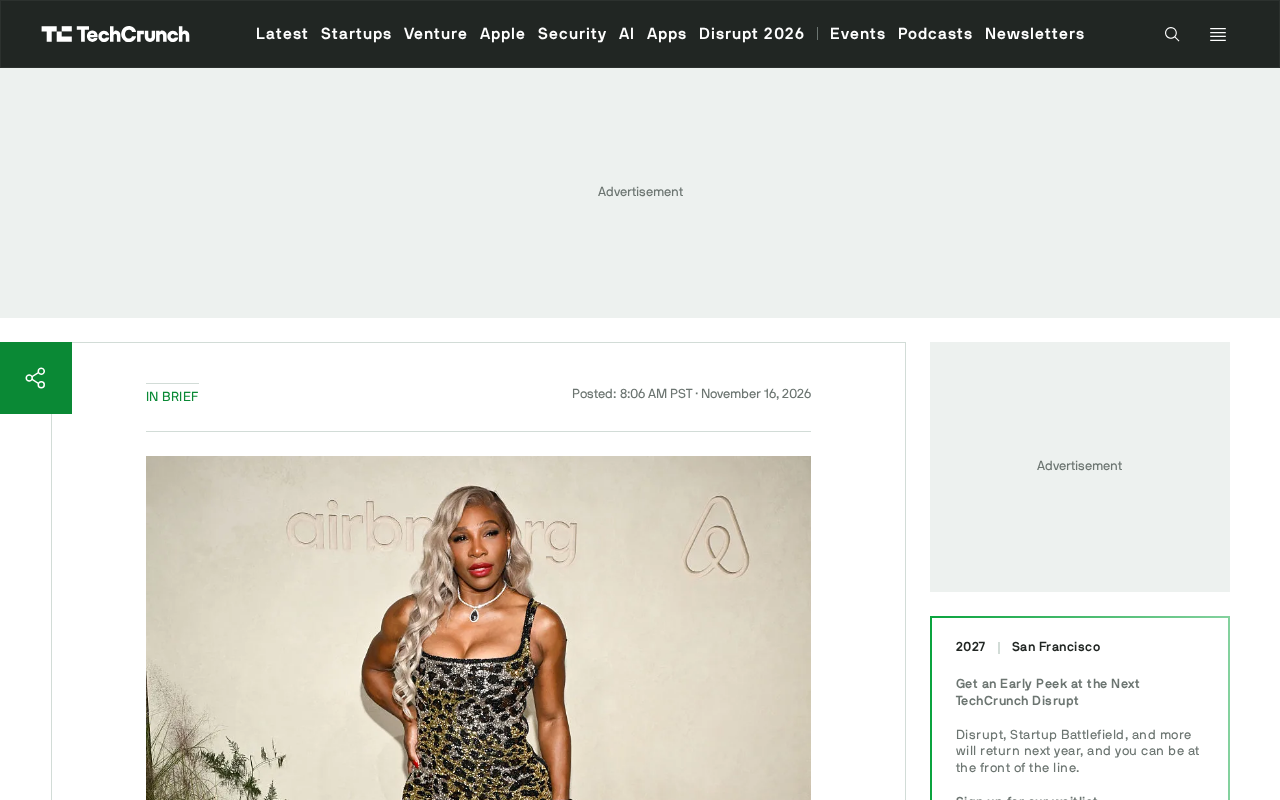
This move sends a clear signal: Serena isn't content to be a "celebrity-endorsement" LP or a figurehead partner—she wants to build investing into a long-term, institutionalized business. Shutting down an old fund and starting a new one typically means substantive adjustments to fund strategy, team structure, or LP composition.
Why "Shut Down + Launch New" Rather Than Continue
In the VC industry, a fund's lifecycle is usually measured in "vintages." Shutting down a fund and establishing a new entity often occurs in a few scenarios: the original fund's investment period is nearing its end, partners need to reallocate rights and interests, or the fundraising strategy needs to shift from family offices and high-net-worth individuals toward more institutional LPs.
Serena Ventures was previously positioned as an early-stage investor focused on female founders and diverse teams. Starfire Ventures continues this "early-stage" positioning, indicating that Serena and Ferreira don't intend to change their investment methodology but rather to place bets on the same track with a larger pool of capital. A $200 million target is already mid-to-upper tier for an early-stage fund—enough to support more systematic portfolio construction and follow-on investments.
The "vintage" structure of VC funds deserves elaboration. A VC typically operates as a limited partnership (LP/GP), with each fund having a fixed investment period (generally 3-5 years) and term (usually 10 years, extendable). GPs cannot commingle money from a new fund with an old one; each fund is accounted for and distributes returns independently. Therefore, when the original fund's investment period ends or when strategy and LP structure need to change, establishing a new entity is standard practice—not a simple rebranding. Shutting down an old fund also involves legal arrangements for managing existing portfolio companies and settling carried interest (carry), which is costly—explaining why this move is seen as a signal of "substantive adjustment."
The 2.0 Phase of Celebrity VC
Sports and entertainment stars entering venture capital is nothing new, but most remain at the "capital + photo op" level. What sets Serena apart is that she has a longtime operating partner in Ferreira. Ferreira has years of early-stage investment and operational experience, and this "star + professional GP" combination is the key variable determining whether a celebrity fund can weather cycles.
The establishment of Starfire is, in a sense, a review and upgrade of the Serena Ventures phase. Shutting down the old brand means the team is willing to bear short-term uncertainty and communication costs in exchange for a clearer long-term structure. For LPs, this is more convincing than simply scaling up the fund.
"GP" refers to General Partner—the fund's manager responsible for fundraising, investment decisions, and post-investment management, bearing unlimited liability; the counterpart "LP" is the Limited Partner, the capital provider who doesn't participate in day-to-day management. The term "operating partner" emphasizes that the GP personally has front-line investment and entrepreneurial/operational experience, rather than merely providing capital and fame. A common failure mode for celebrity funds is when the star serves as LP or figurehead partner while actual decisions are left to a team without a track record; the "star + professional GP" structure separates traffic from professional judgment, aligning more closely with institutional fund governance logic.
What It Means for the Early-Stage Investment Market
Against the backdrop of a generally tight fundraising environment, a founder with global influence choosing this moment to launch a new fund targeting $200 million is itself a noteworthy signal. It shows that top celebrity brands can still access LP resources that ordinary GPs struggle to reach.
On the other hand, competition in early-stage investing is shifting from "providing money" to "providing resources." Serena's network in sports, fashion, and consumer brands represents differentiated value that Starfire can offer portfolio companies. This also explains why the fund maintains its early-stage positioning—the earlier you enter, the more pronounced the celebrity network's effect.
Currently, public information about Starfire's specific investment themes, team expansion, and LP composition remains limited. What's certain is that Serena and Ferreira have chosen a harder but more long-term path: transforming personal brand into sustainable institutional capability.
"Tight fundraising environment" refers to LPs broadly contracting their allocation to risk assets: narrowing IPO windows and declining exit returns have made institutional LPs—pensions, endowments, fund-of-funds—more rigorous in due diligence on new GPs and more cautious in committing capital. In this environment, whether a new fund can complete its first close and final close depends heavily on the GP's track record and LP network. Top celebrity brands' advantage lies in accessing family offices and high-net-worth individuals in sports and entertainment that ordinary GPs struggle to reach, but such capital is also more susceptible to fluctuations in personal relationships and tends to be less institutionalized.
One-line Summary
Serena Williams shuts down Serena Ventures and teams up with Ferreira to launch Starfire Ventures, an early-stage fund targeting $200 million.
Paragraph Summary
Serena Williams and longtime business partner Beth Ferreira announced the launch of early-stage investment fund Starfire Ventures, targeting $200 million, while shutting down the previous Serena Ventures. The article argues that "shut down + launch new" rather than continuing the old fund typically signals substantive adjustments to fund strategy, team structure, or LP composition. The new fund maintains its early-stage positioning and focus on female and diverse-background founders, but builds its portfolio systematically at a larger scale. The key variable is the "star + professional GP" combination: Ferreira's operating-partner role enables Serena to transform her personal brand into sustainable institutional capability rather than remaining a celebrity endorsement. In a tight fundraising environment, top celebrity brands still possess unique advantages in accessing LP resources that ordinary GPs struggle to obtain.
Related articles

GLM-5.4 Released: How a 750B Model Achieves Stronger Reasoning
Zhipu AI releases GLM-5.4, a 750B model that boosts reasoning by running the middle 28 layers twice. GPQA Diamond rises from 47.58 to 56.26, with 1M token context and weights to be open-sourced after safety hardening.

Understanding GLM 5.4 in 8 Minutes: How Loop Transformer Makes AI Smarter Without More Parameters
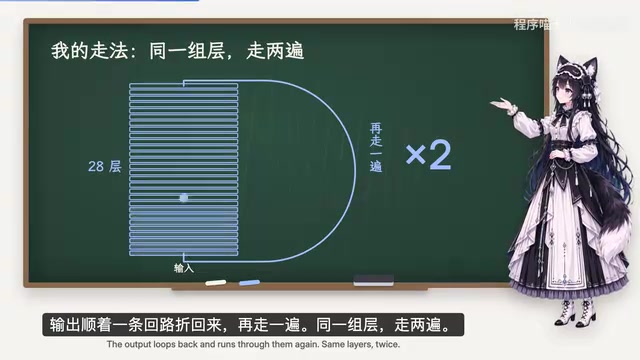
GLM 5.4 didn't grow its parameters yet got smarter. Using the memorizer-vs-reasoner analogy, this article explains how Loop Transformer runs the middle 28 steps twice, how gated progressive update and two other techniques stabilize the second pass, and how generalized Coding uses code to command 3D, mechanical design, and game development — with official comparison data and open questions.
GLM-5.4 Released: An In-Depth Look at Zhipu's First Loop Transformer Flagship Model
Zhipu releases GLM-5.4, its first Loop Transformer flagship. Built on GLM-5 with 28 layers looped twice—no extra params, ~10% more compute, stronger math and long-context reasoning.