Gemini 2.5 Flash Lands on Cursor: Lightweight Model Accelerates AI Coding

Google Gemini 2.5 Flash joins Cursor, offering developers a faster, lower-cost AI coding option.
Google Gemini 2.5 Flash is now officially available in the Cursor editor, the latest addition to its growing multi-model ecosystem. The Flash series delivers low latency, high throughput, and lower per-call costs, complementing the Pro series — with Flash handling high-frequency tasks like code completion and inline suggestions, while Pro handles complex work like architecture design and cross-file refactoring. This integration reflects the prevailing direction of AI coding tools: moving away from single-model bets toward flexible, multi-model setups where developers can balance speed and reasoning depth as needed.
Gemini 2.5 Flash Joins Cursor
According to an official announcement from Cursor, Google's Gemini 2.5 Flash model is now available in the Cursor editor. This gives developers yet another lightweight, high-speed model option within this widely used AI code editor.
For long-time Cursor users, the breadth of available models has a direct impact on the day-to-day coding experience. The Flash series has always been designed around low latency and high throughput, making it well-suited for scenarios that demand quick responses — such as code completion, inline suggestions, and small-scale refactoring.
The Value Proposition of the Flash Series
Google's Gemini models are generally split into two product lines: Pro and Flash. Pro targets complex reasoning and long-context tasks, while Flash emphasizes speed and cost efficiency. In AI-assisted coding, this tiered approach is critical — not every code request requires the full weight of a top-tier reasoning model.
Bringing Flash into Cursor essentially offers a more flexible balance between response speed and reasoning depth. For high-frequency, lightweight editing operations, a faster and cheaper model is often more practical than a flagship large model. Developers can freely switch between quick-response models and deep-reasoning models depending on the nature of the task.
Impact on Developer Workflows
Cursor's core strength lies in deeply embedding large model capabilities into the coding workflow. With Gemini 2.5 Flash now available, users can enjoy a smoother experience for instant completions and quick Q&A tasks, while reserving Pro-tier models for heavier work like architecture design and cross-file refactoring.
This model specialization pattern is becoming the mainstream trend in AI coding tools. Rather than betting on a single model, tool vendors are integrating multiple models so users can pick what they need, when they need it.
From a technical standpoint, Flash-series models are typically several times faster than same-generation Pro models, and their input/output token pricing is significantly lower. Taking Gemini 1.5 Flash vs. 1.5 Pro as an example, Flash's latency can be as low as one-third of Pro's, while the accuracy gap between the two on most code completion benchmarks is surprisingly small. This "good enough" cost-performance philosophy makes Flash an ideal choice for IDE plugin scenarios — where users may trigger hundreds of completion requests per day, and the cumulative differences in latency and cost add up considerably.
The Competitive Landscape of a Multi-Model Ecosystem
Cursor has consistently maintained an open integration strategy across multiple model providers, simultaneously supporting frontier models from different vendors. The rapid integration of Gemini 2.5 Flash also reflects the increasingly tight feedback loop between AI coding tools and the underlying model release cycle — once a model ships, editor-side support often follows within a short window.
For end users, the biggest benefit of this open ecosystem is choice: you can select the model combination that best fits your needs based on real-world performance, speed, and cost — without being locked into a single vendor.
Cursor's current model lineup spans OpenAI's GPT-4o series, Anthropic's Claude 3.x series, Google's Gemini series, and select open-source models. This multi-vendor strategy reduces commercial dependency on any single provider, and creates a differentiated "model marketplace" advantage at the product level. Competitors such as GitHub Copilot and Windsurf are also gradually expanding their model selection, and multi-model integration is evolving from a Cursor differentiator into an industry standard. It's worth noting that different models tend to excel in specific languages (e.g., Rust, Python) and task types (e.g., test generation, documentation writing) — users can run their own comparisons to find the combination that best fits their tech stack.
Summary
Gemini 2.5 Flash arriving on Cursor is a microcosm of the continuous evolution happening in AI coding tools. While this is technically just a model integration update, it reflects the real-world value of lightweight, high-speed models in everyday development — and the clear industry trajectory toward multi-model, on-demand tooling. Developers who are curious should test this new option directly in Cursor and evaluate its response speed and code quality against their own workflows.
Related articles

AI Agent Earns $10K in One Week: 3 Key Upgrades Explained
A blogger shares how he earned $10K in a week with an AI Agent — not by adding more skills, but through verification, approval gates, and subagents to raise trust and enable true automation.
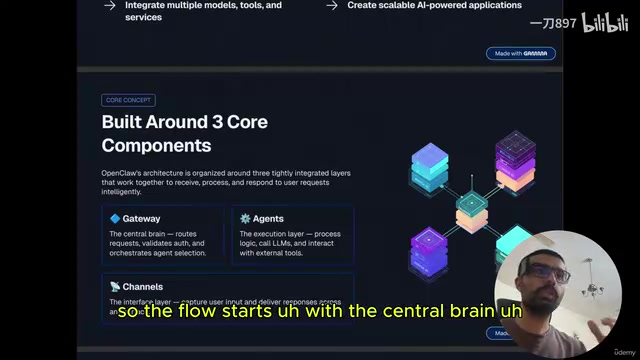
Getting Started with OpenClaw: Multi-Channel AI Agent Gateway and Automated Workflow Guide
OpenClaw is an open-source multi-channel AI agent gateway. This guide covers its three core components — gateway, agents, and channels — plus tool integration and memory mechanisms.
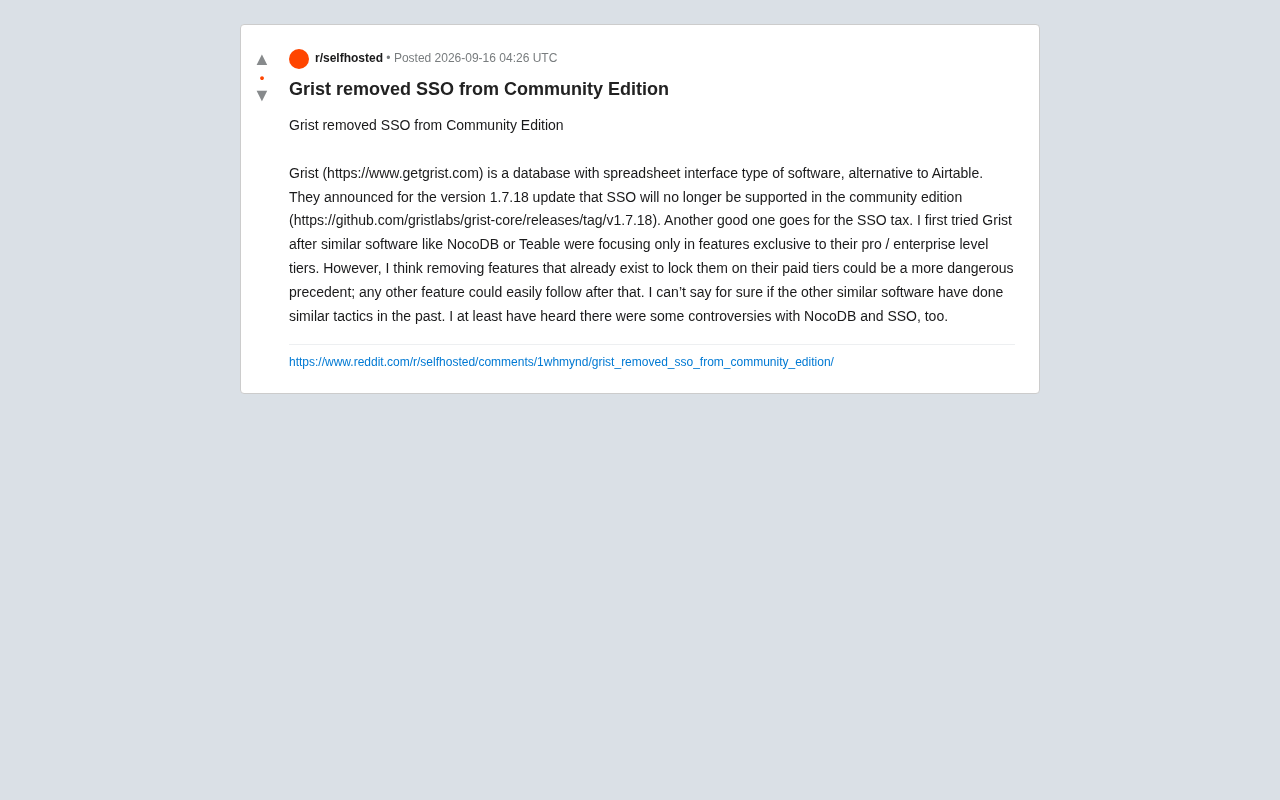
Grist Removes SSO from Community Edition: The 'SSO Tax' Debate Resurfaces
Grist v1.7.18 removed SSO from its Community Edition, locking it behind a paid tier and reigniting the 'SSO Tax' debate. We analyze the incident, open-source monetization tensions, and what it means for self-hosted users.