Gemini 4 Argon: Can Google's New Frontier Model Get Back in the Game?

Gemini 4 Argon's benchmarks and reputation are polarized — the real question is where it fits in your model stack.
Gemini 4 Argon enters open testing with split benchmark results: frontier-best in knowledge work and legal agents, but behind Opus 5.5 and Astra in coding, with performance heavily harness-dependent — near Opus 5.5 Max on anti-gravity CLI but poor on Gemini CLI. Multimodal 3D code generation is its true differentiator, and writing is an underrated strength. Competitive pricing and Google's Pro/Ultra access tiering round out a model that needs scenario-based positioning rather than all-around expectations.
Gemini 4 Argon Is Here, but the Question Has Changed
Announced two weeks ago and now officially in open testing, Google's Gemini 4 Argon posts impressive benchmark numbers — yet community feedback is sharply polarized. The host of the AI Daily Brief offered a key framing: the question about frontier models has shifted from "how good is it" to "where does it fit."
In other words, users are no longer asking "should I switch to the new model," but rather "what unique role can this model play in my model stack?" That shift in perspective is exactly the best entry point for understanding Argon.
Argon is built on an entirely new pretraining foundation — Google previously scrapped its plans to release Gemini 3.5 Pro. The model's size hasn't been disclosed, but Google positions it in the same tier of ultra-large models as Astra and Fable.
Benchmarks: Leading in Knowledge Work, Lagging in Coding
On paper, Argon reaches frontier-level performance across multiple dimensions. In knowledge work, it achieves top scores on the VALS Index, Automation Bench, VALS Finance Agent, and Harvey Legal Agent benchmarks. On the Harvey legal benchmark, Argon leads the second-place Fable 5.1 by 13 points — a significant gap.
Coding performance is far more complicated. Argon slightly leads Opus 5.5 on DeepSuite, but trails the three major competitors by roughly 10 points on Frontier Suite, and lags Opus 5.5 by about 9 points on Terminal Bench 4.0. That said, recent updates to the benchmarks themselves have narrowed scores across the board, and Argon remains in the frontier range — just not at the very top.
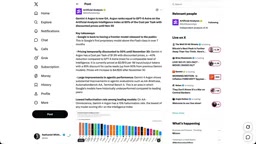
On cost, Argon offers a 50% API discount through November 30. In Artificial Analysis's independent evaluation, Argon completes benchmark tasks at just $1.99 per task — comparable to GLM 5.3 and notably cheaper than every frontier competitor except Sol 6.1. After the subsidy ends, Argon will be more expensive than Astra but still roughly two-thirds the price of Anthropic's models.
Taken together, Argon looks like "frontier AI at a discount" — which in theory should put Google back in the race.
A few notes on the key benchmarks:
- VALS Index: A comprehensive evaluation system maintained by Vals AI, covering knowledge work tasks with an emphasis on multi-step reasoning and tool use in real-world scenarios.
- Automation Bench: Measures a model's end-to-end task completion rate in automated workflows (such as data processing, script execution, and form filling) — closer to actual deployment scenarios than single-turn Q&A.
- Harvey Legal Agent Benchmark: A specialized evaluation released by legal AI company Harvey, with tasks spanning contract review, case law retrieval, and legal memo drafting, requiring models to maintain precise citations across long documents.
- Frontier Suite / Terminal Bench 4.0 / DeepSuite: Coding and terminal operation benchmarks. Frontier Suite focuses on understanding complex codebases and multi-file modifications; Terminal Bench 4.0 simulates shell command chain execution in real terminal environments; DeepSuite leans more toward algorithms and competition problems. The three use different scoring logic, so Argon's divergent performance across them isn't contradictory.
It's especially worth noting that such benchmarks have recently updated their test sets and tightened scoring criteria across the board, causing scores for all frontier models to decline. When making horizontal comparisons, refer to data from the same time window.
Coding Ability: The Most Contested Battleground
Coding has long been Google's weak spot. Some speculate that poor coding performance was precisely why Gemini 3.5 Pro was shelved over the summer.
Developer Pavel Hurin tested Argon on bug-hunter tasks and found the results "not ideal" — on par with Muse Spark 1.3 and clearly behind Astra, Fable, and Opus. Railway's Noah Dunnigan was more blunt: "This model is useless on real code." Developer Theo's codebase analysis benchmark showed Argon was the only model with a false-positive rate above 50%.
But the problem may lie in the test environment. Analyst Max Weinbach pointed out that it performs poorly in anti-gravity but is "very good" in Claude Code and OpenCode. However, using it in other harnesses may violate the terms of service.
The more critical finding came from Pavel Hurin's follow-up tests: running the same benchmark on anti-gravity CLI rather than Gemini CLI, Argon jumped from "okay" to frontier level — "very close to Opus 5.5 Max." He ran it three times to confirm.
This exposes a release strategy problem — Google distinguishes between Pro and Ultra subscribers: Pro users can only use Argon in the Gemini harness, while using anti-gravity requires upgrading to the Ultra tier. This has sparked widespread developer frustration. Marcelo P. Lima's complaint captured how many feel: "Why does Google make it so hard to try their new models?"
Analyst Rishi's summary is quite representative: "After a few hundred million tokens, I'd say Gemini 4 is roughly equal to Opus 4.8."
A note on harnesses and anti-gravity:
The "harness" refers to the runtime environment wrapping the model, including system prompts, tool-calling protocols, context management, and error-retry mechanisms. The same model can perform dramatically differently across harnesses — because the instructions the model actually receives, the visible file scope, and the tool interfaces all differ.
anti-gravity is Google's agentic coding tool for developers (alongside Gemini CLI), focused on multi-agent collaboration and long-context codebase operations. Pavel Hurin's tests show that in Gemini CLI, Argon may "hold back" due to overly conservative tool calls or aggressive context truncation, while in anti-gravity CLI it can operate freely.
The subscription tiering issue also deserves elaboration: Google restricts Argon's anti-gravity access to the Ultra tier, while Pro users can only use it in the Gemini harness. This means most developers can't evaluate the model in its best environment. Much of the community frustration stems from this experience of "capability split by a subscription wall" rather than from the model itself.
Multimodal and 3D: The Real Differentiator
If coding is Argon's weak spot, multimodal and 3D generation are its killer features.
Google's demos were stunning: Demis Hassabis showed a modern take on battle chess with visuals approaching AAA game quality; Chet Aslua shared a 3D pagoda temple complex supporting multi-angle exploration. However, some observers noted these demos were the product of multi-agent collaboration — and not cheap.
Actual user testing was more mixed. After testing vehicle 3D rendering, Max Techno found: "The car shape is much better than Opus, but the colors are completely washed out, textures are floating, and the UI is stuck in the past." He even wondered whether the model was specifically trained on popular public tests.
But feedback on exploratory use cases was entirely different. Venture investor Justine Moore asked Argon to build an interactive Apple computer museum with no images or data provided — Argon scraped archival photos on its own, wrote tools to clean the images, pulled 50 years of spec data, and built a 3D Cover Flow UI that changes by era. The Bugged Dev gave it a single image of a Gothic Victorian carriage, and Argon generated a 3D model with 174,000 faces from scratch — with opening doors, hinged windows, wheel physics, suspension, and custom skull carvings — all generated through code, without Blender.
Websim Saria's assessment is worth noting: "Gemini 4 Argon is the first model that feels like image, video, and language models have merged into one."

A note on 3D generation and multi-agent collaboration demos:
The "3D generation" here doesn't refer to traditional text-to-3D mesh models (like single-pass forward generation in Point-E or TripoSR), but rather code-generated 3D: the model outputs Three.js/WebGL code that the browser renders in real time. The Bugged Dev's 174,000-face carriage model — "opening doors, hinged windows, wheel physics" — is all code-defined procedural geometry. That's why it doesn't need Blender or a professional 3D pipeline.
The "battle chess" demoed by Demis Hassabis approaches AAA quality and was noted to be "multi-agent collaboration" because the task was split among multiple agents: one handling game logic, one handling materials and lighting, one handling UI, then chained for execution. This mode is significantly more expensive than a single conversation, but it demonstrates Argon's potential in long-context orchestration and cross-modal instruction following.
For developers, understanding the boundaries of "code-generated 3D" matters: it far surpasses traditional 3D generation in interactivity and editability, but still depends on the model's understanding of rendering pipelines for geometric precision and physical correctness — so feedback like "washed-out colors, floating textures" isn't surprising.
Writing: The Underrated Strength
Dan Shipper of Every spent an entire week with five colleagues testing Argon across four dimensions — coding, writing, design, and knowledge work — and the conclusion was surprisingly positive.
"I was ready to criticize this model, but the results surprised me," Dan wrote. His core findings: Argon is unstable when refactoring old code but fast and efficient in brand-new projects; it's distinctive in multimodal and "hands-on making things."
And what he praised most was writing. "DeepMind hired professional editors to polish the model's writing style, and the effect is remarkable. I use it to organize structure and refine metaphors. It has a natural feel for structure and detailed explanation that Astra and Opus lack."
Dan's workflow recommendation is quite useful: use ChatGPT and Claude for daily conversation, switch to Gemini 4 when you need an editing partner — "use it to organize the structure of complex articles, refine metaphors, or do a close reading of a book." He even called Argon "a new model trapped in an outdated harness," implying that the lagging harness UX is dragging down the model experience.
Industry Reflection: The Value of Model Diversity
Alex Emas, Director of AGI Economics at Google DeepMind, offered an overlooked perspective: the "output diversity" of frontier models has value in itself.
"Every model has a unique signature in writing, taste, and code — especially in design, such as the background color palettes it chooses. The relevant signals and priors are precisely the source of fragility, learning traps, and AI slop."
Ethan Malek echoed this sense of "difference": "Using Gemini 4 makes you realize how many other models are distilling Claude or GPT, or using similar training pipelines. It genuinely feels different from other models."
But some developers are more reserved about this "difference." Theo said: "This is a huge step forward for Gemini, and the price is great value. But it's still a Gemini model — it often does weird things, and I don't feel I can trust it at all."
A note on "output diversity" and model distillation:
The "output diversity" Alex Emas mentions can be understood as distributional differences in the outputs models produce under the same prompts. When large numbers of open-source models are trained by distilling synthetic data from Claude or GPT, their outputs exhibit similar styles, similar sentence structures, and similar error patterns. This homogenization has two consequences: first, users switching between models don't get genuinely different perspectives; second, when a distilled "teacher model" has systematic biases or vulnerabilities, the entire ecosystem amplifies them in sync.
What Ethan Malek means by "other models distilling Claude or GPT" refers precisely to this phenomenon. Because Argon is built on an entirely new pretraining foundation (and Google scrapped the Gemini 3.5 Pro plan), its output distribution differs markedly from the mainstream Claude/GPT lineage — this is both its selling point and the explanation for why some developers find it "often does weird things": diversity itself also means unpredictability.
From a product strategy perspective, Google's willingness to preserve this "difference" rather than simply aligning to mainstream style may be an important prerequisite for its differentiation in writing and creative scenarios.
Conclusion: A Model That Requires Reunderstanding
Back to the original question — where does Argon fit? The current answer is still: "Not quite sure yet."
But some directions are already clear: writing and editing collaboration is its underrated strength; multimodal 3D generation is its unique lane; coding ability is highly harness-dependent, and only anti-gravity brings out its true level.
The podcast host's summary is quite illuminating: just as with Astra, Argon may require users to "push themselves to do harder, stranger, more unexpected things" to truly see its full potential.
For Chinese developers, the practical advice is: if you're within the Google ecosystem, Argon is worth serious evaluation; if you need "an editor's eye" to polish text, it's a unique option beyond Astra and Opus; if your core need is agentic coding, you may need to wait for both the harness and the model itself to mature further.
One-line Summary
Gemini 4 Argon's benchmarks and reputation are polarized — the key question has shifted from "how good is it" to "where does it fit in the model stack."
Paragraph Summary
Gemini 4 Argon is now in open testing, with clearly split benchmark performance: frontier-best in knowledge work and legal agent evaluations, yet lagging behind Opus 5.5 and Astra in coding — and highly harness-dependent, approaching Opus 5.5 Max on anti-gravity CLI while performing poorly on Gemini CLI. Multimodal and 3D code generation are its true differentiators, and writing ability is seen by professional writers as a hidden strength that can serve as an "editing partner." Pricing is highly competitive during the discount period and remains about two-thirds of Anthropic's models after subsidy. Google's tiering of coding access between Pro and Ultra users has drawn developer frustration. The overall verdict: Argon isn't an all-around champion, but a model that requires reunderstanding and positioning by scenario.
Related articles

Free Unlimited Claude Code Solution: Agnes AI + CC Switch Setup Guide
No paid subscription needed — pair the free AI platform Agnes AI with the open-source tool CC Switch to provide a backend for Claude Code, enabling unlimited free calls to text, image, and video models. This guide covers the full setup, test results, and usage boundaries.

A Complete Zero-Cost Guide to Getting Started with Claude Code for Beginners in China
A beginner's guide to Claude Code for users in China: two installation methods (command line and IDE plugin), full configuration steps for replacing the official API with the free domestic LongCat model, and a hands-on demo of building a small tool with natural language, plus tips.

When the NSA Gets Involved: The AI Supply Chain Crisis Behind Open-Source CVEs and API Key Hijacking
Multiple open-source projects disclosed severe CVEs in one day, PHP flaws alarmed the FBI, and Railway and OpenCode were breached with API keys stolen. This article breaks down the vulnerability window, AI-accelerated exploitation, and the AI supply chain crisis behind the API key black market, with a developer defense checklist.