Gemini 4 Argon Officially Released: AI Engineer NYC Conference Focuses on New Benchmarking Standards

Google Gemini 4 Argon officially reaches GA as the AI Engineer conference focuses on micro-innovation in models and a shift in evaluation standards.
Google DeepMind's Gemini 4 Argon officially reached GA at the AI Engineer NYC conference, with a measured community response since its capabilities were already well understood through preview channels. The conference also focused on the evolution of benchmarks: CursorBench and Vals AI's independent evaluation results align closely with official data, sparking discussion about the value of benchmarking. Overall, the AI industry is shifting from disruptive architectural breakthroughs to engineering optimization and scenario adaptation, evaluation standards are moving from academic-oriented to product-oriented, and the role of AI engineers is diversifying. For developers, the real challenge lies in building AI infrastructure that can quickly switch and flexibly orchestrate models.
At the AI Engineer conference held in New York, Google DeepMind's Gemini 4 Argon became the center of attention. The model officially reached GA (General Availability) today, but discussions about it had already dominated headlines across major tech communities two weeks earlier.
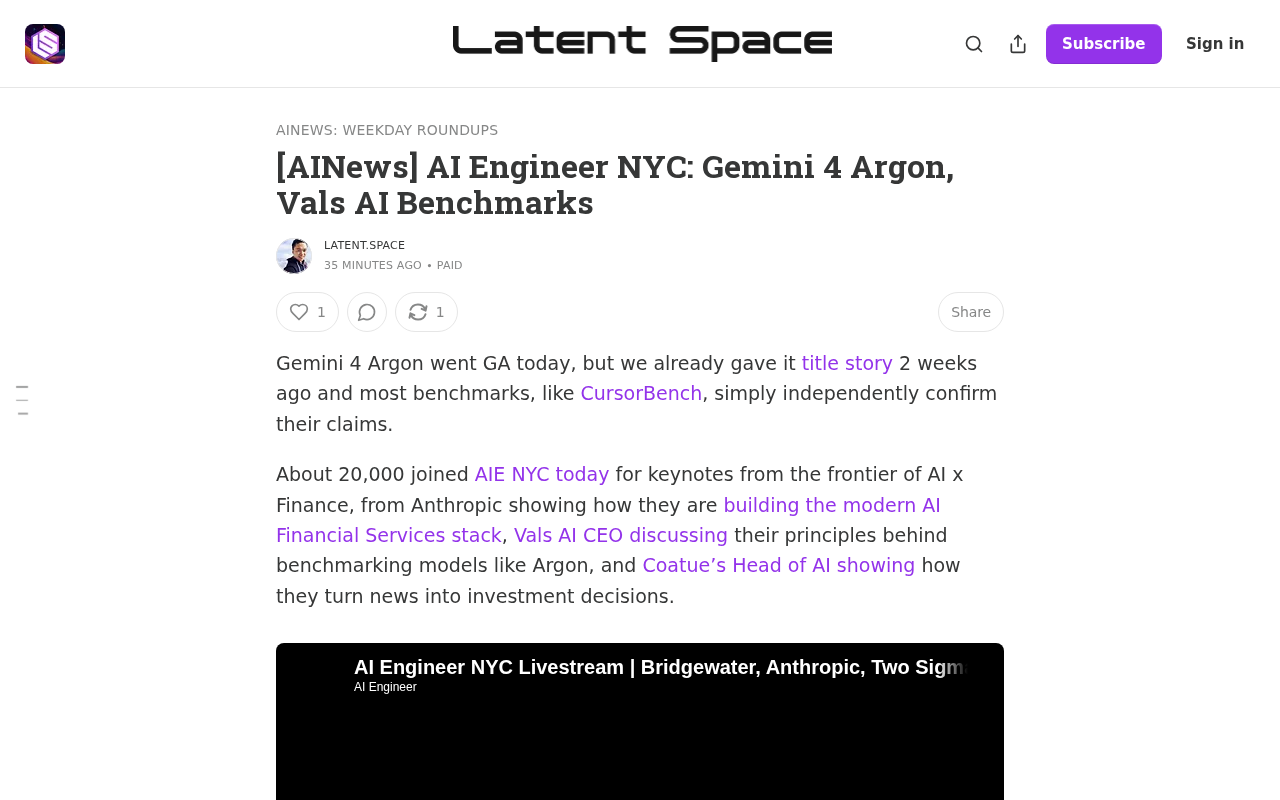
Gemini 4 Argon: From Early Access to Official Launch
The GA of Gemini 4 Argon marks another significant milestone for Google in the generative AI space. Unlike the usual "launch and peak immediately" pattern, the community's reaction this time was more measured — because most developers had already gained a thorough understanding of its capabilities through preview channels.
According to feedback from developers on-site, Argon's improvements in inference speed and multimodal understanding are tangible. One engineer who participated in early testing said: "It's no longer the kind of model that 'looks cool but is hard to deploy.' Argon's API response stability and context window management are quite mature."
A notable detail: Google did not release a flood of new features on GA day, but instead emphasized production environment reliability and toolchain completeness. This pragmatic strategy may reflect that the enterprise AI market is shifting from "showing off" to "competing on engineering capability."
GA (General Availability) is a standard term in the software and cloud services industry, referring to the stage where a product is officially open to all users, stable for commercial use, and backed by official support and SLAs. It typically follows Preview and Beta stages, and is a key milestone in the entire product lifecycle. Unlike preview versions, a GA release means API behavior, pricing, and quotas are frozen, the vendor commits to backward compatibility, and it is approved for production use. Platforms like Google Cloud and AWS all follow this release cadence. For developers, the most important implication of GA is that they can build long-running products with it without worrying about interfaces changing at any time or services suddenly going offline. Therefore, the article emphasizes that Gemini 4 Argon's GA is not just a technical milestone, but a signal of enterprise-grade readiness.
Benchmarks Like CursorBench: Independent Validation or Reinventing the Wheel?
Another core topic at the conference was the evolution of AI benchmarks. The latest benchmark report released by Vals AI, along with CursorBench's independent evaluation results, both attempt to answer one question: How exactly should we measure how good a model is?
From the data, CursorBench's test results align closely with Google's officially published data. This sparked an interesting discussion: When independent evaluations and vendor claims are nearly identical, what is the point of benchmarking?
Some attendees pointed out that the value of benchmarks is not about "calling out" vendors, but about establishing a reproducible, comparable evaluation system. Vals AI's contribution lies in introducing more real-world tasks, such as context coherence in code completion and instruction-following accuracy in multi-turn conversations. These metrics better reflect how models perform in actual products than bare MMLU scores.
However, some developers expressed concern about the "rat race" in benchmarking. A CTO from a startup said bluntly: "We spend too much time climbing leaderboards, but users only care whether it can help them write fewer lines of code."
CursorBench is a model evaluation benchmark proposed by the Cursor team, the makers of the AI coding tool, focusing on real-world testing of code generation and editing capabilities; Vals AI is an organization dedicated to independent AI model evaluation, and its reports are often cited by the developer community as a basis for cross-comparison. Traditional benchmarks like MMLU and GSM8K focus on academic ability, with fixed questions that are easily covered by training data, leading to "data contamination" issues. Product-oriented evaluations like CursorBench and Vals AI use tasks that closely mirror actual development workflows, such as completing code within long contexts, following complex multi-turn instructions, and handling real repository-level dependencies. They focus more on model stability and usability in engineering environments, which is why they became a focal point of discussion at the AI Engineer conference, and also explains why independent evaluation results align closely with Google's official data — because the dimensions they measure have converged.
Industry Signals from the AI Engineer Conference
From the release cadence of Gemini 4 Argon to the flourishing of benchmarks, AI Engineer NYC conveyed several clear signals.
First, model iteration has entered a "micro-innovation" phase. There are no longer disruptive architectural breakthroughs — more engineering optimization and scenario adaptation. This is actually good news for developers — the tech stack can finally stabilize.
Second, evaluation standards are shifting from academic-oriented to product-oriented. Both CursorBench and Vals AI's test sets are closer to real development workflows, which is a positive change.
Third, the role of AI engineers is diversifying. Some focus on model fine-tuning and deployment, while others focus more on packaging model capabilities into usable product features. The conference agenda also reflects this division of labor trend.
For developers in China, Gemini 4 Argon's GA means one more base model option. But the real challenge is not which model to choose, but how to build an AI infrastructure that can quickly switch and flexibly orchestrate models. After all, the next Argon could appear in just a few weeks.
AI Engineer is an emerging professional role in recent years, distinct from traditional ML engineers or data scientists. They focus more on integrating large model capabilities into products, handling engineering tasks such as prompt engineering, RAG pipelines, agent orchestration, cost optimization, and latency tuning. The emergence of this role itself reflects the refinement of the AI deployment chain: models are trained by a few major players, while a large number of developers are responsible for turning models into usable features. The agenda of the AI Engineer NYC conference is structured around this division of labor, featuring both hardcore sharing on model fine-tuning and deployment, and practical discussions on how to design AI product interactions. For developers in China, understanding this role differentiation helps clarify one's own positioning — whether to go deep into base models or focus on building AI infrastructure that enables quick switching and flexible orchestration. The latter is often a more realistic and high-value entry point.
One-line Summary
Google Gemini 4 Argon officially reaches GA, as the AI Engineer conference focuses on micro-innovation in models and a shift in evaluation standards.
Paragraph Summary
Google DeepMind's Gemini 4 Argon officially reached GA at the AI Engineer NYC conference, with a measured community response since its capabilities were already well understood through preview channels. The conference also focused on the evolution of benchmarks: CursorBench and Vals AI's independent evaluation results align closely with official data, sparking discussion about the value of benchmarking. Overall, the AI industry is shifting from disruptive architectural breakthroughs to engineering optimization and scenario adaptation, evaluation standards are moving from academic-oriented to product-oriented, and the role of AI engineers is diversifying. For developers, the real challenge lies in building AI infrastructure that can quickly switch and flexibly orchestrate models.
Related articles
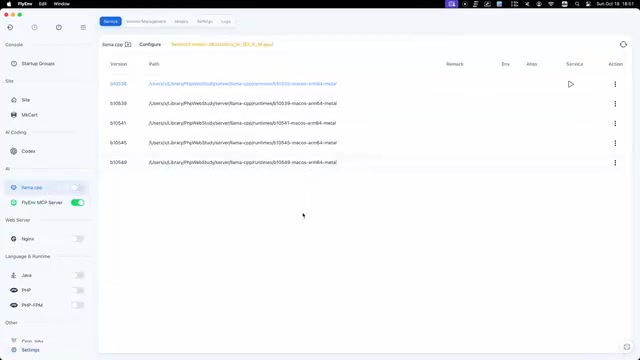
FlyEnv Plugin Review: Visually Running llama.cpp and Managing GGUF Models
FlyEnv launches the official llama.cpp plugin with side-by-side Metal runtime management, public GGUF repository indexing with file type labels, and visual configuration of context, threads, and GPU layers—saving templates and speculative decoding with each model for one-click local LLM inference.
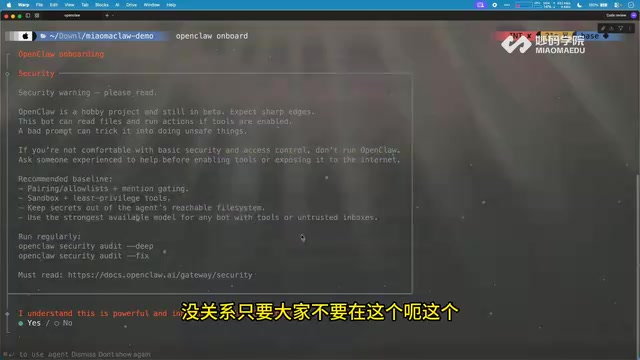
How Can Frontend Developers Advance into AI Agent Development? Deconstructing System-Level Agent Architecture from OpenClaw
Starting from the OpenClaw demo in a Bilibili open class, this article breaks down the three-layer architecture and universal formula of system-level AI agents, and analyzes the path for frontend developers to enter agent development based on TypeScript, including plugin-based design and security/memory layer challenges, with an interview answer framework.

WorkBuddy in Action: How AI Agents Automate Batch File Conversion and Archiving
Bilibili creator Teacher Shanyao tests WorkBuddy vs. Doubao on batch file conversion, showing how AI Agents move from "giving solutions" to "direct execution," with a full workflow and credit cost reference.