Gemini 4 Carbon Full Breakdown: Quotas, Performance, and Hands-On Experience
Gemini 4 Carbon launches faster and is more capable, but compute and quota problems drag down the experience.
Google's new flagship model Gemini 4 Carbon went from announcement to launch in just 12 days. Pricing is on par with Argon, but text, Agent, and coding capabilities have improved significantly. Currently only Ultra subscribers and the Vertex API can use it. Hands-on tests show compute tightness persists, with the same test taking 6 minutes at dawn and 40 minutes in the afternoon. Community consensus: impressive text quality and strong Agent capability, but fast quota consumption, low cache hit rates, and polarized speeds.
Google's new-generation flagship large model, Gemini 4 Carbon, has officially launched. From the first official announcement on October 29, to the official Twitter teaser on November 10, to the official opening on November 11, the entire process took only 12 days—faster than the launch cadence of the previous generation, Gemini for Argon. Bilibili creator DP brought a first-hand summary and hands-on testing, and this article combines the video content with feedback from community members to sort out the key information.
Launch Cadence and Available Channels
Carbon's release pace has clearly accelerated. The official announcement came on October 29, the teaser tweet on November 10, and the launch the very next day. This short "announcement–teaser–launch" cycle suggests Google is accelerating model iteration.
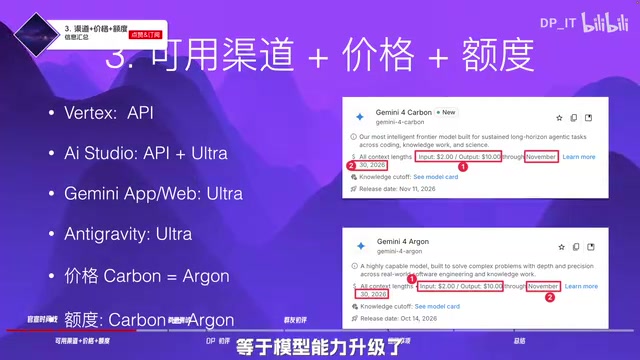
In terms of available channels, the Vertex API is already open; the AI Studio API and Ultra subscribers can use it; Gemini App and Web Ultra subscribers can use it; and in AntiGravity it is likewise limited to Ultra subscribers. Pro subscribers can currently see the model but cannot use it. According to the creator's speculation, Pro subscriptions may in the future follow a separate quota similar to Argon, while Ultra subscriptions will be merged directly into the existing Gemini quota pool.
Vertex API is the enterprise-grade machine learning platform interface provided by Google Cloud, allowing developers to call models such as Gemini within their own applications, typically used for production deployment and scaled invocation; AI Studio is a free/low-barrier experimentation platform for individual developers and researchers, making it easy to quickly test prompts and model capabilities. Ultra subscription refers to high-end subscription plans such as Google One AI Premium, which enjoy priority access to the latest models and higher quotas; Pro subscription is a lower tier, usually lagging in gaining access to new models or limited to only certain features. AntiGravity is an AI-assisted development environment/tool launched by Google that deeply integrates the Gemini model, and its availability is likewise tied to subscription tier. Understanding the differences among these channels helps assess Carbon's opening strategy: prioritizing the experience of enterprise API and high-end subscription users, then gradually expanding to ordinary users.
Pricing and Quotas: More for the Same Price
Carbon's pricing is exactly the same as Argon's—the model's capabilities are upgraded, but the price has not changed at all. Note that a half-price discount applies until November 30, after which the original price may be restored. However, given the current pace of model updates, a new model will likely have already appeared before that date.
In terms of quotas, Carbon's quota is basically the same as Argon's. The creator reminds that compute and quota issues have not been resolved on Carbon; instead, they are more prominent because the model is more popular.
Hands-On Experience: Clear Capability Gains, Compute Holds It Back
The creator conducted two "Dihu tests" (a generative benchmark): at 1 a.m. it took 6 minutes, and at 1 p.m. (12 hours later) it took 40 minutes. The same test took vastly different amounts of time; the speculated reason is that compute tightness has not improved, and Carbon's popularity is higher than Argon's, leading to more intense resource contention.
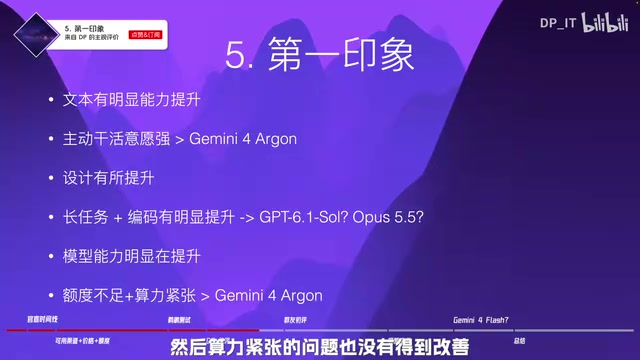
In terms of first impressions, the creator believes: text-related capabilities have improved markedly; the willingness to proactively do work is significantly stronger than Argon's; design capabilities have improved but not especially noticeably; long-task and coding capabilities have clearly progressed, to the point of considering using Carbon to replace GPT-6.1 Soul and OPS 5.5 for part of the work, though further testing is needed to verify. The official benchmark screenshots are basically consistent with the hands-on impressions.
The problems are equally obvious: insufficient quota and tighter compute than in the Argon era, while issues such as zero caching still exist. The creator describes it as a model that "moves forward while sick" and "accelerates forward while sick."
Agent capability refers to the model's ability to autonomously plan, call tools, decompose tasks, and continuously execute multi-step operations, rather than merely passively answering single-turn questions. The "willingness to proactively do work" mentioned in the article refers to the model's tendency to proactively initiate actions, request external tools, or supplement information—one of the core indicators of an agentic model. Long tasks usually refer to complex tasks requiring multiple rounds of interaction, long runtimes, or processing large amounts of context, placing extremely high demands on the model's memory retention, context window, and reasoning stability. Coding capability covers scenarios such as code generation, completion, debugging, and refactoring. Carbon's progress in these three areas means it is closer to an "agent to which work can be delegated" rather than a "question-answering bot," but compute tightness will directly slow down long tasks and multi-step agent calls, creating a gap between capability and experience.
Community Feedback: Consensus and Divergence
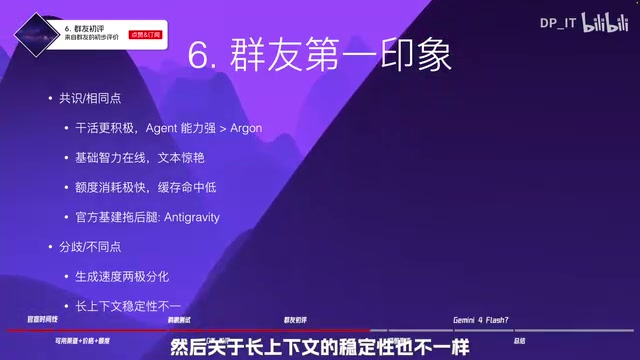
The Ultra subscribers who participated in testing generally agree on several points: the model has an awareness of proactively doing work, and its Agent capabilities are clearly stronger than in the Argon era; basic intelligence is solid, and text output is quite impressive; quota is consumed quickly, and cache hit rates are low. On the official infrastructure side, AntiGravity drew concentrated criticism.
Divergence is mainly concentrated on generation speed, with clear polarization. It is speculated that different accounts are assigned to different compute groups: groups with fast consumption are slow, while groups with surplus are fast. Long-context stability also varies, possibly related to compute grouping. Opinions on front-end coding capability are mixed, and the creator says more testing will be done later.
Compute grouping refers to the mechanism by which cloud service providers schedule user requests to different physical clusters or resource pools. When a model's popularity surges, some users may be assigned to clusters with higher load and tighter resources, resulting in slow generation and long queue times; other users may land on clusters with surplus resources and experience faster speeds. This grouping is usually opaque to users, but it causes significant experience differences for the same model across different accounts. Cache hit rate refers to the proportion of already-computed results reused during model inference; a high hit rate can reduce latency and compute consumption; zero caching or a low hit rate means every request must be computed from scratch, further exacerbating compute pressure and quota consumption. The polarization in speed and the differences in long-context stability mentioned in the article are very likely the combined result of compute grouping and caching strategy.
Practical Reminders and Plugin Recommendation
Community members "Huan Xuezhang" and "Student B" have created a free plugin that lets you view routing status during operation. It currently supports real-time conversation and sub-agents, among other features, and is continuously being updated.
When using Carbon in AntiGravity, it is recommended to adjust the context to about 500k; it works well, but consumption will increase accordingly.
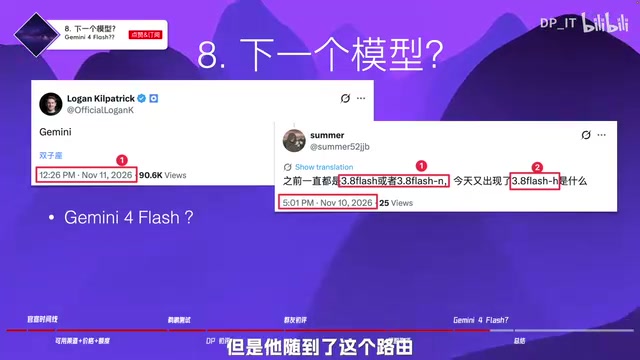
There are also clues suggesting that a new model may be released soon, guessed to be in the Gemini Flash series. Logan posted a riddle-like tweet; channel user "summer" observed routing for a "3.8 flash-h" model, and user "kh" found the "-h" suffix and that the second-slot context had changed to 512k; it is currently in gray-scale testing.
Conclusion: Google Secures Third Place, but Infrastructure Drags Down the Experience
The creator judges that Google has secured third place in the world and has the ability to compete with GPT for second; the positions of the two sides may change—Google is accelerating, while OpenAI still has cards left to play. Compute tightness has continued from Argon to Carbon, and the insufficient quota problem is more obvious on Carbon: in the Argon era, "the quota was not quite enough"; in the Carbon era, "the quota is clearly insufficient."
A final reminder: pay monthly, and do not impulsively buy a higher-tier subscription. Thinking time is important, and output quality needs a certain amount of thinking time to guarantee.
An open question for everyone: based on the current situation, would you consider switching your subscription to a Google One-related subscription?
One-line Summary
Gemini 4 Carbon launches faster and is more capable, but compute and quota problems drag down the experience.
Paragraph Summary
Google's new-generation flagship model Gemini 4 Carbon went from announcement to launch in just 12 days, a clearly accelerated pace. Pricing is on par with the previous generation, Argon, but capabilities in text, Agent, and coding have improved significantly, and the willingness to proactively do work has strengthened. Currently only channels such as the Ultra subscription and Vertex API are available, and Pro users cannot use it for now. Hands-on testing shows the compute tightness problem has not improved: the same test took 6 minutes at dawn and 40 minutes in the afternoon, with higher popularity leading to more intense resource contention. Community consensus is that text is impressive and Agent capabilities are strong, but quota is consumed quickly, cache hit rates are low, and generation speed is polarized, speculated to be related to compute grouping. AntiGravity infrastructure drew concentrated criticism, and it is recommended to adjust context to about 500k. A new Flash-series model is also in gray-scale testing. Overall judgment: Google has secured third place and has a shot at second, but infrastructure drags down the experience; monthly payment is recommended, and impulsive upgrades are not advised.
Related articles
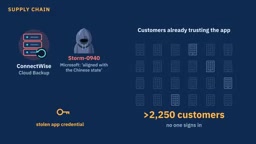
FBI-Warned AI Hacking Tool ARTEX: Cost Disruption and Defensive Restructuring
The FBI-warned AI hacking tool ARTEX reduces penetration testing costs to $150-$1,500, causing financial data breaches and supply chain attacks. Learn how it works, real cases, and a five-step defense strategy.
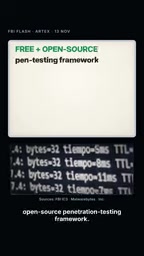
FBI Warns: ARTEX AI Hacking Tool Breaches Systems in Three Hours
FBI warns the open-source AI pentesting framework ARTEX is being abused, with some intrusions gaining privileged access in under three hours, over 1,600 consoles exposed, and links to South Korean financial data breaches and the ConnectWise supply chain attack.

FBI Warns About Artex: AI-Driven Attack Framework Threatens Cloud Identity Security
FBI warns that the AI penetration testing framework Artex is being used for automated attacks: written in Go and driven by AI agents, it covers the full chain from reconnaissance to data exfiltration. This article analyzes its real threat to cloud identity and privilege security and key defense priorities.