Gemini 4 Hydrogen Released: Why Did Google Name Its New Model After Hydrogen?

Google released Gemini 4 Hydrogen, positioning it as the efficiency-tier model for the agent era with low pricing and a large window.
Google released Gemini 4 Hydrogen, a new member of the Gemini 4 family succeeding the former Flash tier, focused on speed and efficiency. It has a 1M-token context window, is 2.5x faster than Gemini 3.8 Flash, costs $1.5/$7.5 per million input/output tokens with no fluctuation, and offers four adjustable thinking levels. Citing Bilibili creator Du Yu, the article argues "Hydrogen" symbolizes the most abundant and cleanest element, aiming to make high-concurrency multi-agent productivity dirt cheap—like the LFP-battery EV of AI. The core thesis: the all-powerful large model era is over, layered collaboration and hybrid agent scheduling are the main thread, and enterprise pain points are latency and cost, not peak intelligence. Developers should embrace layered architecture, using cheap models for massive parallel tasks and flagships for core roles, while investment shifts toward vertical scenario loops.
Gemini 4 Hydrogen Released: Why Did Google Name Its New Model After Hydrogen?
Google has released Hydrogen, a new member of the Gemini 4 family, and launched it simultaneously across Google AI Studio, the Gemini API, Android Studio, Firebase, Google Sheets, and Google Search. This model succeeds the former Flash and becomes the tier in the Gemini 4 family focused on speed and efficiency. But why is it called "Hydrogen" instead of continuing the "Flash" naming? Bilibili creator Du Yu offers his interpretation in a video, with the core argument being: Hydrogen is not a stripped-down flagship, but an "industry standard" designed for the agent era.
Hydrogen's Product Positioning: The Speed and Efficiency Tier
According to Bilibili creator Du Yu, the Gemini 4 family currently has three models: Carbon, Argon, and Hydrogen. Carbon and Argon are the "big brothers," dedicated to long-horizon, deep-reasoning hard problems; Hydrogen's mission is clear—everyday coding, high-concurrency agent workflows, and complex multimodal tasks. It has a massive 1-million-token context window and is 2.5x faster than the previous generation Gemini 3.8 Flash.
Pricing is where Hydrogen hits hardest: just $1.5 per million input tokens and $7.5 for output. Crucially, the price does not fluctuate across the entire 1-million context range—no tiered pricing tricks. In addition, it supports four adjustable thinking levels (low, medium, high, ultra-high), letting developers freely switch between speed and reasoning depth.
Thinking levels are the reasoning-budget control mechanism introduced in the Gemini 4 series, allowing developers to allocate reasoning depth according to task complexity. Lower levels skip most intermediate reasoning steps, suiting high-frequency short tasks like simple function calls and format conversion; higher levels enable longer internal reasoning chains for complex scenarios like architecture orchestration and multi-step planning. This design essentially turns "reasoning compute" into an adjustable parameter, sharing the same philosophy as OpenAI's o-series reasoning effort and Anthropic's extended thinking—letting the same model switch between different cost tiers rather than training a separate model for each tier. For agent workflows, this means the orchestration layer can dynamically choose thinking levels based on subtask type, driving down average token consumption without sacrificing overall quality.
The Commercial Intent Behind the Name "Hydrogen": Making Agent Productivity Dirt Cheap
Google didn't name the new model "Hydrogen" arbitrarily. Hydrogen is the most abundant and cleanest element in the universe. The commercial intent is clear: make high-concurrency, multi-agent collaboration productivity dirt cheap. Anyone who has done agent development knows that a complex task often needs to be split into a dozen sub-agents, simultaneously scanning hundreds of thousands or millions of lines of code and documentation. If you use flagship models to burn tokens for everything, the bill can drag a startup under. Hydrogen's pricing turns multi-agent orchestration from a luxury into a standard offering every team can afford.

Creator Du Yu likens Hydrogen to the "LFP-battery EV" of the AI world. Flagship reasoning models are like supercars running on high-octane gasoline—explosive power but terrifying fuel consumption, slow starts, and high latency; Hydrogen is a streamlined version derived from the Carbon architecture, cutting redundant computation in exchange for a 2.5x speedup. The four thinking levels are like the gears of an EV: simple functions stay in the lowest gear—fast and cheap; complex agent architecture orchestration shifts into ultra-high gear, consuming compute on demand with not a single unit wasted.
Multi-agent orchestration refers to a working mode in which a master agent decomposes a complex task into multiple subtasks, dispatches them to sub-agents running in parallel, and then aggregates the results. Typical scenarios include: dispatching multiple sub-agents to scan different directories simultaneously during codebase review, processing multi-turn conversations in parallel in customer service systems, and batch extraction and validation during document processing. Its cost structure is entirely different from single-turn dialogue—the number of sub-agents multiplied by the context length per turn means token consumption grows multiplicatively, and a single task can easily consume hundreds of thousands of tokens. This is exactly where low-cost, large-window models change the game: the feasibility of orchestration no longer depends on the price of a single call, but on whether the total bill at parallel scale can be covered by business gross margin.
Layered Collaboration Is the Main Thread: The Era of All-Powerful Large Models Is Over
Many people instinctively think "cheap means bad" and that Hydrogen is a low-quality, castrated version. But the creator argues this thinking is stuck in the previous AI era. The era of all-powerful large models is over; layered collaboration and hybrid agent scheduling are the main thread. Media and netizens always fixate on peak scores on leaderboards, but the real pain points for enterprise deployment have never been extreme intelligence—they are latency and cost. A model that is 10% smarter but twice as slow and three times as expensive is a complete failure in real business. Hydrogen performs strongly on Artificial Analysis benchmarks; it is inherently optimized for agent work, not for topping leaderboards.

Google's release this time is effectively declaring: AI infrastructure has entered a period of rapid inflation, and API prices will keep falling. Investment direction must shift—stop simply betting on whose foundation model is stronger, and look at who can close the loop on vertical scenarios with low-cost agents. Directions like overseas customer service automation and enterprise code knowledge base automation offer greater opportunities.
Artificial Analysis is an independent large model evaluation organization that mainly provides standardized benchmarks and horizontal comparisons of engineering metrics such as API price, latency, and throughput. Its Intelligence Index combines multiple reasoning and knowledge tests while also recording each model's output speed and cost per million tokens. Unlike academic leaderboards that emphasize peak intelligence, its evaluations are closer to production-environment selection needs, so they are widely cited in enterprise technical decisions. The article's mention that Hydrogen performs strongly in this evaluation means it occupies a favorable position in the triangle of intelligence level, speed, and cost—not that it simply inflates a single metric.
Implications for Developers and Entrepreneurs: Embrace Layered Architecture
For entrepreneurs and product builders, the creator recommends embracing layered architecture. Previously, the biggest blocker to multi-agent distribution was that models were too expensive. Now, with large-window, low-cost models like Hydrogen, product pricing must be restructured: massive parallel tasks, data cleaning, document retrieval, and code generation go to cheap execution models, while the hardest core roles are left to expensive flagship models. Going forward, programmers and knowledge workers won't need to hand-write large amounts of boilerplate code or dig through piles of documentation; the core skill will be commanding a team of low-cost AI employees to collaborate, and proficiently connecting API automation toolchains such as Google Anti-Gravity, various IDE plugins, and spreadsheet automation modeling tools.

The creator also recommends his own book, Gemini Usage Guide, which systematically breaks down the division of labor across the Gemini model lineup, API calling, and multimodal deployment, helping readers thoroughly test how Hydrogen pairs with Carbon and Argon for layered scheduling and building agent workflows.
Hydrogen's release is not just a Google product line update, but a signal: model competition in the agent era is shifting from "who is smarter" to "who is cheaper, faster, and better suited to large-scale collaboration." For developers and enterprises, understanding this trend matters more than staring at benchmark leaderboards.
One-line Summary
Google released Gemini 4 Hydrogen, positioning it as the efficiency-tier model for the agent era with low pricing and a large context window.
Paragraph Summary
Google released Hydrogen, a new member of the Gemini 4 family, succeeding the former Flash tier and focused on speed and efficiency. It has a 1-million-token context window, is 2.5x faster than Gemini 3.8 Flash, is priced at $1.5 per million input tokens and $7.5 for output with no fluctuation across the full range, and supports four adjustable thinking levels. Citing Bilibili creator Du Yu's interpretation, the article argues the name "Hydrogen" symbolizes the most abundant and cleanest element, with the commercial intent of making high-concurrency multi-agent collaboration productivity dirt cheap—like the LFP-battery EV of the AI world. The core argument is that the era of all-powerful large models is over, layered collaboration and hybrid agent scheduling are the main thread, and enterprise pain points are latency and cost rather than extreme intelligence. Developers should embrace layered architecture, using low-cost models for massive parallel tasks and flagship models for core roles, while investment shifts toward closing the loop on vertical scenarios.
Related articles
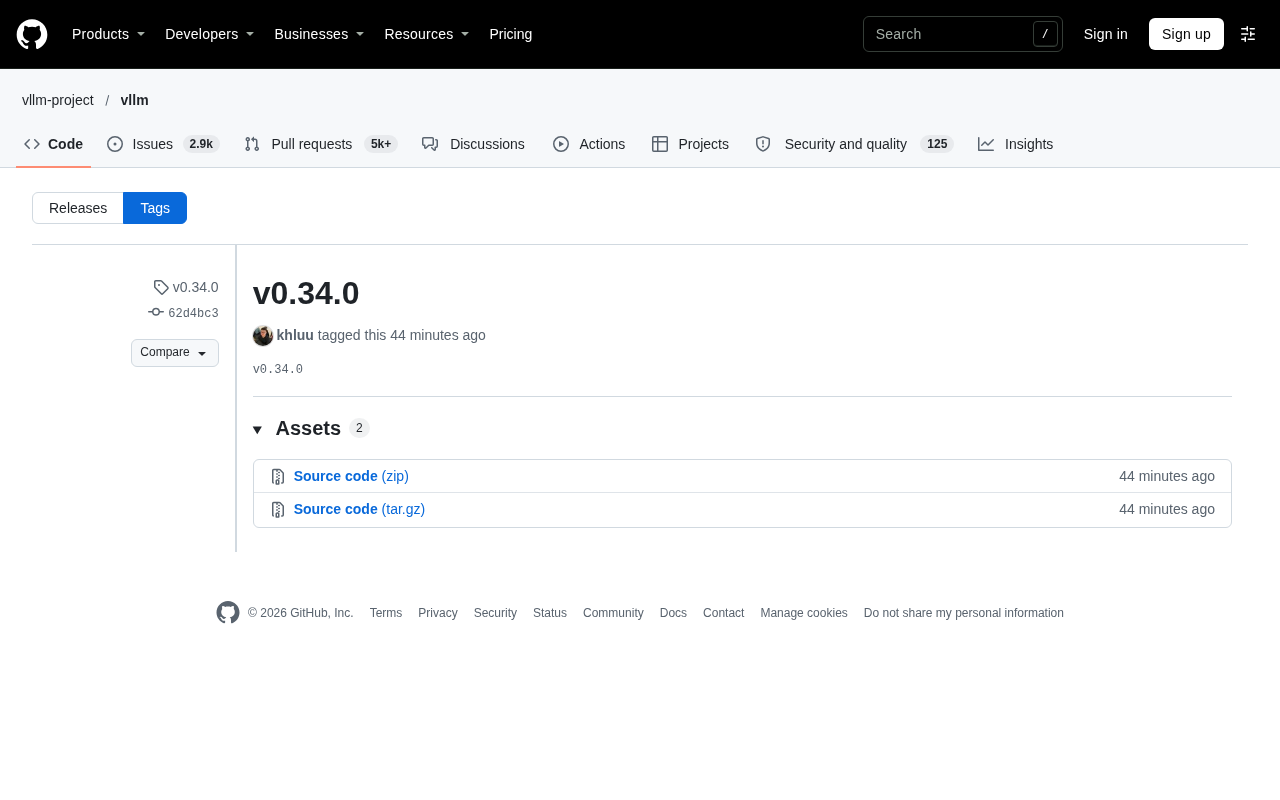
vLLM v0.34.0 Released: The Inference Engine Levels Up Again
vLLM releases v0.34.0, tagged by khluu with two asset files. This article reviews the release info and how developers should cautiously evaluate upgrades given missing release notes.

Gemini 4 Argon Lands on Anti-Gravity: How Multi-Agent Systems Are Reshaping the Development Workflow
Google's agent-first platform Anti-Gravity integrates Gemini 4 Argon, using multi-agent looping workflows to generate 3D worlds from text, turn photos into racing games, and enable end-to-end hardware design, now available on desktop, CLI, and Android Studio.
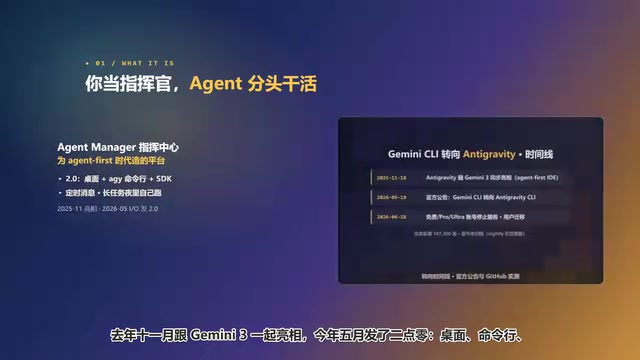
Antigravity Deep Dive: The Agent Command Center After Gemini CLI's Retirement
Google pivots its 107k-star Gemini CLI, migrating users to Anti-Gravity. This article breaks down its Agent Manager multi-agent collaboration, browser self-verification, Artifacts evidence chain, quota pricing, and migration pitfalls, analyzing which developers it suits.