Gemini 4 Krypton Leaks, Claude and DeepSeek Ship New Updates: The Great LLM Shakeup
Demos and rumors abound, but truly usable tool updates are the new dividing line in the LLM race.
The article sorts out two threads in the recent AI world: on one side, demos of unreleased flagship models like Gemini 4 Krypton and GPT 6.2 Astra circulate in testing circles with mixed sources and no official confirmation, making them merely forward-looking; on the other, shipped productivity updates—Claude Code theme customization and Projects collaboration revamp, Google AntiGravity dynamic workflows, DeepSeek opening its full API capabilities, and Perplexity's TeamMates business agents. It also offers a counterintuitive model-selection conclusion: for everyday tasks, start with the more cost-effective Opus 5.5. On the research side, Google used Gemini 4 series models with multi-agent formal verification to verify the Birkhoff conjecture and found flaws in the original proof. The conclusion is that the focus of competition is shifting from parameters to usability: whoever can package capabilities into stable, reusable, cost-controllable workflows holds the chips for the next round.
Recently, the AI world has been flooded with a batch of highly polished demos rumored to point to Google's unreleased flagship model, Gemini 4 Krypton. Meanwhile, Anthropic, Google, DeepSeek, and Perplexity have quietly shipped a set of tools you can actually use today. On one side is a future preview you can see but not touch; on the other is a productivity upgrade already in your hands. The dividing line in the LLM race is shifting from a "parameter contest" to a "usability contest."
1. Gemini 4 Krypton: Identity Fog Behind Stunning Demos
The Gemini 4 Krypton works circulating in testing circles cover several directions: an animated GIF of a cyclist carrying a kettle that switches between day and night, a 3D moon that shows lunar phases as it rotates, and a CSGO-style mini-game with a playable map. Among them, a 3D rocket engine webpage publicly released by developer Harshis is especially hardcore—the entire 3JS 3D library code is packed into a single HTML file, relying on no external textures or model assets. It supports a blueprint wireframe mode that blows the engine apart piece by piece, and can even cut away to show the internal thermal flow field.
But to be clear, these works do not come from the same channel. The CSGO mini-game is a playable demo leaked privately within the community; the rocket engine was released by an individual developer; and the batch actually associated with the anonymous blind-testing platform Arena is a different set of tracking posts. Some testers observed a test listed on Arena called Gemini 4 Hydrogen, with new version tags appearing, and the community speculates that Krypton is behind it. As for the four-panel image of a running lion circulating online, the top-left and bottom-right are labeled DeepSeekAd V4.1 Flash and Gemini 4 Hydrogen, while the bottom-left is labeled GPT 6.1 Terra—these model names were all added by the image creator. Animation smoothness alone can neither prove the true identity nor determine an overall winner among the vendors.
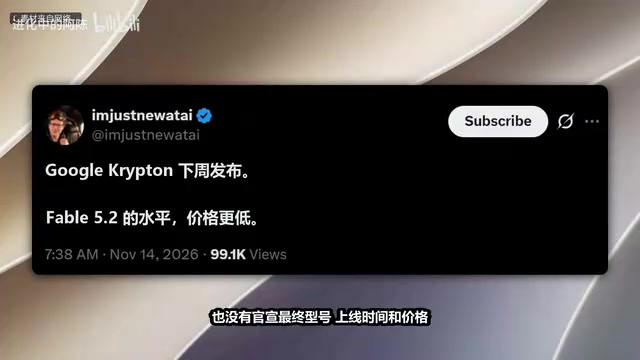
Google has so far neither confirmed that Hydrogen corresponds to Krypton nor announced a launch date or pricing for the final model. Rumors say it will launch next week and be cheaper than Fable 5.2, but until official confirmation lands, these demos remain forward-looking in nature.
Arena (LMArena) is one of the most important anonymous blind-testing platforms in the current LLM community. After a user enters the same prompt, they receive responses from two anonymous models at once and vote for the better one, and the system uses Elo-style ratings to rank the models accordingly. Because models appear under code names, Arena's test lists and version tags often become an "intelligence source" for outsiders speculating about unreleased new models—vendors often use aliases here for small-scale comparative testing before launch, and the community reverse-engineers their true identity through code-name changes, response style, and generation quality. The "Gemini 4 Hydrogen" mentioned in this article is exactly this kind of anonymous code name; whether it is the same model as "Krypton" can only be speculation until Google officially claims it. Understanding this mechanism makes it clear why demos and tags in testing circles cannot be directly equated with an official release.
2. Updates You Can Already Use: Major Claude Collaboration Revamp and Theme Customization
Anthropic has delivered solid features. Claude Code desktop local drawing now supports custom themes, with cloud drawing to follow later. The newly added Mods plugin feature lets users modify color schemes and animated backgrounds without writing style code—simply by asking in natural language or applying built-in templates. You can switch to light animated themes, neon sunset grids, and other effects; when code passes checks and merges into the branch, fireworks even go off in the night sky on screen.
More practically valuable than skinning is the full collaboration revamp of Projects, now live across web, desktop, and the latest mobile app, currently in phased public beta for Claude Pro and Max users. In practice, a user assigns three tasks at once in the main chat—fix tests, add rate limiting, generate dependencies—and the project coordinator automatically spins up three threads working in parallel, pushing back only key progress. Only when a thread is unsure whether to put rate limiting in memory or Redis does it pop up a prompt for the user to decide, and after selection it automatically notifies the corresponding thread to continue. Users can also type BTW to open a separate thread to investigate why a page loads slowly without interrupting the main line, or type Fork to branch off a new thread for a caching-scheme comparison experiment.
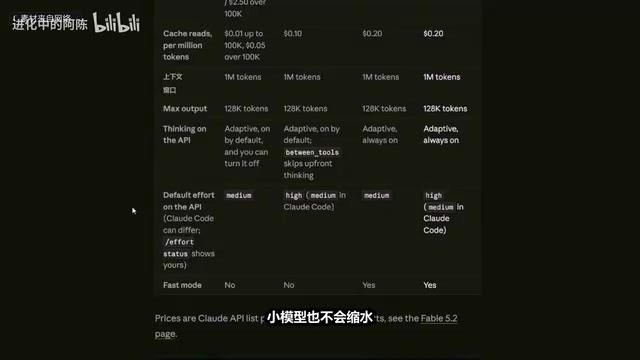
On model selection, Anthropic's official guide offers a counterintuitive conclusion: for everyday engineering and knowledge work, you can simply start from the default medium-strength Opus 5.5, whose unit price is only half that of Fable 5.2. On Terminal Bench 3.0, high-reasoning Opus 5.5 scored 58.9%, slightly beating the previous generation's Fable 5.1 at maximum reasoning, which scored 58.0%, while consuming roughly half the tokens. Only large-scale code migration, complex architecture, or long unattended tasks require switching to Fable 5.2. Independent developer Gary Tan's real-world test running all 52 Terminal Bench 2.1 programming problems with Claude Code 2.1.322 confirms this: Opus 5.5 had an 84.6% solve rate at an average cost of $0.65 per solved problem; Fable 5.2 had an 82.7% solve rate but an average cost of $1.83, 2.80 times the per-problem cost, with the pass-rate gap within statistical error.
Terminal Bench is a benchmark for evaluating AI coding agents' ability to complete tasks in real terminal environments. Its problems cover code modification, dependency installation, script debugging, and other operations close to real engineering work, rather than pure algorithm problems. Evaluations typically record both "solve rate" and "per-problem cost," because agents may trade extensive trial and error and long-context consumption for pass rate. The comparison of Terminal Bench 3.0 and 2.1 cited here is mainly to illustrate a counterintuitive conclusion: a stronger reasoning tier does not necessarily bring a higher pass rate, but it does significantly raise token costs. Therefore "solve rate per unit cost" is becoming a key metric for model practicality, echoing the article's main thread of a "usability contest."
3. Google, DeepSeek, and Perplexity's Shipped Tools
Google's AntiGravity has brought dynamic workflows into its desktop app and command line, open to Google AI Pro and Ultra users. Enter the slash command Run workflow, and it first automatically writes a Python orchestration script and pauses in the interface awaiting review and permission confirmation. Only after approval does it spin up multiple sub-agents to investigate code in parallel in stages, ultimately compiling a risk list, and the process can be saved and reused.
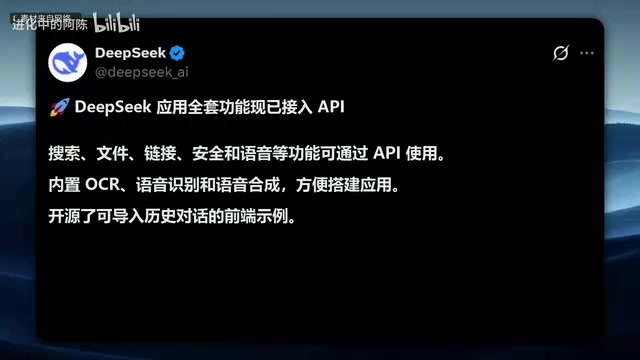
China's DeepSeek has put the full capabilities of its complete app into its API. Developers can change a few parameters to connect web search, file processing, webpage reading, security protection, and voice features. It also opened independent text recognition, speech recognition, and speech synthesis interfaces, and open-sourced a frontend example that supports importing old conversations. As for the pop-up discovered on the web version about quota exhaustion resetting by points, since the pop-up shows no subscription plan or pricing information and the company has not confirmed it, it should not be prematurely interpreted as a paid membership signal.
Perplexity launched its agent teammate feature TeamMates for Mac, open to Max subscribers. It can attach plugins to run an entire business: in the official demo, a teammate role managing an online store, after connecting to Shopify, automatically scanned 90 days of orders, pulled an out-of-stock report, and drafted a restocking order based on supplier lead times.
Wallet-type features show a clear divergence. OpenAI launched ChatGPT Wallet for some ChatGPT Pro subscribers in the US, connecting American Express, Mastercard, and VISA credit cards. In the demo, when the assistant selects a holiday gift box to pay, it uses a virtual card number to mask the real card number, and every order must be personally confirmed by the user through identity verification—the agent itself never touches real card information. Google, meanwhile, integrated Google Wallet into Gemini for US users, but its purpose explicitly does not involve automatic card-swiping orders; it is mainly used to read spending records to answer personal financial questions and generate budget adjustment plans. Both are limited to the US market.
4. Models and Hardware Still in Rumor Stage
OpenAI's GPT 6.2 Astra likewise only has circulating material. In a front-and-back comparison image of three controllers, the column labeled 6.2 Astra is shown side by side with the other two. A 3D scene of an industrial refrigeration unit posted by netizens is rich in detail—thin support bars on fan guards, copper tube cooling fins, rusty peeling iron doors, old wood grain, and even reflections of door bolts in standing water are all clearly layered—but OpenAI has not officially released this model, and neither the final naming nor the rollout scope has been announced.
In community rumors, Zhipu is said to have GLM5.5 beating OPUS5.5 in benchmarks along with parameter scale, but the parameters, pricing, and scores have no independent verification; Meta was dug out by netizens from a code update screenshot showing an internal tag MuseSpark1.4 internal, with no certainty of release; a screenshot of a custom comic settings interface leaked from Google NotebookLM, where you can pick art style and layout, but the opening time is unknown. Domestically, new samples of Alibaba's Qwen 4 MAX preview leaked—in a scene of a 3D figure pedaling a red bicycle along a coastal highway, the clouds, coastline, and frame details show clear dimensionality, while the old demo used for comparison shows a Western coastline and a ring structure on the sea surface.

It should be noted that the native agent computer Queenbook is a project Alibaba has previously demonstrated, with a Chinese-language work interface and automatic software control visible, but there is no new shipping news at present, and it should not be treated as new hardware.
5. Three Things That Will Shape the Next Stage
Google Research had human mathematicians work with Gemini 4 series models and the multi-agent collaboration tool Teamwork to express and verify, for the first time in machine-checkable language, the Birkhoff conjecture since it was proposed in 1927. While converting the informal proof of the three-dimensional Bochner-Riesz conjecture into a machine-checkable version, the team also found and patched a flaw in the original proof. In addition, together with universities including the Chinese University of Hong Kong, they proved and formalized the information-theoretic Cortez-Kumar conjecture, and used multi-agent tools to convert an existing proof of the Vile conjecture into about 1.8 million lines of formalized code, calling sub-agents 28,800 times over the course. Such research-grade collaboration is still far from everyday work, but it demonstrates the potential of multi-agent systems in rigorous reasoning scenarios.
OpenAI confirmed in a Fortune report that it will split and reorganize its robotics team: the research group merges back into the main R&D team, and the applications and hardware groups merge into the applications department. Even the booth it had booked at the Austin robotics academic conference CORL sat empty with no appearance. The company only confirmed the reorganization and did not explain why. Anthropic chief Dario Amodei discussed potential IPO plans in an interview, saying bluntly that going public is mainly to accumulate more cash flow to fund high computing investment, with no specific listing date set.
Formal verification refers to writing mathematical propositions and proofs completely in machine-checkable formal languages (such as Lean, Coq, Isabelle), with a proof assistant verifying step by step whether each inference is valid. Unlike natural-language papers, once a formal proof passes checking, there are no hidden logical leaps or typos, so it is often used to "double-check" classic proofs. This process is extremely tedious and was previously done mainly by hand. The value of having large models work with multi-agent tools on formalization lies in converting informal proof drafts into verifiable code and exposing flaws in the original proof during the conversion. The cases in this article—the Birkhoff conjecture and the roughly 1.8 million lines of formalized code for the Vile conjecture—precisely show that while such work is still far from everyday application, it demonstrates the unique potential of multi-agent systems on rigorous reasoning tasks.
Conclusion: Usability Is the Deciding Factor This Round
Taken together, Claude's desktop themes and collaboration revamp, Google's dynamic workflows, DeepSeek's new interfaces, and Perplexity's teammate feature are all usable today; while Gemini 4 Krypton, GPT 6.2 Astra, GLM5.5, and others remain at the stage of demos or rumors leaking from testing circles, with neither official confirmation of model identity nor launch dates. As demos of top models become increasingly hard to distinguish, whoever can package capabilities into stable, reusable, cost-controllable workflows will truly hold the chips for the next round of reshuffling.
Related articles

Gemini 4 Neon Review: Benchmark Scores Rival Carbon, API Pricing and Quota Breakdown
Google Gemini 4 Neon is now live, benchmark scores closely tracking Carbon, API pricing 3/15 at twice Hydrogen's rate. This article compiles Bilibili creator testing: Neon can replace 90% of Carbon scenarios, AntiGravity quota consumption is only one-third of Carbon, plus subscription channel restrictions and 2API ban risks.

Gemini 4 Helium Coming Soon? Signals of Google Loosening Subscription Restrictions
Google team member hints releases will continue; community speculates Gemini 4 Helium (Flash Lite) may be next. Subscription ban controversy gets a response as product lead says "Soon," suggesting restrictions may be lifted. This article covers Gemini developments, OpenAI Coding Agent and risk management, Doubao real-time audio-video API, and compute business dynamics.

AI-Assisted React Development in Practice: Optimizing a Video App and Handling Errors
A 14-year veteran developer demonstrates AI-assisted React video app optimization: compressing video from 80MB to 5MB (~94%) via ImageKit, plus reliable error handling and retry mechanisms. Includes planning, code understanding, and verification methods for working with AI.