Gemini 4 Neon Released: Frequent Model Switching Is No Match for Task-Based Validation

Google densely releases Gemini 4 models, but you need your own acceptance criteria before switching; Gemini splits privacy switches, and agent coding shows volume isn't value.
The article discusses Google's dense releases of the Gemini 4 series, reminding developers and users that evaluation and migration costs matter more than new models. Gemini separates training authorization from chat history, letting users opt out of training while keeping records, though this isn't full privacy protection. Gemini 4 Neon, the fourth model in seven weeks, needs validation with real error-prone tasks before migration. An agent converting 185K lines of C to 340K lines of Rust shows output volume isn't engineering value—acceptance matters more than generation. It also covers Sense Nova UE Pro, Yuanli Infinite funding, OSMO scent data, and Arm Technology's AIoT platform.
Title
Gemini 4 Neon Released: Frequent Model Switching Is No Match for Task-Based Validation
Meta Description
Google released its fourth Gemini 4 series model, Neon, in seven weeks. This article analyzes the evaluation costs of switching models, Gemini's separated settings for chat history and training authorization, and the validation traps of agent-written code.
Article Content
Google has launched its fourth Gemini 4 series model in seven weeks, a pace that has certainly excited many developers. But in his latest video, A Bao poured cold water on this "model-switching fever": new models are worth paying attention to, but what deserves even more of your time is the cost of evaluation and migration. Meanwhile, he also brought a privacy setting tip that ordinary users can take advantage of, as well as a sobering case about agents writing code.
Chat History and Training Authorization Can Finally Be Managed Separately
According to Ars Technica, Gemini now splits AI training authorization and chat history into two independent switches. Users can choose to opt out of training while keeping their chat history. This change addresses a real pain point: previously, to prevent conversations from being used for training, you might have had to discard your history along with it—and for those who frequently revisit outlines and refine their thinking, that meant losing the convenience of reorganizing work threads.
The process isn't complicated: open Gemini activity settings, check training authorization and chat history separately, and adjust according to your needs. But A Bao flagged two pitfalls. First, how much time you save depends on how much you rely on your conversation history—don't just take someone's word for some "magic number." Second, opting out of training doesn't mean all privacy risks disappear, and it's certainly no reason to stuff work secrets into the chat box. This switch is worth checking, but don't treat default settings as your privacy advisor.
AI training authorization refers to whether users allow the service provider to use their conversation content to train large language models. In the past, many products bundled training authorization with chat history storage in the same privacy setting, meaning users who wanted to refuse data being used for training had to give up saving their chat history. This design stems from early coarse-grained data governance models, where service providers preferred to acquire data in one go for model iteration. Now, splitting the switches means data usage and data retention can be decoupled, consistent with the "purpose limitation" principle advocated by regulations like GDPR. Note, however, that opting out of training only constrains future data use; historical data already used for training cannot be withdrawn.
Gemini 4 Neon: Worth a Spot on the Shortlist, But Not Necessarily a Migration
Geek Park reports that Google DeepMind released Gemini 4 Neon on November 18, the fourth elemental model in the Gemini 4 series launched within seven weeks. The release density is indeed high, which means new options keep increasing for those integrating models—but evaluation and migration both require effort.
The key judgment is: frequent updates alone don't prove your business is worth migrating. Teams building applications and integrating APIs should next compile the real tasks in their current business that are prone to errors, feed the same inputs to Neon and their current model, record whether results are deliverable and how much effort revisions take, and then decide whether to switch. Ordinary users should do the same—test with the problems at hand, and don't treat promotional headlines as experience reports. Neon deserves a spot on the shortlist, but a launch event is no substitute for your own acceptance criteria.
Model migration costs typically include API compatibility modifications, prompt re-tuning, output format adaptation, latency and throughput testing, and regression validation. The Gemini 4 series released four models in seven weeks—this density means rapid version iteration and potentially lagging documentation and ecosystem. For production systems that depend on stability, frequent model switching introduces uncontrollable risk. Evaluation should adopt the "same-task comparison method": select high-frequency, error-prone real tasks from your business, run the same inputs through both old and new models, and record delivery quality, revision cost, and response time. Only when the new model significantly outperforms the current one on key metrics and migration costs are manageable is switching worthwhile.
Agents Writing Code: Output Volume and Engineering Value Are Not Equivalent
Simon Willison relayed Daniel Steinberg's claim: an agent converted 185,000 lines of C code into 340,000 lines of RUST code. Meanwhile, the actual Curl project merged over 300 commits and fixed more than 200 issues. This contrast is sobering because code output volume and engineering value are simply not equivalent.

Teams that have adopted coding agents shouldn't rush to schedule large-scale rewrites. First pick clearly defined problems in existing projects, have the agent submit modifications, then review whether the problems are resolved and whether maintenance burden has increased. For language migration, first write down the behaviors that must be preserved and the acceptance conditions. This material is insufficient to judge the overall quality of the rewrite project, but it's enough to remind everyone: generated code needs someone accountable for acceptance. Don't package rising line counts as rising project value.
Curl is a widely used open-source command-line tool and library for transferring data, with a codebase written in C, a long history, and strict maintenance. The case of converting 185,000 lines of C code to 340,000 lines of Rust reflects a typical problem for agents in language migration: Rust's ownership and borrow-checking mechanisms differ greatly from C's memory management model, and automatic conversion often requires extensive manual correction to pass compilation and testing. Increased line count doesn't mean improved quality—it may instead introduce hidden undefined behavior. Engineering value should be measured by defect rate, maintenance cost, and functional equivalence, not by lines of code produced.
Other Notable Developments
Quantum Wei reports that Sense Nova UE Pro took first place in China and sixth globally on Design Arena's image generation and editing dual leaderboards. Designers can add it to their trial list and validate it with their own revision requirements.

The same source also introduced Clean Image 4.0, with a headline touting AI-generated 8K images. Those working on large-format materials can test it with actual images—high resolution is one thing, but details need to be zoomed in and checked.
36Kr reports that Yuanli Infinite completed a Pre-B round of tens of millions of yuan, exclusively invested by Hangzhou Capital, its fourth round in three months, at a valuation approaching ten billion yuan, with funds going toward Artenbrain R&D. Choosing suppliers still comes down to real-world implementation.
MIT Technology Review reports that OSMO used about 30 experienced perfumers to record scents, then cross-referenced chemical analysis to build training data. The company claims its AI nose is comparable to humans, but those in scent detection still need to see validation results.

Arm Technology held a new product briefing on November 18, analyzing the ARM Cortex-M42 and releasing the Xingchen 10-billion AIoT prototype platform. Those doing embedded design can add it to their prototype evaluation list.
Summary: No Matter How Often Models Launch, You Still Need to Validate with Your Own Work
In this wave of updates, A Bao's judgment is clear: Neon deserves a spot on the shortlist, but whether to switch—a launch event is no substitute for your own acceptance criteria. Writing code is only the beginning; getting it right and reviewing it thoroughly is what counts as delivery.
One-line Summary
Google is densely releasing Gemini 4 series models, but you need your own acceptance criteria before switching; meanwhile Gemini splits privacy switches, and an agent coding case warns that output volume isn't value.
Paragraph Summary
The article centers on Google's dense releases of the Gemini 4 series, reminding developers and ordinary users that new models are worth attention, but evaluation and migration costs are key. Gemini splits training authorization and chat history into independent switches, letting users opt out of training while keeping records—though this shouldn't be seen as comprehensive privacy protection. Gemini 4 Neon, the fourth model in seven weeks, has high release density but that doesn't mean your business should migrate; validate with real, error-prone tasks. The case of an agent converting 185,000 lines of C to 340,000 lines of Rust shows code output volume and engineering value aren't equivalent—acceptance matters more than generation. It also briefly covers Sense Nova UE Pro, Yuanli Infinite's funding, OSMO's scent data, Arm Technology's AIoT platform, and other domestic developments.
Related articles
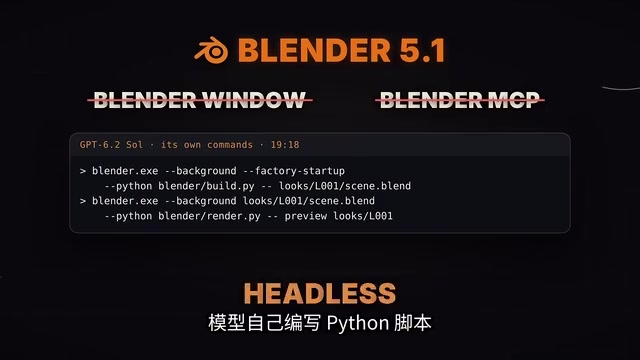
GPT-6.2 Dual-Model Hands-On Test: Astra Burns $419, Sol Just $5
OpenAI GPT-6.2 Astra vs Sol tested on Blender clock, neon shooter, and Formula racing. Astra costs $419, Sol $197, cheapest clock under $5. Cost comparison and selection advice.

After GPT-6 Ultra's Launch: A Complete Guide to Plus/Pro Subscriptions
How to subscribe to GPT membership after GPT-6 Ultra's launch? This article covers the complete Bilibili tutorial: registering a Google account from scratch, Alipay top-up walkthrough, and a comparison of Go, Plus, and Pro plans.

Real-World Test: Subscribing to ChatGPT Plus/Pro 5x/10x in China — Self-Service Channels and Account Maintenance Guide
A Bilibili creator tests self-service top-up channels for ChatGPT Plus and Pro 5x/10x in China, covering Session acquisition, plan selection, credit card and mobile in-app purchase pitfalls, plus account maintenance tips like fixed devices and networks to reduce ban risk.