Gemini 4 Neon vs Claude Pro: The Cost Game and How to Choose
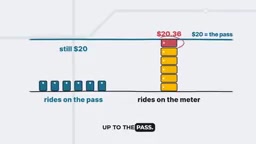
Gemini 4 Neon's 11x cheaper claim is an API pay-as-you-go comparison; the real break-even is about six builds a month, so the choice hinges on usage frequency and risk appetite.
The article examines whether Google's new Gemini 4 Neon is worth switching to for Claude users. The '11x cheaper' claim compares Neon with another model at API list prices and ignores Claude Pro's $20 monthly plan; six builds cost about $20.36, making roughly six builds per month the break-even point. Neon leads Opus by two points on an external intelligence index, but Google's own benchmarks show Opus ahead on two coding tests, and the toolchain (e.g., AntiGravity) can significantly amplify Neon's performance. Hidden costs include reasoning tokens billed as output that surge at high reasoning levels, and code review possibly lowering the break-even to four and a half builds. Google AI Pro subscribers can use Neon within AntiGravity, but quotas are opaque with overspend risk. The final choice depends on monthly build frequency and risk preference.
Google's newly launched coding model Gemini 4 Neon has stirred up the developer community, and many Claude users are starting to wonder whether they should switch camps. Supporters point to the "11x cheaper" price comparison and its impressive results beating Claude Opus on external indices. But before you hit cancel on your subscription, it's worth doing the math—because the way "cheaper" is calculated may not be quite what you think.
Where does the 11x cheaper claim come from?
The "11x cheaper" comparison is actually between Neon and another model, Fable 5.2, and both are calculated at API list prices. According to analysis in a YouTube video, building the same six apps produced a bill of $226 for Fable and $20.36 for Neon. $223 versus $20.36—the gap looks huge.
But that comparison doesn't include your $20 monthly subscription. Claude Pro's subscription model is like a transit pass: no matter how many rides you take, the price is fixed. Neon's per-token billing is like a taxi meter (Google's price list shows $3 per million input tokens and $15 per million output tokens, with no free tier for Neon). Only when your "number of rides" is high enough does the taxi end up costing more than the pass.
According to the same test, the total cost of six single-prompt app builds was $20.36. In other words, roughly every six builds, Neon's taxi meter overtakes your $20 monthly pass. Spread across 30 days, that's about one build every five days. If you use Claude Pro and complete two builds a week, then by the end of the third week the taxi meter has already surpassed the monthly pass.
The essential difference between API list prices and subscriptions: API token-based billing is "pay for what you use," with unit prices publicly listed by the model provider, but the actual bill depends on variables such as input/output length and reasoning process. A subscription is a fixed monthly fee in exchange for a certain quota or unlimited use (usually subject to fair-use limits). The two cannot be directly compared on unit price, because subscribers may use far less than their quota, while API users may incur high costs due to long context or high reasoning levels. Understanding this is the key to avoiding being misled by "X times cheaper per million tokens" marketing.
Capability: Leading on indices, lagging on tests
Beyond price, capability is another decision dimension. According to the intelligence index from external benchmarking firm Artificial Analysis, at each side's highest settings, Neon scores two points higher than Opus and is billed as "the world's strongest applied model." But according to Google's own published benchmark table, Opus leads on at least two coding tests: Terminalbench and Frontier Code. Leading on one index and lagging on two tests—which is stronger depends on what tasks you give it.
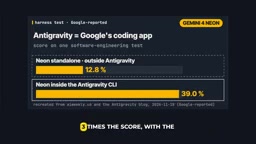
The influence of the toolchain should not be underestimated either. Google's own coding app AntiGravity can significantly amplify Neon's capabilities: when run standalone, the model scored 12.8% on a certain software engineering test; inside the AntiGravity command-line version, the same model scored 39—three times as much. This means you can't discuss Neon's strengths and weaknesses without considering the software environment it runs in.
Artificial Analysis Intelligence Index: This is a composite score published by a third-party benchmarking firm that evaluates model capability by aggregating multiple standardized tests (such as reasoning, coding, and math). The index attempts to provide cross-model comparison, but the weighting of different tests and task types affects the ranking. The article notes that Neon leads Opus by two points on the index, but Google's own benchmark table shows Opus leading on Terminalbench and Frontier Code, which shows that a single index cannot fully reflect a model's strengths and weaknesses on specific tasks. Developers should interpret these scores in light of their own actual workloads (such as terminal operations and code generation).
Hidden costs: reasoning tokens and review overhead
There's another easily overlooked detail in Neon's pricing: the reasoning process is also billed as output tokens. When you see "$15 per million output tokens" on the price list, it says right next to it that "reasoning is included." Neon has four reasoning levels (from low to ultra), and although you won't read most of the reasoning content, it is indeed consuming your budget.
According to observations from external indices, at high reasoning levels Neon's output volume is nearly twice that of the median model; at the ultra level, it's more than four times. This isn't a higher unit price—it's a large increase in token count at the same unit price. In other words, reasoning is like taxi waiting time: the car is stopped while the driver plans the route, but the meter keeps ticking.

Moreover, no matter which model writes your code, you still need to run code review. If review is estimated to add 30% to the cost of each build round (the video author stresses this is illustrative, not measured), then the break-even point drops from about six builds per month to four and a half.
Reasoning tokens: These are the tokens consumed by the model's internal reasoning steps before it generates the final answer. These tokens are usually not shown directly to users, but they count as output tokens and are billed. Different models handle the reasoning process differently: some allow users to set a reasoning level (such as low, medium, high, ultra); the higher the level, the more tokens the model spends on reasoning, which may improve answer quality but correspondingly increases cost. The article points out that at high reasoning levels Neon's output volume can be more than twice that of the median model, meaning that even at the same unit price, the actual bill will rise significantly due to the expansion in token count.
An unexpected advantage for existing subscribers
One fact that could change the conclusion: you may not need to pay per token. Google says Neon is rolling out to AntiGravity within the Google AI Pro and Ultra paid plans, covering the desktop app, command line, and editor extension. Google AI Pro is also $20 per month, the same price as Claude Pro. So the comparison becomes pass versus pass, with no meter within the quota.
But the pass has its limits. Under the Pro plan, AntiGravity's quota refreshes every 5 hours until a weekly cap is reached. For Neon, Google has not published specific figures. Public reports for the previous-generation model Argon showed that after barely any use, the weekly quota dropped to 0%. This is a reminder: invisible limits can derail your entire week's plans.
After exceeding the quota, AntiGravity can continue working by consuming AI credits. There's a setting that determines whether overspending is allowed: set "overspend" to "never" to protect your monthly fee cap. Google's official advice for conserving quota is: let Neon plan the work and have its cheaper sibling model Hydrogen execute it.
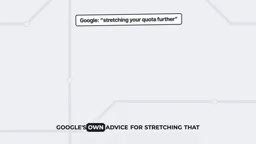
AntiGravity and the quota mechanism: AntiGravity is a coding app launched by Google that integrates a desktop client, command line, and editor extension. For Google AI Pro and Ultra subscribers, using Neon within AntiGravity is not billed per token, but is limited by a quota that refreshes every 5 hours and has a weekly cap. This quota mechanism is like a "pass plus rate limiting": the advantage is no extra bill, the disadvantage is that the limit is opaque (Google has not published specific figures), and the previous-generation model Argon once ran out of its weekly quota with almost no use. Users can avoid unexpected charges by setting "overspend" to "never," but should note that once the quota is exhausted, work may not be able to continue.
How to decide for yourself?
The final choice depends on your usage pattern. If you complete fewer than six builds per month (even fewer after accounting for review), Neon's pay-as-you-go cost may be lower than a monthly subscription. If you're already subscribed to Google AI Pro, you might first try Neon in AntiGravity and set overspend to "never." But if an agent writes code for you every day, keeping a fixed monthly plan may be safer—even Claude's $100 Max plan supports roughly 30 builds before pay-as-you-go catches up.
The first step the video author suggests is simple: count how many builds you completed last week and multiply by four. More than six? Keep your current plan. Fewer than six? On the premise of lowering the reasoning level, trial a month of pay-as-you-go first, then decide. Remember, six is just an average from one particular test, not your actual month.
Ultimately, this is a choice about risk preference: would you rather accept a weekly quota, or face a bill with no upper limit?
One-line Summary
Gemini 4 Neon's 11x cheaper claim is based on API pay-as-you-go comparison; the actual break-even point is about six builds per month, and the choice depends on usage frequency and risk preference.
Paragraph Summary
The article analyzes whether Google's new model Gemini 4 Neon is worth switching to for Claude users. The so-called "11x cheaper" is a comparison between Neon and another model at API list prices, not accounting for Claude Pro's $20 monthly subscription; in an actual test, six builds cost about $20.36, meaning about six builds per month is the break-even point. On capability, Neon leads Opus by two points on the external intelligence index, but Google's own benchmarks show Opus leading on two coding tests, and the toolchain (such as AntiGravity) can significantly amplify Neon's performance. Hidden costs include reasoning tokens billed as output causing token volume to surge at high reasoning levels, and code review potentially lowering the break-even point to four and a half builds. Google AI Pro subscribers can use Neon within AntiGravity, but the quota is opaque and there is a risk of overspending. The final choice depends on the number of builds per month and risk preference.
Related articles

Ternary Bonsai 2.5 27B: 27B Coding Power Packed into 5.9GB, Code Stays Local
Ternary Bonsai 2.5 27B uses ternary quantization to compress 27B parameters into 5.9GB, enabling local coding with code staying on-device. We analyze its approach, vendor benchmarks, and multi-turn progress.

Self-Host Google Photos with Open-Source Immich: Privacy and AI Combined
Learn how to self-host a Google Photos alternative with open-source Immich: automatic backup, local AI search, and remote access—private and smart.

Astrophysicist Pokes Fun at Supermoons: The Difference Between a 16-Inch and a 15-Inch Pizza
Astrophysicist Neil deGrasse Tyson criticizes the terms supermoon and micromoon, using a 16-inch vs. 15-inch pizza analogy to show the visual difference is negligible, and calls out exaggerated labels in science communication.