Gemini 4 Trio Hands-On: Which Is Stronger — Hydrogen, Neon, or Carbon?

Bilibili creator tests Gemini 4 trio: Hydrogen fastest, Carbon most detailed, Neon in between.
Bilibili creator ZP Studio tested Gemini 4 family models Hydrogen, Neon, and Carbon with five chemistry-themed tasks. Results show a clear gradient in speed and detail: Hydrogen averages about 11 minutes with cartoonish, standard output; Neon about 20 minutes with improved texture and interaction; Carbon about 31 minutes with the richest modeling precision, web details, and article substance, though with issues like clipping. Across the 3D workbench, Chernobyl timeline, element website, Roguelike game, and popular-science article tasks, Carbon led in detail overall, with Neon and Hydrogen decreasing in turn. Total consumption was 13 weekly credits, which the creator considered low. Conclusion: Hydrogen suits fast batch work, Carbon suits quality pursuit, and Neon balances both.
Google's Gemini 4 family has added a new member, Neon, joining the earlier Hydrogen and Carbon to form a "chemical element trio." Bilibili creator ZP Studio ran a hands-on test of these three models using five chemistry-themed tasks to examine their capability differences. The conclusion is clear: the three models form a distinct gradient in speed, detail, and positioning—Hydrogen focuses on fast responses, Neon sits in the middle, and Carbon pursues extreme detail.
Model Positioning and Task Design
According to the creator, Gemini 4's names all come from chemical elements, and Neon is officially described as "possessing higher intelligence, but with speed between Carbon and Hydrogen." This hints at Google's differentiated positioning: Hydrogen is the fastest, Carbon the most capable, and Neon the balanced option.
The hands-on test designed five chemistry-related tasks: building a 3D chemistry workbench, recreating the Chernobyl nuclear plant accident timeline, designing a chemistry element-themed website, developing an element-themed Roguelike game, and writing a chemistry popular-science WeChat article. All tasks used the same set of prompts to compare the three models' outputs.
Roguelike is a game genre characterized by randomly generated maps, permadeath, and run-based progression. The name comes from the 1980 game Rogue; each time the player enters, the dungeon layout, enemies, and items change randomly. After death, you start from scratch, but repeated play builds understanding of the mechanics. The genre emphasizes high replay value and strategic adaptation, and has seen a revival in recent years with titles like The Binding of Isaac and Hades. The test task in the article asks the model to generate a directly runnable Roguelike game, which in effect examines the model's code implementation ability for the game framework of "randomness + state management + combat loop," not just interface design.
Test 1: 3D Chemistry Workbench—A Contest of Detail and Interaction
The first task required generating an interactive 3D chemistry lab bench. Hydrogen's output showed metal branches growing, deep blue crystals, volcanic hot springs, and other effects, but the creator judged the presentation as "rather cartoonish." Neon's version went further in texture, with more obvious metallic luster, and added a "supernova flash explosion" with support for 0.25x slow motion, offering richer interaction options.
Carbon's version was clearly more "like" a real lab bench: it provided operable tools such as droppers and glass rods, supported ignition and heating, and the foam spray effect was closer to a real experiment.
In terms of completeness and texture, Carbon won with more detailed modeling and longer generation time. The creator said outright that "Carbon really does make it more detailed," which matches its slower generation speed.
Test 2: Chernobyl Timeline—Modeling Precision and Information Density
The second task required recreating the 3D scene of the Chernobyl nuclear plant before and after the accident, displayed along a timeline. Hydrogen's output could present key elements such as core meltdown and the dome, but the external structure design was somewhat rough; the creator guessed "maybe it's so you can see the inside at a glance."
Neon's version was highly similar to Hydrogen's, but with noticeably improved modeling precision, finer frameworks, and better material texture. Carbon's version was packed with information, with more details, larger volume, more realistic elements such as chimneys and helicopters, and a more realistic explosion effect. However, the creator also pointed out that Carbon's version had "clipping" issues, with the core almost penetrating the outer shell.
Overall, Neon and Carbon both performed well on this task. Carbon led in richness of detail but sacrificed some completeness.
Clipping is a term in 3D modeling and game development referring to two 3D models unintentionally penetrating each other in space, such as a character's arm passing through a wall or an object embedded in the ground. Clipping is usually caused by improperly set collision bodies, incorrect vertex positions, or imprecise animation interpolation, and visually breaks the realism of the scene. In AI-generated 3D content, models lack explicit understanding of physical spatial relationships and are prone to clipping in stacked or nested structures (such as a reactor core and outer shell). The article mentions that Carbon's core "almost penetrated the outer shell," which is exactly this kind of imprecise handling of spatial relationships.
Test 3: Chemistry Element Website—Divergence in Front-End Design
The third task required designing a front-end website themed around chemical elements. Hydrogen did not make a collection navigation site; instead, it directly presented the periodic table and spectrum visualization, supported clicking to view element data, and could simulate the liquid-to-solid change of sodium and chlorine combining into sodium chloride.
Neon and Carbon both made collection navigation sites, but their design approaches converged. Neon's website included modules such as spectra, quantum orbital probability clouds, and a molecular collision forge, with decent interactivity. Carbon's website, named "Volatile Substances," added modules such as smells and chemical-physical eggs, with richer web design details. The overall approach was similar to Neon's but more complete.
The creator commented: "Carbon may be a bit more web-design oriented, and still has more detail."
Test 4: Roguelike Game—Similar Gameplay, Divergent Detail
The fourth task required developing a directly openable chemistry element-themed Roguelike game. The three models' solutions were highly similar: the player chooses an initial experiment protocol (such as "Open-Air Time Protocol"), fires beam attacks at enemies, and triggers elemental reactions such as poison and superconductivity.
Hydrogen's version was named "Bond Rack Dry Pot" and lacked beginner guidance, so the creator had to figure it out alone. Neon's version was called "Elemental Reaction," with almost identical gameplay, health display, and attack feedback. Carbon's version added a map and auto-shooting, and even included boss fights, but the creator felt that "there are many complicated things right from the start," with insufficient beginner guidance.
The three models did not differ much in game design. Carbon had a slight advantage in system complexity, but the overall experience still felt rough.
Test 5: WeChat Article—Differences in Writing and Layout
The final task was to write a chemistry popular-science WeChat article. Hydrogen's output layout was close to the WeChat style, with fairly standard language. Neon placed the header image at the top and used many metaphors, giving it a livelier style. Carbon's article was titled "Why boiled pork is never as fragrant as roast pork? In the second it crosses 140 degrees, thousands of aroma molecules awaken at once," with rich image details, more substantive content, and even a simulated comment section.
The creator concluded: "Carbon really does more in terms of detail."
Speed and Consumption: A Clear Performance Gradient
The creator measured the average time for the three models to complete the five tasks: Hydrogen about 11 minutes, Neon about 20 minutes, and Carbon about 31 minutes, forming a clear gradient. Total consumption was 13 weekly credits (using an Ultra account), which the creator considered "quite low."
This data matches the model positioning: Hydrogen is suitable for fast batch processing, such as generating WeChat articles; Carbon is suitable for tasks that pursue detail; Neon sits in the middle.
Conclusion: How to Choose Among the Trio
The three models showed clear positioning differences in the hands-on test. Hydrogen is the fastest and suitable for batch tasks with low detail requirements; Neon balances speed and detail; Carbon is the richest in detail but takes the longest. The creator also raised a question: whether Gemini 4 will launch new element models later is worth watching.
For developers, if a task requires rapid iteration, Hydrogen is the first choice; if pursuing output quality, Carbon is more suitable; Neon fits scenarios that need both speed and quality. The three models are not simply substitutes but cover different levels of demand.
Related articles

WorkBuddy Zero-Basics Office Automation Hands-On Tutorial
WorkBuddy hands-on tutorial: learn how this domestic Codex alternative adapts to common office software, with 28 knowledge points and SQL materials to automate your office work.
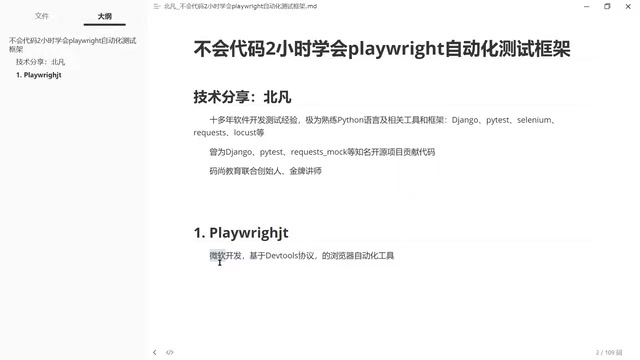
Zero to Hero in 3 Hours: AI Automation Testing with Playwright and DeepSeek
Based on a popular Bilibili video, this article explains Playwright's core advantages: Microsoft-built, DevTools Protocol-based, driver-free, and natively async. It compares Playwright with Selenium and introduces a zero-background path to agent testing via MCP and LLMs.
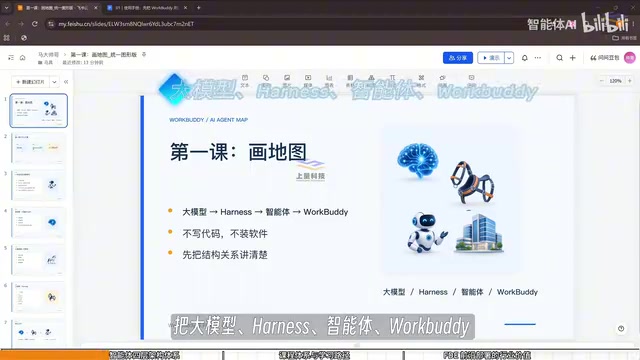
WorkBody Tutorial: From AI Chat to Agent in Practice
WorkBody tutorial explained: from LLMs and the Harness to agent platforms, clarifying the four-layer AI agent structure, with hands-on guidance on using WorkBody for complex tasks, building automated workflows, and understanding the value of Forward Deployed Engineers (FDE).