Gemini Meets Google Docs: Billing Disputes, Missing Features, and a Trust Crisis
Gemini Meets Google Docs: Billing Disp…
Gemini in Google Docs frustrates paying users with missing edit features and contradictory billing messages.
A paid Google Workspace Standard user sparked widespread discussion after receiving a "free trial through July" email for Gemini in Docs — a feature supposedly already included in their plan. Worse, Gemini couldn't directly edit documents at all. The incident highlights two core issues with Google's AI strategy: incomplete product integration and a serious lack of pricing transparency.
A Confusing Email
A paid Google Workspace user recently shared their experience on Reddit, striking a chord with many others in similar situations. The user recounted receiving an email from Google roughly one to two months ago, which "generously" offered free access to Gemini in Google Docs through July.
The catch? This user was already subscribed to Google Workspace Standard — a plan that, according to Google's official documentation, should already include Gemini features. The contradiction was immediate: if they were already paying for a plan that includes Gemini, why were they receiving a "free trial through July" email? Is Google planning to charge extra for Gemini in Docs after that date?
This blurry boundary around subscription benefits is one of the core frustrations driving dissatisfaction among both enterprise and individual users of Google's AI strategy.
Background: The Google Workspace Plan Structure
Google Workspace (formerly G Suite) is Google's cloud-based productivity suite for businesses and individuals, covering Gmail, Docs, Drive, Meet, and more. Its tiered plans — Business Starter, Business Standard, Business Plus, and Enterprise — range from $6 to several dozen dollars per user per month. Beginning in 2023, Google started integrating Gemini AI capabilities into Workspace plans in phases, using this as justification for price increases on certain tiers (e.g., Business Standard rose from $12 to $14). This pricing move has been widely seen as a textbook example of an "AI premium" strategy. However, Google's official documentation has never clearly spelled out which Gemini features come standard with a given plan versus which require an additional Gemini Business/Enterprise add-on — sowing widespread confusion among users.
How Gemini Actually Performs in Google Docs
Beyond the billing dispute, what disappointed the user even more was Gemini's real-world performance inside Google Docs. They stated plainly that when they actually tried to use it, they found it "can't even add or change anything in the document."
What Should a Basic AI Document Assistant Be Able to Do?
For an AI assistant embedded in a document editor, users reasonably expect the following baseline capabilities:
- Generate or continue text based on instructions
- Edit and refine existing paragraphs
- Adjust formatting and document structure
- Summarize or extract key points
If an AI feature can't even perform the most fundamental operation — writing directly into a document — its practical value is severely diminished. The user's complaint, "What's even the point of this?" isn't an overreaction; it's genuine feedback about a glaring product gap.
It's worth noting that Gemini's capabilities vary significantly across contexts. The standalone Gemini web app or mobile app performs reasonably well at text generation, but the version deeply integrated into the Workspace suite is often constrained by permission management, limited context access, and incomplete editing interfaces — resulting in the awkward situation where it can chat but can't act.
Technical Deep Dive: The Difference Between Deep and Shallow AI Integration
AI assistant integration with productivity software falls into two technical categories: "shallow integration" and "deep integration." Shallow integration typically presents the AI as a sidebar or dialog box — the AI can read limited context and output text, but the user has to manually copy and paste it. It's essentially an independent AI app embedded in an editor's interface. Deep integration requires the AI to have direct read/write access to the document (Document API access), the ability to understand cursor position and text selection, and the capability to modify document content directly through native editing interfaces. Microsoft Copilot in Word is closer to deep integration — it can directly insert, replace, and format content within a document. Early versions of Gemini in Google Docs, however, primarily operated through a sidebar, with limited direct editing capabilities. This is the technical root cause of the user's "can chat, can't edit" experience. The gap isn't about model capability — it reflects the level of product engineering investment and API openness.
The User Trust Crisis Sparked by Pricing Strategy
Behind this individual case lies a broader problem in Google's AI monetization approach: a serious lack of transparency around entitlements.
The Conflicting Messages: "Already Included" vs. "Free for a Limited Time"
Google Workspace has undergone multiple rounds of plan restructuring in recent years. Google has announced that Gemini features would be folded into certain Workspace tiers, with corresponding price adjustments. But the actual rollout has often been unclear — leaving users struggling to determine:
- Which AI features are actually included in their current plan
- Whether a "free trial" email is a marketing tactic or a genuine notice of an upcoming entitlement change
- Whether they'll be charged automatically once a trial period ends
When a company simultaneously tells users "Gemini is included in your plan" and sends an email saying "enjoy free access through July," the contradictory messaging inevitably erodes user trust.
The Hidden Barrier for Paying Users
For users already paying for Workspace Standard, nothing is more frustrating than discovering they've "paid and still need to pay more," or "paid but can't access full features." This kind of experience directly undermines users' willingness to pay for the broader AI subscription ecosystem — accelerating churn.
Industry Context: The Pricing Transparency Problem in the AI Subscription Market
Between 2023 and 2024, major tech companies faced widespread criticism for confusing, layered AI subscription pricing. Microsoft introduced Copilot as a $30 per user per month add-on on top of Microsoft 365, then later folded some Copilot features back into base plans — leaving enterprise IT procurement managers thoroughly confused. SaaS companies like Salesforce, Adobe, and Notion experienced similar growing pains when rolling out AI features and repricing. Gartner's 2024 report identified "lack of transparency in AI feature pricing" as one of the top three concerns in enterprise software procurement. For users, the most damaging trust crises rarely stem from price increases themselves — they come from the information asymmetry of not knowing what you're paying for. That's exactly the deeper frustration triggered by Google's confusing email.
Implications for Google's AI Product Strategy
As a heavyweight in the AI space, Google's underlying model capabilities are competitive — but the company shows clear weaknesses in product execution and user communication.
Strong Underlying Models ≠ Good Product Experience
Having a powerful foundation model doesn't automatically translate into a great product. Genuinely embedding AI capabilities into users' daily workflows requires ongoing refinement in interaction design, permission management, and feature completeness. A "document AI that can't edit documents" is a failed product integration, regardless of how advanced the underlying model may be. Gemini Ultra consistently performs well on benchmarks, but the gap between benchmark scores and real-world workflow experience is precisely the hardest challenge in AI productization.
Pricing Transparency Is the Foundation of AI Monetization
As more vendors roll out AI subscription services, users are growing increasingly sensitive to pricing. Google, Microsoft Copilot, and other AI tools all face the same challenge: clearly communicating to users what they're paying for and what they're getting. Vague marketing emails and fuzzy plan boundaries only accelerate churn and cause lasting damage to brand reputation.
Conclusion
This Reddit user's complaint may seem like an isolated incident, but it represents the shared confusion of a significant portion of paying Workspace users. Gemini's integration into Google Docs has exposed two core issues: incomplete functionality and opaque pricing.
For Google to genuinely win in the AI productivity space, stacking up model capabilities alone is not enough. Building solid features, communicating entitlements clearly, and delivering a smooth user experience are the real foundations for retaining paying users. Until then, the question of "should Gemini in Google Docs cost extra?" will continue to frustrate many.
Key Takeaways
Related articles
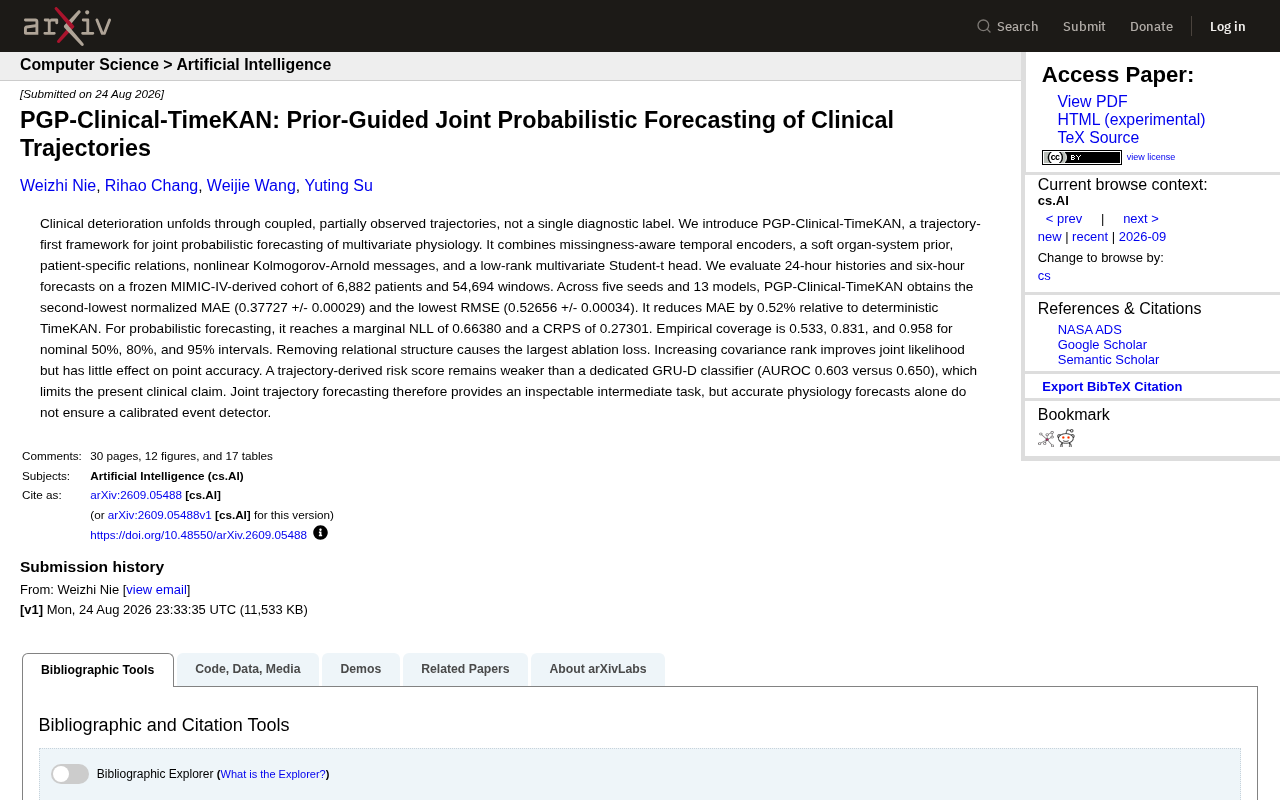
PGP-Clinical-TimeKAN: A Detailed Guide to the Multivariate Physiological Indicator Joint Prediction Framework
An in-depth analysis of the PGP-Clinical-TimeKAN framework for joint probabilistic prediction of multivariate physiological indicators, covering trajectory-first paradigm, KAN message passing, MIMIC-IV validation, and ablation studies.
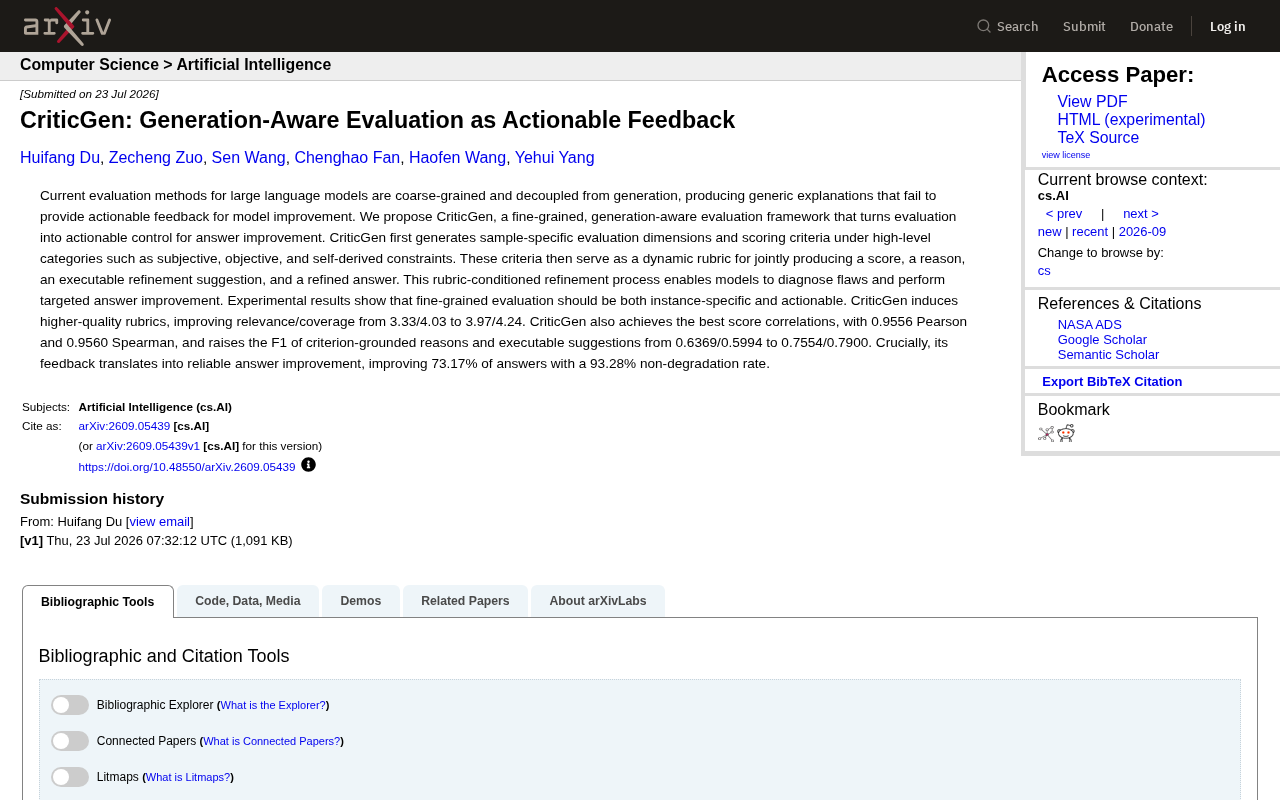
CriticGen: A New Framework That Transforms AI Evaluation into Actionable Improvement Feedback
CriticGen proposes a generation-aware evaluation framework that transforms AI assessment from passive scoring to an active optimization loop, achieving 73.17% answer improvement and 93.28% non-degradation rate.
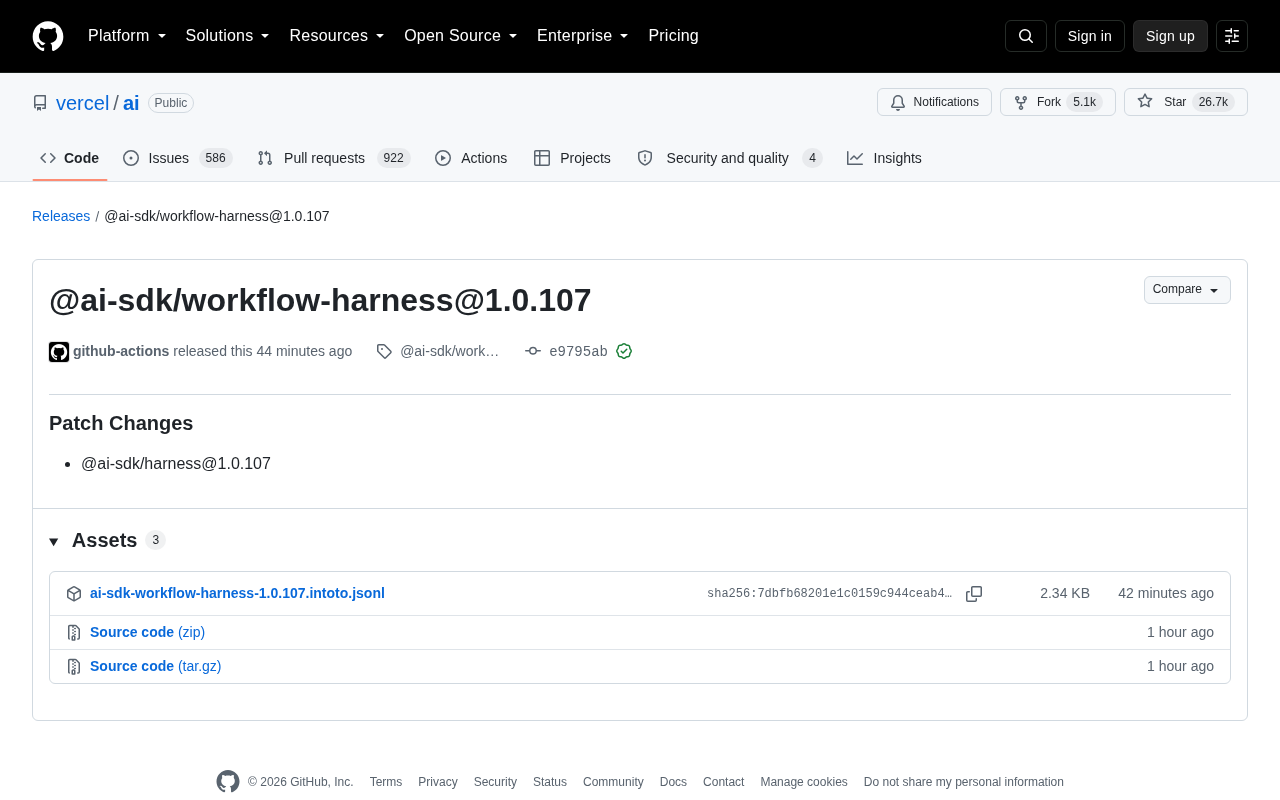
Vercel AI SDK workflow-harness Update Analysis
Deep analysis of Vercel AI SDK workflow-harness 1.0.107 update: architecture design, engineering practices, and developer value for building reliable AI apps.