Gemini Skills Officially Launch: Three Creation Methods and Chained Invocation in Practice

Gemini launches Skills, turning prompt engineering into reusable, migratable workflow assets.
Gemini completes its Skills feature, covering both Chat and Spark entry points. Skills are defined as workflow recipe cards for repeatable task execution, supporting three methods: conversation-guided creation, manual filling, and uploading skill.md. A skill.md consists of instructions plus optional reference materials (like a CSV pricing table), and can migrate bidirectionally between Gemini, ChatGPT, and Claude. Multiple skills can be invoked simultaneously, enabling combined outputs like proposal writing with personal tone imitation. The creator most recommends packaging repeatedly refined processes from past conversations into a skill with one sentence, and reminds users to verify source trustworthiness before using others' skills.
Gemini has finally filled in the Skills piece of the puzzle. For people who use AI heavily, this may be the most worthwhile feature update to study recently—it turns scattered prompt engineering into reusable, composable workflow assets.
What Skills Actually Are: A "Recipe Card" for AI
According to the video creator's definition, a skill is a mechanism that teaches AI to execute a specific task or set of steps in a repeatable way. He likes to think of it as a workflow recipe card: some skills are just a set of instructions, while others come with reference materials, tools, or the assets needed to execute the task.
Skills currently cover two entry points: Gemini Chat and Gemini Spark. The latter is Gemini's more agentic platform, positioned similarly to ChatGPT Work or Claude's collaboration products, capable of proactively going out and getting things done for you. In Spark, skills sit directly on the side panel.

Three Creation Methods, Choose by Scenario
In the Chat settings page, you'll see three creation paths: Create with Gemini opens a conversation and guides you through skill creation in an interview format; manual creation requires filling in the name, description, and instructions yourself, which is time-consuming from scratch; upload supports files or folders, ideal for migrating skills from other platforms or directly using skill files found online. There's also a batch of recommended skills at the bottom of the settings page to help you get started.
The creator's own habit is to bypass the settings page and directly start a new conversation to send a prompt. He demonstrates with a meeting recap: copy the prompt from the guide, paste and send, and the skill is instantly generated and saved, with the interface showing its structure and contents. Later, in a new conversation, type a slash to bring up the skill list, select meeting recap, and drop in the meeting notes—no need to enter any prompt or additional context. The output automatically includes decisions, action items with names and deadlines, and open questions at the end, fully matching the preset requirements.
There's also a practical detail in Gemini: clicking the three dots lets you send the result to Gmail as a draft, and you can quickly add recipients and send it out.
Slash Command is a common invocation entry point in chat-based AI products: typing / at the beginning of the input box pops up a list of callable commands or skills, so users don't need to memorize full prompts—just select from the list to trigger a preset flow. Its value lies in compressing long prompts into a single selection action, reducing the friction of repeated input, and giving skills a "discoverability" similar to software shortcuts. Once Gemini attaches skills to the slash list, the same workflow can be reliably reproduced in new conversations without pasting large blocks of instructions each time.
What a Skill File Looks Like, and Cross-Platform Migration
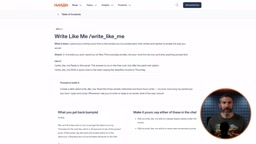
The creator demonstrates the upload path with the "Write Like Me" skill. To make AI write like you, you need good writing samples—you can directly ask Gemini to search your sent mailbox for three emails that represent your tone. This skill records your opening lines, tone structure (direct, polite, pragmatic), sentence length, and closing style. After generation, invoke the skill in a new conversation, paste an email, and add a line like "Decline this one, lots of shoots in December"—the output genuinely sounds like the creator's own style: brief but polite.
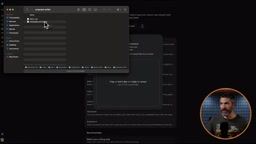
Broken down, each skill is based on a skill.md file—Markdown is just a formatted text file, typically containing the name, overview, instruction set, and sometimes the context needed for the task. The proposal-writing skill the creator uploaded also comes with a CSV file containing pricing, ensuring quotes come from real data rather than Gemini's guesses. Different skills can reference different files: PDFs, style guides, images, and multiple ones at that.
After uploading, the system automatically fills in the title, description, and instructions—just click create. Each skill in the guide comes with a skill.md file, and uploading directly is faster than manually editing prompts, unless you need customization.
More importantly, it's bidirectionally compatible: skills can be downloaded and shared directly, and used in ChatGPT or Claude; conversely, skills downloaded from Claude or ChatGPT can also be uploaded into Gemini. For heavy cross-platform users, this is a real reduction in migration cost.
Markdown is a lightweight markup language that uses # for headings, - for lists, and ** for bold, ultimately rendered as formatted documents. Its plain-text nature makes it ideal as a skill carrier: humans can read and edit it directly, and models can parse the name, overview, and instructions as-is. skill.md leverages this characteristic to write skill definitions as clearly structured, cross-platform text files, so the same file uploaded across Gemini, ChatGPT, and Claude retains its semantics without loss from format conversion.
Chained Invocation: Multiple Skills Working at Once
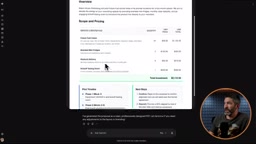
The creator then demonstrates combined usage: invoke the "proposal writing" skill, also invoke "Write Like Me", and add a short instruction. The result: all prices in the proposal come from the CSV table, totaling 2,112, and the email draft below starts with "Hey Jordan" and ends with "Thanks Kevin", carrying through the tone characteristics from the samples he provided. You can further request the proposal be exported as a PDF.
Agentic refers to AI no longer merely passively answering single-turn questions, but being able to autonomously plan steps, invoke tools, and continuously execute tasks to accomplish goals. Gemini Spark is positioned exactly in this form—it can proactively "go out and do things" within the user's authorization scope, such as retrieving materials, organizing information, or operating across applications. Skills in this environment are equivalent to pluggable capability modules: the agent handles orchestration and decision-making, while skills provide specific, reusable execution steps. Only by combining the two can automated flows be both flexible and stable.
The Most Underrated Usage: Packaging Historical Conversations into Skills
The creator's most-used creation method isn't actually in the settings page. He iterates through repeated back-and-forth with Gemini, gradually refining the output—AI's first reply is rarely perfect, and iteration is the norm. Once he confirms a process or workflow will be reused in the future, he says "package everything we just did into a skill", and Gemini encapsulates the entire flow, so the next one-click invocation hits the target output on the first try.
Even more convenient, this operation can be retroactive: open an old conversation you previously refined back and forth, and directly ask to package it into a skill—no need to start from scratch.
Prompt Engineering refers to guiding models to produce more expected results by designing the structure, context, and examples of instructions. The traditional approach relies on individual trial and error, with experience hard to accumulate and transfer; the skill mechanism instead solidifies successfully debugged prompts along with reference materials into files, making a single tuning result reusable, shareable, and cross-platform migratable. This marks prompt engineering shifting from personal feel to versionable, circulatable engineering assets, with migration costs dropping significantly.
Getting Started Tips
The creator offers two immediate actions: copy a prompt from the guide to create a skill; dig up a conversation where you repeatedly refined until you got a satisfactory result, and ask Gemini to package it into a skill. Many people already have such a conversation lying around—they just haven't realized it can be solidified to save a lot of repetitive work.
A reminder: before using skills shared by others, be sure to confirm the source is trustworthy—skills are essentially executable instruction sets, and skills of unknown origin carry risks.
The value of the skill mechanism isn't in efficiency gains for a single task, but in turning "one-time tuning" into "reusable assets", and allowing different skills to be assembled like building blocks. When skills can freely migrate between Gemini, ChatGPT, and Claude, prompt engineering is transforming from personal feel into a circulatable engineering product.
Related articles

Free Unlimited Claude Code Solution: Agnes AI + CC Switch Setup Guide
No paid subscription needed — pair the free AI platform Agnes AI with the open-source tool CC Switch to provide a backend for Claude Code, enabling unlimited free calls to text, image, and video models. This guide covers the full setup, test results, and usage boundaries.

A Complete Zero-Cost Guide to Getting Started with Claude Code for Beginners in China
A beginner's guide to Claude Code for users in China: two installation methods (command line and IDE plugin), full configuration steps for replacing the official API with the free domestic LongCat model, and a hands-on demo of building a small tool with natural language, plus tips.

When the NSA Gets Involved: The AI Supply Chain Crisis Behind Open-Source CVEs and API Key Hijacking
Multiple open-source projects disclosed severe CVEs in one day, PHP flaws alarmed the FBI, and Railway and OpenCode were breached with API keys stolen. This article breaks down the vulnerability window, AI-accelerated exploitation, and the AI supply chain crisis behind the API key black market, with a developer defense checklist.