Genie One MCP: Bringing Governed Enterprise Business Context to AI Assistants

Genie One MCP adds enterprise governance and access control to AI assistants like ChatGPT and Claude via MCP.
Genie One MCP is an enterprise governance gateway built on the Model Context Protocol (MCP), designed to prevent AI assistants from hallucinating or bypassing access controls in corporate environments. It non-invasively connects ChatGPT, Claude, and Microsoft Copilot to approved business definitions, trusted data relationships, and fine-grained permissions — no tool migration required. As MCP becomes the connectivity standard for LLM ecosystems, governance-first middleware like this is emerging as critical infrastructure for scaling AI safely in the enterprise.
What Is Genie One MCP
Genie One MCP is a new approach to injecting governed enterprise business context into the AI tools your teams already use. It addresses a clear and pressing challenge: AI assistants and coding agents inside organizations are powerful, but they often lack accurate knowledge of internal data definitions, data relationships, and permission structures — making them prone to hallucinations or unauthorized data access.
MCP (Model Context Protocol) has recently emerged as a universal standard for connecting large language models to external data and tools. Genie One MCP is built on this protocol, enabling MCP-compatible clients to securely tap into an organization's existing knowledge and data infrastructure — without requiring separate integrations for every AI tool.
MCP (Model Context Protocol) was introduced and open-sourced by Anthropic in late 2024, and was quickly adopted by major LLM vendors including OpenAI and Google, effectively becoming an industry standard. Its core design defines a unified "host–client–server" communication specification: AI applications (clients) request context information or tool calls from an MCP server through a standardized interface, while the server handles interactions with the actual data sources or business systems and returns results. This decoupled architecture means any compliant data provider can be called by any MCP-compatible AI client, eliminating the need to write custom integration code for every "model × data source" combination. Genie One MCP operates as an MCP server, acting as a standardized bridge between the enterprise data governance layer and multiple AI assistants.
Which Tools Does It Connect
According to official documentation, Genie One MCP connects MCP-compatible clients — including ChatGPT, Claude, and Microsoft Copilot — to the Genie One platform. This means teams don't need to switch away from their preferred AI assistants; instead, those tools can answer questions and generate code based on "approved definitions, trusted data relationships, and permission-aware access controls" from within the enterprise.
The value of this design lies in its non-invasive nature: organizations don't need to force employees onto a specific AI platform. Instead, the governance layer is pushed down to the protocol level. Regardless of which assistant a team prefers, consistency and security of business context are guaranteed.
Three Key Capabilities
- Approved definitions: Ensures AI uses officially sanctioned business terminology and metric definitions, preventing the same concept from being interpreted arbitrarily across different tools.
- Trusted data relationships: Enables AI to understand the real associations between data entities, reducing faulty inferences.
- Permission-aware access: AI can only access data that the user themselves is authorized to view — existing access controls cannot be bypassed simply by introducing AI.
Deployment and Governance Highlights
The latest official walkthrough covers three areas: how to complete the initial setup, how identity and access controls work, and best practices for managing and monitoring the service in production environments.
For enterprise IT and data governance teams, the latter two are especially critical. Identity and access controls determine the boundaries of what an AI assistant can reach when acting on behalf of a user. Continuous monitoring in production, meanwhile, is essential for detecting anomalous access in a timely manner, auditing the AI's data usage behavior, and maintaining a traceable compliance record.
In other words, Genie One MCP aims to solve not just "making AI smarter," but "making AI trustworthy within enterprise rules" — which is precisely the biggest concern most organizations face when rolling out AI at scale.
"Permission-aware access" is typically implemented through an Identity Federation mechanism: when the MCP server processes a data request from an AI assistant, it first verifies the identity of the actual human user behind the operation (rather than the AI tool's own service account), maps that identity to the organization's existing IAM (Identity and Access Management) policies, and then determines which data to return. The critical significance of this mechanism is that if an AI tool is simply granted a high-privilege service account, every employee using that tool could theoretically bypass existing permission boundaries through natural language queries. Scoping access control to the granularity of "who is asking what through AI" is a core security requirement when enterprises adopt AI assistants — and one of the central differentiating values of governance gateway products like this.
Why This Type of Solution Deserves Attention
As MCP gradually becomes the connectivity standard for the LLM ecosystem, governance-oriented middleware built around it is becoming an important piece of the enterprise AI puzzle. Raw model capability is no longer the only competitive dimension — enabling models to operate under compliance, security, and contextual accuracy constraints is the real barrier to enterprise-scale adoption.
Products like Genie One MCP essentially place a "governance gateway" between AI assistants and enterprise data: open enough to facilitate calls, yet retaining control over permissions, definitions, and auditing. For organizations evaluating how to safely adopt ChatGPT, Claude, or Copilot, this type of solution offers a compelling framework to consider.
Note: This article is based on publicly available product documentation. Actual feature performance, capabilities, and governance effectiveness should be validated against official walkthrough materials and each organization's specific environment.
The "governance gateway" product category is not entirely new to enterprise software — API gateways, data catalogs, and data virtualization layers have all played similar intermediary roles. What's different now is that AI-era queries have shifted from structured SQL or fixed API calls to open-ended natural language requests, which challenges traditional access control mechanisms that assume known query patterns. A governance gateway must understand request intent at the semantic level and map it to controlled data access paths — requiring both semantic comprehension and permission enforcement capabilities simultaneously. What Genie One MCP represents is an attempt to use an organization's existing data semantic layer (business terminology, metric definitions, entity relationships) as an "anchor" for AI, constraining the model's free-form behavior and making it operate within a defined business semantic framework — rather than relying on the model's own speculative interpretation of enterprise data.
Related articles

REA: Reverse Engineer Any App with AI, No Coding Required
REA is a viral open-source AI reverse-engineering tool that lets Claude, Codex, and other AI agents analyze any app and generate functional clones—no coding required. This article covers how it works, installation, a hands-on test, and legal risks.
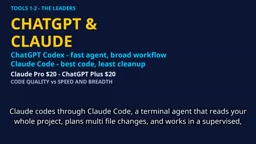
2026 AI Coding Tools Comparison: Claude, ChatGPT, Gemini — Which Is the Best?
A 2026 comparison of five mainstream AI coding tools — Claude Code, ChatGPT Codex, Gemini, DeepSeek, and GitHub Copilot — on real projects, pricing, and code quality, to help you decide where that $20/month should go.

ChatGPT Codex Can Clone Any Software? Testing the Risks and the Truth
YouTube shorts claim ChatGPT Codex or Claude Code can clone Adobe, Excel, and Figma for lifelong free use. We break down the feasibility, legal risks, and DM-funnel tactics—and explain what AI coding tools are truly good for.