Germany Launches Sovereign AI Model Kolibri: Europe's New Push for Data Autonomy

Germany's Kolibri aims to give Europe sovereign AI capabilities, reducing reliance on US and Chinese models.
Germany has unveiled a sovereign AI model called Kolibri, seeking technological autonomy in a global LLM race dominated by US and Chinese giants. The core case for "sovereign AI" spans data compliance (meeting strict regulations like GDPR), strategic independence, and local language and cultural fit. The project debuted on Hacker News Show HN and remains in early stages with limited discussion and unverified capabilities. Regional sovereign models face structural challenges including insufficient compute funding and difficulty keeping pace with frontier iterations, making a pragmatic focus on niche use cases — German-language processing, government deployment — more viable than competing directly with top-tier general-purpose models.
Germany Launches Sovereign AI Model Kolibri
Against a backdrop where the global large model race is dominated by a handful of giants from the US and China, Germany has introduced a sovereign AI model called Kolibri. The project made its debut in the Show HN section of Hacker News, sparking discussions centered on a concept that Europe is increasingly taking seriously — AI Sovereignty.
"Sovereign AI" refers to artificial intelligence systems where the training data, model weights, compute infrastructure, and the entire technology stack are controlled by the nation or region itself. The goal is to reduce dependence on foreign cloud providers and closed-source large models, while ensuring data compliance, privacy protection, and strategic autonomy. The name Kolibri comes from the German word for hummingbird, suggesting agility and lightness — hinting that the model may be positioned as an efficient, locally deployable system rather than a parameter-heavy behemoth.
Why Europe Needs Sovereign AI
Europe has long been playing catch-up in the generative AI space. US companies like OpenAI, Anthropic, and Google control the most advanced closed-source models, while the open-source camp is similarly dominated by US and Chinese players — Meta's Llama series, Alibaba's Qwen, DeepSeekAd, and others. For a region that places enormous value on data protection (GDPR), routing sensitive data through foreign APIs has always carried compliance and security risks.
The value of sovereign AI manifests across three dimensions: data compliance, as models can be deployed locally or within the EU to satisfy strict privacy regulations; strategic autonomy, avoiding dependence on geopolitically volatile foreign infrastructure for critical systems; and linguistic and cultural fit, since models optimized for German and European contexts tend to be far more suitable for local needs than English-centric general-purpose models. Kolibri was born out of precisely these demands.
GDPR (the General Data Protection Regulation) came into force across the EU in 2018 and is one of the world's strictest data privacy frameworks. It imposes rigorous conditions on the processing, storage, and cross-border transfer of personal data, with violations subject to fines of up to 4% of global annual revenue. For companies using cloud-based AI APIs, sending user data to servers outside the EU for inference or fine-tuning can trigger cross-border data transfer compliance risks — a legal grey area that European businesses routinely face when adopting US AI services like OpenAI or Google. Locally deployable sovereign AI models fundamentally sidestep this problem: data never leaves local or EU-based infrastructure, dramatically reducing compliance costs and risk. This is especially critical for highly regulated industries such as healthcare, finance, legal services, and government.
Early Community Reaction
With 27 upvotes and 9 comments on Hacker News, Kolibri is clearly a project in its infancy that hasn't yet generated widespread discussion. The Show HN section is typically where developers showcase their own work, suggesting Kolibri is likely a newly released open-source or semi-open-source project seeking community feedback.
The relatively muted response also reflects the typical situation these "regional sovereign models" face in the international developer community: the concept earns conceptual approval, but actual capabilities, benchmark performance, and ecosystem maturity still need time to prove themselves. The community tends to focus on a few key questions — whether the training data sources are disclosed, whether the weights are truly open, how it performs on standard evaluations, and whether it offers meaningful differentiation over existing open-source models.
The Real Challenges of Sovereign AI
The vision is compelling, but the practical challenges facing sovereign AI shouldn't be underestimated. The first major hurdle is compute and funding. Training a competitive large model requires enormous GPU resources and sustained investment — a structural disadvantage for Europe, which lacks the kind of hyperscale tech giants that can absorb these costs.
The second challenge is keeping pace with the frontier. When leading models iterate on a cycle of months, regional projects can easily fall into the trap of "always being one generation behind." For this reason, projects like Kolibri have a more pragmatic path: rather than competing head-on with general-purpose capabilities, focus on specific use cases — German-language processing, government and public sector applications, localized deployment in regulated industries — trading "best-in-class" for "sovereign and sufficient."
From this perspective, the significance of Kolibri may not lie in whether it can challenge GPT-tier models, but in what it represents: yet another attempt by Europe to establish autonomy over its AI infrastructure. Whether it's Germany's Kolibri or better-known European players like France's Mistral, they are all collectively answering the same question: in an era of AI dominated by a few giants, how can a region preserve its own technological voice?
France's Mistral AI is currently the most prominent success story in the European sovereign AI landscape. Founded in 2023, Mistral quickly built a reputation in the global developer community by releasing efficient open-source models like Mistral 7B and Mixtral 8x7B — achieving near-GPT-4 benchmark performance at a fraction of the parameter count, validating the "small but mighty" approach. Mistral secured substantial venture funding from both European and US investors, with a valuation that at one point exceeded $6 billion, and established partnerships with EU institutions. Mistral's trajectory demonstrates that European sovereign AI projects looking to break free from the "always one generation behind" trap often need to find differentiated positioning through open-source strategy, model efficiency, and ecosystem building — not just political narratives and localization labels. Whether Kolibri can replicate this path is an important reference point for observers tracking its development.
Conclusion
Kolibri remains an early-stage project with limited publicly available information; its true capabilities await further technical details and benchmark disclosures. But the "sovereign AI" proposition it embodies is a thread worth following in today's global AI landscape. For developers and organizations focused on data compliance, local deployment, and technological autonomy, projects like this offer an alternative to the dominant US and Chinese models. As more information becomes available, whether Kolibri can carve out its own place in the European AI ecosystem is well worth watching.
Related articles
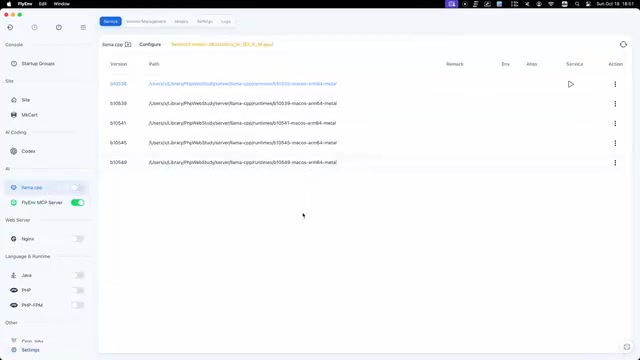
FlyEnv Plugin Review: Visually Running llama.cpp and Managing GGUF Models
FlyEnv launches the official llama.cpp plugin with side-by-side Metal runtime management, public GGUF repository indexing with file type labels, and visual configuration of context, threads, and GPU layers—saving templates and speculative decoding with each model for one-click local LLM inference.
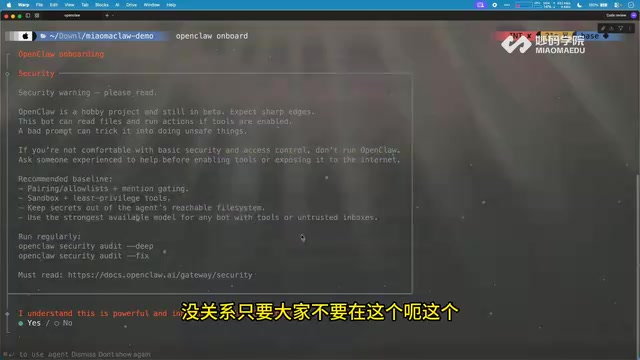
How Can Frontend Developers Advance into AI Agent Development? Deconstructing System-Level Agent Architecture from OpenClaw
Starting from the OpenClaw demo in a Bilibili open class, this article breaks down the three-layer architecture and universal formula of system-level AI agents, and analyzes the path for frontend developers to enter agent development based on TypeScript, including plugin-based design and security/memory layer challenges, with an interview answer framework.

WorkBuddy in Action: How AI Agents Automate Batch File Conversion and Archiving
Bilibili creator Teacher Shanyao tests WorkBuddy vs. Doubao on batch file conversion, showing how AI Agents move from "giving solutions" to "direct execution," with a full workflow and credit cost reference.