Getting Started with AI Agent Development: A Three-Step Practical Path with Python + LangChain

A beginner-friendly three-step path to AI Agent development using Python and LangChain.
This guide breaks AI Agent development into three simple steps: learn just enough Python, understand core large model concepts (vectors, embeddings, fine-tuning) via a book and low-code platforms, then build your first Agent with LangChain using the 'Model + Memory + Tools' formula.
Getting Started with AI Agent Development: A Three-Step Practical Path with Python + LangChain
Many people want to learn AI Agent development, but the moment they see terms like Python, large language models, and LangChain, they feel discouraged, thinking the barrier is too high and it's beyond their reach. In reality, AI Agent development isn't as complicated as it seems—the real challenge isn't the technology itself, but the lack of a clear roadmap for getting started. This article outlines the simplest practical path to help complete beginners avoid detours and quickly get hands-on with commercial-grade Agent development.
What is an AI Agent? The concept of the AI Agent stems from the AI field's long-standing exploration of "autonomous decision-making systems." The early concept of Agents can be traced back to multi-agent systems research in the 1990s, but it wasn't until the rise of large language models (LLMs) that Agents truly gained practical value. The core breakthrough of modern AI Agents lies in the fact that large models endow Agents with the ability to understand natural language instructions and perform reasoning and planning, enabling them to break down complex tasks into executable sub-steps and dynamically call external tools to achieve goals. Since 2023, with the rapid advancement of models like GPT-4 and Claude, AI Agents have moved from the lab to commercial deployment, being widely applied in scenarios such as customer service automation, data analysis, code generation, and research assistants.
Step One: Master Python Basics—Just Enough Is Enough
The first step in getting started with AI Agent development is building a solid Python foundation. But here's a key insight: you don't need to master Python to an expert level.
There are deep historical reasons why Python became the "first language" of AI development. In the early 2000s, the scientific computing community gradually established Python as the standard tool for numerical computing, with libraries like NumPy and SciPy laying the ecosystem's foundation. After the deep learning boom in 2012, frameworks like TensorFlow and PyTorch adopted Python as their primary interface, further solidifying its dominance. For Agent developers, Python's advantage lies not only in its concise syntax and gentle learning curve, but also in its vast ecosystem—almost all mainstream AI frameworks, API-calling libraries, and data processing tools prioritize Python support.
For Agent developers, there are really only two learning goals for Python: first, to be able to read the code of AI projects; second, to be able to write simple logic and functionality. Mastering the basics—variables, functions, classes, common data structures, and package management—is enough to handle the vast majority of Agent development tasks, without needing to dive deep into low-level algorithm implementations. Many people jump right into thick textbooks, studying chapter by chapter from start to finish, only to spend a huge amount of time without ever getting to the real work.
A more efficient approach is to organize the Python knowledge points you need to master into a mind map, and study the key points accordingly. With this method, investing one to two hours a day, you can basically reach a "just enough" level in three to four days.
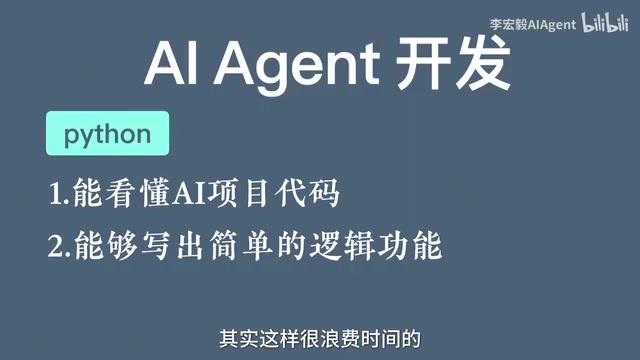
Remember one premise: we learn Python to do AI Agent development, not to become algorithm engineers. At this stage, don't fall into the trap of over-learning—just enough is enough, and avoid getting bogged down.
Step Two: Understand Large Models—Don't Be Scared Off by Theory
Large models are the core of AI Agents, much like the engine of a car—without an engine, the car simply won't run. Therefore, understanding large models is an unavoidable step.
Don't Get Lost in Fragmented Tutorials
Many beginners feel that large models are difficult and hard to understand theoretically, often because their approach is wrong. The most typical mistake is scouring the internet for scattered tutorials, learning a bit here and a bit there, only to end up more confused the more they study.

A better approach is to first systematically read a book, such as an introductory work like Build a Large Language Model (From Scratch). When reading, you don't need to scrutinize every word and detail—just grasp three core points:
- How large models are "assembled": understand the overall architecture and components
- The core concepts of large models: such as vectors, embedding models, and the basic process of fine-tuning
- How large models actually run: understand the basic logic of inference and invocation
These three concepts are worth expanding on a bit: Vectors are a way of converting unstructured data such as text and images into arrays of numbers, enabling computers to perform mathematical operations and similarity comparisons. Embedding models are specifically responsible for this conversion work—for example, OpenAI's text-embedding-ada-002 can map a piece of text into a high-dimensional vector space, where semantically similar texts are closer together in that space. This is the underlying principle of knowledge base retrieval. Fine-tuning involves performing secondary training on a pre-trained large model using domain-specific data, allowing the model to better adapt to business scenarios. Understanding these three concepts helps you grasp how an Agent "remembers" knowledge, how it retrieves information, and how it adapts to specific scenarios.
Get Hands-On Quickly with Low-Code Platforms
Reading books and studying theory alone is far from enough—you must get hands-on as soon as possible. Here, I recommend using platforms like Alibaba Cloud and Baidu to build knowledge bases and design workflows using no-code or low-code approaches.

Upload your own content to the platform and try performing a simple fine-tuning on a large model. Through this intuitive hands-on practice, you'll quickly understand how large models are invoked and adapted to your own needs. Many abstract theoretical concepts often become crystal clear once you start doing hands-on work.
Step Three: Implement Agent Development with LangChain
This is the most critical step in the entire path. LangChain is currently the most mainstream AI Agent development framework, and simply learning its official documentation is enough. If you find the official documentation somewhat difficult, you can also follow a structured tutorial to go through it, which makes it easier to understand.
LangChain was released by Harrison Chase in October 2022 and quickly accumulated over 90,000 stars on GitHub, becoming one of the fastest-growing open-source frameworks in the AI Agent development field. Its core value lies in providing a set of standardized abstraction layers that encapsulate the workflow of "model invocation → result parsing → tool execution → context management"—which developers would otherwise have to implement manually—into reusable component chains. The LangChain ecosystem includes: LangChain Core (basic abstractions and interfaces), LangChain Community (third-party integrations, supporting 100+ models and tools), LangSmith (a debugging and monitoring platform), and LangGraph (a graph orchestration framework for complex multi-step Agents). It's worth noting that LangChain isn't the only choice—frameworks like LlamaIndex (focused on RAG scenarios) and AutoGen (from Microsoft, specializing in multi-Agent collaboration) each have their own strengths. But for beginners, LangChain has the most comprehensive documentation and the richest community resources, making it the best starting point for learning Agent development.

The Core Formula of Agent Development
The essence of an AI Agent can actually be summed up in one sentence:
Agent = Large Model + Memory + Tools
This seemingly simple formula embodies the essence of Agent architecture design:
- The large model plays the role of the "brain," responsible for understanding instructions, formulating plans, and making decisions—essentially a powerful reasoning engine.
- Memory addresses the inherent "stateless" flaw of large models—standard LLM calls are independent each time and can't remember context. An Agent's memory system is divided into short-term memory (context within the conversation window) and long-term memory (historical information stored in vector databases), enabling the Agent to maintain coherent multi-turn conversations.
- Tools are the key to Agents breaking through the limitations of language models—large models themselves can't access the internet in real time, execute code, or read and write files. But through tool-calling mechanisms (Function Calling), an Agent can call search engines, databases, and API interfaces just like a human uses software, thereby completing complex real-world tasks.
The collaboration of these three transforms an Agent from something that can merely "talk well" into an autonomous system that can "get things done." Understanding this formula means grasping the key to Agent development.
In practice, I recommend following the code in the documentation step by step. When you successfully get your first simple Agent up and running, you've truly gotten started. The "get it running first, then dive deeper" approach is far more efficient than researching low-level theory from the outset.
Summary: The Simplest Three-Step Path to AI Agent Development
Looking back at the entire path, the simplest entry route for AI Agent development can be distilled into three steps:
- Master Python basics: just enough is enough, with the goal of reading code and writing simple logic
- Understand large models: one book + hands-on practice on low-code platforms, grasping core concepts like vectors, embeddings, and fine-tuning
- Implement Agent development with LangChain: understand the "Large Model + Memory + Tools" formula and get your first Agent running
Throughout the entire process, you don't need to master low-level theory—you just need to understand the processing logic of each module. Focus on hands-on practice, and even complete beginners can get up to speed quickly.
AI Agent development actually isn't hard—what's hard is not having a step-by-step roadmap to guide you. As long as you progress in order following "what to learn first, what to learn next, which tutorials to follow, and which projects to practice," you can avoid the vast majority of detours and truly master the skill of Agent development.
Related articles
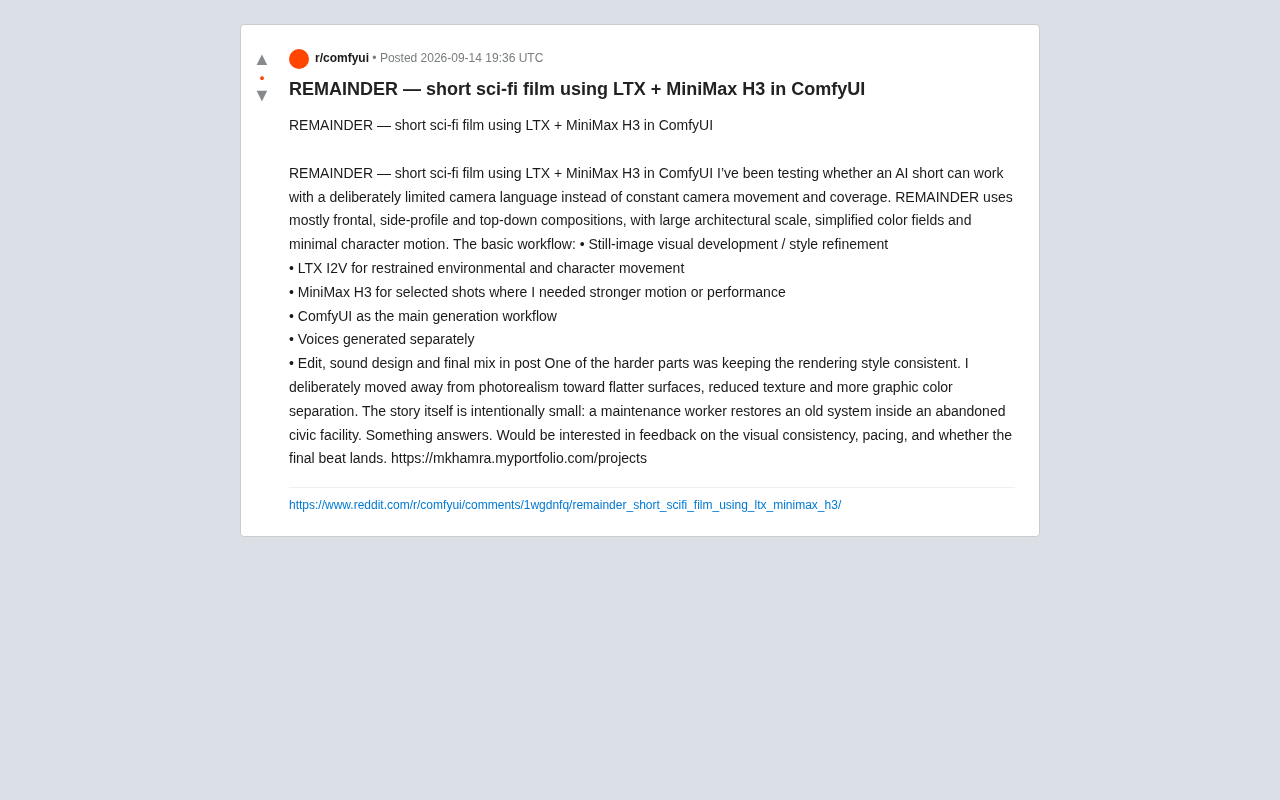
Building an AI Sci-Fi Short with LTX + MiniMax H3: Restrained Cinematography in ComfyUI
Sci-fi short REMAINDER uses LTX, MiniMax H3, and ComfyUI with restrained cinematography and flat aesthetics to solve visual consistency in AI filmmaking.
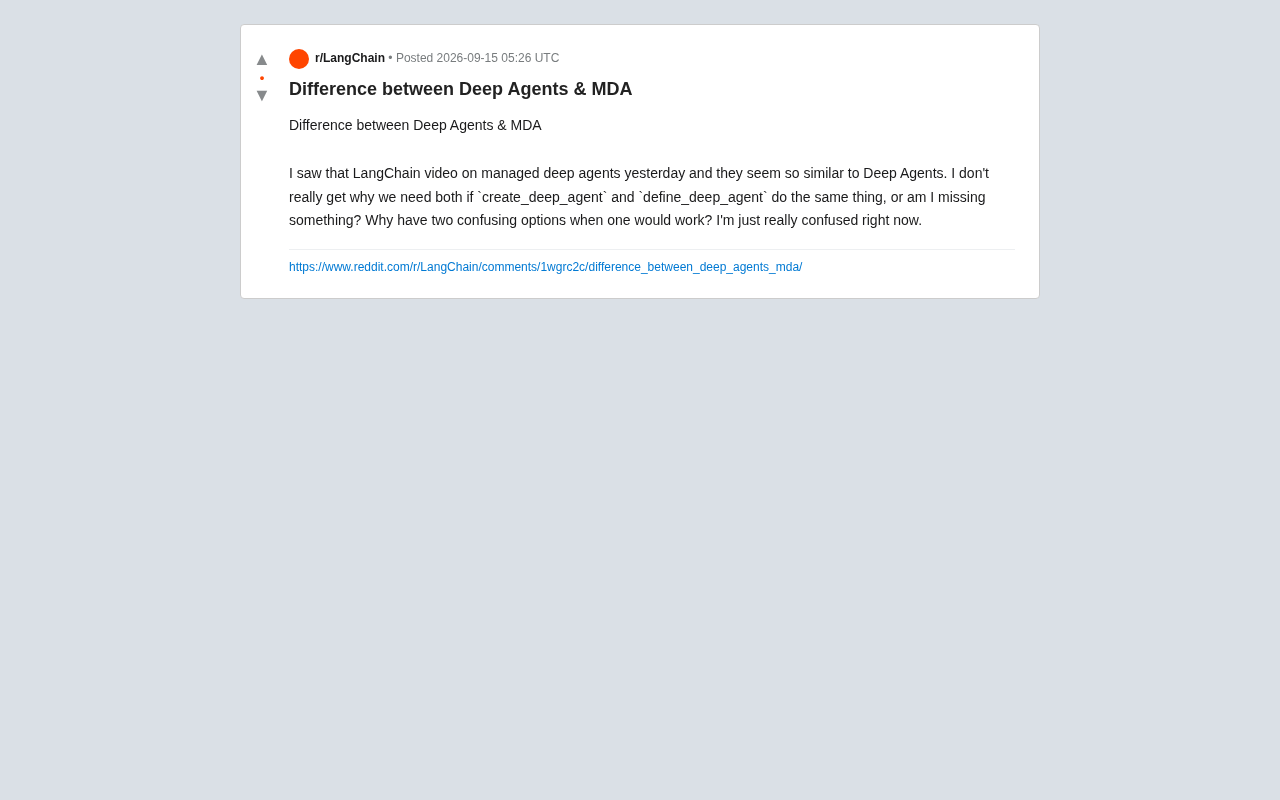
LangChain Deep Agents vs. MDA: Clearing Up the Confusion for Developers
What's the difference between LangChain's Deep Agents and MDA (Managed Deep Agents)? We break down create_deep_agent vs. define_deep_agent and help developers choose.
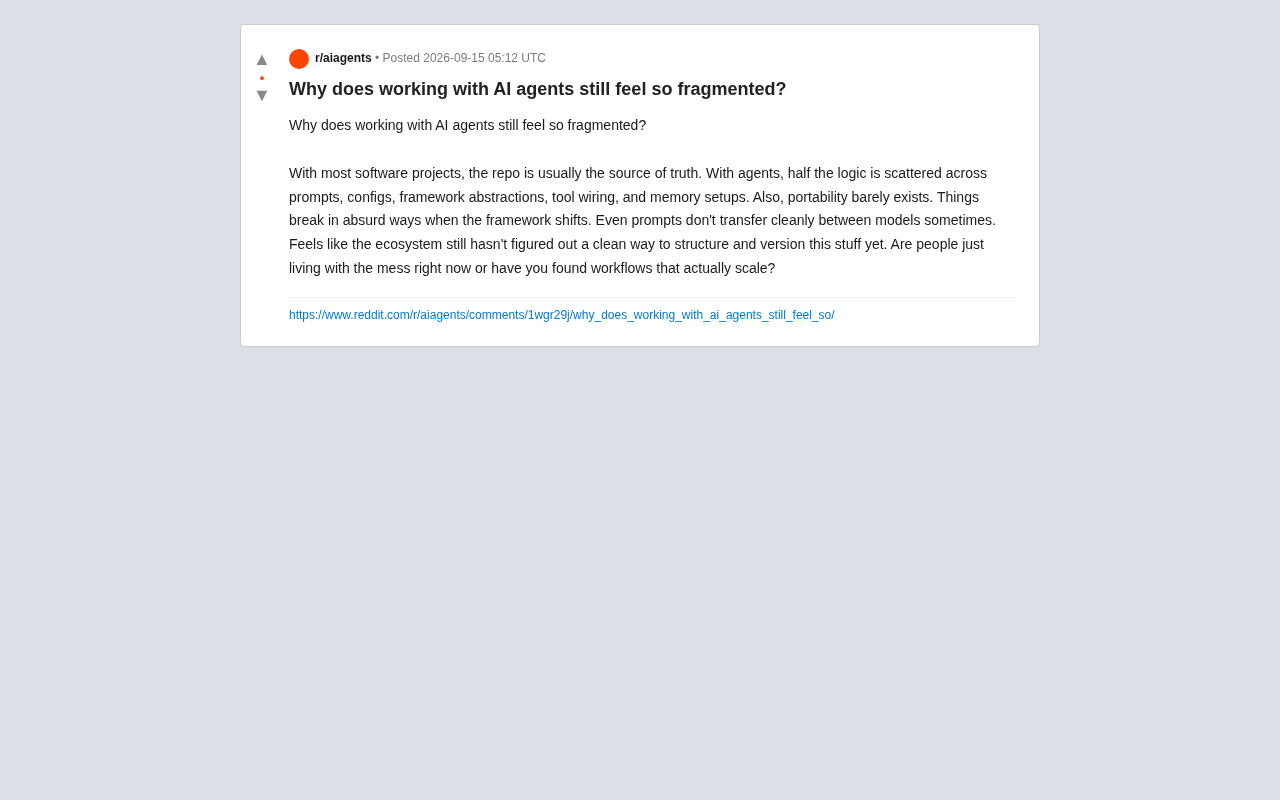
Why Is AI Agent Development So Fragmented? The Real Causes and How to Work Around Them
Why does AI Agent development feel so fragmented? Logic scattered across prompts, configs, and frameworks makes portability nearly impossible. Here's why — and how to cope.