Getting Started with Coze Agents: Core Concepts, Platform Positioning, and a Practical Implementation Guide

A beginner's guide to Coze agents: core concepts, platform positioning, and practical project implementation.
This article systematically explains Coze, ByteDance's agent-building platform: its core positioning within the AI tool ecosystem, how it differs from Dify and n8n, and its full capability system including agents, workflows, RAG knowledge bases, and multi-agent modes—helping beginners build a clear framework for agent development.
Why Choose Coze to Get Started with Agent Development
As large model capabilities continue to advance, agents have moved from the laboratory into real-world production scenarios. As an agent-building platform under ByteDance, Coze has become one of the popular choices among domestic developers for quickly building agents, thanks to its friendly interface and cross-platform interoperability.
Coze was launched by ByteDance in late 2023. Behind it lies ByteDance's self-developed Doubao large model (based on the Skylark architecture) as its default inference engine, while also supporting integration with third-party models such as GPT-4 and Claude. This "model-neutral + proprietary-model-first" strategy gives it a competitive edge in domestic regulatory compliance and inference cost. The platform is divided into an international version (coze.com) and a domestic version (coze.cn), which differ slightly in available models and deployment channels—developers should pay attention to data compliance requirements when making their choice.
The Doubao Large Model and the Skylark Architecture: Doubao is a large language model product officially released by ByteDance in 2023, trained on ByteDance's self-developed "Skylark" foundation model architecture. The Skylark architecture has been specifically optimized for domestic scenarios in terms of training data scale, Chinese corpus ratio, and multimodal capabilities, giving Doubao strong performance in Chinese comprehension, Chinese generation, and local cultural common sense. From an industry landscape perspective, ByteDance's move is a typical example of the "proprietary large model + application ecosystem" dual-drive strategy pursued by major domestic tech companies, competing directly with Baidu's Ernie, Alibaba's Tongyi, and Tencent's Hunyuan. For Coze users, using Doubao as the default inference engine not only means lower call latency (the advantage of same-region deployment), but also makes it easier to meet domestic compliance requirements for content safety review and data localization. When choosing an underlying model, developers should comprehensively weigh three dimensions: inference capability, call cost, and compliance constraints.
This article systematically walks through Coze's positioning, core concepts, and its place within the broader AI tool ecosystem, helping those new to agent development build a clear cognitive framework. Whether or not you have a programming background, understanding this system will enable you to get started with agent development more efficiently.
First, Clarify the Concepts: Three Major Categories in the AI Tool Ecosystem
Before diving into Coze, it's worth sorting out several easily confused concepts in the AI field. The entire ecosystem can be roughly divided into three categories: agent-building platforms, agent software, and agent development frameworks. The three have different positioning, usage methods, and target audiences.
It's worth noting that these three types of tools are not in competition with one another; rather, they occupy different levels of abstraction—development frameworks provide capability primitives at the lowest level, building platforms encapsulate engineering complexity in the middle layer, and agent software delivers value to end users at the top layer. Understanding this layered logic helps you make sensible tool choices in different scenarios.
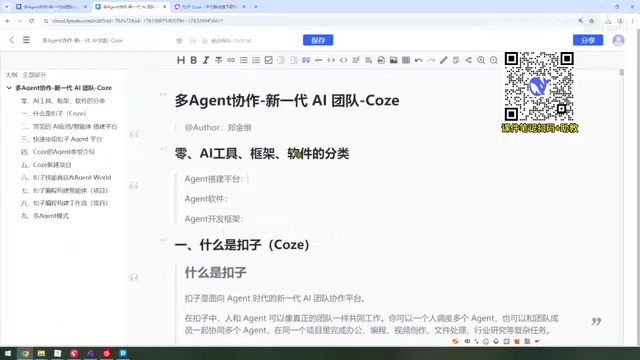
Agent-Building Platforms
Coze's core positioning is precisely that of an agent-building platform, with similar products including Dify, n8n, and others. The core value of such platforms lies in—helping you quickly build an agent.
It is not itself a finished piece of software you can chat with directly, but rather a set of "production tools." Even if you can't program at all, you can visually build a deployable agent that can be directly invoked by a project, to solve real business problems. Its core keyword is "building."
The low-code agent-building platform represented by Coze is a product of the fusion between the software industry's "low-code/no-code" (LCNC) movement and large model technology. Over the past decade, platforms such as OutSystems and Microsoft Power Platform have already proven the commercial value of visual programming in enterprise application development, and Gartner predicts that by 2026, low-code platforms will handle over 80% of enterprise application development workloads. The emergence of large models has extended this trend into the AI application field: developers no longer need to master the underlying principles of prompt engineering or the operational details of vector databases—they can complete, through a drag-and-drop interface, AI application prototypes that previously required weeks of engineering work.
The Historical Origins of the Low-Code/No-Code Movement: The roots of the LCNC movement can be traced back to the "visual programming" trend of the 1990s, when tools such as Visual Basic and Delphi already allowed developers to build desktop applications via drag-and-drop. Upon entering the cloud computing era, Salesforce's Force.com platform (2007) and Mendix (2005) systematized this idea into enterprise-grade PaaS products, marking the formation of modern low-code platforms. Their core design philosophy is "separation of concerns"—decoupling the expression of business logic from the underlying engineering implementation, allowing domain experts to participate directly in software construction rather than relying entirely on engineers to translate requirements. When large model technology matured, this philosophy was naturally extended to AI application development: engineering details such as prompt templates, tool-call configurations, and RAG pipelines were encapsulated as visual nodes, enabling non-technical roles such as business analysts and product managers to become builders of AI applications, fundamentally changing the organizational form of AI application development.
Horizontal Comparison of Similar Platforms: Dify is an open-source LLMOps platform that supports private deployment and is popular in scenarios with high enterprise data security requirements; its prompt orchestration and RAG (Retrieval-Augmented Generation) capabilities are relatively mature. n8n, on the other hand, is an open-source tool centered on workflow automation, historically closer to automation platforms like Zapier/Make, and has in recent years extended toward AI agents by integrating large model nodes. Compared to Coze, Dify leans more toward production deployment for technical teams, n8n emphasizes cross-system data flow automation, while Coze—leveraging ByteDance's ecosystem resources (the Doubao model, channels like Douyin and Feishu)—has unique advantages in connecting both consumer-facing and business-facing scenarios domestically.
Agent Software
The second category is agent software, which most developers have encountered to some degree. Examples include Claude Code for assisted programming, as well as Codex, among others. Their common trait is: these are finished products built by others, ready to use out of the box.
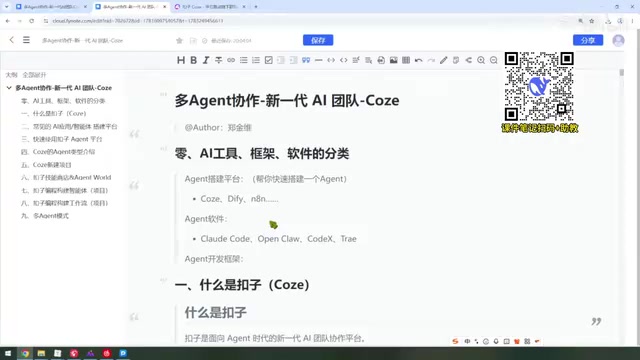
Its core keyword is "practicality"—you don't need to worry about how it's built internally; you only need to judge whether the agent is good to use and whether it solves your problem.
Agent Development Frameworks
The third category is agent development frameworks, such as LangChain, LangGraph, and DeepAgent in the Python ecosystem, and Spring AI and Spring AI Alibaba in the Java ecosystem. These frameworks are more like code libraries or dependency components: Java developers import them via Maven, and Python developers install them via pip.
They provide the underlying components needed to build agents, with a core focus on "development," targeting technical personnel with programming skills.
The Industry Standing of Development Frameworks: LangChain is currently the most influential agent development framework in the Python ecosystem, rising alongside the ChatGPT boom in late 2022. Through its standardized "chain" call interface, it connects large models with external tools and data sources, greatly reducing engineering costs. LangGraph is its advanced version, introducing a directed graph (DAG) structure designed specifically for complex agent scenarios requiring multi-step loops and conditional branching. In the Java ecosystem, Spring AI Alibaba is led by Alibaba Cloud, deeply integrating Alibaba Cloud services and suitable for enterprise-grade Java projects. The core value of these frameworks is providing reusable underlying abstractions, but the trade-off is that developers need a solid programming foundation and an understanding of large model invocation mechanisms. It's worth mentioning that LangChain was heavily criticized in 2023 for debugging difficulties caused by excessive encapsulation, which directly gave rise to the "lighter, more transparent" second-generation framework design style represented by LangGraph—reflecting the developer community's ongoing negotiation over the degree of framework abstraction.
Coze's Unique Positioning: A Fusion of Building Platform and Agent Software
Coze's positioning is undergoing an interesting evolution. Its original core goal was to help users quickly build agents, making it a typical building platform. But through continuous iteration, it has begun to move toward the agent software direction.
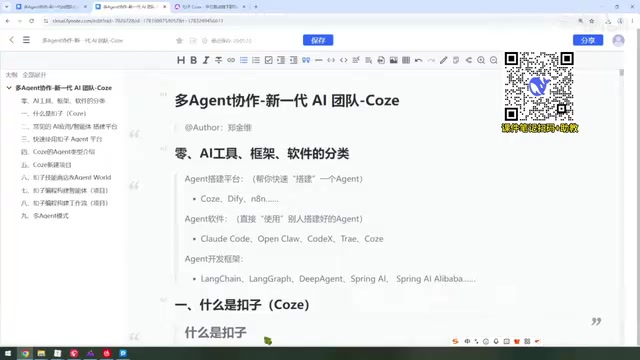
Today's Coze provides a large number of ready-made skills internally, and users can directly invoke these capabilities to accomplish specific functions—this increasingly resembles mature agent software. Therefore, it can be said that Coze now possesses two attributes simultaneously:
- For developers: You can use it to build customized agents and workflows;
- For non-technical users: You can directly use the platform's built-in skills and ready-made agents to complete tasks.
This dual nature of "being able to both build and use directly" has greatly expanded Coze's applicable audience—everyone can master it, whether or not they can program.
The Technical Essence of Agents: In the AI field, an agent specifically refers to a system with autonomous perception, reasoning, and action capabilities. Unlike traditional question-answering large models, an agent can decompose complex goals, invoke external tools (such as search engines, code executors, databases), and continuously correct its own behavior through multiple rounds of interaction until the task is complete. Its core architecture usually consists of four parts: a perception module (receiving input), a memory module (storing context), a planning module (decomposing tasks), and an action module (invoking tools or outputting results). It is precisely this "perception-reasoning-action" closed loop that enables agents to handle open-ended, multi-step tasks that traditional software struggles with. Tracing its academic origins, the concept of an agent was first proposed by Minsky and others in cognitive science, later systematized by Russell & Norvig's classic textbook Artificial Intelligence: A Modern Approach into the theoretical framework of the "rational agent." The emergence of large models turned this theoretical framework from academia into engineering reality—language models naturally serve as the planning module, and their powerful reasoning and instruction-following capabilities make it possible to "define task goals in natural language and have the model autonomously plan the execution path."
A Panoramic Analysis of Coze's Core Capabilities
Cross-Platform Interoperable User Experience
Coze supports multiple forms including a web version, an app version, and a desktop client, with data synchronized across all platforms. Users can flexibly switch based on the scenario, seamlessly transitioning between different devices.
Diverse Agent Types
The Coze platform has built-in agent types of various kinds—including officially provided ones, as well as locally deployed and cloud-run options. This tiered design meets the different needs ranging from individual experimentation to enterprise-grade deployment.
The Project and Skill System
Users can create new projects in Coze to solve real business problems, and the platform also offers a rich set of skills to invoke. In addition, there is the Agent World feature, which is still under construction and worth continued attention going forward.
Agents and Workflows: The Two Core Pillars of Project Implementation
For users with programming skills, Coze supports quickly building two core components through programming: agents and workflows.
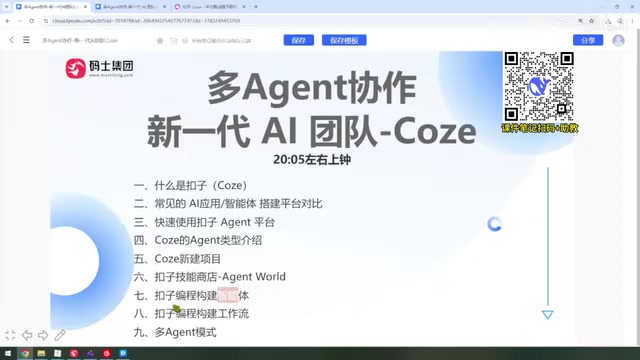
Among them, agents handle specific task execution, while workflows chain multiple steps into a complete business process. The combination of the two is the key to actually implementing Coze projects.
Understanding data flow within workflows also requires understanding the context window constraint of large models. During each inference, the amount of text a model can process is limited (measured in tokens, with mainstream models supporting roughly 32K–128K tokens), and anything beyond this is truncated. To address this, agent systems typically design three types of memory mechanisms: short-term memory (conversation history within the current session window), long-term memory (summaries or knowledge fragments stored in a vector database), and external memory (structured database queries). Coze's variable storage and knowledge base features essentially implement this layered memory system, helping the agent maintain a coherent task state across multiple rounds of interaction.
The Engineering Significance of Tokens and the Context Window: A token is the basic unit for large models to process text. In Chinese contexts, one Chinese character usually corresponds to about 1.5–2 tokens, while in English, one word roughly corresponds to 1–2 tokens. The size of the context window directly determines how much historical information the model can "see" in a single inference, which has profound engineering implications for agent design: the larger the window, the stronger the conversational coherence the agent can maintain, but inference cost also grows linearly or even super-linearly. The context windows of mainstream models have expanded from 4K tokens in the GPT-3 era to 1 million tokens in Gemini 1.5 Pro, but ultra-long windows are not a panacea—when processing ultra-long contexts, models exhibit the "Lost in the Middle" phenomenon, where attention to information located in the middle of the context significantly decays. Therefore, a reasonable layered memory design (short-term/long-term/external memory) remains a necessary engineering practice for production-grade agent systems, rather than relying solely on a larger context window.
The Collaboration Mechanism Between Workflows and Agents: Workflows and agents play distinctly different roles at the architectural level. A workflow is essentially a directed acyclic graph (DAG) structure for process orchestration, suitable for handling tasks with fixed steps and predictable logic—for example, a deterministic process like "receive user file → extract key information → generate report → send email." Its advantages are stability, auditability, and ease of debugging. An agent, on the other hand, is better at handling tasks with clear goals but uncertain paths, dynamically deciding the next action based on intermediate results. In Coze's practice, workflows typically carry the structured business skeleton, embedding agents at key nodes to handle the parts requiring reasoning and judgment, with the two complementing each other to form a robust production-grade system.
Knowledge Base and RAG Capabilities
Coze has a built-in knowledge base module, which is one of the platform's key capabilities for enterprise implementation. Its underlying technology is Retrieval-Augmented Generation (RAG): after slicing documents uploaded by users, they are vectorized and stored; during inference, the most relevant fragments are first retrieved and then injected into the large model's context along with the user's question, allowing the model to answer based on private knowledge rather than relying solely on training data. This mechanism effectively addresses the dual pain points of the large model's knowledge cutoff date and the inability to train on private data, and is a standard technology for knowledge base Q&A bots in enterprise scenarios. Coze encapsulates this complex engineering process into a simple file upload operation, greatly lowering the barrier to building private knowledge agents.
The Technical Details and Engineering Challenges of RAG: The core pipeline of RAG is divided into two stages—the offline indexing stage and the online retrieval stage. Offline stage: documents are split into fixed-size text blocks (chunks, usually 256–512 tokens), each block is converted into a high-dimensional vector via an embedding model (such as text-embedding-ada-002 or the domestic BGE series), and stored in a vector database (such as Pinecone, Weaviate, Milvus). Online stage: the user's question is likewise converted into a vector, the semantically most similar Top-K text blocks are found via approximate nearest neighbor (ANN) search, concatenated into the prompt, and sent to the large model to generate an answer. However, RAG's engineering challenges go far beyond this: the choice of chunk granularity affects the balance between retrieval precision and context completeness; the semantic space of the embedding model may deviate from the understanding space of the generative model; and multi-hop questions (requiring reasoning across multiple document fragments) pose challenges to single-shot retrieval. These deeper problems have driven the emergence of advanced RAG variants such as HyDE (Hypothetical Document Embeddings) and Self-RAG (self-reflective retrieval). Coze's encapsulation of these engineering details allows users to enjoy the private knowledge integration capabilities that RAG offers without needing to understand them in depth.
Multi-Agent Collaboration Mode
Multi-agent mode refers to multiple agents working together, dividing labor to complete complex task chains. This is a frontier direction in the current agent field and an important part of Coze's advanced usage.
The Technical Background of Multi-Agent Collaboration: Multi-Agent Systems (MAS) is a classic research direction in artificial intelligence, and it has recently re-entered engineering practice as large model capabilities have improved. Its core idea is to distribute complex tasks among multiple specialized sub-agents for parallel or serial processing, analogous to the division of labor and collaboration in human organizations. Typical multi-agent architectures include: the master-slave mode (an orchestrator agent responsible for planning, and multiple worker agents executing specific subtasks) and the peer collaboration mode (multiple agents communicate with and cross-check each other). OpenAI's Swarm framework and Microsoft's AutoGen are both representative open-source projects in this direction. Multi-agent mode can break through the context window limits and capability boundaries of a single agent, making it a key architectural choice for handling long-process, cross-domain complex tasks. Notably, multi-agent systems also bring new engineering challenges: the standardization of inter-agent communication protocols (the MCP protocol proposed by Anthropic in 2024 is the most influential attempt to date), the optimization of task allocation, and the control of cascading risks from error propagation—these problems remain frontier topics explored jointly by academia and industry.
Suggested Learning Path
For beginners, the key to understanding Coze lies in first clarifying its position in the AI tool ecosystem: it is an agent platform that can be both built with and used directly. Compared to pure-code development frameworks, it greatly lowers the barrier to entry; compared to purely finished software, it retains ample room for customization.
It is recommended to progress step by step along the following path:
- Familiarize yourself with the platform's basic operations, experiencing built-in skills and ready-made agents;
- Try building simple agents and workflows to solve a small real-world problem;
- Introduce knowledge base (RAG) capabilities to build a domain bot with private knowledge;
- Dive deeper into programmatic building and multi-agent collaboration to explore advanced usage.
As a domestic ByteDance product, Coze has certain advantages in Chinese-language scenarios and localization support, making it worth including in your AI toolbox for systematic study.
Key Takeaways
- The AI tool ecosystem is divided into three layers: development frameworks (underlying capability primitives) → building platforms (encapsulation of engineering complexity) → agent software (delivery to end users), with Coze positioned in the middle layer and extending upward
- Coze's technical foundation is ByteDance's Doubao model (based on the Skylark architecture), while also supporting multi-model integration; the domestic and international versions differ in compliance and available resources
- RAG (Retrieval-Augmented Generation) is the core mechanism of the platform's knowledge base feature, with its engineering pipeline covering four key steps: document chunking, vector embedding, ANN retrieval, and prompt injection
- The context window limit and the "Lost in the Middle" phenomenon together determine the necessity of a layered memory architecture, of which Coze's variable storage and knowledge base are the engineering implementation
- Workflows (DAG structure, deterministic processes) and agents (dynamic planning, uncertain paths) complement each other, and their collaboration is the recommended architecture for production-grade systems
- The multi-agent collaboration mode breaks through the capability ceiling of a single agent via master-slave or peer architectures, and standardization work such as the MCP protocol is driving this direction toward maturity
- The fusion of the LCNC movement with large model technology is the industry background behind the rise of Coze-like platforms; its essence is extending the power to build AI applications from engineers to a broader range of business roles
Related articles

Hacker News Monthly 'What Are You Working On?' Thread: A Window Into the Developer Community
Hacker News's monthly 'What are you working on?' thread drew 180 upvotes and 558 comments. We explore why this community ritual persists and what it reveals about developer trends.
After Towns Cancel Flock Contracts: The Lingering Fallout of AI License Plate Recognition Cameras
Towns across the US are canceling Flock AI license plate camera contracts amid public backlash, but terminating contracts doesn't erase collected data. A look at the data retention risks that persist.
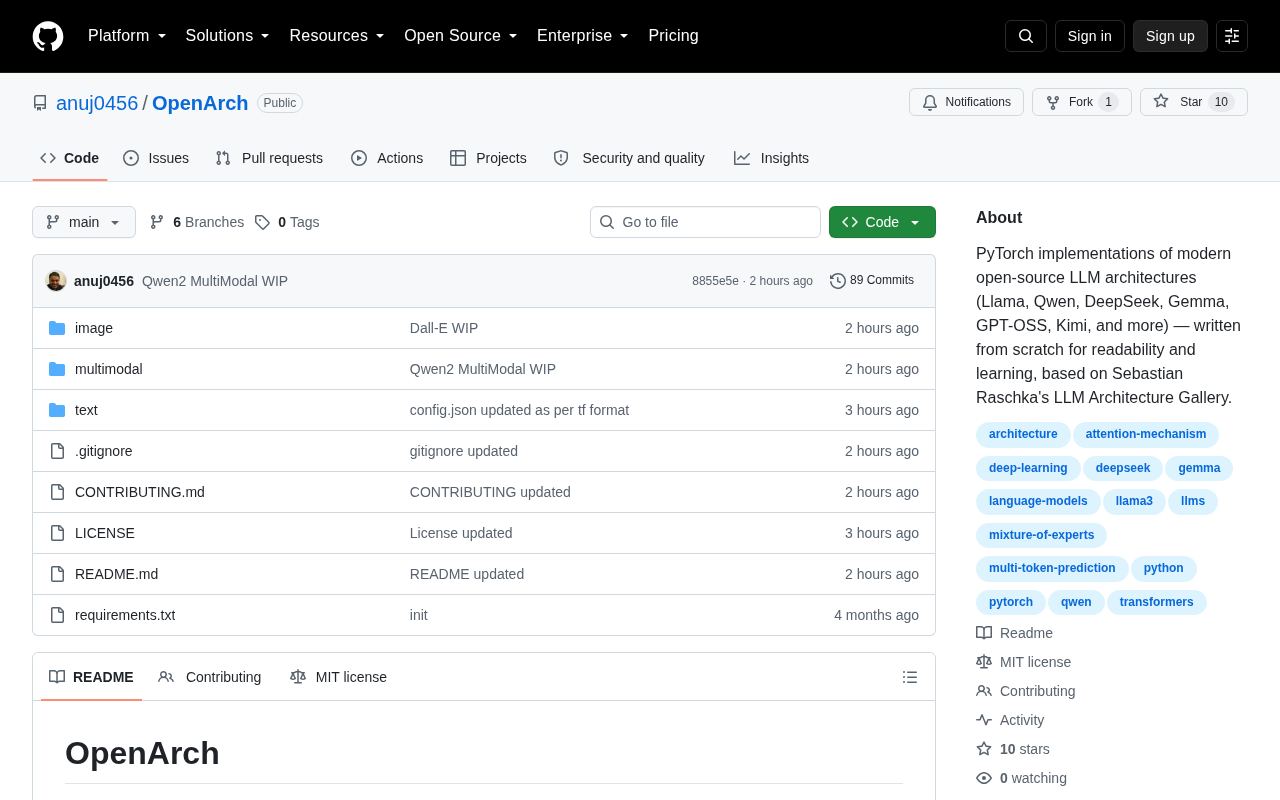
OpenArch: An Open-Source Project Reimplementing Modern LLM Architectures in PyTorch
OpenArch is an open-source PyTorch project reimplementing modern LLM architectures with a focus on clean, readable code. Learn about its value for learners and researchers.