Getting Started with LangChain 1.3: Building Intelligent Agent Applications with Deep Agent

A hands-on guide to LangChain 1.3 covering LLM, RAG, and Agent concepts through the Deep Agent project.
This article introduces LangChain 1.3's three-tier architecture and its evolution from chain-based to agent-based paradigms. It explains core concepts — LLM/Model abstraction, RAG for knowledge grounding, and ReAct-based Agents — then walks through building a Deep Agent application with planners, tools, executors, and reflection mechanisms, with practical advice on context management, cost control, and framework selection.
Why LangChain 1.3 Matters
LangChain is one of the most popular frameworks for building LLM-powered applications, and it has been evolving at a rapid pace. Released by Harrison Chase in October 2022, it quickly became one of the fastest-growing open-source projects on GitHub. Its core value lies in providing a standardized "glue layer" that encapsulates capabilities developers would otherwise have to wire up manually — model calls, prompt management, memory storage, and external tool integration — all packaged as reusable modules. As of version 1.3, the LangChain ecosystem has matured into a three-tier architecture: langchain-core (core abstractions), langchain-community (community integrations), and LangGraph (graph-based agent orchestration). Combined with the LangSmith observability platform, it forms a fairly complete LLM application engineering stack.
LangChain 1.3 brings a more mature architecture and cleaner abstractions, with particularly significant improvements to agent orchestration. For developers who want to bring LLM capabilities into real-world business scenarios, mastering this framework is practically essential.
As one tutorial puts it: "Virtually every business use case that needs to be deployed can be handled with a framework like LangChain." This captures the framework's core value — it's not a toy. It's an engineering framework capable of connecting complex model calls, retrieval augmentation, and tool usage into production-grade applications.
The Significance of Version Evolution
From its early releases to 1.3, LangChain has undergone a paradigm shift — from "chain-based" calls (Chain) as the core concept, to "agents" (Agent) as the central paradigm. This evolution reflects the industry's broader reassessment of how LLM applications should be structured: simple prompt stitching is no longer sufficient for complex tasks. Models need the ability to plan autonomously, call tools, and iteratively reflect on their progress.
Early LangChain centered on the "Chain" paradigm — essentially linking a fixed sequence of processing steps, such as "prompt template → model call → output parsing." This approach was structurally clean but lacked flexibility, feeling rigid when faced with dynamic tasks. As reasoning paradigms like ReAct (Reasoning + Acting) and CoT (Chain-of-Thought) matured, and capabilities like OpenAI Function Calling and Tool Use became widespread, the Agent paradigm gradually overtook Chain as the mainstream approach. The key difference with Agent is the introduction of a decision loop: rather than following a preset path, the model dynamically chooses its next action based on the current task state — giving it the ability to handle open-ended, multi-step complex tasks.
Core Concepts: Agent, LLM, Model, and RAG
To use LangChain 1.3 effectively, you first need to understand a few key concepts — they form the skeleton of the entire framework.
The LLM and Model Layer
In LangChain, Model is the lowest-level abstraction. It provides a unified interface for LLMs from different vendors — whether OpenAI, Anthropic, or domestic Chinese models — allowing developers to call them all through a consistent API. The core value of this abstraction is decoupling: business logic doesn't need to know which underlying model is being used, and switching models requires only a configuration change.
Version 1.3 further standardizes the Message structure, unifying system prompts, user inputs, and tool call results into standardized message objects — making multi-turn conversation and tool interaction logic cleaner and more controllable. The introduction of LCEL (LangChain Expression Language) also provides declarative pipeline-building syntax, making component composition more concise and intuitive, with native support for streaming output and async calls — laying the groundwork for performance optimization in production environments.
RAG: Retrieval-Augmented Generation
RAG (Retrieval-Augmented Generation) addresses two major pain points of large language models: knowledge limitations and hallucination. The idea is to vectorize and store enterprise documents and knowledge bases, then retrieve relevant content when a user asks a question before passing it to the model to generate an answer — significantly improving accuracy and timeliness.
RAG relies on a vector database as its core storage layer. The workflow goes like this: documents are split into semantic chunks, converted into high-dimensional vectors via an embedding model (e.g., text-embedding-ada-002), and stored in a vector database (common options include Pinecone, Weaviate, Chroma, Milvus, and FAISS). At query time, the user's question is similarly vectorized, and approximate nearest neighbor (ANN) search finds the most semantically similar document chunks, which are then injected into the prompt as context. RAG effectively mitigates two fundamental LLM weaknesses: information lag caused by knowledge cutoffs, and hallucination — where models confidently fabricate content beyond their knowledge boundaries.
In LangChain 1.3, the RAG pipeline is highly modular, covering document loading, text splitting, vectorization, vector storage, and Retriever configuration — with dedicated components for each step. LCEL further simplifies declarative RAG pipeline construction, letting developers compose custom retrieval pipelines like building blocks.
Agent: Teaching Models to "Think and Act"
Agents are the main focus of this tutorial. Unlike simple Q&A, an Agent can autonomously decide which tools to call, which steps to take, and dynamically adjust its strategy based on intermediate results — all in pursuit of a task goal. This closed loop of "reasoning → acting → observing" is precisely what distinguishes agents from ordinary LLM applications.
The core reasoning framework for LangChain Agents originates from the ReAct paper published by Google in 2022 (Reasoning and Acting in Language Models). ReAct interleaves reasoning (Thought) and action (Action), forming an iterative loop of "think → act → observe → think again." Specifically: the model first outputs its reasoning (Thought), then decides which tool to call and with what parameters (Action), observes the tool's return value (Observation), and decides whether to continue acting or produce a final answer. This paradigm significantly outperforms pure reasoning approaches on complex tasks, because external validation at intermediate steps prevents errors from compounding through pure model "imagination."
LangChain 1.3, through LangGraph, further supports more complex graph-based orchestration — enabling non-linear, multi-agent collaborative topologies that go beyond a single ReAct loop.
Deep Agent: A Hands-On Project
The tutorial uses the Deep Agent project as a hands-on case study, demonstrating end-to-end how to build an agent application with deep reasoning capabilities from scratch.
The Design Philosophy Behind Deep Agent
The key word in Deep Agent is "deep" — it's not satisfied with giving a one-shot answer. Instead, it tackles complex tasks through multi-round planning, task decomposition, and tool calls. Typical use cases include multi-step data analysis, automated workflows that call external APIs, and professional consulting systems backed by private knowledge bases.
At the implementation level, Deep Agent typically consists of the following modules:
- Planner: Breaks large tasks down into executable subtasks
- Tools: Encapsulates capabilities like search, computation, and database queries
- Executor: Calls tools according to the plan and aggregates results
- Reflection: Evaluates execution outcomes and replans when necessary
Tools extend the boundaries of what an Agent can do — essentially, they are callable functions with structured descriptions. Modern LLMs (such as GPT-4 and Claude 3) natively support Function Calling/Tool Use, allowing models to autonomously decide when to call a tool, what parameters to pass, and how to integrate the returned result into the reasoning chain.
In practice, tool design follows several key principles: descriptions must be precise (the model decides whether to call a tool based on its description), parameters should be minimal (reducing the chance of the model hallucinating arguments), and error handling must be comprehensive (network timeouts, permission errors, and other exceptions must degrade gracefully). LangChain 1.3 standardizes tool definitions, supporting quick wrapping of any Python function via the @tool decorator or StructuredTool, with seamless integration with native tool-calling protocols of major models.
From Concept to Production
The value of a hands-on project is bridging the last mile between theory and engineering. Through a complete Deep Agent case study, developers can see firsthand how components work together — and anticipate common pitfalls in real-world scenarios, such as error handling for tool calls, context length management strategies, and cost control for inference.
As agent task complexity increases, context window management becomes an engineering challenge. Each model call must carry conversation history, tool call records, retrieved documents, and more — easily hitting the model's token limit (e.g., GPT-4 Turbo's 128K tokens). Long contexts not only increase inference latency but also significantly drive up API costs (billed per token). Common mitigation strategies include: sliding windows (keeping only the most recent N turns), summary compression (compressing earlier conversations into summaries), and vector memory (storing history in a vector database for on-demand retrieval).
For cost control, a hybrid strategy — using a lightweight model (e.g., GPT-3.5) during the planning phase and only invoking a high-performance model for final generation — can strike a balance between quality and cost. LangChain 1.3's Memory module has built-in support for all of the above strategies.
Learning Path and Framework Selection Advice
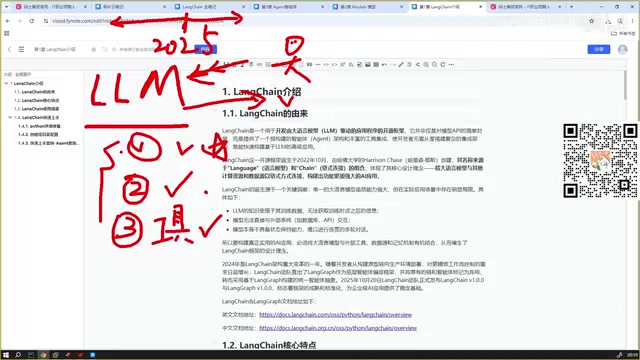
For beginners, the recommended learning path is "Model → RAG → Agent" — build up gradually. Start with the fundamentals of model calling, then understand how retrieval augmentation works, and finally dive into the complex orchestration of agents. Jumping straight into advanced Agent content is a surefire way to get discouraged.
Thinking About Framework Selection
It's worth noting that while LangChain is powerful, it has also drawn some criticism for its many abstraction layers and steep learning curve. In real projects, it's wise to weigh your options based on business complexity: for simple scenarios, calling the model API directly is often lighter and more pragmatic. LangChain's value really shines in complex agents that involve multi-tool collaboration and multi-step orchestration.
The community has also seen alternative options emerge for specific niches: LlamaIndex (focused on RAG), AutoGen (Microsoft's multi-agent dialogue framework), CrewAI, and others. When choosing a framework, evaluate based on your team's tech stack and specific use case — rather than following trends blindly.
Overall, LangChain 1.3 represents an important milestone in the maturation of LLM application development. As Agent technology continues to evolve, mastering this framework will open up broader possibilities for developers in the AI era. As the tutorial's core message puts it — the vast majority of business scenarios that need to be deployed can be realized with a framework like this.
Key Takeaways
Related articles

Gaussian Process Bandit Optimization: Exploration Strategies and Inference Regret Guarantees
Cumulative regret guarantees in Bayesian optimization fail to reflect final recommendation quality. This article examines a new study that provides inference regret guarantees for Gaussian process bandit optimization through exploration query strategies and fill distance analysis, validated on hyperparameter optimization and control tasks.
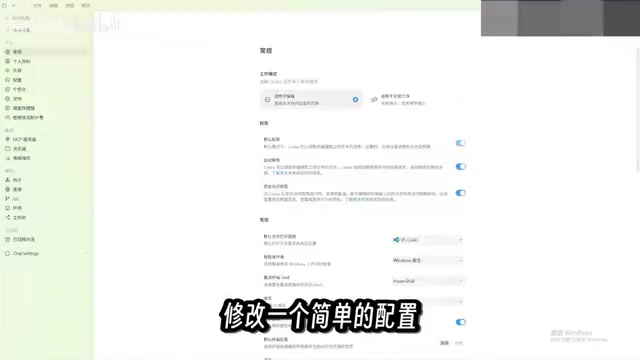
The Most Detailed Codex Guide on Bilibili: From Installation to Real-World Practice
The most detailed Codex guide on Bilibili: from app store installation to daily work mode configuration, with a real coffee shop project demonstrating file organization, data extraction, dashboard creation, and other practical tasks. Learn to use Plan Mode and desktop pets to leverage Codex efficiently.

Appearance Compensation in Volume Rendering: Why RGB Accuracy Cannot Guarantee Density Correctness
Volume rendering research reveals that volumetric data perfectly reproducing external RGB views may still contain density errors: appearance compensation can double central density and keep external rays unchanged even when L2 error exceeds 14.52%. Density recovery depends on appearance capacity, spatial resolution, and measurement design.