Getting Started with MCP: The Protocol That Lets LLMs Connect to External Tools

MCP is the protocol that lets LLMs connect to external tools in a standardized, natural-language-friendly way.
MCP (Model Context Protocol) is a core protocol in Agent development — essentially a ruleset that allows LLMs to interface with external tools, business systems, and traditional APIs in a standardized way. Traditional software interfaces are designed for programs and programmers, not for language models that need natural-language descriptions to understand a tool's purpose. MCP bridges this gap by requiring tools to describe their functionality in natural language and follow a unified communication standard, enabling models to identify, select, and invoke the right tools during inference. For developers entering LLM application development, understanding the "protocol as rules" design philosophy behind MCP is a critical step from beginner to practitioner.
Why LLMs Need the MCP Protocol
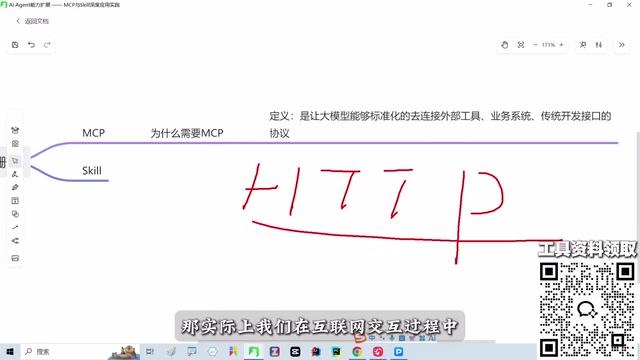
In the world of Agent development, MCP (Model Context Protocol) has become an unavoidable cornerstone. No matter which framework you're learning, encountering MCP is almost inevitable. Put simply, MCP is a protocol that allows large language models to connect with external tools, business systems, and traditional development interfaces in a standardized way.
When people hear "protocol," many think of HTTP. In web interactions, a request corresponds to a response, and both parties follow the rules of HTTP to communicate. MCP works on the same principle — it's a set of rules, a convention. Once you understand that a protocol is essentially a ruleset, MCP's role becomes much clearer.
MCP (Model Context Protocol) was officially proposed and open-sourced by Anthropic in late 2024, with the goal of becoming a universal interface standard between AI models and external data sources or tools — similar to how USB-C serves as a unified connector standard in hardware. Before MCP, every AI application that needed to call an external tool (such as a database, search engine, or code execution environment) required developers to manually write custom adapter code, which couldn't be reused and was costly to maintain. By defining a unified message format and communication process, MCP allows any model that supports the protocol to plug into any tool server (MCP Server) that implements it — turning "write a custom adapter for every tool" into "just follow one shared standard."
What's Wrong with Traditional Interfaces
To truly appreciate the value of MCP, we need to go back to the era before large language models. Software development has accumulated a massive number of systems over the decades — many developers have spent ten-plus years working in Java, C++, Go, or PHP, building countless software systems in the process.
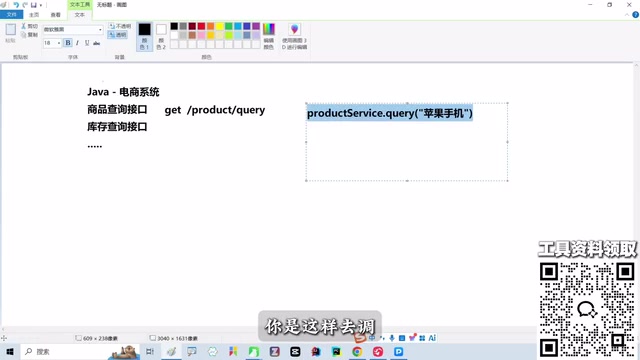
Take an e-commerce system as an example. It typically contains a large number of interfaces: product query endpoints, inventory check endpoints, and so on. When others need to access these interfaces, developers expose an access point — for instance, a route like GET /product/query. The frontend calls the backend, the backend calls the relevant service, the service may query a database, and ultimately a product list is returned to the caller.
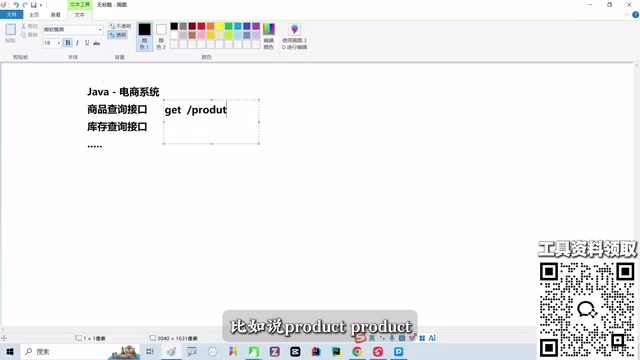
The key point here is: these interfaces are fundamentally designed for programs to call. If you're writing Java code, you might call a product.query() method, passing in parameters to check iPhone inventory. For programs and programmers, seeing an interface is usually enough to infer its purpose, parameters, and return values.
LLMs Can't Understand Traditional Interfaces
The problem is that this traditional structure was designed for programs — not for humans or large language models. If you hand a raw interface directly to a model like ChatGPT, it has no idea what that interface does, what parameters to pass, or what goal it's meant to achieve.
What a large language model needs is a tool description it can actually understand. That means when an LLM is working through a task, it needs to know that a particular tool exists and what it does — for example, "check inventory." You only need to describe the tool's functionality in natural language (Chinese, English, whatever works) — you don't need to expose the underlying implementation details.
This is the core problem MCP is designed to solve: bridging the gap between interfaces designed for programs and natural-language descriptions that large language models can understand.
The way LLMs understand tools relies on the "Function Calling / Tool Use" mechanism. Developers must declare a tool's name, a natural-language description of its functionality, and the names and types of its required parameters to the model in advance — typically in JSON Schema format. During inference, the model decides based on user intent whether a tool call is needed. If so, it outputs a structured call instruction, which is executed by an external program before the result is returned to the model. MCP builds on this foundation by further standardizing the process: it specifies how tool descriptions are published, and how call requests and responses are formatted and transmitted — ensuring consistency across different frameworks and platforms, rather than leaving each implementation to do things its own way.
Where MCP Fits in Agent Development
Looking at the full Agent development workflow, MCP's significance lies in unifying how large language models interact with the outside world. In the past, integrating each new tool might require writing a dedicated adapter from scratch. With a standard protocol like MCP, tool integration becomes normalized and reusable.
According to tutorials shared by educator Shanshan from the Mashi Group on Bilibili, MCP is a foundational capability touched on by most mainstream Agent frameworks (such as LangChain), and mastering it is a necessary step in moving from beginner to hands-on development. For developers looking to enter the field of LLM application development, understanding the design philosophy behind the protocol matters far more than simply memorizing API usage.
Summary
MCP is not fundamentally complicated: it's a protocol, a set of rules, designed to let large language models connect to and use external tools in a standardized way. Traditional interfaces are built for programs to read, while large language models need tool descriptions expressed in natural language they can understand. Grasping this distinction gets to the heart of why MCP exists. For anyone looking to systematically learn Agent development, MCP is a foundational concept well worth revisiting and thinking through carefully.
Related articles

Random Pruning of the DPO Computation Graph: 1.4x Training Speedup and Lower Peak Memory
DPO training too slow and memory-hungry? This paper proposes a random pruning framework for the DPO computation graph, sampling independently across position, sequence, and branch dimensions; branch pruning achieves a 1.426x step-time speedup and cuts training time by about 30%, with in-depth attribution of memory and time gains.

Why Does JEPA Underperform MLM in Longitudinal EHR Representation Learning?
New study compares JEPA and MLM for longitudinal EHR representation learning on MIMIC-IV: three JEPA variants train stably without collapse but underperform MLM; target size, not heterogeneity, drives prediction error.

Transfer Learning + Visible Light Communication: A New Approach to Energy-Efficient Indoor Positioning
A study proposes a transfer learning-based visible light communication indoor positioning method, achieving 47% accuracy improvement on the BOSCH factory dataset, 67.5% model efficiency under high noise, and introducing the ME composite metric for energy-efficient positioning in energy-constrained industrial IoT scenarios.