Ghost-Downloader-3: The Swiss Army Knife of Downloaders

Python open-source downloader Ghost-Downloader-3 hits 13k stars with its all-in-one pitch, but completeness remains unproven.
Ghost-Downloader-3 is an open-source Python downloader by XiaoYouChR that aims to cover HTTP direct downloads, BitTorrent, and more in one tool. It has over 13,000 GitHub stars, 826 forks, and gained 341 stars in a single day. This article analyzes its appeal — real high-frequency demand, open-source trust, and Python's low barrier to customization — while noting the engineering challenges of the all-in-one approach: protocols differ greatly at the底层, and universal tools risk being 'jack of all trades, master of none.' The conclusion: current stars reflect community expectations rather than completeness, and the project's value must be proven through continued iteration and real-world use.
Ghost-Downloader-3: The Swiss Army Knife of Downloaders
In the world of download tools, users have long faced a dilemma: different download scenarios often require different tools. One tool for direct HTTP downloads, another for BitTorrent, and yet another for certain special resources. The open-source GitHub project Ghost-Downloader-3 attempts to break down these silos, with a slogan that's refreshingly direct — "The only downloader you need."
Developed by XiaoYouChR in Python, the project has already surpassed 13,000 stars, gaining 341 stars in a single day — a clear sign that it's rapidly attracting attention from developers and heavy download users alike.
Project Positioning: One Tool for Every Download Scenario
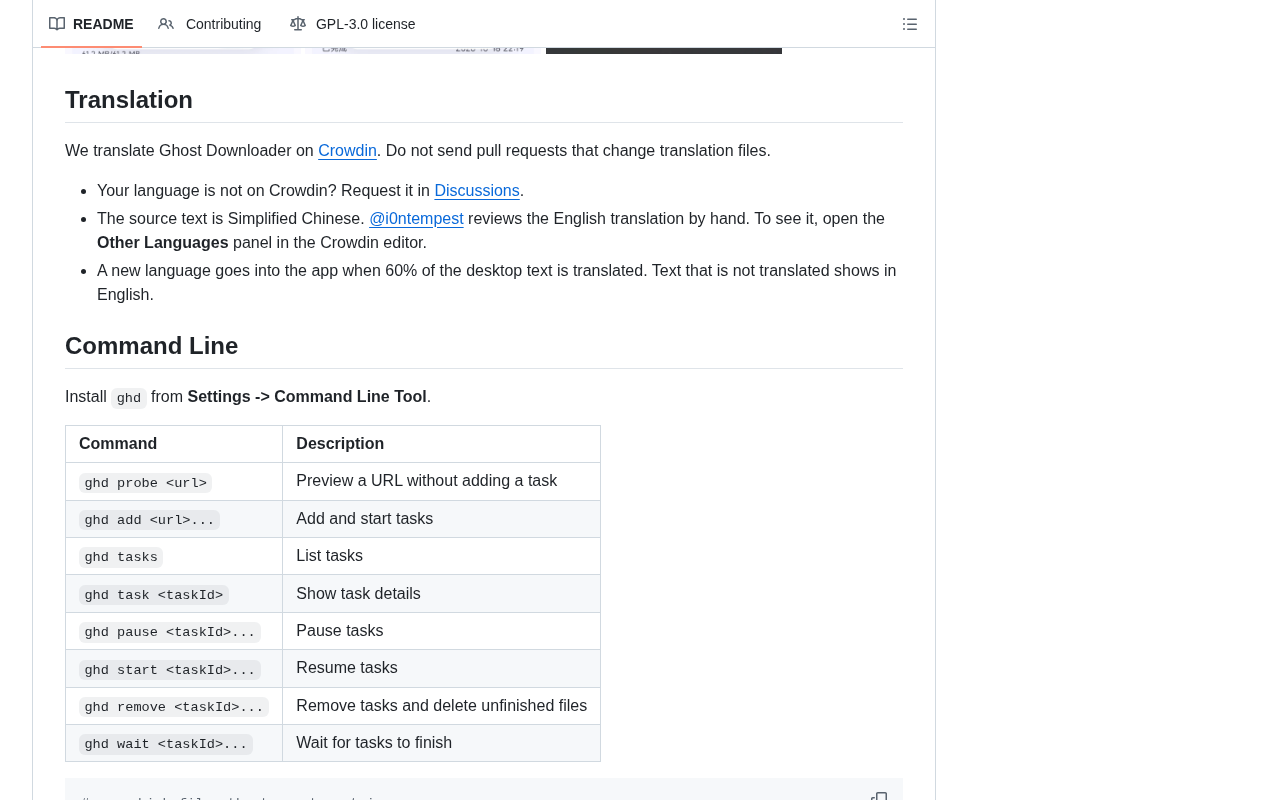
Ghost-Downloader-3's core proposition is "all-in-one" — a single unified tool that handles different types of download needs rather than forcing users to switch between multiple applications.
Judging from the project description, it doesn't position itself as a specialized tool for any particular niche, but rather aims for the "universal downloader" slot. This direction isn't new — early download software made similar integration attempts — but what sets Ghost-Downloader-3 apart is its choice of the Python tech stack and its rapid accumulation of community influence on GitHub as an open-source project.
For ordinary users, "one tool to rule them all" means a lower learning curve; for developers, being written in Python means a lower barrier to customization and secondary development.
Why a Downloader Can Garner This Kind of Attention
A star count of 13k is no longer niche territory on GitHub. When a download tool reaches this level, there are usually several driving factors behind it.
The need is real and high-frequency. Downloading is a fundamental internet activity, and nearly every user has experienced the frustration of "this downloader doesn't work well" or "that downloader has too many ads." An open-source tool that claims to unify all download scenarios naturally has appeal.
Open-source status builds trust. Commercial download software is often criticized for bundled installs, pop-up ads, or opaque background behavior, while open-source projects allow users to audit code and compile it themselves — a strong selling point for users who value privacy and control.
The convenience of the Python ecosystem. Python's popularity among developers is extremely high, which means the project is easier to understand, modify, and extend — and easier to attract contributors.
A growth curve of 341 stars in a single day typically appears when a project hits the trending list or gets recommended by a major community account, which usually brings a concentrated wave of user and developer attention.
The Real-World Challenges of Being an All-in-One
"The only downloader you need" is an ambitious declaration, but the "all-in-one" path is not easy from an engineering standpoint.
Different download protocols differ significantly at the underlying level: direct downloads focus on concurrency and resumable transfers, torrent downloads involve piece scheduling and peer negotiation, and various proprietary protocols require separate adaptation. Integrating all these capabilities into a single codebase while maintaining stability and performance is an ongoing evolutionary process.
Moreover, universal tools often face the "jack of all trades, master of none" critique. Users will ask: does it match the performance of specialized tools in each specific scenario? That takes time and real-world usage to verify.
From this perspective, Ghost-Downloader-3's current star count reflects expectations rather than completeness — the community endorses the problem it's trying to solve, but the project itself is still growing.
Resumable transfer refers to the ability to resume transmission from the byte position already downloaded after a network interruption or program exit during a download, without having to start over. Its implementation relies on the Range request header in the HTTP protocol — the client records the offset already written to disk and requests the remaining range from the server upon resumption. For direct downloads, resumable transfer is a fundamental capability for measuring a downloader's practicality, especially with large files and unstable networks.
Piece scheduling and peer negotiation are the core mechanisms of BitTorrent-style protocols. Files are divided into fixed-size pieces, and the downloader fetches different pieces in parallel from multiple peers, using strategies like rarest-first to improve overall throughput; peer negotiation refers to the process of discovering other nodes through trackers or DHT, exchanging handshake information, and sharing available piece bitmaps. These two mechanisms differ significantly from the concurrency model of HTTP direct downloads, which is one of the reasons why "all-in-one" is difficult to achieve through simple code reuse from an engineering perspective.
Who It's For
For ordinary users, if you're tired of switching between multiple download tools and are willing to invest some learning time in an open-source project that's still actively iterating, Ghost-Downloader-3 is worth watching.
For developers, the Python tech stack makes this project a good reference sample: you can see how a downloader organizes multi-protocol support, handles concurrency and task scheduling, and you can build custom development directly on top of it.
For the broader open-source community, this project's rise once again confirms a pattern — when a tool accurately hits users' pain point of "tool fragmentation," it becomes more than just software; it becomes an emerging community consensus.
Whether Ghost-Downloader-3 can truly live up to the title of "all-in-one" ultimately depends on whether it can do each type of download scenario solidly, beyond just breadth of features. That requires sustained community investment and the developer's long-term commitment to that promise.
Related articles
Unlock All Claude Models for Free? Developer Mode + Gateway Configuration Tutorial
A YouTube tutorial claims that enabling Claude desktop developer mode and configuring a third-party gateway allows free use of all models, including Opus 5.5. This article breaks down the steps, analyzes the gateway technical principles, and reveals the triple risks of account bans, data privacy, and service stability, as well as the authenticity of model names.
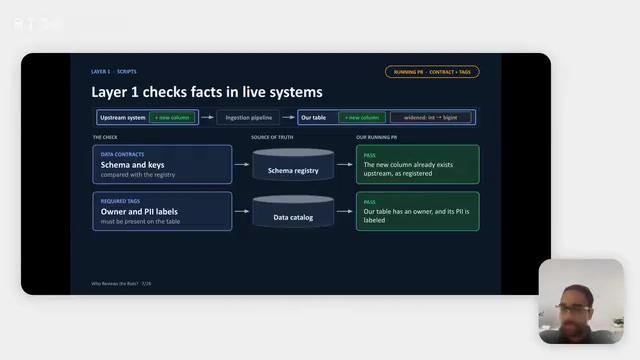
Robinhood's Hybrid AI Reviewer: 60% of Data PRs Auto-Merge
Robinhood's data platform team shares a hybrid AI PR reviewer: deterministic scripts verify facts, AI Agents judge contextual risk, and humans keep key decisions. About 60% of data pipeline PRs merge without human review, cutting review workload ~75%, saving ~132 engineering hours monthly, and reducing related incidents ~30%.

Making Marketing Videos with Claude Code Is More Efficient Than AI Video Generation
Generate marketing videos programmatically with Claude Code—more flexible and cheaper than AI video generators. Reference a style, generate a storyboard, output content as code, and make edits instantly.