The CES Travel Hack: Why This Portable Coffee Grinder Became a Tech Blogger's Go-To
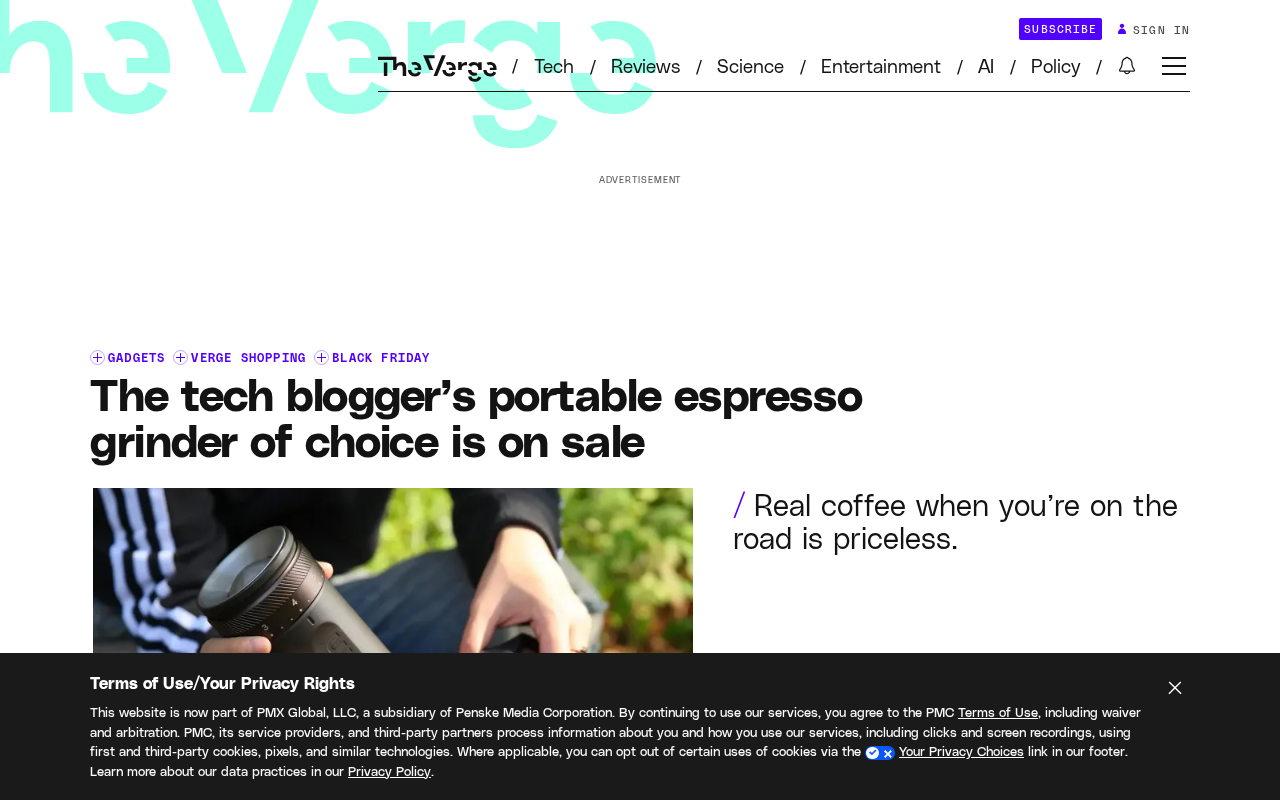
A tech blogger ditches hotel coffee and turns to travel gear like a portable espresso grinder.
The article tells how a tech blogger, after more than a decade of CES coverage and bad hotel coffee, abandoned the idea of bringing a full espresso machine to the hotel and chose portable travel coffee gear, centered on a portable espresso grinder. It analyzes the pain points behind this shift—unstable hotel coffee quality, long lines and high prices at the venue, and hard-to-get delivery coffee—explains why fresh grinding preserves flavor and compact design aids portability, notes the grinder is on sale as a window to lower trial-and-error costs, and reminds buyers to check whether grinding precision matches espresso extraction and whether the setup's weight and storage are acceptable.
Every year at CES, the most frustrating part usually isn't the frantic rush to cover sessions and file stories — it's the undrinkable cup of coffee at the hotel. Tech bloggers have long had enough of this torture — some have even seriously considered checking an entire espresso machine onto a flight to their Las Vegas hotel room, until reason kicked in and they turned to a more realistic solution: travel coffee gear.
From Hotel Coffee to Portable Gear: A Blogger's Real Transformation
According to this tech blogger's own account, after more than a decade of drinking "terrible hotel coffee" at tech trade shows, he finally couldn't take it anymore. The idea of hauling a full espresso machine to a CES hotel was obviously impractical, so he turned his attention to lighter travel coffee tools — and the core piece of equipment was a portable espresso grinder.
Behind this shift is a very typical pain point: during trade shows, hotel coffee quality is inconsistent, on-site coffee means long lines and high prices, and delivery coffee is hard to get between meetings. For tech media people who rely on caffeine to sustain long hours of writing and interviews, a coffee setup that fits in a backpack is far more practical than a big home machine.
CES (International Consumer Electronics Show) is held every January in Las Vegas, runs about four days, and spans a massive venue with a packed schedule. Media people often walk tens of thousands of steps a day and file stories back-to-back. During the show, local coffee demand spikes, lines at the venue and hotels are long, prices are high, and hotel rooms typically come with drip capsule machines or instant products of inconsistent quality. This high-intensity, low-supply scenario is exactly where demand for travel coffee gear typically comes from.
Why a Portable Grinder Became "Standard Equipment"
In the travel coffee gear chain, the grinder is usually the key link that determines the floor of quality. Freshly ground beans lose the least flavor, while pre-ground powder absorbs moisture and oxidizes during travel, with obvious flavor degradation. A portable grinder solves the problem of "being able to use fresh beans in a hotel room," while its compact electric or hand-crank design lets it easily pass security and fit into a suitcase.
The blogger's logic is straightforward: rather than relying on coffee supply at the show, it's better to keep the controllable part in your own hands. A grinder plus portable extraction equipment makes up a mini coffee station that works right in a hotel room.
Price Drop Window: A Timing Worth Noting
The original article mentions that this portable espresso grinder, chosen by the tech blogger, is currently on sale. For users who have long followed travel coffee gear, discount periods are usually a good time to lower the cost of trial and error — portable coffee equipment isn't cheap per unit, and buying during a promotion noticeably improves value for money.
Espresso places far higher demands on grind size than brewing methods like pour-over: the coffee powder needs to be fine enough and have a uniform particle size distribution to form stable resistance under about 9 bar of pressure and extract the target flavor in 25-30 seconds. If a portable grinder's burr precision is insufficient or the adjustment steps are too wide, channeling easily occurs — water flows through cracks in the puck, causing under-extraction and over-extraction to coexist and throwing flavor off balance. This is why, when choosing a portable espresso grinder, the burr type (conical/flat), grind adjustment (stepped or stepless), and particle size consistency deserve more attention than size and battery life.
Who Should Jump on the Bandwagon and Buy One
People who travel frequently, attend trade shows, and stay in hotels are the most direct target users for this kind of product. Next are enthusiasts who have requirements for coffee quality in scenarios like camping and road trips. It's worth noting that a portable grinder is only one link in the whole setup; it needs to be paired with extraction equipment (such as a portable espresso machine or pour-over gear) to deliver value. Before buying one on its own, it's best to think clearly about whether your use scenario actually holds up.
For people who just want a cup of coffee on the road that isn't bad, the barrier to entry for this gear isn't exactly low; but for tech professionals who treat coffee as work fuel and have basic quality requirements, it solves a real and high-frequency pain point. The reason this blogger's choice is worth referencing is precisely that it comes from more than a decade of real trade-show experience, not a paper comparison of spec sheets.
Things to Think Through Before Buying
The pitfalls of portable coffee gear mainly come down to two points: first, whether the grinding precision matches your extraction method — espresso has high demands on grind uniformity, and ordinary portable grinders may not deliver consistently; second, the weight and storage volume of the whole setup — are you really willing to carry it out every time? No matter how tempting the sale price is, if it ends up gathering dust at home, that money is wasted.
If, like this blogger, you're constantly shuttling between hotel rooms and trade show floors and don't want to rely on hotel coffee to survive anymore, then seriously evaluating a portable coffee setup during a promotional window is worth your time.
One-line Summary
A tech blogger ditches hotel coffee and turns to travel coffee gear like a portable espresso grinder.
Paragraph Summary
The article tells how a tech blogger, after more than a decade of covering CES and being tormented by hotel coffee, gave up the unrealistic idea of moving a full espresso machine into a hotel and instead chose portable travel coffee gear, centered on a portable espresso grinder. The author analyzes the pain points behind this shift: during trade shows, hotel coffee quality is unstable, on-site lines are long and prices high, and delivery coffee is hard to get in time. The portable grinder is key because fresh grinding and extraction preserve flavor as much as possible, and its compact design makes it easy to carry. The article notes the grinder is on sale, a window to lower trial-and-error costs, while reminding readers that a portable grinder must be paired with extraction equipment and that before buying they should assess whether grinding precision matches espresso extraction and whether the weight and storage volume of the whole setup are acceptable.
Related articles

The Ultimate Form of Intelligence: From Black Hole Computers to the Universe's Final Question
Intelligence begins with survival but may end by reshaping the universe. This article explores the ultimate form of intelligence—from black hole computers to the Omega Point—and asks what intelligence is ultimately for.

Gift Guide for Book Lovers: Beyond Books, These Tech Gifts Are Worth Giving
Shopping for a book lover? Beyond books, e-readers, noise-cancelling headphones, reading lights, tablets, and styluses are worth considering. This guide covers buying advice for immersive, nighttime, and note-taking scenarios, plus tips on device habits and ecosystem compatibility before gifting.

AI Wiki Clones Are Hurting Your Favorite Wiki
AI-generated wiki clone sites are diverting search traffic from original wikis and eroding editor communities. This article analyzes how clone sites operate, the hidden damage to the wiki ecosystem, and possible community responses.