GitHub Daily · August 29: In-Browser Code Intelligence and the Rise of Native PHP Compilation

Browser-based code intelligence, control-plane-free networking, and native PHP compilation lead GitHub Trending.
GitNexus runs code knowledge graphs and RAG entirely in the browser with zero servers, protecting code privacy. Tailscale's official tailcat ditches the control plane for lightweight encrypted peer-to-peer connections, gaining nearly 1,000 stars in one day. The Swoole team's typephp attempts to compile PHP into native binaries, challenging the language's performance ceiling.
Today's Overview
On the last weekend of August, GitHub Trending displayed a fascinating split personality. On one side, heavyweight veterans continued to dominate the charts — like Ghidra, the reverse engineering framework open-sourced by the NSA, and screenshot-to-code, which turns screenshots directly into code. On the other side, several dark horses surged at astonishing speed, such as tailcat from the official Tailscale team, which gained nearly a thousand stars in a single day.
If there's a common thread today, it's that the boundaries of developer tools are being redefined. Code intelligence is moving into the browser, networking tools are ditching the control plane, and even PHP — that language jokingly called "the best in the world" — is experimenting with compiling to native binaries. Let's break them down one by one.
GitNexus: Stuffing a Code Knowledge Graph into Your Browser
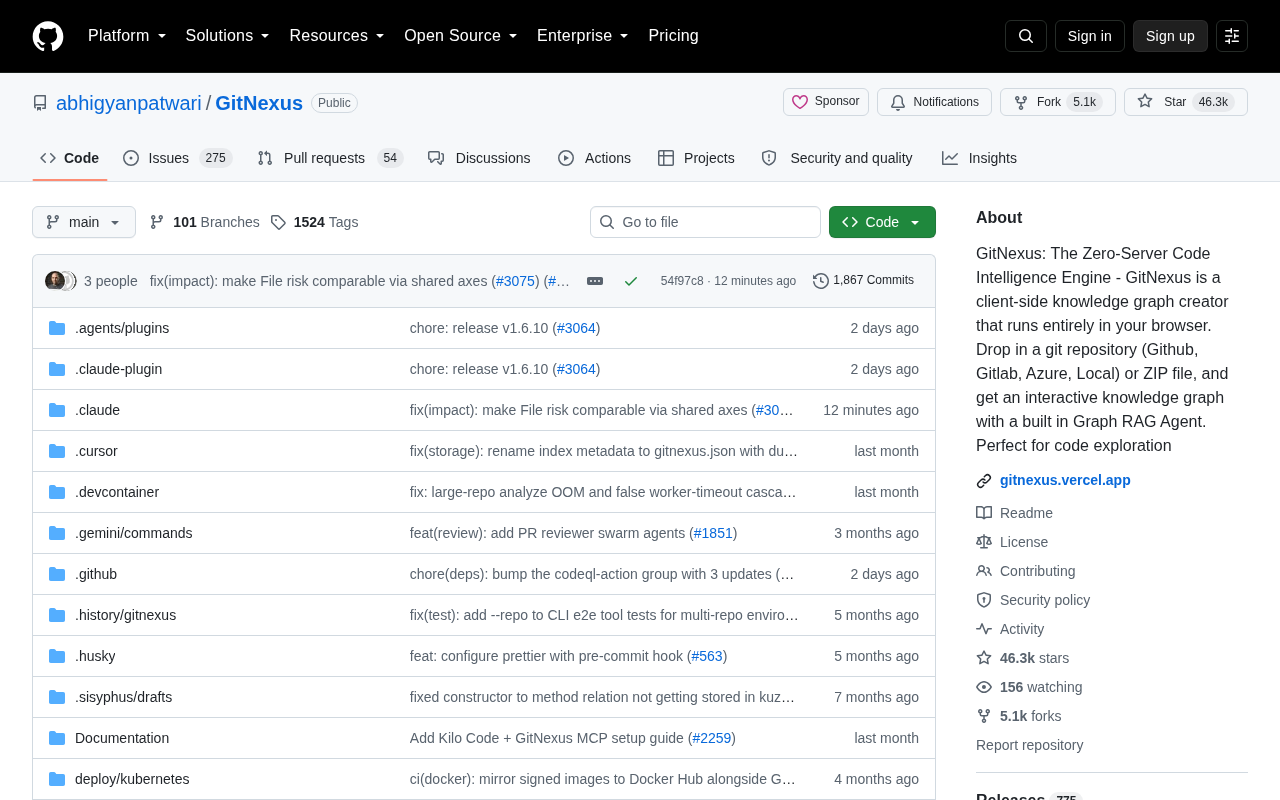
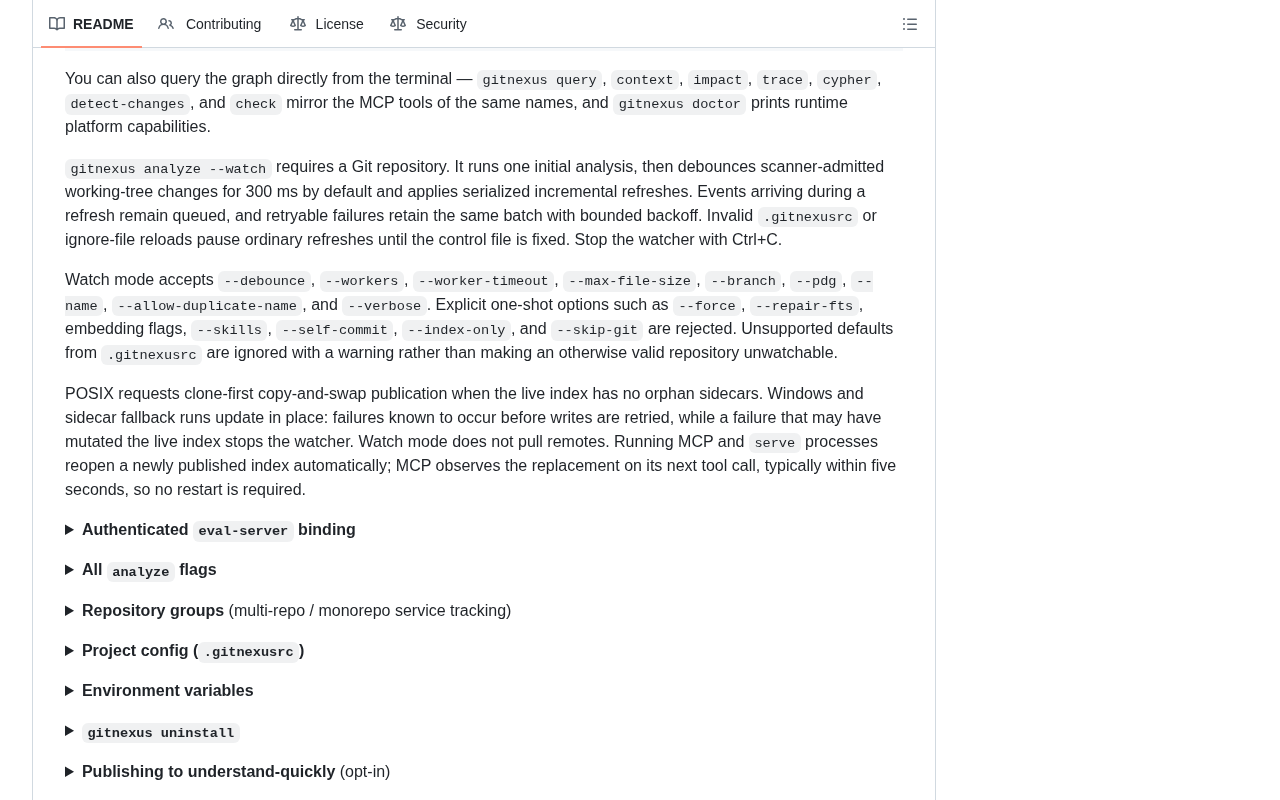
GitNexus has a clear positioning: it's a purely client-side code intelligence engine. Feed it a git repository — whether from GitHub, GitLab, or even a local ZIP archive — and it generates an interactive knowledge graph, complete with a built-in Graph RAG Agent to help you explore the codebase.
The problem it solves is genuinely painful. Previously, understanding an unfamiliar large codebase meant either sifting through documentation or clicking through files one by one in your editor. GitNexus visualizes the entire repository's structural relationships as a graph — how functions call each other, how modules depend on one another — all at a glance.
The most noteworthy aspect is Zero-Server — literally zero servers. All computation happens in your browser, and your code is never uploaded anywhere. For teams that don't dare send proprietary code to third-party AI services, this is an absolute must-have.
The tech stack uses TypeScript, and the fact that it can run knowledge graphs and RAG in the browser shows that front-end computing power has been seriously underestimated in recent years. For developers, this serves as an excellent reference implementation for WebAssembly and browser-side AI applications. With over 46,000 stars and still gaining 200+ per day, its momentum is rock solid.
screenshot-to-code: The Perennial Heavyweight of Screenshot-to-Code
This project is a regular on Trending — over 75,000 stars, still gaining 300+ today. Its functionality can be summed up in one sentence: feed it a design mockup or webpage screenshot, and it generates clean code, supporting HTML + Tailwind as well as React and Vue.
Why does it stay so popular? Because it hits the most tedious part of front-end development dead center — converting designs into code. This used to require manual slicing, but now multimodal LLMs handle it in seconds.
Its core value lies in its engineering polish. Under the hood, it's calling vision LLMs, but the author has packaged the entire workflow — from screenshot upload to code output to live preview — into a ready-to-use product. That's why it maintains its popularity even as many similar model capabilities have emerged.
It uses Python for the backend. For developers looking to learn how to wrap multimodal models into practical tools, this is a ready-made textbook.
tailcat: A Network Swiss Army Knife Without the Control Plane
Today's biggest dark horse is tailcat, surging by over 900 stars in a single day — a remarkably unusual growth rate. It comes from the official Tailscale team and positions itself as an encrypted version of netcat.
Anyone familiar with the command line knows netcat — that all-purpose network debugging tool. What makes tailcat clever is that it runs on Tailscale's data plane but doesn't require Tailscale's control plane.
That last sentence is the key point. Traditionally, using Tailscale requires logging into an account and letting the control plane coordinate nodes. tailcat eliminates that step entirely — you get end-to-end encrypted, peer-to-peer connections directly. For ad-hoc file transfers or quick debugging between two machines, the barrier to entry drops dramatically.
The tech stack is Go — practically the standard language for networking tools. At just 3,000 stars, it's still very young, but the official backing plus 900+ stars per day tells us the community has a genuine hunger for lightweight, decentralized networking tools.
Ghidra: The NSA's Reverse Engineering Powerhouse
Ghidra is a name everyone in the security world knows — it's the software reverse engineering framework open-sourced by the NSA. Over 73,000 stars, still gaining 190+ today.
Reverse engineering, in plain terms, means taking compiled binary programs and reconstructing them back into readable code logic. This field used to be monopolized by the commercial tool IDA Pro, which was absurdly expensive. Ghidra's open-source release essentially kicked the door wide open on this high-barrier field.
Its core feature is the decompiler, which can convert machine code back into pseudo-code closely resembling C, with support for multiple processor architectures. For security researchers, malware analysts, and CTF competitors, this is an essential tool of the trade.
It's written in Java — which some people gripe about for slow startup times — but it wins on cross-platform support and being completely free. The fact that a national security agency open-sourced its own internal tools is symbolically significant in itself: it ensures that top-tier security capabilities are no longer the privilege of the few.
typephp: Compiling PHP to Native Binaries
The last project comes from the Swoole team. Called typephp, it aims to compile PHP into native binary files. It currently has only around 800 stars, but gaining 180+ per day is impressive growth for a project of this size.
PHP has long been criticized as an interpreted language — slow to run and requiring an entire runtime environment for deployment. What typephp wants to do is shatter that image, allowing PHP code to compile into standalone executables just like Go.
This addresses PHP's distribution and performance pain points. Imagine: a PHP tool you wrote can be compiled into a single binary, copied to another machine, and run immediately — no PHP environment needed. For CLI tools and microservice scenarios, that's incredibly appealing.
The "type" in the name also hints that it may be moving toward strong typing. Swoole is already the flagship name in PHP's high-performance space, and this attempt likely represents a collective effort by the PHP community to break through the language's ceiling.
Today's Trend Observations
Looking at these five projects together, two clear undercurrents emerge.
The first is localization and decentralization. GitNexus moves code analysis into the browser; tailcat strips away the control plane from networking tools. Both are reducing dependence on central servers. Developers increasingly care about data sovereignty and privacy — they don't want to hand things over to someone else's servers.
The second is the breaking of boundaries between languages and tools. PHP compiling to native binaries, front-end running knowledge graphs — these are all challenging our stereotypical assumptions about certain technologies.
Today's Must-See TOP 3
Number one: tailcat. Officially backed, fastest growth, and the control-plane-free approach is highly imaginative. Network engineers should try it out immediately.
Number two: GitNexus. Running code knowledge graphs entirely in the browser, privacy-friendly, and a powerful weapon for understanding large codebases.
Number three: typephp. While small in scale, if it truly brings PHP into the native compilation era, it would be a revolution for the entire PHP ecosystem.
The evolution of tools never happens in a vacuum — it always responds to developers' real pain points. Today's trending list is the perfect footnote to that statement.
Related articles

EmbeddedSass for .NET: A Sass Compilation Solution Without Node.js Dependencies
EmbeddedSass for .NET uses the official Embedded Sass Protocol, enabling .NET developers to compile Sass/SCSS natively without Node.js. Learn how it works and integrates with ASP.NET.

San Francisco to Singapore Time Difference: The Trans-Pacific Routine of Silicon Valley Tech Workers
SF and Singapore are 15-16 hours apart, and frequent travel between them is now routine for tech workers. Explore the time difference challenges, AI industry globalization, and talent flows.

Anthropic Launches Official Claude Code Plugin Directory: A Curated High-Quality Extension Ecosystem
Anthropic launches claude-plugins-official, a curated directory of high-quality Claude Code plugins. Learn about its positioning, core value, and impact on the AI coding ecosystem.