GitHub Daily Digest · September 2: The Rise of Claude Code Skill Ecosystems and Local-First AI Tools
Claude Code skill packs and local-first AI tools dominate GitHub Trending on September 2.
Today's GitHub Trending highlights two major shifts: the rise of Claude Code skill ecosystems and the push toward local-first AI. Academic research and UI design skill packs are equipping AI agents with vertical expertise, while VoiceStudio — a local ElevenLabs alternative — saw the day's highest growth. Self-hosted tools like reclip reinforce the trend of users reclaiming data control amid rising API costs and privacy concerns.
Today's Overview
Looking through today's GitHub Trending list, one very clear signal emerges: AI tools are moving from the cloud to local machines, and from general-purpose capabilities to vertical-specific skills. Of the four projects that made the list today, two are built directly around the Claude Code ecosystem, one is a fully local voice AI suite, and another is a lightweight self-hosted video downloader.
This reflects two major trends. The first is the skill-ification of AI Agents — people are no longer satisfied with models that just chat broadly; they want to equip them with specialized workflows. The second is local-first — more and more developers are becoming wary of data privacy concerns and API costs, choosing to bring AI capabilities back to their own machines.
Let's break them down one by one.
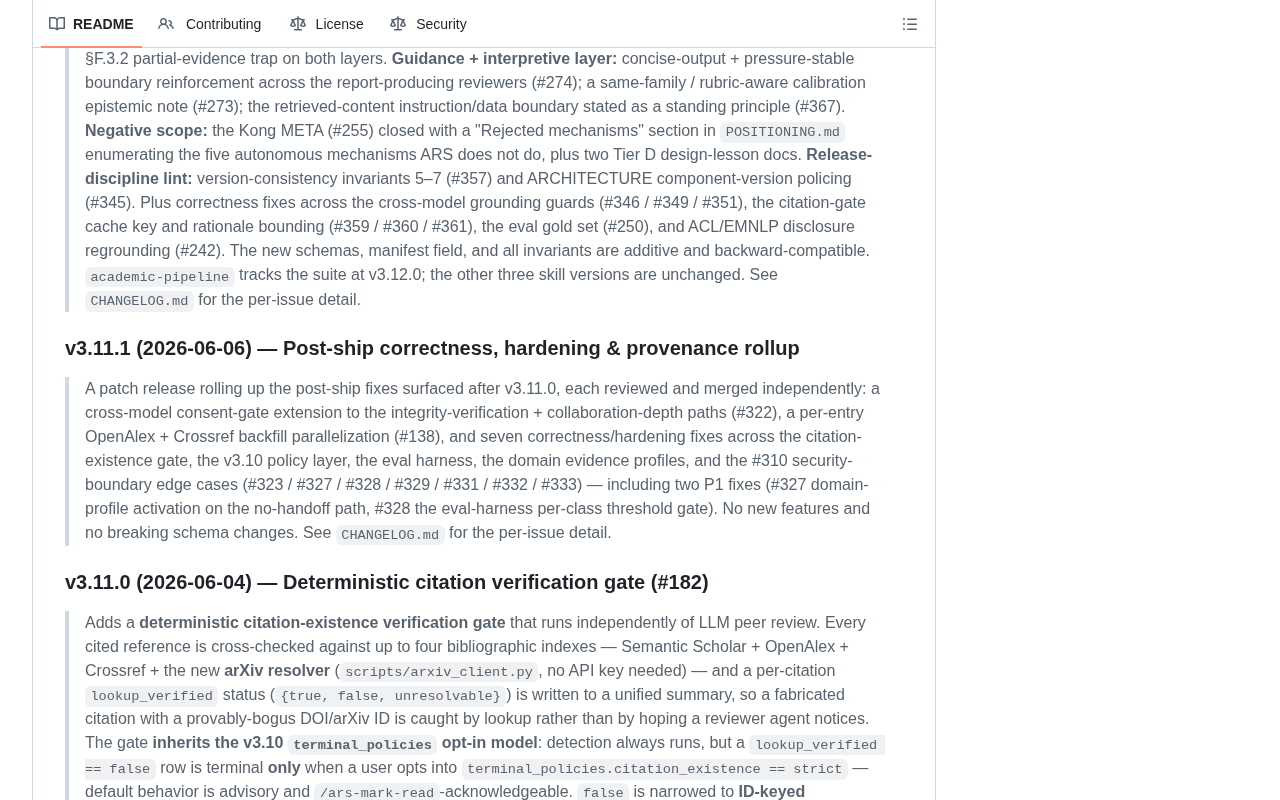
Imbad0202/academic-research-skills: Giving Claude Code an Academic Research Brain
Project positioning: This is an academic research skill pack designed specifically for Claude Code, chaining the entire research writing process into an automated pipeline.
The problem it solves is very specific. Think about it — a researcher completing a paper has to go through literature review, drafting, self-review, iterative revision, and finalization. This skill pack breaks the process into five stages: research → write → review → revise → finalize. Each step has a corresponding skill module that tells Claude Code exactly what to do at each point.
The core feature is its process-oriented design. It's not just a simple prompt — it makes the tacit knowledge of academic research explicit. For example, during the review stage, it guides the model to critically examine argumentation gaps. During the revision stage, it switches to a mode focused on polishing expression.
Use cases are clear-cut: graduate students writing theses, researchers rushing to meet conference deadlines, and even engineers writing technical reports can all use it to boost productivity.
The tech stack is Python, which aligns with the mainstream choice in academia. For developers, the reference value lies in how it demonstrates decomposing a complex human workflow into skill units that AI can understand.
Data analysis: With over 44,000 stars and 161 new stars today, this volume indicates a project that has been accumulating momentum over time rather than going viral overnight. Academic needs are persistent, and tools like this tend to have lasting staying power.
debpalash/VoiceStudio: A Fully Local ElevenLabs Alternative
Project positioning: This is an open-source, fully local voice AI suite that positions itself as an alternative to the commercial product ElevenLabs.
The gap it fills is critical. ElevenLabs is great, but it's a cloud service — your voice data gets uploaded, and it charges by usage, which adds up over time. VoiceStudio brings everything local.
Core features are impressive. It supports voice cloning, voice design, video dubbing, dictation, transcription, and even audiobook creation. Most remarkably, it claims to support 646 languages. That kind of coverage is extremely rare among open-source projects.
Use cases are wide-ranging: independent creators who want to dub videos without paying subscription fees, podcast producers who need batch transcription, publishers looking to create multilingual audiobooks, and even privacy-conscious users who simply want to process their voice data locally.
The tech stack is also Python. For developers, it serves as an excellent reference for studying local voice model deployment.
Data analysis is the most noteworthy part. Today's growth of 509 stars is the strongest among all four projects. With a total of over 12,000 stars plus this explosive growth, it shows that the local voice AI space is heating up. People's anxiety about privacy and costs is translating into real demand for local solutions.
VoltAgent/awesome-design-md: Teaching Coding Agents Design
Project positioning: This is a collection of DESIGN.md files containing analyses of well-known brand design systems. Drop one into your project, and your coding agent can generate interfaces that match the desired style.
The idea is genuinely clever. Today's AI coding assistants are great at writing code, but the interfaces they produce often look cookie-cutter. Where's the problem? The model doesn't know what design style you want. This project gives the agent a design specification document.
The core feature is the documentation of design standards. Each DESIGN.md distills the essence of a brand's design system — color palettes, spacing, component styles. Once the agent reads this file, it can produce a cohesive UI accordingly.
For use cases, any developer using AI to write frontend code should take a look. Just pick a design document that matches your aesthetic, drop it into your project, and let Cursor or Claude Code reference it — the quality of the output immediately improves.
Data analysis: Over 112,000 stars makes it the absolute giant on today's list. It still gained 487 stars today. This scale indicates it's already a community-recognized resource. Its popularity also confirms a principle: feeding AI the right context is far more effective than endlessly tweaking prompts.
averygan/reclip: A Clean and Simple Self-Hosted Video Downloader
Project positioning: This is a lightweight, self-hostable media download tool that can grab videos from virtually any website, complete with a clean web interface.
The pain point it addresses is straightforward. There are plenty of video download tools out there, but either the command-line interface scares off regular users, or the web-based versions are stuffed with ads. reclip's selling point is cleanliness and user control.
The core feature is its lightweight and self-hosted nature. You can deploy it on your own server and operate it through a web interface — no need to remember complex commands, and no worries about third-party sites secretly logging your downloads.
Use cases include learners who want to save tutorial videos for offline viewing, creators backing up content, and tech enthusiasts building home media libraries.
The tech stack is primarily HTML, indicating the focus is on that clean frontend interface.
Data analysis: Over 7,000 stars with 21 new stars today puts it in the steady growth category. It doesn't chase hype — it succeeds by doing one small thing well.
Today's Trend Observations
Looking at all four projects together, two threads become especially clear.
The first is the explosion of the Claude Code ecosystem. On today's list, both the academic research skill pack and the design document library are essentially supplementing coding agents with specialized knowledge. This signals that the community is no longer satisfied with general-purpose AI — they're stuffing vertical domain know-how into its brain. Whoever can provide high-quality skills and context will capture the dividends of this wave.
The second is local-first and user control. VoiceStudio positions itself against cloud-based ElevenLabs, and reclip emphasizes self-hosting. What these two projects share is giving data and control back to the user. Under the dual pressures of API costs and privacy anxiety, local solutions are becoming a force that can no longer be ignored.
Today's Must-See TOP 3
#1: VoiceStudio. The fastest growth today. Local voice AI is a validated real need, and every creator should bookmark it.
#2: awesome-design-md. The smartest approach — a single file that makes AI produce beautiful interfaces. Frontend developers can't afford to miss this.
#3: academic-research-skills. Addresses a real academic need. The process-oriented design philosophy is highly inspiring for anyone building agent tools.
Looking ahead, today's trending list actually foreshadows the next phase of AI tools. General-purpose capabilities are no longer scarce — what's truly valuable is vertical expertise and local control. We'll see more and more projects like these: not trying to be big and all-encompassing, but doing one specialized thing exceptionally well.
Related articles
AI Beginner's Guide: Three Stages to Building Your Own Personal AI Assistant from Scratch
No tech background? No problem. This beginner's guide maps out a 3-stage path to building a personal AI assistant — from prompt engineering to no-code automation to API calls.

Zero to Vibe Coding in Seven Days: A Complete Beginner's Guide to AI Programming
A beginner's guide to Vibe Coding: learn the 6-step path covering Claude Code, Cursor, Codex, prompt engineering, and project practice to build products with AI.
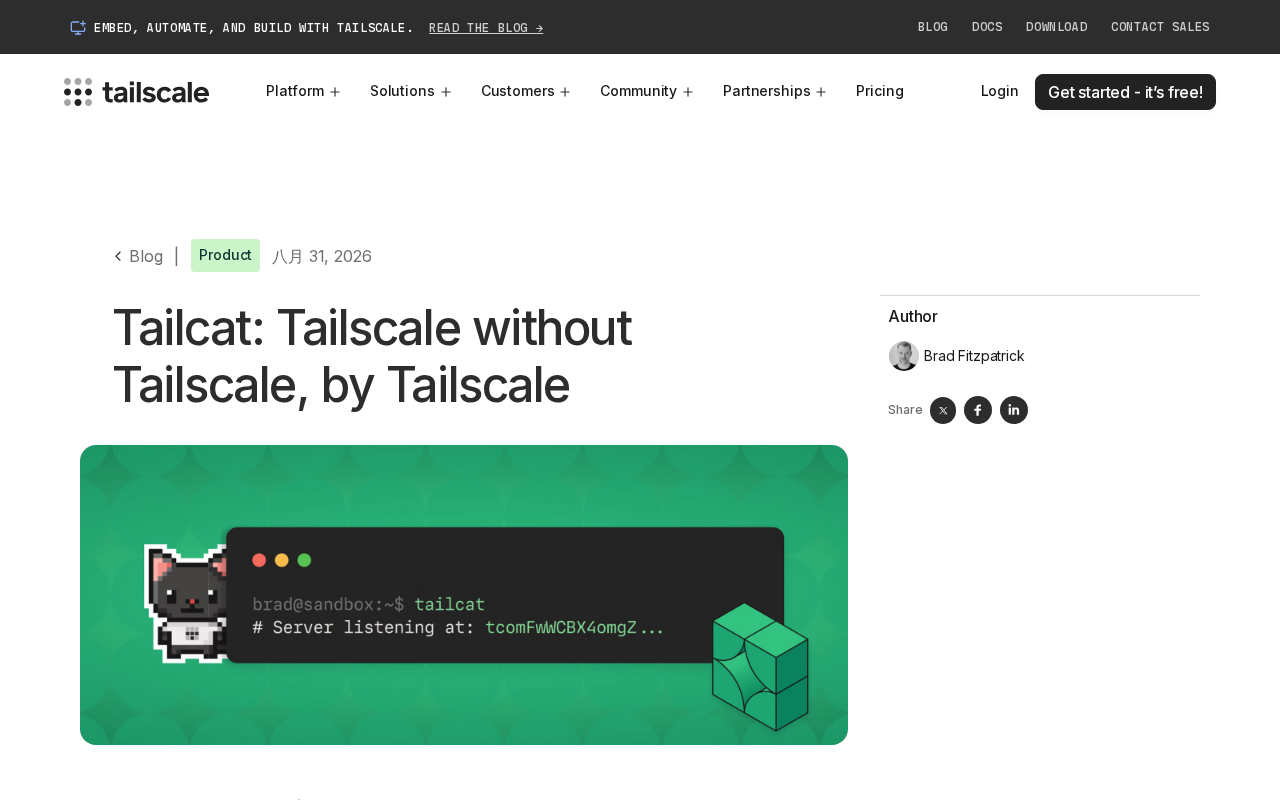
Tailcat: Tailscale's Official Decentralized Minimalist Networking Solution
Tailcat is Tailscale's official decentralized networking project that strips control plane dependencies, offering self-hosting users a more autonomous, privacy-focused WireGuard mesh experience.