GitHub Daily · July 31: Security Reverse-Engineering AI Skill Pack Tops the Charts, Open-Source Tools Bloom Everywhere

Security reverse-engineering AI skill pack tops GitHub Trending with 612 stars/day as open-source pragmatism thrives.
GitHub Trending on July 31 is dominated by the fusion of security research and AI toolchains. reverse-skill, an AI skill routing pack for reverse engineering and pen-testing, surged 612 stars in one day with a 15% fork rate, signaling Agent-ified security workflows. Other highlights include chatwoot (open-source Intercom/Zendesk alternative), kaneo (minimalist project management opposing Jira bloat), and ESP32-Bit-Pirate (a multi-protocol hardware hacking tool with Web CLI).
GitHub Daily · July 31: Security Reverse-Engineering AI Skill Pack Tops the Charts, Open-Source Tools Bloom Everywhere
Today's GitHub Trending reveals a clear theme — the deep fusion of security research and AI toolchains. The top spot is claimed by an AI skill routing pack focused on reverse engineering and penetration testing, surging 612 stars in a single day, signaling the security community's strong demand for "AI-assisted security research." Meanwhile, the trending list also covers customer service SaaS, project management, hardware hacking tools, and more, spanning language stacks from PowerShell, Ruby, and TypeScript to C++. It's clear that today's open-source highlights aren't concentrated in a single track but instead exhibit an overall ethos of "tool pragmatism" — every trending project solves a specific, well-defined pain point.
Let's dive into each one.
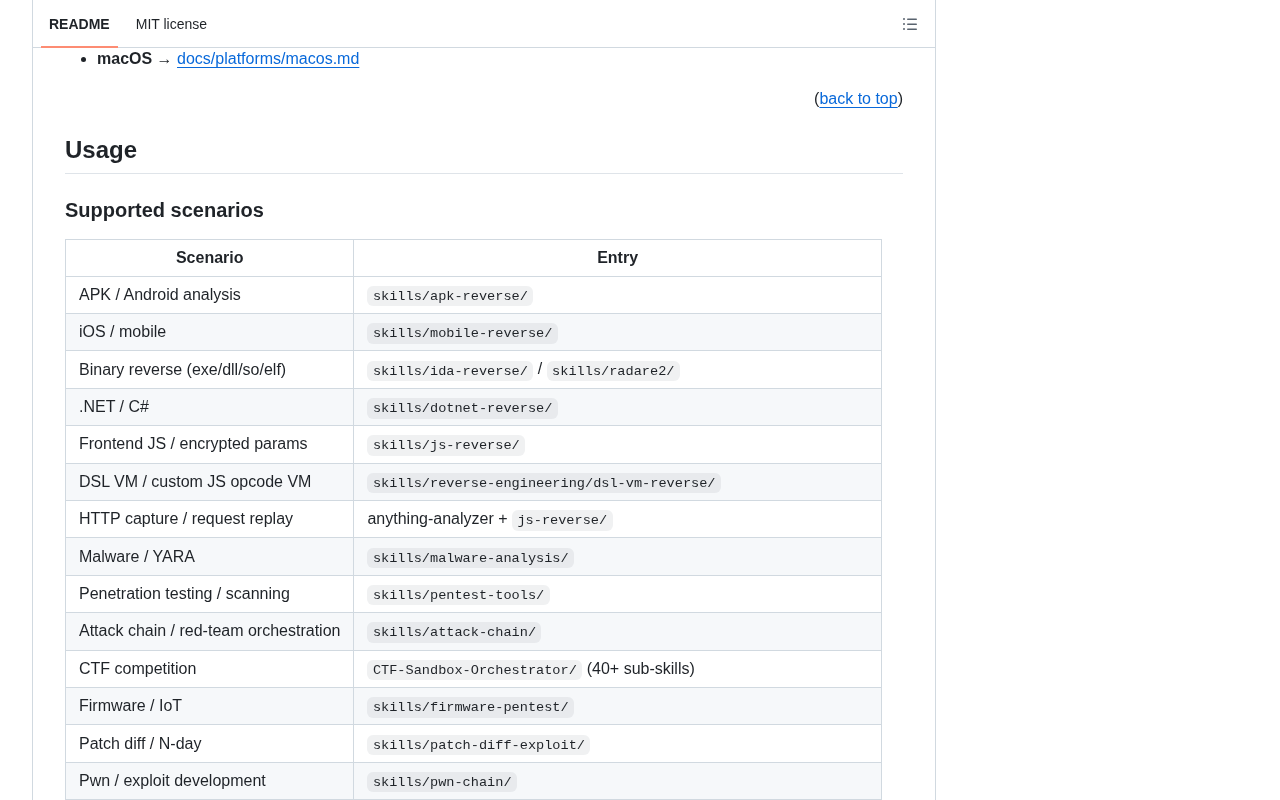
reverse-skill: Routing Reverse Engineering & Pen-Testing Capabilities to AI Coding Assistants
Project positioning: A "skill routing pack" for reverse engineering, authorized penetration testing, and security research that empowers AI coding clients like Claude Code, Kiro, Cursor, and Cline through AI-powered auto-routing + on-demand bootstrapping toolchains + self-evolving experience databases.
Problem solved: In the past, security researchers using AI coding assistants faced an awkward gap: general-purpose LLMs lack sufficient domain knowledge for reverse engineering and penetration testing scenarios, and they can't invoke specific toolchains (like disassemblers, packet sniffers, or protocol analyzers). reverse-skill fills precisely this gap — it doesn't train a new model but acts as a "middleware layer," intelligently routing to the most suitable skill module based on the current task and bootstrapping the corresponding toolchain on demand.
Core features: Three key concepts deserve attention. First, "AI auto-routing" lets the assistant select the appropriate capability branch based on task type. Second, "on-demand toolchain bootstrapping" dynamically guides installation and configuration when needed, lowering the barrier to environment setup. Third, "self-evolving experience database" means it continuously accumulates and consolidates experience through use, getting smarter over time. This self-evolving design philosophy is exactly at the frontier of today's Agent engineering.
Use cases: Imagine a security researcher analyzing a binary sample in Cursor — after inputting requirements, reverse-skill automatically identifies this as a reverse engineering task, routes to the corresponding skill, spins up the disassembly toolchain, and draws on its accumulated experience database to provide analysis recommendations. This is extremely attractive for CTF players, red team engineers, and malware analysts.
Tech stack: Primarily written in PowerShell — an interesting choice. PowerShell holds a central position in the Windows security ecosystem, and choosing it as the routing and bootstrapping script language indicates the project focuses on Windows reverse engineering scenarios. For developers, it demonstrates how to build the "glue layer" of AI tools using scripting languages.
Data analysis: 9,996 stars, 1,550 forks, 612 stars/day — this growth rate is extremely rare among security tools. Nearly 10,000 stars paired with 1,550 forks yields a fork rate as high as 15%, indicating that many users aren't just bookmarking it but are actually cloning, using, and even building upon it. This is a project truly being "put to work" by the community, not merely spectated.
chatwoot: The Evergreen of Open-Source Customer Service Platforms
Project positioning: An open-source live chat, email support, and omni-channel helpdesk system, positioned as an open-source alternative to Intercom, Zendesk, and Salesforce Service Cloud.
Problem solved: Commercial customer service SaaS is expensive, and data is hosted by third parties, which isn't friendly to privacy-sensitive or budget-constrained businesses. chatwoot lets companies self-host a complete customer service system, maintaining data sovereignty while saving on hefty subscription fees.
Core features: Omni-channel is its core selling point — website live chat, email, and social media messages can all be managed from a single workspace. For small and medium business support teams, this "all-in-one" integration dramatically improves response efficiency.
Use cases: SaaS startups, e-commerce teams, and finance/healthcare companies that need compliant data control can all deploy chatwoot as their customer communication hub.
Tech stack: Built with Ruby (Rails), a classic and mature web technology stack that's stable and reliable. For Rails developers, chatwoot is an excellent large-scale open-source codebase to study.
Data analysis: 34,947 stars, 8,423 forks — the largest veteran on today's list. While 53 stars/day isn't explosive growth, for a mature project that has already accumulated nearly 35,000 stars, sustained steady growth precisely proves its long-term vitality. The 8,000+ forks also reflect that many enterprises are self-deploying and customizing it.
kaneo: A Minimalist Open-Source Project Management Tool
Project positioning: An open-source project management tool whose motto is "everything you need, nothing you don't" — emphasizing that tools should serve you, not slow you down.
Problem solved: Heavyweight project management tools like Jira are feature-bloated with high learning curves, and many small teams are hurt by over-engineered processes. kaneo takes the opposite approach, cutting in with a minimalist product philosophy — keeping only core task management capabilities and stripping away the bloat.
Core features: The biggest highlight is "restraint." This "less is more" design philosophy is especially rare in the project management space, directly addressing developers' widespread frustration with bloated tools.
Use cases: Solo developers, small startup teams, and open-source project maintainers — any scenario that doesn't need enterprise-grade complex workflows can benefit from kaneo's lightweight and efficient experience.
Tech stack: Full-stack TypeScript, the most mainstream web development choice today, offering direct reference value for frontend and full-stack developers.
Data analysis: 4,614 stars, 423 forks, with a healthy 188 stars/day growth rate, indicating its minimalist positioning precisely hits the pain point. The relatively low fork rate suggests users are more attracted by the philosophy and bookmarking to follow along — the product is still in a rapid growth phase.
ESP32-Bit-Pirate: The Hardware Hacker's Swiss Army Knife That Speaks Every Protocol
Project positioning: A hardware hacking tool based on the ESP32, offering a web-based CLI interface and claiming to "speak all protocols."
Problem solved: In hardware debugging and security research, engineers frequently need to interact with various communication protocols (UART, SPI, I2C, etc.), and traditional approaches often require multiple dedicated devices. ESP32-Bit-Pirate draws inspiration from the classic Bus Pirate concept, using an inexpensive ESP32 to handle multiple protocols, with the innovative addition of a Web CLI.
Core features: The Web-Based CLI is the biggest highlight — no dedicated software needed, just open a browser to operate, drastically lowering the barrier to entry. Combined with the ESP32's built-in WiFi capability and low cost, this is an exceptionally cost-effective hardware security research platform.
Use cases: IoT security researchers, hardware reverse engineering enthusiasts, and embedded developers can all use it to sniff, inject, or analyze various hardware communication protocols.
Tech stack: Written in C++, running on the ESP32 microcontroller — the typical tech stack for embedded security.
Data analysis: 4,676 stars, 383 forks, 152 stars/day. For a hardware project to achieve such growth reflects the active hardware hacking community and the continued prosperity of the ESP32 ecosystem.
Trend Observations: A Dual Return to Security and Pragmatism
Looking at today's full trending list, two clear threads deserve attention.
First, security research is being comprehensively "AI-ified." The chart-topping reverse-skill and the fourth-ranked ESP32-Bit-Pirate — one software, one hardware — both point toward the hot direction of security research. reverse-skill's approach of packaging reverse engineering/pen-testing capabilities as "skill packs" for AI coding assistants marks that security workflows are being restructured through Agent-ification. As AI coding tools like Claude Code and Cursor become standard developer equipment, building vertical domain skill packs around them is emerging as an entirely new open-source track.
Second, "open-source alternatives" and "minimalism" continue to thrive. chatwoot benchmarks against Intercom/Zendesk, kaneo rebels against Jira's bloat — both use open-source and restrained product philosophies to challenge the existing commercial SaaS landscape. Beyond the AI hype, these tools that solidly solve real pain points for businesses and teams still possess a firm user base and growth momentum.
Today's Must-See TOP 3
#1: reverse-skill — If you're a security researcher or interested in AI Agent engineering, this project that surged 612 stars/day with a 15% fork rate absolutely cannot be missed. It represents the most cutting-edge practice of the "AI coding assistant + vertical skill pack" paradigm.
#2: ESP32-Bit-Pirate — A godsend for hardware hackers and IoT security enthusiasts. With an ESP32 costing just a few dollars, you get a Swiss Army knife that "speaks all protocols," and the Web CLI design maximizes usability.
#3: kaneo — Teams tired of Jira should give this minimalist project management tool a chance. Full-stack TypeScript, clear philosophy, strong growth — a great choice for small teams looking to cut costs and boost efficiency.
Today's trends tell us that in the open-source world of 2026, on one side AI Agents are penetrating deeply into vertical professional domains, while on the other side practical tools are steadily replacing commercial software. Regardless of which direction you're in, all four of these projects are worth your time to explore in depth. See you tomorrow.
Related articles
Getting Started with Ollama: The Go-To Tool for Running Open-Source LLMs Locally
Ollama is a free, open-source tool for managing and deploying open-source LLMs like DeepSeek locally. Learn what it is, its cross-platform support, CPU/GPU features, and key use cases.
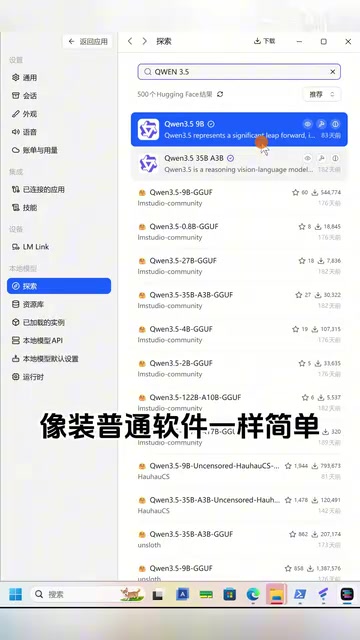
LM Studio vs Ollama vs vLLM: A Deep Dive into Local LLM Deployment Tools
LM Studio, Ollama, and vLLM compared: ease of use, performance, and ideal use cases. Beginners pick LM Studio, developers use Ollama, enterprises go with vLLM.
Getting Started with Ollama: The Essential Tool for Local Open-Source LLM Deployment
Learn what Ollama is and why it matters: a free, open-source tool for deploying LLMs like DeepSeek locally, with GPU/CPU support, cross-platform compatibility, and API access for private AI apps.