GLM Builds Its Own Inference Infrastructure: A Critical Step in LLM Deployment
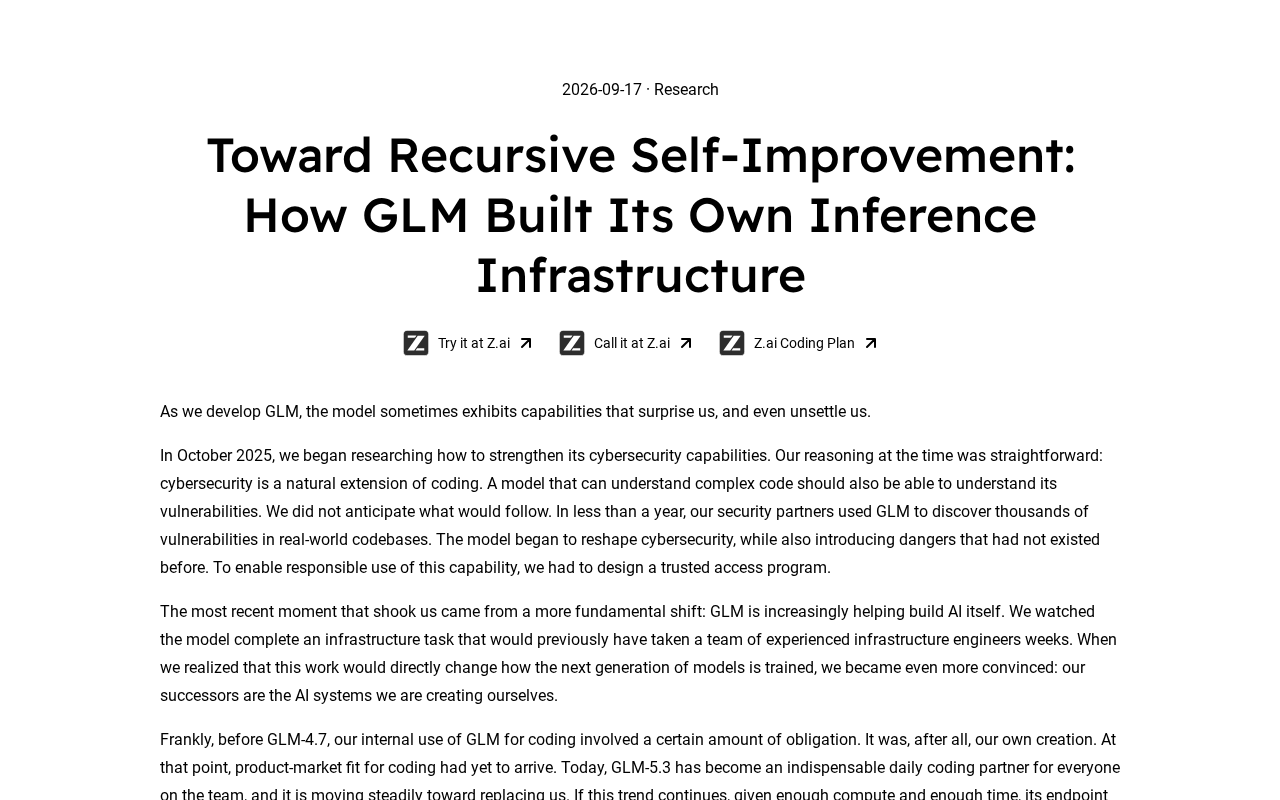
GLM's in-house inference infrastructure marks a shift from model capability races to production engineering.
This article examines the technical and commercial rationale behind GLM's decision to build its own inference infrastructure. Inference directly determines user experience, cost structure, and commercial viability — and as call volume scales, the limitations of relying on third-party frameworks become increasingly apparent. An in-house inference layer enables deep customization for the model's architecture, covering operator fusion, memory management, batching strategies, and speculative decoding, delivering meaningful cost and throughput gains. At the same time, building in-house requires significant engineering investment and a deliberate trade-off against mature open-source options like vLLM and TensorRT-LLM. The article concludes that autonomous control over inference infrastructure is becoming the key dividing line between lab research and sustainable products.
Why GLM Chose to Build Its Own Inference Infrastructure
A recent discussion on Hacker News titled "GLM Built Its Own Inference Infrastructure" has caught the attention of the tech community. While the conversation is still in its early stages, it touches on a critical piece of the large model deployment puzzle — inference infrastructure.
For any large language model moving toward large-scale production use, training is just the beginning of a long journey. What truly determines user experience, cost structure, and commercial viability is what happens after the model goes live: the inference stage. As one of China's most prominent LLM series, GLM's decision to build its own inference infrastructure signals a broader shift among top-tier model teams — from "being able to train a model" to "being able to serve a model efficiently."
Why Inference Infrastructure Matters
The Cost-vs-Scale Tradeoff
The cost of running large model inference is far higher than most people realize. Every user request consumes precious GPU compute, and as call volume grows, inference costs rise linearly — or even steeper. Continuing to rely on third-party general-purpose inference frameworks or cloud services significantly limits a team's flexibility in cost control and performance tuning.
Building your own inference infrastructure means you can deeply customize optimizations for your model's specific architecture — from operator fusion and memory management to batching strategies and request scheduling — all fine-tuned to match real-world workload patterns. This kind of vertical integration often delivers meaningful reductions in cost and improvements in throughput.
Owning the Tech Stack
Keeping the inference layer in-house also means freedom from dependency on external framework roadmaps. When model architecture changes, or when new inference features need to be supported — such as longer context windows, quantized inference, or speculative decoding — an in-house system can respond far faster, without waiting for upstream community support.
Speculative Decoding is one of the most important inference acceleration techniques in recent years. The core idea is to use a small "draft model" to rapidly generate candidate token sequences, which are then verified in parallel by the larger model — significantly boosting generation speed without sacrificing output quality. Quantized inference, on the other hand, compresses model weights from FP16/BF16 down to INT8 or INT4 precision, drastically reducing memory usage and compute at the cost of a small precision trade-off. Both techniques depend heavily on an intimate understanding of the model's architecture. This is where building your own inference infrastructure has a clear edge over relying on general-purpose frameworks — the team behind the model can match these optimization techniques precisely to their model's architectural details, without waiting for the open-source community to catch up.
The Challenges of Going In-House
Building your own inference infrastructure is not without its downsides. It requires substantial engineering investment, spanning complex domains including distributed systems, GPU programming, and service reliability. For any team, it's a long-term commitment that may not show clear returns in the short term.
There's also a contrarian argument worth acknowledging: given that open-source inference frameworks like vLLM, TensorRT-LLM, and SGLang are already quite mature, why reinvent the wheel? The answer usually comes down to this — general-purpose frameworks can't fully satisfy the extreme optimization needs of a specific model, especially once the model's scale and call volume cross a certain threshold. Even a few percentage points of efficiency improvement can translate into significant compute savings.
vLLM is a high-performance LLM inference framework open-sourced by UC Berkeley. Its core innovation is PagedAttention — inspired by operating system virtual memory paging, it manages the KV Cache (key-value cache) in non-contiguous memory blocks, significantly reducing memory fragmentation and enabling larger batch sizes and higher throughput. TensorRT-LLM is NVIDIA's inference library deeply optimized for its GPU hardware, offering low-level capabilities like operator fusion and precision quantization. SGLang focuses on scheduling efficiency for structured generation and complex inference workflows. Each of these frameworks has distinct strengths and is widely used in production environments, representing the current high-water mark of the open-source inference ecosystem. That's precisely why choosing to build a custom system on top of — or instead of — these foundations requires a compelling differentiation rationale and significant engineering investment.
What This Means for the Industry
From a broader perspective, GLM building its own inference infrastructure is a signal that the large model industry is maturing. In the early days, the industry's attention was almost entirely focused on competing over model capabilities. Now, more and more teams are recognizing that engineering prowess and infrastructure are equally central to competitive advantage.
The ability to serve millions of users reliably, at lower cost and higher stability, is becoming the dividing line between "lab-grade research output" and "sustainable product." For teams looking to build a lasting presence in the LLM space, having autonomous control over inference infrastructure may carry more strategic value than chasing leaderboard scores.
It's worth noting that since publicly available information on this topic remains limited at this stage, the analysis above is largely based on industry-wide patterns. Specific technical implementation details remain to be disclosed by the GLM team.
Related articles
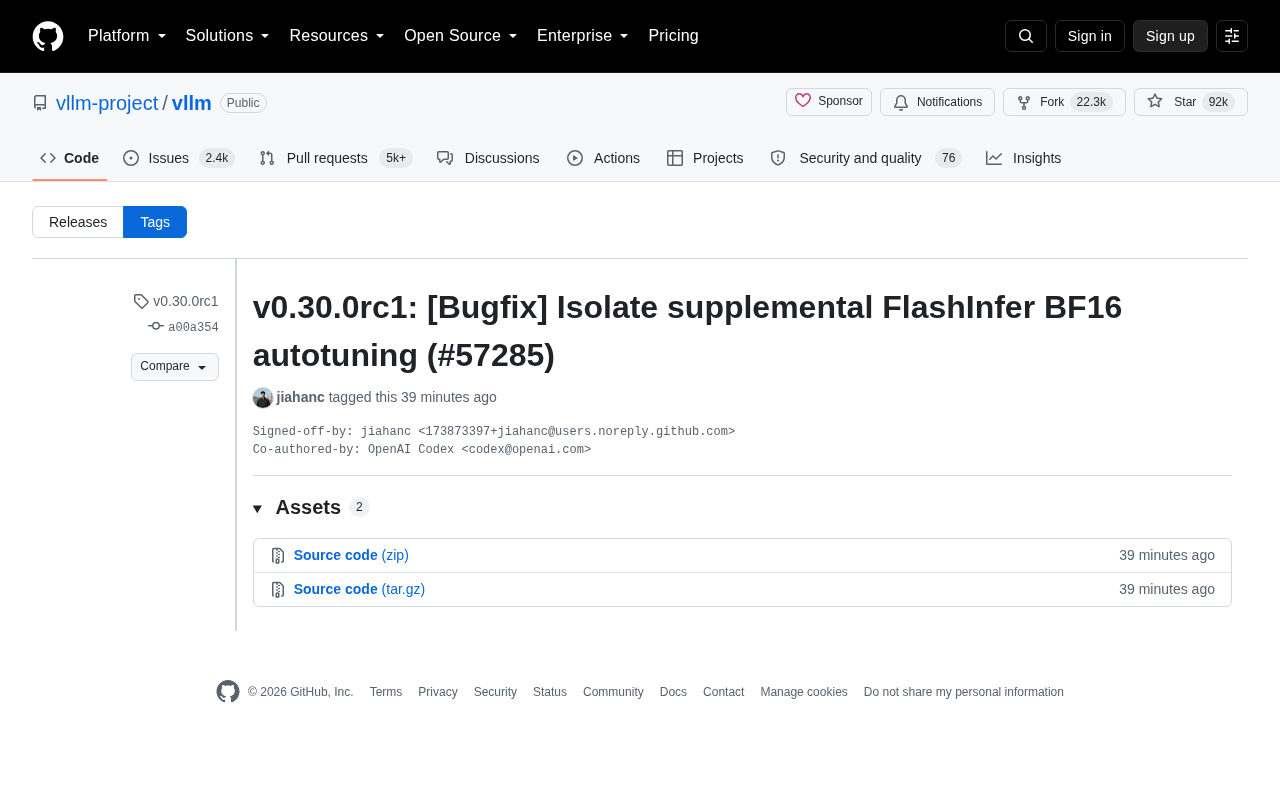
vLLM v0.30.0rc1 Released: Isolates FlashInfer BF16 Autotuning Logic
vLLM v0.30.0rc1 release candidate fixes FlashInfer BF16 autotuning isolation (PR #57285). Learn the technical background and its impact on inference deployment.

Comp AI Raises $34M Series A, Bets on Agentic Security Compliance
Comp AI raises $34M Series A led by Roo Capital and Grand Ventures, betting on "continuously agentic" AI to transform compliance from periodic audits into real-time monitoring.

MIT Technology Review's 35 Innovators Under 35: A Climate Tech Edition Explained
MIT Technology Review's latest 35 Innovators Under 35 list focuses on climate tech, spotlighting nine young global innovators. Here's what the list means and why it matters.