GM's EV Mini-Factory: The Behind-the-Scenes Hub for Battery Innovation
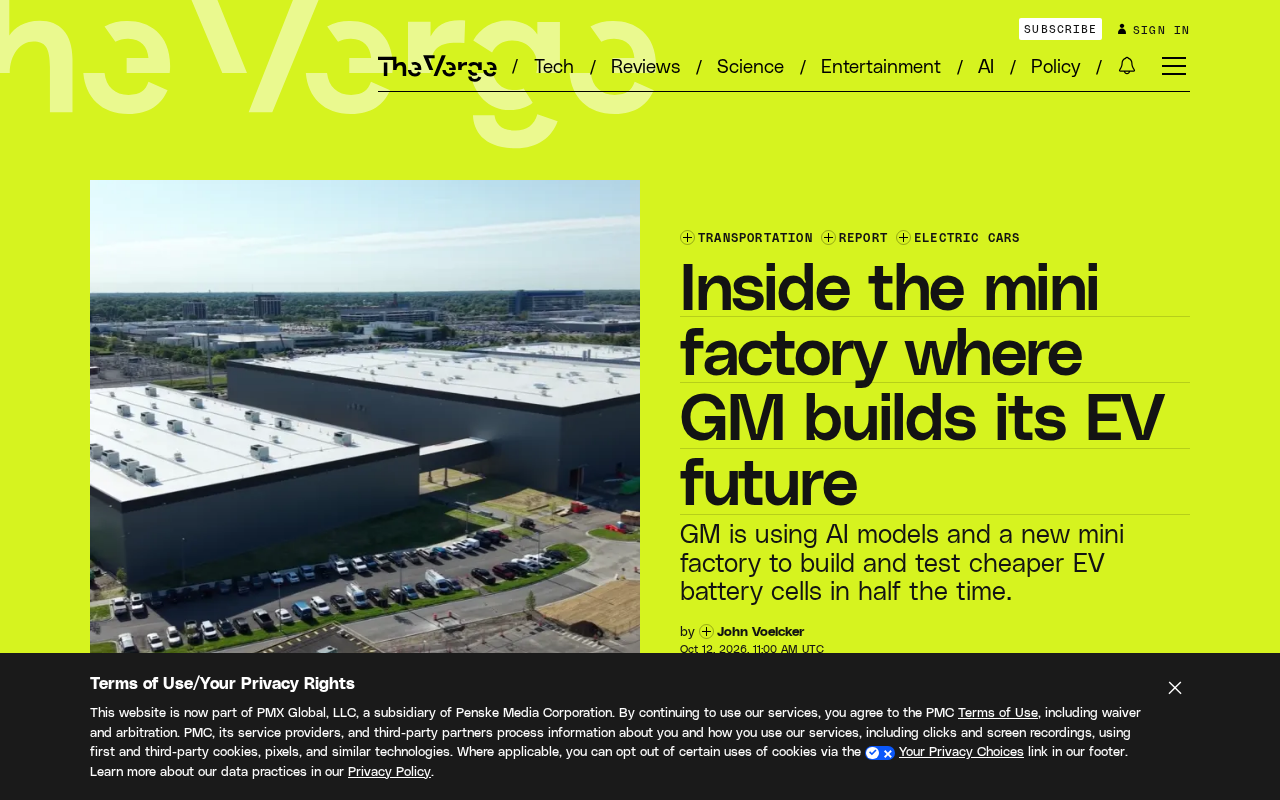
GM builds a 500,000-sq-ft EV pilot factory in Michigan to validate battery processes and reduce mass-production risk.
General Motors is constructing a 500,000-square-foot pilot-scale "mini-factory" within its core campus in Warren, Michigan. Rather than a mass-production line, it serves as a critical bridge between lab R&D and full-scale manufacturing — validating battery chemistry, cell design, and production processes under near-real-world conditions. This "prove it small, then scale" approach surfaces process flaws early and reduces yield risk and launch costs. By embedding this facility within its core manufacturing ecosystem, GM signals that electrification is now central to its operations, and that the EV competition has shifted from "can you build it" to "how efficiently can you build it at scale."
A Hidden EV Laboratory in Michigan
Deep within General Motors' sprawling 710-acre campus in Warren, Michigan, sit two unremarkable white buildings. Drive past them and you'd likely not give them a second glance. Yet inside these two structures — totaling 500,000 square feet — a major construction project is quietly underway, one that embodies GM's bet on the future of electric vehicles.
Described as a "mini-factory," this facility isn't designed for mass production. Instead, it occupies a critical middle ground between the lab and the production line — giving engineers a near-real-world environment to validate battery and EV manufacturing processes. This "small but precise" model reflects a new methodology that legacy automakers are increasingly adopting as they navigate the shift to electrification.
Why a Mini-Factory Matters
For traditional automakers, the biggest challenge in going electric isn't building a car that runs — it's achieving consistent quality, controlled costs, and sufficient scale in continuous production. The battery, as the core driver of both cost and performance, ultimately determines how competitive an EV can be.
By establishing a dedicated mini-factory, GM can rapidly iterate on battery chemistry, cell architecture, and manufacturing processes without disrupting its large-scale production lines. The approach — "prove it at small scale first, then ramp to volume" — significantly reduces the risk and rework costs associated with full-scale production launches.
From an industry perspective, these pilot-scale facilities are becoming a key mechanism for automakers to build technological moats. Whoever can most quickly translate lab breakthroughs into manufacturable processes will gain the upper hand in the EV race for price and range.
This intermediate layer between lab-scale R&D and mass production is commonly referred to in manufacturing as a "pilot scale" facility. The core value of pilot-scale work lies in the fact that processes validated under laboratory conditions rarely translate directly to production volumes. Material flow characteristics, thermal management, equipment precision, and operator consistency all introduce entirely new failure modes as scale increases. For battery manufacturing, this challenge is especially acute — uniformity of chemical coating on cells, electrolyte injection accuracy, and electrode alignment tolerances are manageable in small batches, but on a line producing tens of thousands of cells per day, even minor process variations amplify into yield losses and safety risks. Pilot facilities allow engineers to surface these problems under near-production conditions, enabling them to lock in and optimize process parameters before the full-scale ramp begins.
The Logic Behind a Legacy Automaker's Transition
GM's decision to site this facility within its own core campus — rather than building a standalone greenfield plant — sends a signal in itself: electrification is no longer a fringe initiative. It has been integrated into the heart of the company's R&D and manufacturing systems. Co-locating research, process validation, and manufacturing capability on a single campus helps compress the feedback loop from design to execution.
This also highlights a fundamental difference in approach between legacy OEMs and EV-native startups. Where new entrants tend to bet boldly on a single technology path, GM — with its deep manufacturing heritage — favors incremental process validation as a way to steadily mature its EV platforms and battery technology.
There is a structural difference in how traditional automakers and EV-native companies organize their R&D. Companies like Tesla and Rivian built their electrification systems from scratch, allowing for globally optimized designs around an electric platform — but without the accumulated knowledge of high-volume manufacturing. Legacy giants like GM and Volkswagen, by contrast, face a "two-front war": they must keep their vast internal combustion engine businesses profitable enough to fund the transition, while simultaneously advancing EV R&D and building out production capacity. Embedding a mini-factory within an existing core campus, rather than starting fresh elsewhere, is a classic balancing act between capital efficiency and transformation speed — it reuses existing infrastructure, supply chain networks, and engineering talent, while carving out independent space for new technology validation and keeping old and new processes from interfering with each other.
What This Means for the Industry
This still-unfinished mini-factory offers a window into how traditional automakers are responding to the EV wave. It signals that EV competition has moved beyond the question of "can you build one" into the harder question of "how do you build them efficiently, at scale, and at low cost." Battery manufacturing processes, yield control, and cost optimization are displacing product launches as the new battleground for automakers.
For the broader industry, this approach — using pilot-scale facilities as the bridge connecting the lab to the production line — may well become standard practice for more legacy automakers making the electric transition.
(Note: Given the limited source material available, descriptions of specific technical details and capacity plans for GM's mini-factory are based on publicly available framework information. Further details await official disclosure.)
Related articles

M&M's Spent Millions Replacing Artificial Blue Dye — Why Is It So Hard?
Mars spent millions trying to replace artificial blue dye in M&M's with spirulina, but thick material clogs pipes and residue risks mold, forcing a full production-line rebuild. Here's the engineering behind the reformulation.

Teammate Wanted for Meta Global AI Developer Hackathon: Computer Vision & Medical AI
A Reddit developer seeks teammates for the Meta Global AI Developer Hackathon, focusing on computer vision and medical AI. This article analyzes the track logic, skills-complementarity needs, and topic selection strategy behind this teaming signal.
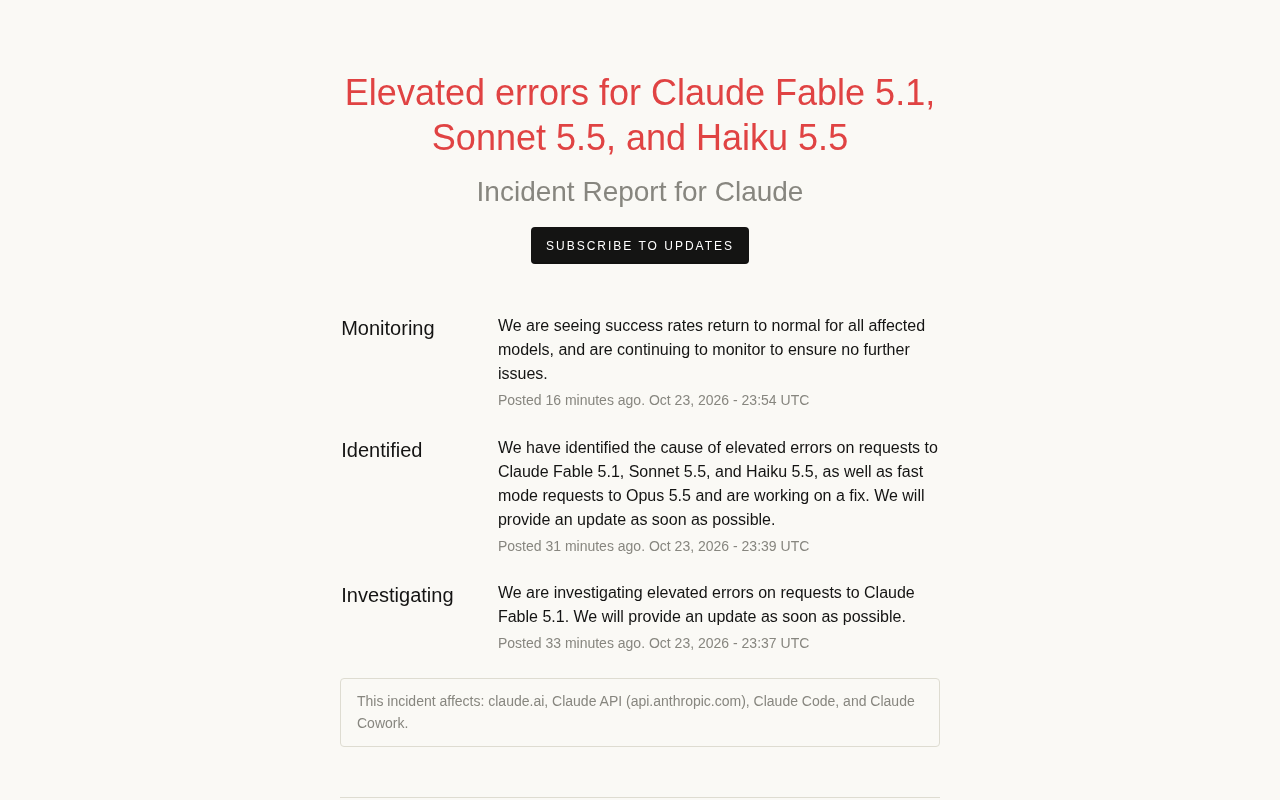
Multiple Claude Models Hit by Errors: A Postmortem of Fable 5.1, Sonnet 5.5, and Haiku 5.5
Claude Fable 5.1, Sonnet 5.5, Haiku 5.5, and Opus 5.5 fast mode saw elevated errors; Anthropic identified and resolved the issue in 17 minutes. This postmortem covers the timeline, the technical reasons for the multi-model cascading failure, and practical lessons for retry and degradation strategies.