Google Gemini 3.8 Flash Cyber: A Deep Dive into the Cybersecurity-Specialized AI Model
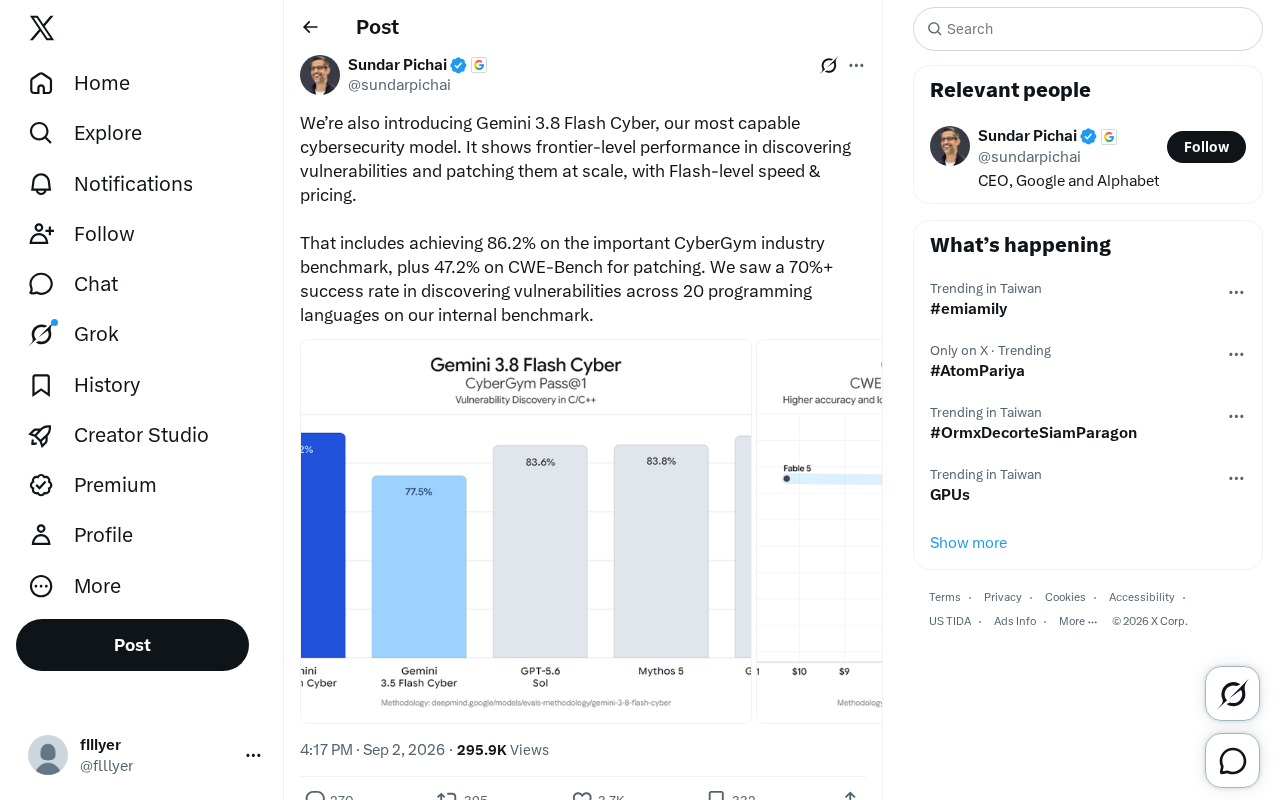
Google's Gemini 3.8 Flash Cyber brings frontier-level vulnerability discovery and patching to a cost-efficient Flash-tier model.
Google has released Gemini 3.8 Flash Cyber, a cybersecurity-specialized LLM built for vulnerability discovery and automated patching at scale. Scoring 86.2% on CyberGym, 47.2% on CWE-Bench, and 70%+ across 20 languages in internal tests, the model operates at Flash-tier speed and cost — making large-scale AI-driven security operations economically viable. Its release signals a broader industry shift toward deep vertical specialization in AI.
Google Releases Gemini 3.8 Flash Cyber, Its Most Powerful Security-Focused Model
Google recently announced Gemini 3.8 Flash Cyber on social media — its most capable cybersecurity-specialized model to date. Unlike general-purpose large language models, this one focuses squarely on two core use cases: vulnerability discovery and vulnerability patching. It delivers frontier-level security performance while keeping the speed and cost advantages the Flash series is known for.
For security teams, this means AI can be deployed at scale across code auditing, vulnerability hunting, and automated remediation workflows — without the steep compute bill that usually comes with it.
Security Capabilities in a Flash-Tier Package
One detail worth noting: Google placed this security model under the Flash product line, not its flagship Pro series. Flash has always been positioned as lightweight, fast, and affordable — built for high-frequency, latency- and cost-sensitive workloads.
To understand this product decision, it helps to know how Google's Gemini model family is structured. The Pro series targets maximum reasoning capability; Flash uses techniques like model distillation to compress a large model's core capabilities into a smaller parameter footprint, dramatically reducing inference compute. The basic idea behind distillation is that a smaller "student" model learns from the output distribution of a larger "teacher" model rather than training from scratch — preserving most of the capability while cutting parameters and latency significantly. Flash-tier pricing is typically a fraction of Pro, which makes high-volume batch workloads economically viable.
Putting security capabilities into the Flash tier signals a clear product philosophy: cybersecurity scenarios often require large-scale, batch scanning of massive codebases and dependency trees. Per-call cost has to be low enough to achieve scale. If every vulnerability scan required the most expensive top-tier model, real-world deployment would be nearly impossible.
Breaking Down Gemini 3.8 Flash Cyber's Key Benchmark Results
Google's announcement includes three sets of core numbers to back up the model's security chops — drawn from industry-recognized benchmarks and internal testing.
CyberGym: 86.2% on Vulnerability Discovery
On CyberGym, which Google describes as "an important industry benchmark," Gemini 3.8 Flash Cyber scores 86.2%. CyberGym measures a model's ability to find security vulnerabilities in realistic scenarios — this score puts the model close to frontier-level performance in identifying potential attack surfaces and locatable exploitable flaws.
CyberGym is designed to simulate real-world vulnerability discovery, not just test a model's recall of known vulnerability patterns. It typically covers a wide variety of security defect types — buffer overflows, SQL injection, cross-site scripting (XSS), privilege escalation — requiring the model to accurately pinpoint potential attack surfaces in given code snippets or system configurations. Unlike traditional static analysis tools like Semgrep or CodeQL that rely on predefined rules, LLM-based vulnerability discovery can handle more complex contextual dependencies and novel vulnerability patterns. That's a big part of why 86.2% is considered close to frontier level.
CWE-Bench: 47.2% on Automated Patching
On CWE-Bench, which measures vulnerability patching capability, the model scores 47.2%. CWE (Common Weakness Enumeration) is the security industry's standardized vulnerability classification system, so CWE-Bench maps closely to real-world remediation challenges.
To be specific: CWE is maintained by MITRE and is the most widely used software security weakness taxonomy in the world, currently covering over 900 classified weakness types. Each CWE has a unique identifier (e.g., CWE-79 for cross-site scripting, CWE-89 for SQL injection) along with detailed descriptions of the weakness's technical characteristics, potential exploitation paths, and recommended remediation strategies. CWE-Bench builds its test set on this taxonomy, requiring the model not just to identify which CWE category a vulnerability belongs to, but to generate a working fix patch.
This number is notably lower than the 86.2% on vulnerability discovery — and that gap reflects a real-world truth: finding a problem is far easier than fixing it correctly. An automated patch must eliminate the vulnerability without breaking existing functionality or introducing new flaws, which demands a much higher level of code comprehension and reasoning. The model needs to understand business logic, data flow, and control flow to ensure functional correctness after the fix. This is fundamentally a deep program-understanding task — far more complex than pattern-matching-based vulnerability detection.
Internal Benchmark: 70%+ Across 20 Programming Languages
Google also disclosed results from an internal benchmark: the model achieves a vulnerability discovery success rate above 70% across tests covering 20 programming languages. This cross-language coverage matters enormously — modern software stacks are typically built with a mix of languages, and a genuinely useful security model must generalize across all of them.
To put the value of 20-language coverage in context, consider a typical enterprise software system: the frontend might use TypeScript, backend services Java or Go, data pipelines Python, database queries SQL, ops scripts Bash or PowerShell, and performance-critical components C/C++. Each language carries its own characteristic security risks — C/C++ is prone to memory safety issues, Java sees common deserialization vulnerabilities, JavaScript/TypeScript faces prototype pollution risks, and SQL is a prime target for injection attacks. Supporting 20 languages means this model can handle the security concerns of an entire software stack in a single audit pass, without needing different specialized tools for each language — significantly reducing the toolchain management burden on security teams.
Closing the Loop: From Discovery to Patching at Scale
The most compelling aspect of this model is its attempt to complete the full defensive loop — vulnerability discovery → patching at scale.
Traditional security tools tend to excel at scanning and alerting, leaving the heavy lifting of actual remediation to human engineers. Gemini 3.8 Flash Cyber leads with "at scale" patching, signaling that Google wants AI to be not just a scanner that finds problems, but a fixer that resolves them.
Why large-scale automated patching is such a persistent pain point in security operations is well-documented: industry reports show that enterprises take an average of 60–90 days to patch a known high-severity vulnerability, and large codebases often carry thousands of items of accumulated security technical debt. Traditional patching workflows involve vulnerability confirmation, impact assessment, patch development, regression testing, staged rollout, and full deployment — with human intervention at every step. AI-driven automated patching aims to compress this pipeline, letting the model generate patch code directly and verify it through automated testing. But this introduces a new trust question: are enterprises willing to let AI autonomously modify production code? The current industry consensus leans toward a human-in-the-loop model — AI generates patch suggestions and draft fixes, which human engineers review before deciding whether to apply them.
Combined with Flash-tier speed and pricing, this capability could reshape the economics of security operations: vulnerabilities that once required large teams of engineers to triage and fix one by one could increasingly be handled by AI in bulk, with human engineers focusing on high-value review and decision-making.
AI Cybersecurity Competition Enters the Vertical Specialization Phase
From an industry perspective, the release of Gemini 3.8 Flash Cyber marks a shift in LLM competition — moving from "who has the best general capability" to "who can go deepest in a specific vertical." Cybersecurity, as a high-value, high-barrier professional domain, is becoming an important battleground where major vendors demonstrate their models' hard technical capabilities.
That said, a balanced view is warranted: a model that efficiently discovers and exploits vulnerabilities is inherently a double-edged sword. It can be used by defenders to harden systems — and it could also be misused by attackers. This dual-use problem is one of the most actively discussed issues in AI governance today. A model skilled at finding vulnerabilities is, by nature, one step away from exploitation — understanding a vulnerability's root cause and location is equivalent to understanding how to trigger and weaponize it. Since 2024, multiple security research teams have demonstrated that LLMs can be used to automate the generation of exploit code. To address this risk, the industry is exploring several mitigation strategies: model output filtering (blocking offensive code generation), use-restricting license agreements, and safety alignment training that biases models toward generating defensive rather than offensive outputs.
Google's choice to frame the model's capabilities around a defensive loop of "discover and patch," along with the transparency of publishing benchmark data, is partly a direct response to this risk — using clear product positioning and alignment strategies to steer the model's usage direction.
Conclusion
Gemini 3.8 Flash Cyber delivers near-frontier security performance at Flash-tier cost: 86.2% on CyberGym, 47.2% on CWE-Bench, and 70%+ on Google's internal multi-language benchmark. It represents a meaningful step in AI's evolution within cybersecurity — from assistive tool toward automated closed-loop operation.
Of course, these numbers currently come from a single source: Google's own announcement. Real-world effectiveness in complex production environments remains to be validated through independent third-party evaluation and actual user experience.
Related articles

Fable 5.1 Hands-On: AI One-Click 3D Game Scene Generation Crushes GPT and Grok
Hands-on comparison of Fable 5.1, GPT-5.6 Sol, Grok 4.6, and Kimi K3 in 3D game scene generation — from Gothic architecture to Sekiro menus, analyzing real gaps in detail fidelity, speed, and interaction.
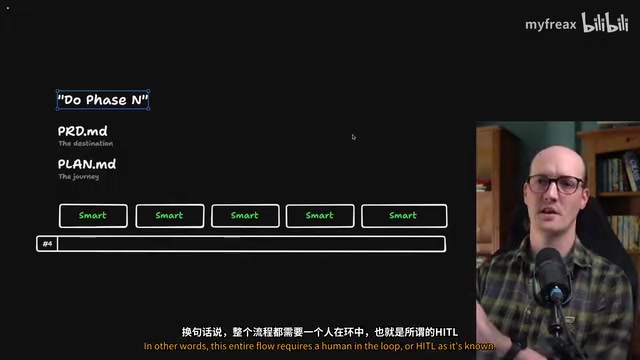
AFK Agent: Let AI Code Autonomously While You're Away From the Keyboard
Explore how AFK Agent mode elevates AI coding from Human-In-The-Loop to autonomous unattended execution through multi-phase plan decomposition and automation loops.
Free Data Science Learning Resources Guide: An Efficient Path to Getting Started on Zero Budget
How to learn data science on a tight budget? This guide covers free resources like Kaggle Learn, freeCodeCamp, and Fast.ai with a complete self-study roadmap from Python basics to machine learning.