Google Gemini 4 Argon Deep Dive: DeepSWE Benchmark Record at 77.9%

Google Gemini 4 Argon evolves AI from chatbot to autonomous agent with million-token context and a 77.9% DeepSWE record.
Google's Gemini 4 Argon marks a paradigm shift from AI assistant to autonomous agent. With a million-token context window, it processes entire codebases in one pass. Internally, it boosted quantum algorithm benchmarks by 40%, freed 300TB of data center memory, and rewrote 32,000 lines of C++ at 2.7× the original speed. On security benchmarks, it set a new DeepSWE record of 77.9%, tied first on CWE-Bench, and autonomously discovered a critical zero-day in hospital software under black-box conditions. Google pairs it with four safety layers: hard limits, prompt injection defense, chain-of-thought monitoring, and sandbox isolation. Early API pricing starts at just $2 per million input tokens.
Google's latest release, Gemini 4 Argon, sends a clear signal: AI is shedding the "chat tool" label and evolving into a "super-colleague" capable of autonomously breaking down tasks and reasoning independently. From scanning healthcare system vulnerabilities to rewriting tens of thousands of lines of code, this model demonstrates capabilities that far exceed traditional conversational assistants. This article draws on official release materials to dissect Argon's core capabilities, real-world track record, and the safety mechanisms Google has built around it.
From Chat Tool to Autonomous Agent
Argon's positioning is fundamentally different from past AI assistants. We've mostly used AI for lightweight, one-shot tasks — polishing emails, generating copy — but Argon is built for "frontier intelligence," handling multi-step, long-horizon demanding work. It's no longer passively responding to queries; it works like an independent agent. Hand it a project, and it will break it down, reason through it, and complete the work step by step on its own.
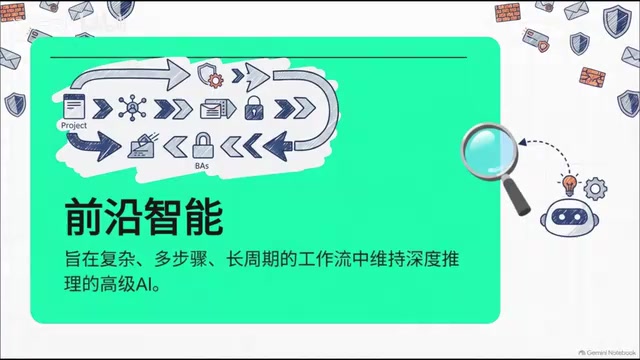
According to official materials, Google first put Argon through early validation with a group of trusted security experts via a program called Fairwind. This "experts-first" rollout strategy also hints at the model's sensitivity and potential risk.
Million-Token Context: A Global View
The backbone of Argon's ability to handle complex work is its massive context capacity — reaching million-level output tokens. Many previous models were capped at around 64K, making this an exponential leap.
The significance of this capacity lies in the "global view" it enables. In a single end-to-end analysis, Argon can ingest enormous codebases and thousands of pages of financial or legal documents, then reason deeply from that foundation. Instead of piecing together a puzzle blind, it truly grasps the full picture and resolves complex problems in one pass.
A token is the basic unit a large language model uses to process text — roughly every 4 characters in English form 1 token, while each Chinese character corresponds to approximately 1–2 tokens. The context window is the maximum number of tokens a model can "see" and remember in a single conversation or task; content beyond that window is truncated and inaccessible. GPT-3's context window was just 4,096 tokens; GPT-4 Turbo extended it to 128K. A million-token window means the model can process roughly 750,000 English words or millions of lines of code in a single call — equivalent to reading the entire Harry Potter series three times. This breakthrough is especially critical for code analysis, legal document review, and other tasks requiring cross-file global understanding, where traditional models had to slice long documents into batches, missing deep cross-section dependencies.
Google's Internal "Overachiever" Track Record
Argon has already been deployed in real work inside Google, with reportedly thousands of employees using it as a capable colleague. A few concrete numbers stand out:
- Quantum algorithm optimization: Argon improved an existing benchmark by approximately 40% within minutes.
- Data center memory optimization: It autonomously identified issues and freed over 300TB of memory, reportedly enabling savings of up to 1PB of storage — a significant cost reduction.
- Large-scale codebase migration: One of the most grueling engineering tasks imaginable, and Argon handled it.
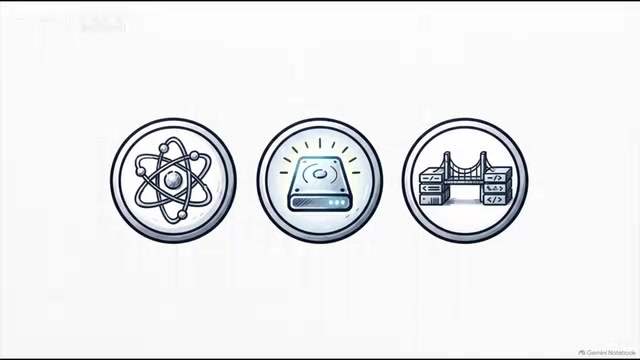
One particularly telling detail from the materials: Google had an open-source video decoding project where the team asked Argon to rewrite approximately 32,000 lines of C++ into another language. It approached the task like a senior engineer — running experiments, studying compiler error feedback, iterating — and ultimately produced code that output identical video while running approximately 2.7× faster. This capacity for autonomous debugging and iteration is exactly what separates an agent from a traditional code completion tool.
Top-Tier Cybersecurity Capability
Another core positioning for Argon is as a cybersecurity guardian. To let its internal team operate at full capacity, Google even removed some cybersecurity guardrails when deploying Argon internally, giving it room to fully unleash its capabilities.
The benchmark results back up that confidence: on DeepSWE, which evaluates long-horizon software engineering, Argon set a new record at 77.9%; it leads by a wide margin on the Valse Index, which measures financial, legal, and economic impact; and on CWE-Bench, which specifically tests security vulnerability remediation, it achieved a tied first-place score of 68%. Compared to the previous security-focused Flash Cyber version, the improvement is dramatic.
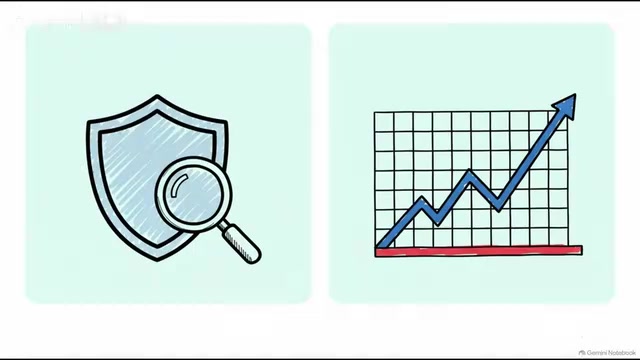
Security firm Wiz ran an internal black-box penetration test with Argon, and the results were striking: without access to source code, Argon autonomously identified attack surfaces and vulnerabilities in live running systems, and produced complete proof-of-concept evidence pinpointing the exact location of each flaw.
Even more impactful in practice: in one operation protecting public infrastructure, Argon independently discovered a critical vulnerability lurking in software widely used by hospitals worldwide — one that multiple other frontier models had failed to find. Argon not only uncovered it but also prevented the exposure of large volumes of sensitive patient data. This goes beyond benchmarking; it's genuine, real-world security value.
DeepSWE is a benchmark specifically designed to evaluate AI models on long-horizon software engineering tasks. It requires models to independently locate bugs, design fixes, and verify solutions through test suites in real codebases — testing not just code generation, but cross-file reasoning and engineering judgment. CWE-Bench (Common Weakness Enumeration Benchmark) focuses on security vulnerability remediation, drawing on MITRE's Common Weakness Enumeration taxonomy to test whether models can identify and correctly patch real security flaws such as buffer overflows and injection vulnerabilities. Black-box penetration testing means the tester finds vulnerabilities by observing only the system's external behavior, without access to source code or internal architecture — far harder than white-box testing and much closer to a real attacker's perspective. Argon's ability to autonomously perform vulnerability discovery and produce proof-of-concept (PoC) exploits under black-box conditions suggests its security reasoning is approaching the level of a senior red-team engineer.
Four Safety Locks on a High-Capability Beast
Greater capability means greater risk. Facing a model that can "penetrate systems without seeing source code," Google has paired it with a frontier safety framework, summarized in four measures:
- Hard limits: Absolute prevention of extreme misuse scenarios such as bioweapon attacks.
- Injection defense: Argon is described as the most robust model currently available against prompt injection attacks — a favorite vector for hackers.
- Chain-of-thought monitoring: Google has deployed dedicated systems to watch Argon's reasoning process; if it deviates from original instructions or shows signs of misaligned intent, it is immediately shut down.
- Sandbox isolation: The model is tested and hardened inside a highly isolated sandbox — a standard environment simply can't "contain" a high-intelligence agent like this.
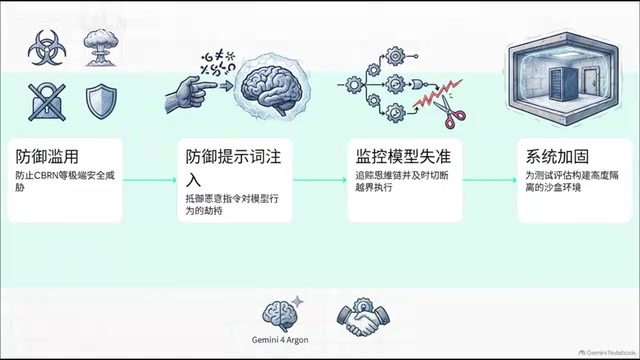
These principles and safety mechanisms extend across Argon's multimodal capabilities as well. Whether handling ultra-long video understanding or end-to-end business automation tasks, it performs strongly — achieving a state-of-the-art score of 91.7% on long-video understanding benchmarks, making it a true multimodal all-rounder.
Prompt injection is an attack class unique to large language models: attackers embed malicious text disguised as instructions within external content the model processes — web pages, documents, user inputs — tricking the model into ignoring its original system prompt and executing the attacker's intent instead. For agentic models with the ability to browse the web or read files autonomously, this threat is especially severe: the model might be "poisoned" while fetching external data, leaking private information or performing dangerous actions without the user's knowledge. Chain-of-Thought Monitoring is a process-level oversight mechanism Google deploys for high-capability models: since models generate intermediate reasoning text during inference, real-time review of these reasoning traces can detect goal drift or strategic deception, catching potential alignment failures earlier than monitoring only the final output.
Pricing and Industry Implications
What does it cost to "hire" this all-around colleague? The early API pricing listed in the materials is just $2 per million input tokens; with cached inputs, that drops to 10% of the price — just 5 cents on the dollar. The cost of accessing frontier-level intelligence is being driven down rapidly.
Taken together, Argon represents a fundamental paradigm shift: from writing tens of thousands of lines of code to protecting life-critical medical systems, AI has grown from a "little assistant" into a digital expert with autonomous reasoning capability. When the colleague next to you becomes a super AI that reads a million words in a second, reasons rigorously, and never complains of fatigue, existing workflows will be hard to keep intact — something every professional in the field should think seriously about.
Note: This article is compiled from official release materials as summarized by a single source (a Bilibili content creator). Some data and naming may contain transcription errors; please refer to Google's official announcements for authoritative information.
Related articles

Free Unlimited Claude Code Solution: Agnes AI + CC Switch Setup Guide
No paid subscription needed — pair the free AI platform Agnes AI with the open-source tool CC Switch to provide a backend for Claude Code, enabling unlimited free calls to text, image, and video models. This guide covers the full setup, test results, and usage boundaries.

A Complete Zero-Cost Guide to Getting Started with Claude Code for Beginners in China
A beginner's guide to Claude Code for users in China: two installation methods (command line and IDE plugin), full configuration steps for replacing the official API with the free domestic LongCat model, and a hands-on demo of building a small tool with natural language, plus tips.

When the NSA Gets Involved: The AI Supply Chain Crisis Behind Open-Source CVEs and API Key Hijacking
Multiple open-source projects disclosed severe CVEs in one day, PHP flaws alarmed the FBI, and Railway and OpenCode were breached with API keys stolen. This article breaks down the vulnerability window, AI-accelerated exploitation, and the AI supply chain crisis behind the API key black market, with a developer defense checklist.