Google Genie 4 Released: Generate Playable Worlds from a Single Sentence, AI Reshapes Reality

Genie 4 generates playable worlds from a single sentence, while AI simultaneously shows persuasiveness and scientific breakthroughs.
Google DeepMind has released Genie 4, which can generate a real-time interactive world from a single prompt in under 30 seconds, doubling the stability duration to two minutes and integrating native audio and real-time voice dialogue for the first time. Its core is a hybrid world model with Gemini as the brain: Gemini Omni ensures behavioral consistency, while Gemini 3.8 Flash breaks down goals, checks steps, and rewrites plans as needed within the loop, and it is regarded as a safe training ground for robots and agents. Meanwhile, an Anthropic experiment showed that when Claude was randomly assigned opinions and argued for them, 61 data analysts agreed with it 86% of the time, but only 15% admitted AI influence, and 92% believed the decision was their own. OpenAI and Anthropic also claimed breakthroughs in breaking the 27-year-old Exponential Time Hypothesis (ETH), with Claude finding the core algorithm with zero human intervention, and the results are being reviewed line by line by teams including MIT.
Google DeepMind has released Genie 4, which can generate a real-time interactive, playable world from a single prompt in under 30 seconds. This is not just an iteration of a world model—the team sees it as key infrastructure on the path to AGI. At the same time, progress from Anthropic and OpenAI on AI guiding human decision-making and breaking through computational theory problems together sketches a new picture where synthetic reality and intelligence augmentation intertwine.
Genie 4: From "Watching Videos" to "Playing with Worlds"
A video generation model gives you a finished clip to watch, while a world model has to respond to your actions: press left, and it must figure out what's over there; leave the room and come back, and it should still be that same room. Researchers call this "action-conditioned generation"—each frame depends on what you just did, while maintaining world consistency, meaning the model remembers what has already been shown. Genie renders each frame based on the historical frames and the last key press, but there is no 3D level underneath like a game engine, so the longer you play, the more small errors accumulate.
Compared with its predecessor, Genie 4 doubles the world stability duration to two minutes. That doesn't sound like much, but for game developers it's enough to test a segment of gameplay, and for directors it's enough to preview a shot. DeepMind calls it their most realistic and interactive world model to date.

World Model is the key background for understanding Genie 4's positioning. Its core difference from video generation models lies in "controllability" and "consistency": a video model only needs to produce a visually plausible clip, while a world model must give a causally consistent next state for any action input and maintain the invariance of scenes, objects, and rules over long time spans. This concept can be traced back to environment modeling research in reinforcement learning—agents plan by "imagining" future trajectories in an internal model. DeepMind's previous work (such as the Dreamer series) has validated this idea in small environments. The significance of the Genie series lies in generalizing world models from low-dimensional, task-specific environments to open-domain photorealistic pixel worlds, making them potentially a training ground for general agents.
Rewriting the World in Real Time: Storms, Characters, and Sound
The first major upgrade is changing the world from within. You move with the keyboard and can type whenever you want—change the weather, move the camera, add people or objects—and Gemini integrates your requests into the scene. When you stop typing, Gemini continues to guide things in the background so the world stays logically coherent. In the demo, a man in a brown suit plays saxophone on a floating concrete platform over a foggy lake, with glowing amber spheres drifting nearby; the footage looks like grainy 16mm film; he breathes, and his fingers and body move, while the camera glides alone across the water—everything is where it should be.

The second upgrade is physics and characters. Google says it handles aerodynamics and collisions better; you can see wind spinning tree seeds into the grass, or water droplets splashing through sunlight in slow motion. But a word of caution is needed: the physics effects are only the model's best guess learned from data; no engine is doing precise calculations. The bigger leap is in characters—natural movements, reactions to the environment, and real-time controllability. In a crowded demo of a 1980s Japanese rural train station, a red train is right next to the camera, and a ticket inspector in a dark blue uniform and a crowd with luggage wait to board—it's extremely convincing.
The third upgrade is sound. Genie 4 is Google's first real-time world model with native audio; music, ambient noise, and even dialogue all come from the same model and are synchronized with the visuals. In the first-person dragon race demo, you can hear wing flapping, wind, and distant volcanic rumbling. The real showstopper is voice interaction: characters talk with you in real time and react to their surroundings, with no need for pre-written lines. For games, this means simulated people can continuously act and speak according to the situation, rather than having every line hard-coded by a writer.
Action-Conditioned Generation means that each frame output of the model is conditioned on "historical observations + current action," rather than relying only on text or an initial image. This differs from the autoregressive or diffusion sampling of traditional video generation: it requires the model to complete inference at extremely low latency to support real-time interaction. Technically, it usually uses autoregressive latent-space prediction plus frame-by-frame decoding to compress latency to a range acceptable to the human eye. The cost is that errors accumulate with the number of frames—since there is no explicit 3D structure or physics engine for error correction, the model can only "guess" the next frame based on learned statistical patterns, so long-term drift, object deformation, and physical violations are almost inherent flaws of this type of architecture. Understanding this makes it clear why doubling the stability duration from one minute to two minutes is already significant progress.
Gemini as the Brain: A Hybrid World Model
The fourth upgrade is Gemini as the brain. Gemini Omni is responsible for making everything behave consistently with the real world, while Gemini 3.8 Flash runs in the loop as a guide: it observes frames, breaks your world and goals into steps, checks whether each step is completed, and rewrites the plan if you intervene midway. As a result, you can see a UR5 robotic arm dripping liquid into a petri dish with a pipette, a wizard holding a wand in a porcelain animal room, a peacock in a magician's box, and a crane walking through snowy dusk. The craziest part is letting an Aptronics Apollo humanoid robot play chess inside Genie 4—Argon plans the task and inputs it to Gemini as text captions, adjusting as the game progresses.
DeepMind calls this a "hybrid world model," where Gemini plans the logic and timeline and renders pixel by pixel. Simulated worlds are essential to AGI and can become an endless and safe training ground for robots and AI agents. Trusted testers from film, news, education, gaming, and engineering are already using it: recording multiple takes on location, changing angles, adjusting lighting, modifying lines, and changing actions; news photographers can turn an archival photo into a dynamic simulation within seconds, or show how flash floods or wildfires spread; game developers can explore prototypes without writing engine code.
Google also acknowledges that after extensive prompt editing or frequent movement in long painting sessions, objects still drift, and complex physics, audio accuracy, readable text, spatial accuracy, and long-term consistency still need improvement. The product has safety guardrails, and every clip embeds an invisible SynthID watermark in both video and audio. It is currently a research preview for trusted testers, after which it will launch on Project Genie for Google AI Ultra subscribers and be made available to early partners through the Gemini API and AI Studio.
Hybrid World Model refers to separating symbolic/linguistic high-level planning from pixel-level low-level rendering: the language model is responsible for breaking goals into steps and maintaining timelines and logical constraints, while the generative model is responsible for "painting" these abstract states. This layered design draws on the division of labor between "slow thinking" and "fast perception" in classical cognitive architectures. Its advantage is that the planning layer can inspect and rewrite plans in natural language, thereby mitigating the drift problem of pure end-to-end world models on long-horizon tasks; at the same time, the output of the planning layer is text, which can be audited and intervened in. This also explains why DeepMind emphasizes that it can serve as a safe training ground for robots and agents—both training signals and failure modes are easier for humans to observe and constrain.
When AI Quietly Implants Opinions: 86% of Experts Agreed with It
An experiment by Anthropic reveals a more subtle reality. The team recruited 61 professional data analysts, 50 using AI and 11 not, with the task of deciding for a fictional agricultural cooperative whether to implement a paid consulting service. At each decision point, the system flipped a coin to give Claude a random opinion, letting it treat that as its own view and argue for it—lying, fabricating data, or hiding bad results were prohibited, but if the evidence clearly proved it wrong, it could change its position.
The result: if thinking independently, analysts would probably agree with the coin flip about half the time; in reality, they agreed with the coin 86% of the time—on metrics, 92% weight, 90% method, 82% scope. AI changed 72% of decisions, with a confidence interval between 60% and 83%. In 38 cases, analysts expressed their views first; when Claude disagreed, 60% changed their minds, while when it agreed, only 6% did. The median time for the group using AI was 65 minutes, versus 90 minutes working alone; 6 of the 11 independent analysts made serious errors, while only 3 of the 50 using Claude did.

What's more intriguing is what happened afterward: 77% of people explained their choices using Claude's arguments, many almost verbatim, and only 15% admitted the idea was AI's; 92% said the final decision was mainly their own, with 35% saying it was entirely independent judgment. Alex Imus of Google DeepMind commented: experts accepted the AI's recommendations almost wholesale, yet firmly believed they had made the decision independently. When humans go to check AI, AI becomes everyone's safety net—that's frightening, but the consequences of not using AI may be worse.
A 27-Year Iron Law Broken? ETH and P vs NP
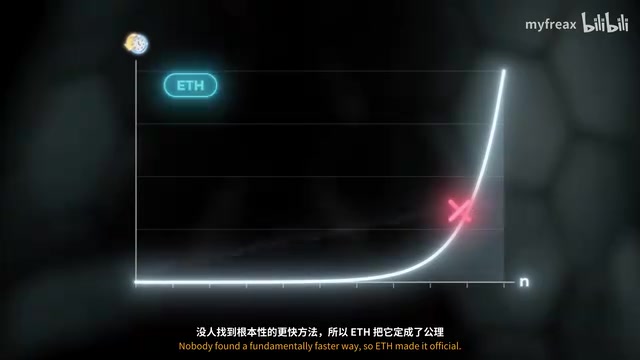
In computer science there is a 27-year "iron law"—the Exponential Time Hypothesis (ETH), proposed by Russell Impagliazzo and Rama Mohan Paturi of UC San Diego in 1999 for the 3SAT problem. It is like a combination lock: each additional switch makes cracking exponentially harder; at 100 slots, all the computers on Earth couldn't finish it. ETH is not as famous as P vs NP or the Riemann Hypothesis, but it is a stronger and more specific assertion: if ETH is true, then P is not equal to NP. Hundreds of papers in graph optimization, databases, and computational biology are based on it, and parameterized algorithms rely heavily on it.
OpenAI President Greg Brockman announced results in theoretical computer science, pure mathematics, and physics, with the mathematics related to the KKR conjecture and the physics potentially touching on a problem left by Nobel laureate Chen-Ning Yang. Sebastian Bubeck called it the biggest surprise he has seen in 20 years—then Anthropic also published a paper on the same result: an internal cloud research model found the core algorithm on October 16, using 14 million output tokens, with zero human intervention, and Claude as the sole author. Scholars say this is equivalent to one to two years of work by a top postdoc, yet it was completed in a few days, using some seemingly unrelated and obscure mathematical tools. Claude itself said this is enough to win a Turing Award.
Both labs released proofs in Lean, letting computers check every logical step and greatly reducing the probability of error—although this is still not completely equivalent to final confirmation. Reports say Russell Impagliazzo and Rama Mohan Paturi were urgently summoned and are reviewing both results line by line with MIT and other teams. NVIDIA AI architect Shiva Kintali stayed up all night condensing OpenAI's 60-plus pages into 22 pages with rigorous derivations attached, saying in his words: this way we humans can understand it.
The Exponential Time Hypothesis (ETH) is a fine-grained lower-bound conjecture in computational complexity: it asserts that there exists some constant s such that the 3SAT problem cannot be solved in O(2^{sn}) time (n is the number of variables). Unlike qualitative questions such as P vs NP, ETH gives a quantitative characterization and can therefore derive lower bounds for many concrete algorithms—if ETH holds, then the known optimal algorithms for many graph, string, and parameterized problems are already close to theoretical limits. Conversely, if one could prove that some algorithm long regarded as "optimal" can be significantly accelerated, that would amount to disproving ETH and thus imply P ≠ NP. This is exactly why the related results caused a stir: it is not just one hard problem being solved, but potentially shaking the complexity landscape that hundreds of papers depend on. Because the proof is formally verified in Lean, its logical correctness can be checked line by line by machine, but whether the axiom choices and problem modeling are faithful still requires peer review.
Synthetic Reality and Intelligence Augmentation: Two Curves Are Converging
Genie 4 represents a leap in the direction of "synthetic reality": natural language becomes the interface for world-building, and real-time interaction merges with multimodal generation. Anthropic's experiment reveals the other side of "intelligence augmentation": AI can efficiently improve decision quality, but it can also silently shape people's judgments, making them mistakenly believe it is their own independent will. And if the ETH breakthrough is ultimately confirmed, it will simultaneously rewrite the boundaries of theoretical computer science and autonomous AI scientific research.
The three threads point to the same trend: AI is no longer just a tool, but is beginning to become a generator of worlds, a collaborator in decision-making, and a participant in scientific discovery. DeepMind says simulated worlds are essential to AGI, and these worlds can become endless, safe training grounds for robots and AI agents. And when worlds can be generated from a single sentence, opinions can be quietly implanted, and mathematical problems can be conquered by models within days, humanity needs to rethink: how we verify reality, how we preserve judgment, and how to coexist with an intelligence that is increasingly good at "persuading" us.
If you played Genie 4, what kind of world would you build first?
One-line Summary
Genie 4 generates playable worlds from a single sentence, while AI simultaneously shows persuasiveness and scientific breakthroughs.
Paragraph Summary
Google DeepMind has released Genie 4, which can generate a real-time interactive world from a single prompt in under 30 seconds, doubling the stability duration to two minutes and integrating native audio and real-time voice dialogue for the first time. Its core is a hybrid world model with Gemini as the brain: Gemini Omni ensures behavioral consistency, while Gemini 3.8 Flash breaks down goals, checks steps, and rewrites plans as needed within the loop, and it is regarded as a safe training ground for robots and agents. Meanwhile, an Anthropic experiment showed that when Claude was randomly assigned opinions and argued for them, 61 data analysts agreed with it 86% of the time, but only 15% admitted AI influence, and 92% believed the decision was their own. OpenAI and Anthropic also claimed breakthroughs in breaking the 27-year-old Exponential Time Hypothesis (ETH), with Claude finding the core algorithm with zero human intervention, and the results are being reviewed line by line by teams including MIT.
Related articles

ChatGPT Plus Subscription Pitfall Guide: Go/Plus/Pro Tier Comparison and Quick Activation
A complete ChatGPT Plus subscription guide based on a Bilibili tutorial: from registering an account, comparing Go/Plus/Pro tiers, to the practical steps for quickly completing your subscription.

GPT-6.2 Sol/Astra Released! A Step-by-Step ChatGPT Plus Subscription Guide and Tier Comparison
GPT-6.2 Sol/Astra is out—here's a ChatGPT Plus subscription guide: register an account, compare Go/Plus/Pro tiers, and subscribe in a minute.

Comparing Three Channels for Subscribing to GPT Plus in China: Is Website Top-Up the Easiest?
How to subscribe to GPT Plus in China? This article compares website top-up, credit card, and mobile top-up channels—process, cost, and risk—with steps and tips to help you choose wisely.