Google Genie 4 Released: The Real-Time Interactive World Model Is Here

Google releases Genie 4 world model, featuring real-time controllability and native audio—research preview first, API later.
Google has released Genie 4, positioned as its most realistic and interactive world model yet, shifting focus from visual quality to playability and real-time performance. Capabilities include real-time control of dynamic environments, native environment-matching audio with real-time character dialogue, photorealistic scenes with realistic physics, and coherent multi-step event chains via Gemini reasoning. It opens first as a research preview, later arriving in Project Genie and via the Gemini API and AI Studio.
Google has officially released Genie 4, positioning it as "the most realistic and interactive world model to date." Unlike earlier models that leaned toward static generation, Genie 4's core selling point puts "playability" and "real-time" front and center: users can steer in real time within dynamic environments, shape events, adjust camera angles, and trigger actions—rather than merely watching a pre-generated video.
From "Generating Frames" to "Controlling a World"
Google's description of Genie 4 centers on four capability groups. First is real-time control of dynamic environments—changing the direction of events, camera angles, and character actions, which means the generated content has interactive continuity rather than being a one-shot output. Second is native audio generation, covering both realistic ambient sound that matches the environment and characters capable of real-time conversation. Third is photorealistic scenes with realistic physics simulation. Fourth is the use of Gemini's reasoning capabilities to generate more coherent multi-step event chains.
Together, these four points all point in the same direction: world models are evolving from "video generators" into "runnable simulated environments." The fact that camera angles and actions can be rewritten in real time suggests the model maintains some kind of consistent spatial and causal state internally, rather than stitching frames together one by one.
World Model refers to a class of models that learn the dynamic laws of an environment and can predict and simulate future states within an internal representation space. Unlike video generation models that only learn pixel distributions, world models emphasize maintaining state consistency of the environment (objects don't vanish into thin air, lighting and geometry remain coherent) and a causal action-to-outcome mapping, thereby supporting "given an action, predict the next state." The Genie series has evolved along exactly this line: early versions focused mostly on generating explorable 2D environments from a single image, while later versions gradually introduced stronger spatiotemporal consistency and interactive responsiveness. Typical applications of world models include simulation training for robot policies, closed-loop testing for autonomous driving, rapid prototyping of games and interactive content, and serving as "imagination environments" for embodied agents. The core challenges lie in long-horizon consistency, physical plausibility, and inference latency—together, these three determine whether a model can truly be "controlled" rather than merely "watched."
Why Audio and Conversation Matter
Among Genie 4's capability list, native audio is an easily underestimated item. Ambient sound matching the environment means the audio isn't added in post-production but generated in sync with the scene state; characters being able to converse in real time further blurs the boundary between "world models" and "conversational models."
Combined with Gemini's reasoning capabilities, the coherence of multi-step events depends not only on visual consistency but also on inferring "what happens next." Google specifically emphasizes reasoning from Gemini, which suggests that Genie 4 leverages Gemini's reasoning chain at the event-orchestration level, rather than relying purely on a diffusion model extrapolating frame by frame.
Native audio generation means the model directly outputs audio signals synchronized with the visual state while generating visual content, rather than first describing it in text and then having a separate audio model dub it in afterward. This kind of joint generation requires the model to model visual events and acoustic events within a unified timeline—for example, matching a footstep landing with the sound of footsteps, or matching changes in ambient lighting with atmospheric sound. Technically, this usually requires encoding audio into discrete tokens or continuous latent variables and generating them autoregressively or via diffusion in the same sequence as video tokens, thereby ensuring audio-visual alignment. By contrast, the traditional pipeline is "produce video first, add sound later," which is prone to issues like out-of-sync lip movements and misaligned audio-visual events. The significance of native audio isn't just in eliminating the post-production step—it's in making sound part of the world state. Sound can reflect physical events in the scene, which in turn provides an additional feedback channel for interaction—an important component of the playability experience.
Release Cadence: Research Preview First
Genie 4 is currently available as a research preview to trusted testers. It is planned to later be offered to Google AI Ultra subscribers in Project Genie, while also being made available to early-access partners through the Gemini API and AI Studio.
This cadence is worth noting: small-scale testing first, then a subscription product, and finally API access—indicating that Google treats Genie 4 both as a research project and as a commercializable platform capability. For developers, the access paths through the Gemini API and AI Studio mean world models could be integrated into applications just like calling an ordinary model, rather than remaining confined to demo videos.
Gemini API and AI Studio are Google's model access channels for developers: AI Studio provides a web-based environment for prompt debugging, parameter comparison, and prototype validation, suited for rapid experimentation; the Gemini API provides programmatic interfaces that support integrating model capabilities into production applications, billed by usage. The division of labor between the two is akin to a "sandbox" and a "production line." If world models are opened up through this path, developers can embed the generation capability of interactive environments into games, education, simulation, and other applications just like calling a language or multimodal model, without having to build their own inference infrastructure. It's worth noting that such high-real-time models have far higher demands on inference compute and latency than text models, and API throughput limits, concurrency constraints, and pricing strategies will directly affect their usable scenarios and economics.
A New Variable in the World Model Race
Genie 4's release pushes the competitive focus from "visual quality" to "interaction and real-time performance." Realistic physics simulation combined with real-time control directly connects to scenarios such as robot simulation, game prototyping, and interactive content creation; native audio and real-time conversation bring it closer to an environment you can "step into."
However, the research preview stage usually means that capability boundaries and stability remain to be verified, and Google has not disclosed specific performance metrics. Whether Genie 4 can maintain smooth real-time control and physical consistency once opened up will be the key to judging its practical value.
One-line Summary
Google releases Genie 4 world model, featuring real-time controllability and native audio—research preview first, API later.
Paragraph Summary
Google has released Genie 4, positioned as the most realistic and interactive world model to date, with its core selling point shifting from visual quality to playability and real-time performance. Its capabilities include real-time control of event direction, camera, and character actions in dynamic environments, native generation of environment-matching ambient sound with real-time character conversation, photorealistic scenes with realistic physics simulation, and coherent multi-step event chains powered by Gemini's reasoning. This marks the evolution of world models from video generators into runnable simulated environments. In terms of release cadence, Genie 4 first opens as a research preview to trusted testers, later arrives in the Project Genie subscription service, and becomes available to early partners through the Gemini API and AI Studio—showing its dual positioning as both a research project and a commercial platform. The article argues that the competitive focus has shifted to interaction and real-time performance, but capability boundaries and stability at the research preview stage remain to be verified.
Related articles

DeepSeek Open-Sources DeepInfer: What Is an Inference Framework Actually For?
DeepSeek open-sources its inference framework DeepInfer under Apache 2.0, supporting DeepSeek V4.1 Flash offline inference. This article explains its request scheduling, FlashMLA/DeepGEMM compute optimization, DSPark speculative verification acceleration, and what it means for developers and ordinary users.
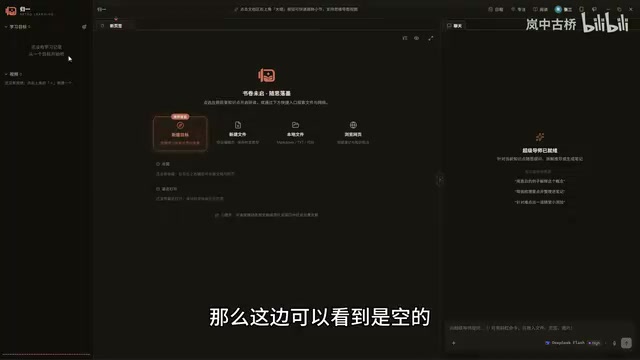
Open-Source AI Learning Agent: A Full Workflow Experience from Topology Graphs to Exam Generation
Explore an open-source AI learning agent: built on DeepSeek API, it constructs knowledge systems via topology graphs, with automatic document generation, notes, super documents, and exams. Learn about its Agent workflow and design highlights.

DeepSeek Whale Girl Open-Source MV Meme: AI Industry Coded Slang About Pivoting to Closed Source
Bilibili's DeepSeek Whale Girl rap MV uses fictional memes to tease the AI open-source vs. closed-source debate, with lyrics full of industry slang. This article explains the meme culture, the Whale Girl symbol, and the open/closed tension.