Google's AI Body Fat Estimation from Selfies: Technical Principles, Accuracy, and Privacy Risks Explained

Google's AI selfie body fat estimation offers convenience but raises accuracy and privacy concerns.
Google is developing AI technology that estimates body fat percentage from selfie photos using computer vision and deep learning. While this dramatically lowers the barrier to health monitoring compared to traditional methods like DEXA scans, it raises significant concerns about data privacy, measurement accuracy under uncontrolled conditions, regulatory classification, and potential psychological impacts on vulnerable users.
When Selfies Become Health Screening Tools
Google is exploring a rather controversial AI technology: estimating body fat percentage by analyzing selfie photos uploaded by users. This technology transforms the smartphone camera from a simple imaging tool into a potential health monitoring device, marking yet another boundary expansion in consumer-grade health tech.
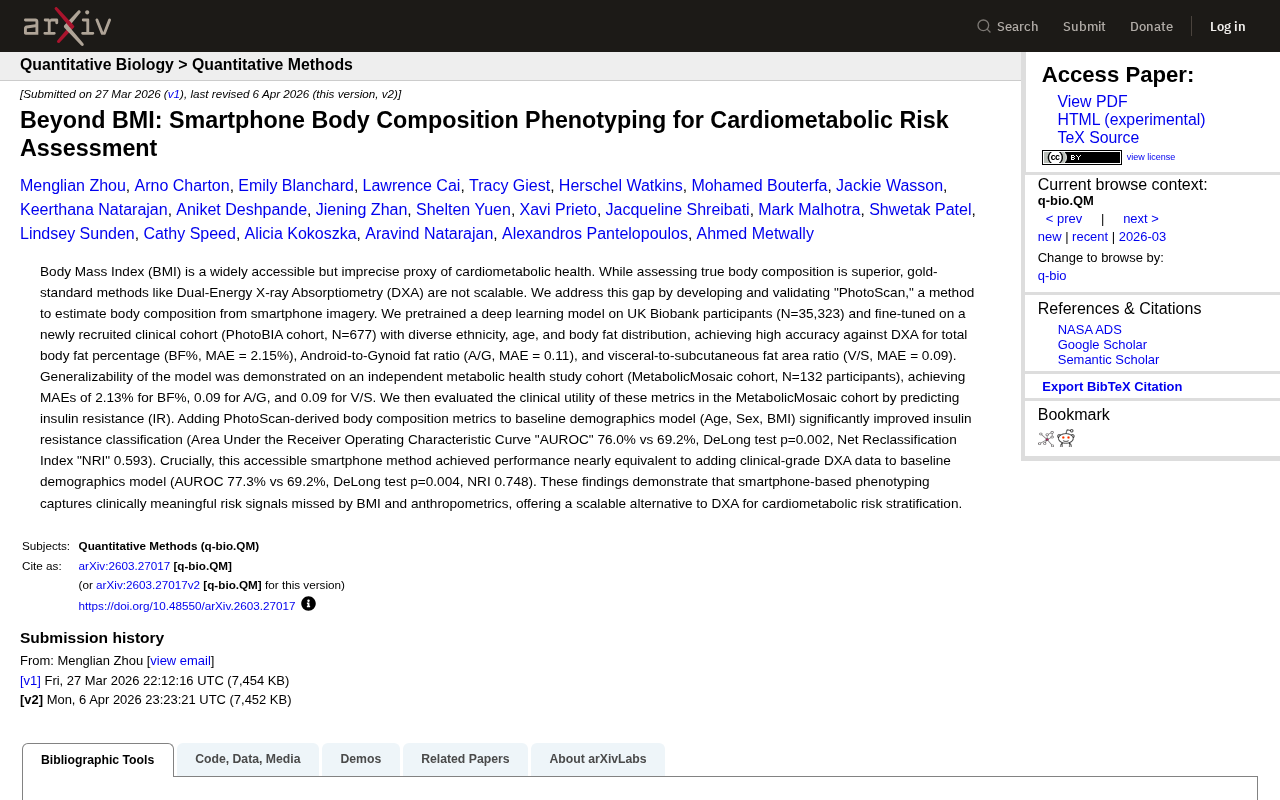
According to discussions on the Hacker News community, this AI image scanning technology developed by Google can extract biometric information from ordinary selfies and infer health indicators such as body fat percentage. For many everyday users who previously relied on professional body composition scales or DEXA scans to obtain such data, this undoubtedly lowers the barrier to health monitoring.
How AI Selfie Body Fat Estimation Works
From a technical perspective, such applications typically rely on a combination of computer vision and deep learning models. The AI system analyzes body contours, body proportions, facial features, and skin appearance under specific lighting conditions to build a correlation model between visual features and body fat content.
Specifically, the technical architecture of such systems typically contains several key components. First is an image feature extraction module based on Convolutional Neural Networks (CNN), which can identify morphological features of various body parts from 2D photos, such as waist-to-hip ratio, limb circumference proportions, and facial fat accumulation. More advanced approaches incorporate 3D human body mesh reconstruction technology (such as the SMPL model) to estimate three-dimensional body parameters from a single 2D photo, thereby establishing a more precise mapping to body composition. Finally, a regression model maps these visual features to specific body fat percentage values. The core challenge of the entire pipeline lies in constructing training data — researchers need to collect standardized photos of large numbers of subjects while simultaneously using gold-standard devices like DEXA to obtain their actual body fat data in order to train a model with good generalization capability.
Google has been deeply invested in computer vision and healthcare AI for years. From Google Health to various image recognition research projects, all have built the technical foundation for such applications. Its MediaPipe framework can already perform real-time human pose estimation and body segmentation, while DeepMind's breakthroughs in areas like protein structure prediction demonstrate Google's capability to apply AI to complex biological problems. In theory, given a sufficiently large, annotated training dataset (containing photos paired with corresponding measured body fat data), a model can learn the statistical patterns between the two.
The Dual Considerations of Convenience and Privacy
The appeal of this technology is obvious. Traditional body fat measurement methods either require professional equipment (such as DEXA scans or hydrostatic weighing) or have significant measurement errors (such as ordinary body composition scales). Getting a body fat estimate from a single selfie greatly improves the convenience of health data acquisition, making it particularly suitable for everyday scenarios like fitness tracking and weight management.
To understand the value of this technology, it's worth understanding the limitations of traditional body fat measurement methods. DEXA (Dual-energy X-ray Absorptiometry) is considered one of the gold standards for body composition measurement. It works by emitting two different energy levels of X-rays through the body and precisely distinguishing bone, fat, and lean mass based on how different tissues absorb the radiation, with errors typically within 1-2%. However, a single test can cost hundreds to over a thousand yuan. Hydrostatic weighing uses Archimedes' principle to calculate body density by comparing body weight in air versus water, then deriving body fat percentage — its precision is comparable to DEXA, but the procedure is extremely cumbersome, requiring subjects to be fully submerged in water while expelling as much air from their lungs as possible. The body composition scales most commonly used by consumers employ Bioelectrical Impedance Analysis (BIA) technology, sending a weak electrical current through the body and measuring impedance to estimate body composition — since fat tissue has low water content and poor conductivity while muscle tissue has high water content and good conductivity, the impedance characteristics of the two differ significantly. However, BIA is highly susceptible to hydration status, meal timing, exercise state, and other factors, with an error range typically of 3-8% or sometimes even greater.
However, comments on Hacker News also reflect the community's cautious attitude. Uploading body images to an AI system for analysis essentially means handing over highly sensitive biometric data to a tech company. This raises several core questions.
Data Privacy Risks Cannot Be Ignored
Body images are among the most private personal data. Once these images and their derived health inference data are stored, transmitted, or used for other purposes, they could pose serious privacy breach risks. Users need clear answers: Are these photos processed locally, or uploaded to the cloud? How long is data retained? Will it be used for model training or other commercial purposes?
From a legal framework perspective, body images and health data derived from them fall under the highest protection level in most privacy regulations. The EU's GDPR classifies biometric data (data relating to physical, physiological, or behavioral characteristics used to uniquely identify a natural person) as "special categories of personal data," and processing such data requires meeting stricter lawfulness conditions, including obtaining explicit consent. While the US lacks a unified federal privacy law, Illinois's BIPA (Biometric Information Privacy Act) has already triggered numerous lawsuits against tech companies. From a technical solutions perspective, Federated Learning and Differential Privacy are two approaches that could potentially alleviate privacy concerns. Federated Learning allows models to be trained and perform inference locally on user devices, sending only encrypted model updates (rather than raw data) to servers; Differential Privacy adds carefully designed noise to data, ensuring that individual user information cannot be reverse-engineered from aggregate results. Google itself is one of the main advocates of Federated Learning — its Gboard keyboard has long employed this technique. However, whether the computational requirements and latency constraints of model inference in body fat detection scenarios allow for fully localized processing still needs further validation.
The Accuracy Boundaries of AI Body Fat Estimation
The accuracy of estimating body fat percentage from photos is itself questionable. Lighting conditions, shooting angle, clothing, body posture, and other factors can significantly affect visual judgment. Even advanced AI models may show considerable deviation between their estimates and professional equipment measurements. If users over-rely on this data for health decisions, it could actually be misleading.
Multiple academic studies on image-based body composition estimation already exist. Several papers published around 2020 show that under controlled conditions (standardized lighting, fixed shooting distance, subjects wearing tight-fitting clothing), AI models can achieve correlation coefficients of 0.85-0.93 with DEXA results, with mean absolute errors of approximately 2-4% body fat percentage. However, the test environments in these studies differ vastly from real-world user selfie scenarios. Under uncontrolled everyday selfie conditions, the color temperature and direction of lighting changes body shadows, affecting body shape judgment; different phone lens focal lengths introduce varying degrees of perspective distortion (wide-angle lenses make parts closer to the lens appear larger); and clothing occlusion directly blocks visual information acquisition. Additionally, performance differences across different ethnic groups, genders, and age groups (i.e., algorithmic fairness issues) remain an insufficiently addressed challenge.
Trends in Consumer-Grade Health AI
Google's exploration is not an isolated event but rather a microcosm of the broader consumer health AI wave. In recent years, from smartwatch heart rate and blood oxygen monitoring to smartphone apps for skin lesion identification, AI is integrating various health monitoring capabilities into devices people use daily.
Concrete examples of this trend are already quite abundant. Apple Watch received FDA approval for its ECG function in 2018, capable of detecting cardiac arrhythmias such as atrial fibrillation — this was the first time a consumer device received such a high-level medical device certification. Google's skin disease AI tool DermAssist can identify nearly 300 skin conditions from phone photos. Samsung Galaxy phones with Samsung Health built in can already measure blood pressure and blood oxygen via camera. In the body composition space, Amazon's Halo band once offered a similar body scanning feature — users would photograph themselves from multiple angles while wearing tight-fitting clothing, and the system would generate a 3D body model and estimate body fat percentage (that product was discontinued in 2023). These cases collectively outline a trend: smart devices are evolving from information terminals into personal health sensor networks.
The core driving force behind this trend is: democratizing expensive, professional medical testing capabilities so that ordinary people can conveniently track their own health status. But on the other side, it also brings numerous challenges in regulation, accuracy, and ethics.
Key Issues to Watch
For the widespread adoption of such technologies, several aspects require ongoing attention:
- Regulatory positioning: Are these tools medical devices or consumer fitness products? Different classifications correspond to vastly different regulatory requirements and liability standards. The US FDA released its "Software as a Medical Device" (SaMD) guidance framework in 2017, classifying AI/ML-driven health software by risk level for regulatory purposes. If an app claims to "diagnose" diseases or provide "clinical-grade" measurement results, it would likely need to undergo rigorous clinical validation and pre-market approval processes (such as 510(k) or De Novo pathways). But if positioned merely as a "fitness reference" or "trend tracker," it may fall within the FDA's enforcement discretion scope, facing lighter regulation. How Google positions its body fat detection feature will directly determine the compliance requirements it must meet.
- Psychological impact: Instant feedback on body data like body fat percentage may have negative psychological effects on some users (especially those with body image anxiety). Research shows that frequent body monitoring and quantification may exacerbate symptoms in eating disorder patients or trigger unhealthy body comparison psychology among adolescents. Lowering the threshold of body fat measurement to the level of a casual snapshot may further amplify this risk.
- Data sovereignty: Whether users truly have control over their own body data, including the rights to delete, export, and refuse secondary use. Regarding data portability, while GDPR grants EU users the right to data portability, in practice, standardization of health data formats and cross-platform interoperability still face enormous challenges.
Conclusion
Google's AI selfie body fat detection technology demonstrates AI's tremendous potential in the health domain, while once again bringing the tension between convenience and privacy protection to the forefront. As a technology still in the exploration phase, its final form and impact remain to be seen.
For users, maintaining alertness about data privacy while enjoying technological convenience and rationally assessing the accuracy of AI estimates is perhaps the wisest attitude when facing this wave of health AI. For tech giants like Google, how to build user trust while driving innovation will be the key factor determining whether such technologies can gain widespread acceptance.
Related articles

Uber Deploys ChatGPT Work Company-Wide: AI in the Workplace Enters the Scaled Implementation Phase
Uber deploys ChatGPT Work to 30,000+ employees, extending it from engineering to all roles. We analyze its expert-engineer pairing, end-to-end automation, and questions of AI control and power concentration—insights for scaling AI in the workplace.

Shift at Midnight Hands-On: When "ID Verification" Becomes Alien Hunting
Shift at Midnight blends ID verification with horror survival in a four-player co-op game. We break down its inspection mechanics and chaotic humor.

Zelensky Recounts the Outbreak of War: I Need Ammunition, Not a Ride
Zelensky recalls the first day of war in a YouTube interview: farewell to family, rejecting Biden's evacuation offer with "I need ammunition, not a ride," and how Bucha shaped his stance on compromise and peace talks.