Google's Gemini 4 Argon and Quantum Breakthrough Lead This Week's AI News

Google's Gemini 4 Argon leads with million-token output and a quantum breakthrough, amid a dense wave of open-source releases.
A dense week for AI: Google launched Gemini 4 Argon, whose biggest differentiator is 1M tokens of output per response, topping the Vals Index knowledge work leaderboard at an order of magnitude lower cost, though it doesn't lead all benchmarks; Google also demonstrated magic state cultivation on Willow, cutting quantum state preparation error by ~40x. Meta released agent-focused Muse Wonder and the 816B-parameter Muse Spark Open, the latter with stringent requirements. Open-source MOSS Image became a practical text-to-image option under Apache 2.0, and Kling 4 launched but didn't surpass Seedance. Matrix Game 4.0 hit 83 FPS real-time game generation on a single card, Drama 3 topped the open-source TTS leaderboard, and RP1 fully open-sourced its humanoid robot hardware.
Google's Gemini 4 Argon and Quantum Breakthrough Lead This Week's AI News
This week brought a dense wave of AI releases: Google dropped both its flagship Gemini 4 Argon model and a breakthrough solution to a twenty-year-old quantum computing problem, Meta rolled out Muse Wonder and the open-weight Muse Spark Open, Fish Audio's Drama 3 topped the open-source TTS leaderboard, MOSS Image joined the open-source image generation race under a permissive license, and Kling 4 officially launched. On the open-source side there's also a batch of locally runnable models including Matrix Game 4.0, UniForge 3D, and Infinisplat V2.
Below is a topic-by-topic breakdown of what's worth paying attention to.
Google's Two-Front Assault: Gemini 4 Argon and Quantum Error Correction
Gemini 4 Argon: 1M Token Output Is the Real Differentiator
Gemini 4 Argon is now available to Pro/Ultra and paid API users. According to figures on the launch page, it surpasses GPT-6 Astra and Claude Opus 5 across knowledge work, agentic coding, science, and math, ranks first on the Vals Index knowledge work leaderboard, and costs significantly less than the second- and third-place models—the chart's horizontal axis is on a logarithmic scale, meaning it's nearly an order of magnitude cheaper. It also ranks first in medical image reasoning.
The most noteworthy item deserves its own callout: a single response can output 1 million tokens. This isn't the context window—it's the generation limit. Frontier models had previously plateaued at 64K to 128K output; Argon raises the ceiling by nearly tenfold. For tasks like multi-file codebase generation, full-length novels, and complete reports, removing the output bottleneck is far more practical than a few percentage points of benchmark improvement.
It doesn't lead across the board: second on MazeBench, third on VendingBench, third on KernelBench, and nearly matching the human baseline on BlueprintBench. There's also a notable application case—Google says Argon helped design several new enzymes that have been validated in real laboratories, and helped optimize a quantum computing algorithm, reducing the cost of a certain computation by more than 100x relative to the baseline.

The difference between output limit and context window
The industry often conflates "context window" and "maximum output length," but the two constrain entirely different capabilities. The context window is the total number of input-plus-history tokens the model can "see" at once in a single request, determining how long a document or how many conversation turns it can handle; maximum output length limits how long the model can write in a single generation, directly determining whether it can produce an entire multi-file codebase, long report, or full novel in one go.
Previously most frontier models had output caps in the 64K to 128K range, while input windows had long since reached the million mark—meaning the model could "read it all" but couldn't "write it all," so many long tasks had to be split into multiple calls stitched together by external logic, easily losing global consistency. Raising the output limit to 1M tokens changes that workflow, letting the model maintain holistic planning over an extremely long artifact within a single generation process—especially critical for agentic coding and long-document generation.
Quantum Computing: Magic State Cultivation Cuts Error by 40x
Google demonstrated a technique called magic state cultivation on its Willow processor. The background: quantum computers need a special quantum resource called a "magic state" to perform certain key operations, and preparing them can consume 95% of the machine's compute, leaving only 5% for actual computation.
The new approach starts from an imperfect quantum state, progressively probing and eliminating errors through a series of measurements to arrive at a far cleaner state. Google says the error is reduced by roughly 40x, reaching 99.99% fidelity. The full paper has been published in Science. The sober caveat: this is still a single-point demonstration, and whether it can be reproduced at larger scale remains unverified; but if it holds, it points toward a dramatic reduction in quantum computer hardware requirements.
Magic states and fault-tolerant quantum computing
To grasp the weight of this breakthrough, you first need to know that not all operations in a quantum computer are equally "cheap." Under the fault-tolerant quantum computing framework, a class of basic operations called Clifford gates can be implemented efficiently and reliably using error-correcting codes, but they alone aren't sufficient for universal quantum computing—any algorithm of real value (Shor's factoring, quantum simulation) must rely on non-Clifford gates, which are extremely expensive to implement physically.
"Magic states" are precisely the resource for realizing non-Clifford gates: by preparing a specific quantum state offline and then using "magic state injection" to convert it into the needed non-Clifford gate. The problem is that high-fidelity magic states are hard to prepare directly, typically requiring distillation from large numbers of lower-quality copies, with cost growing exponentially with the target error. Google's magic state cultivation bypasses the traditional distillation route, instead directly "cultivating" high-fidelity states through a feedback-driven measurement sequence. If it can be scaled, it would significantly reduce the physical qubit requirements of fault-tolerant quantum computers.
Meta's Dual-Model Strategy: Muse Wonder and Muse Spark Open
Meta released two models this week with very different positioning.
Muse Wonder focuses on agents and professional work, and on the company's self-reported benchmarks some items exceed the strongest models from GPT and Claude. Speed is its strength, clearly faster than Gemini 4 and Opus 5.5; on hallucination tests it's refreshingly honest—more inclined to admit it doesn't know something than to make it up. But third-party leaderboards paint a less rosy picture: not in the top ten on LiveBench, just 1% on MazeBench, and even the stronger Muse Wonder Full only ranks fifth on the Vals Index. On cost, Artificial Analysis estimates about $4.50 per task, pricier than the smarter GPT-6 Astra and Gemini 4. Both versions are currently available to Muse Code subscribers, with only the weaker one offered via API.
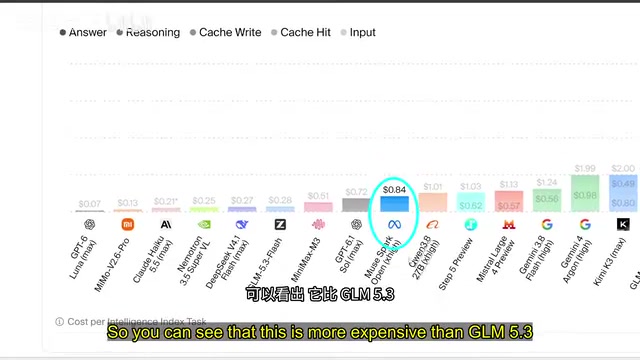
Muse Spark Open is an 816B-parameter MoE open-weight model with 42B active parameters and 1M context. The official benchmarks look good, but on the Intelligence Index it trails open-source models like GLM 5.3, Step 5, Kimi K3, and Mimo 2.6. More off-putting than performance is the barrier to use: it requires submitting your legal name, date of birth, and organization, demands prominent "Built with Muse Spark Open" attribution in your product's user interface, and requires a separate commercial license for companies with annual revenue over $20 million.
Open-Source Image and Video: MOSS Image, CREA 3, and Kling 4
MOSS Image: A Practical Choice Under Apache 2.0
MOSS Image has about 5B parameters, with the Transformer portion at only about 10GB—runnable on consumer GPUs. It does text-to-image only and doesn't support natural-language editing, but it wins on output quality and a permissive license: strong on anime, game scenes, text layout, comic panels, and infographics, and it supports bounding-box composition control. The official release includes both base and SFT versions—the former suited to fine-tuning, the latter to better output quality. Apache 2.0 means commercial use is allowed.
For comparison, the concurrently released FLUX.3 Image Klein supports 4K generation and editing, bounding-box control, and just 5.6B parameters, but in testing faces and human anatomy broke down badly, with frequent extra fingers and distorted limbs; it also uses the FLUX community license, restricting it to non-commercial use. CREA 3 focuses on speed: generating or editing at 2K resolution in under 8 seconds, far faster than Nano Banana's 30+ seconds, and it can precisely change only specified elements while preserving other pixels, supporting up to 6 reference images—currently online paid use only.
Total parameters vs. active parameters in MoE architectures
Several open-source models this week sported dual numbers like "600B total parameters, 27B active"—a hallmark of the mixture-of-experts (MoE) architecture. A traditional dense model uses all its parameters in every forward pass, whereas MoE splits the feed-forward layers into many "experts" and a routing network selects only a few experts per token. So total parameters measure the model's capacity and memory footprint, while active parameters determine the actual compute per inference—the two can differ by an order of magnitude.
This explains a common confusion: why some models with hundreds of billions of total parameters can still run on consumer-grade or small multi-GPU setups, and why models with similar parameter counts can have wildly different inference costs. When gauging inference overhead, active parameters are more informative than total parameters, while total parameters better reflect the model's ceiling for stored knowledge.
Kling 4 Launches: Clear Progress but Not on Top
Kling 4 brings stronger motion dynamics, high-quality stereo audio, 10-bit HDR output, support for up to 15 reference assets and 10 keyframe controls, with 4K resolution on the way. The preliminary verdict: very close, but still short of Seedance, which remains the top name in AI video for now.
Long-Video Consistency: Mosaic Chunk and Anytime Any Space
Two works tackle the same pain point—video models "forgetting" objects that temporarily leave the frame. Mosaic Chunk introduces a selective memory mechanism that retains only useful information from earlier frames and recalls it when needed; in tests, an object occluded for several seconds still maintained consistent appearance when it reappeared. Code and model are open-sourced, with the text-to-video version based on MiniMax H3 and the image-to-video version based on Lingworld Infinity. Anytime Any Space goes further, directly reconstructing the scene's 3D environment as memory—a character leaves a room and comes back to find it unchanged—and it can pair with various video models like MiniMax H3 and Alibaba's Wan.
World Models and 3D: From Playable Games to Real-Time Rendering
Matrix Game 4.0: 83 FPS Real-Time Game Generation on a Single Card
Skywork's Matrix Game 4.0 takes a hybrid route: physics, motion, and game rules are handled by a game engine, and AI is responsible only for converting the engine's rough output into refined visuals in real time. This solves the old problem of previous AI game models drifting and deforming over time—mechanics, scenes, and characters stay consistent throughout. It also ships with a coding agent that can describe new gameplay in natural language and directly modify the game code. The standout figure: 83 frames per second at 480p on a single consumer GPU. Code and model have been released.
World models and the drift problem of frame-by-frame generation
The "world model" that appears repeatedly in this article refers to generative models that predict future frames based on actions or historical observations—the core approach to AI-generated interactive environments. The pure end-to-end method lets a video model directly predict the next frame without any external structure, and its fundamental flaw is error accumulation: tiny deviations in each frame become inputs to the next, so after dozens of frames the scene geometry and object appearance gradually drift and deform, unable to maintain long-term consistency.
The hybrid routes of Matrix Game 4.0 and NVIDIA Stream Render are precisely a response to this flaw—handing stable information like physics rules and spatial structure to a traditional game engine to maintain, with AI responsible only for "stylizing" the engine's rough render into photorealistic textures. Because the engine provides a trustworthy geometric and motion skeleton, the model needn't memorize the scene from scratch, so consistency is guaranteed while the generation burden drops to a real-time level.
Rendering Acceleration: NVIDIA Stream Render H3 and Streaming Code World Model
The two share a similar idea: feed the game engine's color-coded maps to a video model to generate realistic textures and lighting. NVIDIA's approach is based on MiniMax H3, requiring only two generation steps per video segment to render in real time—at the cost of a demo using 8 GB200s with a full model suite over 200GB, essentially out of reach for single consumer-grade hardware. The Streaming Code World Model is leaner: generating segment by segment, with each segment referencing prior segments and the engine's latest input, at 5.1 seconds per segment on a single H200, with training scripts also open-sourced.
On the 3D front there are several more open-source projects: UniForge 3D completes full models from multi-angle photos, with reconstruction of visible parts and generation of missing parts working in tandem, preserving detail better than comparison methods; Gaussie Animate uses a dual-layer "inner skeleton + outer surface" representation to solve the stiffness of clothes, hair, and soft tissue under traditional skeletal animation; Infinisplat V2 reconstructs freely navigable 3D scenes from multi-angle photos, with a model of just 6.6GB that can handle driving footage of over a thousand frames.
Speech, Robotics, and Open-Source Models at a Glance
Drama 3 Tops Open-Source TTS
Fish Audio's Drama 3 ranks first on the Artificial Analysis open-source TTS leaderboard and is now available on Hugging Face. Its distinguishing feature is the ability to insert meta-tags into transcribed text to specify tone and expression sentence by sentence; with 35B total parameters and only 3B active, user feedback suggests the actual runtime barrier is far lower than the parameter count implies.
Full-Stack Open-Source Humanoid Robot RP1
RP1 open-sources the hardware design as well: mechanical structure, circuit diagrams, electronics, firmware, and assembly documentation are all public, not just software. The full unit supports 24 to 42 degrees of freedom, with the real-time control system running at 500Hz. Accompanying software supports motion-imitation training and experimentation with different AI control policies.

On the robotics demo front, Ping Pong Duo has two humanoid robots playing doubles: they need to predict the ball's path, take turns hitting, and step aside then return after each shot, all accomplished by a coordinated control system that sustains rallies of considerable length.
A Dense Batch of Open-Source Model Releases
Step 5 Preview (StepFun) is a 600B-total / 27B-active MoE flagship focused on autonomous coding and complex reasoning, with 1M context, Hugging Face weights of about 650GB, slightly below GLM 5.3 and MIMO 2.6 on the Intelligence Index, and an API at about $1 per task—roughly half of GLM 5.3. NVIDIA Nemotron 3.5 Super VL is a 120B/12B-active multimodal model exceeding 600 tokens per second, not top-tier in intelligence but suited to throughput-hungry tasks, with its training recipe fully open-sourced. Ling 3.1 Flash is 560B/25B-active, with performance close to GLM 5.3, Kimi K3, and DeepSeekAd 4.1, stronger than same-size Qwen 3.6 and Gemma 4 on agentic coding and tool use, and its 48GB size and near-Apache-2.0 license make it relatively easy to use.
Two Things Worth Noting
OpenAI confirmed this week that an employee placed a roughly $20 recording device behind a conference-room TV, wrapped in a tissue and plugged into a USB port; the employee was arrested by the FBI on October 9. The crudeness of the scheme (the most conspicuous spot, a cheap device) left many observers puzzled.
On the academic side, Stanford's Next Concept Modeling proposes a coarse-to-fine generation paradigm: first determine the overall idea and structure, then fill in details layer by layer, with multiple tokens generatable in parallel within the same stage. It performs notably on Sudoku tasks and is up to 31x faster than comparable diffusion language models on summarization tasks. This idea forms an interesting contrast with mainstream token-by-token autoregression.
FAQ
Can free users use Gemini 4 Argon? Currently it requires a Pro/Ultra subscription or paid API; the free tier is not available.
Can MOSS Image be used commercially? Yes, it uses the Apache 2.0 license, and both the base and SFT versions can be downloaded and run locally.
Is Kling 4 better than Seedance? Preliminary tests suggest it's close but still behind; Seedance remains in the lead for now.
One-line Summary
Google's Gemini 4 Argon leads with million-token output and a quantum error-correction breakthrough, amid a dense wave of open-source model releases.
Paragraph Summary
A dense week for AI releases: Google launched the flagship Gemini 4 Argon, whose biggest differentiator is 1 million tokens of output per response, ranking first on the Vals Index knowledge work leaderboard at an order of magnitude lower cost, though it doesn't lead across all benchmarks; Google also demonstrated magic state cultivation on Willow, cutting quantum state preparation error by roughly 40x. Meta released the agent-focused Muse Wonder and the 816B-parameter Muse Spark Open, though the latter has stringent usage requirements. On the open-source side, MOSS Image became a practical text-to-image choice with its Apache 2.0 license and ~5B parameters, while Kling 4 launched but didn't surpass Seedance. In addition, Matrix Game 4.0 achieved 83 FPS real-time game generation on a single card, Drama 3 topped the open-source TTS leaderboard, and RP1 fully open-sourced its humanoid robot hardware design.
Related articles

Altman Declares: The Cybersecurity Crisis Is Unsolvable and There Are Too Many Vulnerabilities to Patch
OpenAI CEO Sam Altman publicly admits he can't fix all security vulnerabilities and that the cybersecurity crisis will keep worsening. This article analyzes the industry reality behind this statement: exploding software complexity, the double-edged sword of AI, and the need to shift security paradigms from "zero vulnerabilities" to resilient defense.

Product Hunt Launches Visual Launch Editor, Saying Goodbye to Tedious Form Filling
Product Hunt launches a Visual Launch Editor with in-place editing for name, tagline, gallery, and maker info, auto-saved drafts, and a checklist to guide creators.

Zelensky Speaks: How We Held Kyiv Against 200,000 Russian Troops
Zelensky recalls the early Russia-Ukraine war: 200,000 Russian troops drove on Kyiv while Ukraine's main forces were in the east. He explains how mobilization grew the army from 200,000 to 800,000 and how Kyiv and Chernihiv oblasts were recaptured.