Google TimesFM Deep Dive: A Foundation Model for Zero-Shot Time Series Forecasting

Google's TimesFM brings foundation model zero-shot capabilities to time series forecasting.
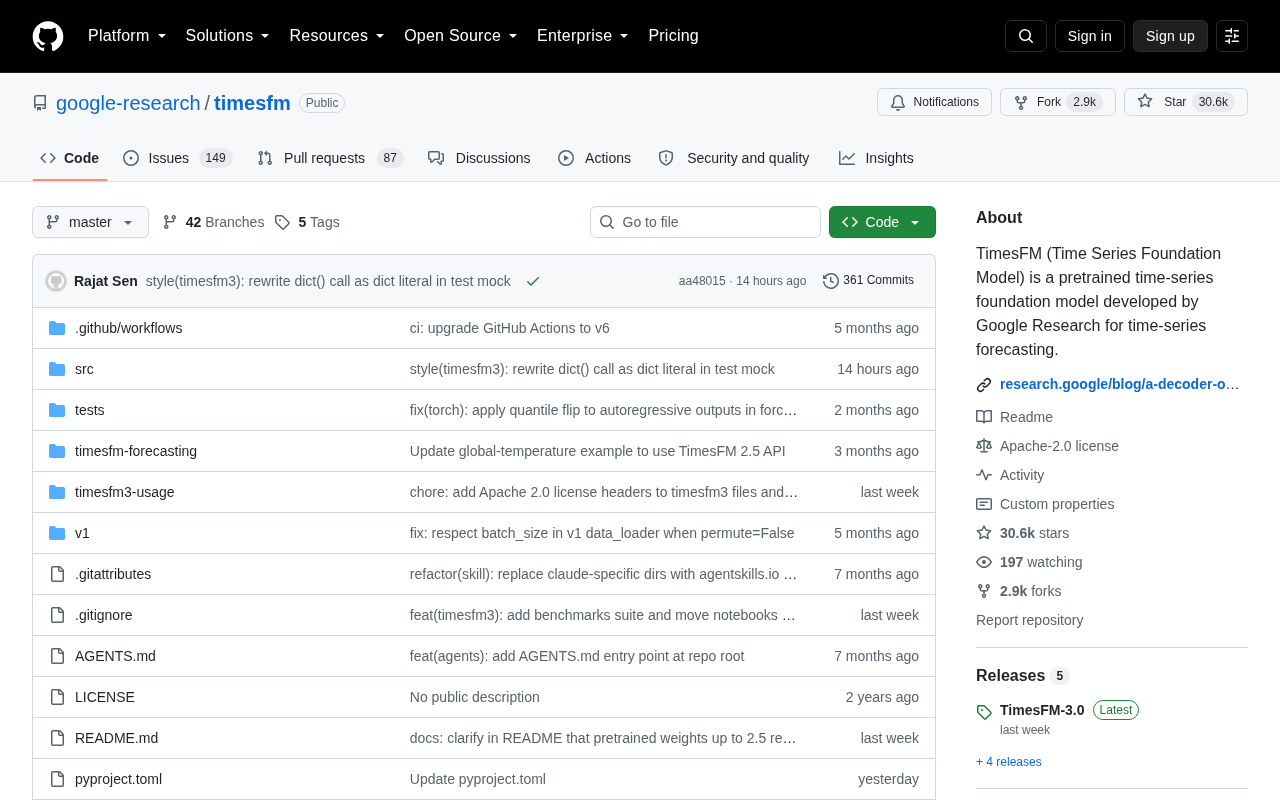
TimesFM is Google Research's open-source time series foundation model that applies the pre-train-then-predict paradigm to forecasting. With over 30,500 GitHub stars, it enables zero-shot predictions on unseen data without task-specific training. Built in Python, it covers energy, retail, finance, and IoT use cases, signaling a shift from specialized models to general-purpose forecasting foundations.
What Is TimesFM
After large language models swept through the natural language processing landscape, Google Research brought the "Foundation Model" concept to another domain that has long relied on specialized algorithms — time series forecasting.
The Paradigm Revolution of Foundation Models Foundation models represent one of the most significant paradigm shifts in AI in recent years. Unlike traditional task-specific models trained for particular purposes, foundation models are pre-trained at scale on massive, diverse datasets, learning general data representations and patterns. These models possess powerful transfer capabilities and can quickly adapt to downstream tasks through zero-shot learning, few-shot learning, or fine-tuning. The GPT series and BERT are classic examples in NLP — they've proven that a single large model pre-trained on general data can perform excellently across numerous tasks like Q&A, translation, and summarization without training from scratch for each one. This "pre-train then adapt" paradigm dramatically lowers the barrier and cost of AI adoption, and it's also the theoretical foundation for TimesFM bringing this concept to the time series domain.
TimesFM (Time Series Foundation Model) is a pre-trained time series foundation model built by Google Research. The project has accumulated over 30,500 stars and nearly 2,900 forks on GitHub, maintaining a recent growth rate of over 340 stars per day — a clear indicator of the industry's intense interest in this direction. TimesFM's core objective is straightforward: replace the traditional workflow of training separate models for each forecasting task with a single, general-purpose pre-trained model.
Why Time Series Forecasting Needs a Foundation Model
For a long time, time series forecasting has been heavily dependent on statistical methods or deep learning models that need to be trained from scratch for specific datasets.
Limitations of Traditional Approaches ARIMA (AutoRegressive Integrated Moving Average) is a classic statistical method in time series forecasting, widely used since the 1970s. It captures trends, seasonality, and random fluctuations by combining three components: autoregression (AR), differencing (I), and moving average (MA). Exponential smoothing is another important family of methods that forecasts the future by assigning exponentially decreasing weights to historical data. These statistical approaches have clear strengths: solid theoretical foundations, strong interpretability, and friendliness to small-sample data. But their limitations are equally apparent: they require extensive manual feature engineering and parameter tuning, struggle to capture complex nonlinear patterns, and perform poorly with multivariate, high-dimensional data. Deep learning methods (such as LSTM and Transformer) can handle more complex patterns but typically require collecting large amounts of data for each specific scenario and training from scratch.
This means that every time the business context changes — from electricity load forecasting to retail sales estimation, from financial trend analysis to sensor monitoring — engineers must recollect data, tune parameters, and retrain. This repetitive labor is not only time-consuming but also requires deep domain knowledge and machine learning expertise.
The Breakthrough Foundation Models Bring TimesFM borrows the "pre-training + zero-shot inference" paradigm from large language models: after completing large-scale pre-training on massive, diverse time series data, the model can directly forecast entirely new, previously unseen time series without any task-specific training. This "out-of-the-box" capability is the fundamental value that distinguishes TimesFM from traditional approaches. By learning from thousands of time series datasets spanning different domains, frequencies, and patterns, TimesFM has mastered the universal laws of temporal data — how to identify trends, capture periodicity, handle outliers, and understand dependencies across different time scales.
Core Technical Features of TimesFM
Zero-Shot Forecasting: Ready to Use Without Fine-Tuning
TimesFM's most compelling feature is its zero-shot forecasting capability.
The Technical Principles Behind Zero-Shot Learning Zero-shot learning is a powerful generalization capability in machine learning, where a model can make accurate predictions on a task category it has never encountered during training. This stands in stark contrast to traditional supervised learning, which requires collecting labeled data and training for each specific task. Zero-shot capability relies on the general knowledge and patterns the model acquires during pre-training. Take GPT as an example: after learning language patterns from massive text corpora, it can complete translation tasks like "translate English to French" even though it was never explicitly trained on that specific task, simply by understanding the instruction. TimesFM's zero-shot forecasting works the same way: by pre-training on thousands of time series from different domains, frequencies, and patterns, the model learns universal time series principles — trends, cycles, anomalies, and more — so it can provide reasonable forecasts on entirely new business data without retraining.
Users simply provide a segment of historical time series data, and the model outputs predicted values for a future period — no fine-tuning required whatsoever. This dramatically lowers the barrier to time series forecasting — modeling work that previously took a data science team weeks to complete can now potentially be accomplished with just a few lines of Python code.
For enterprises, this means rapidly deploying unified forecasting capabilities across multiple business lines without maintaining separate model pipelines for each product line. This improvement in scalable efficiency is the core dividend of the foundation model paradigm. The commercial value of this capability lies in dramatically shortening the time from data to decision, enabling non-specialists to obtain high-quality forecasting results.
Python-Based Open-Source Ecosystem
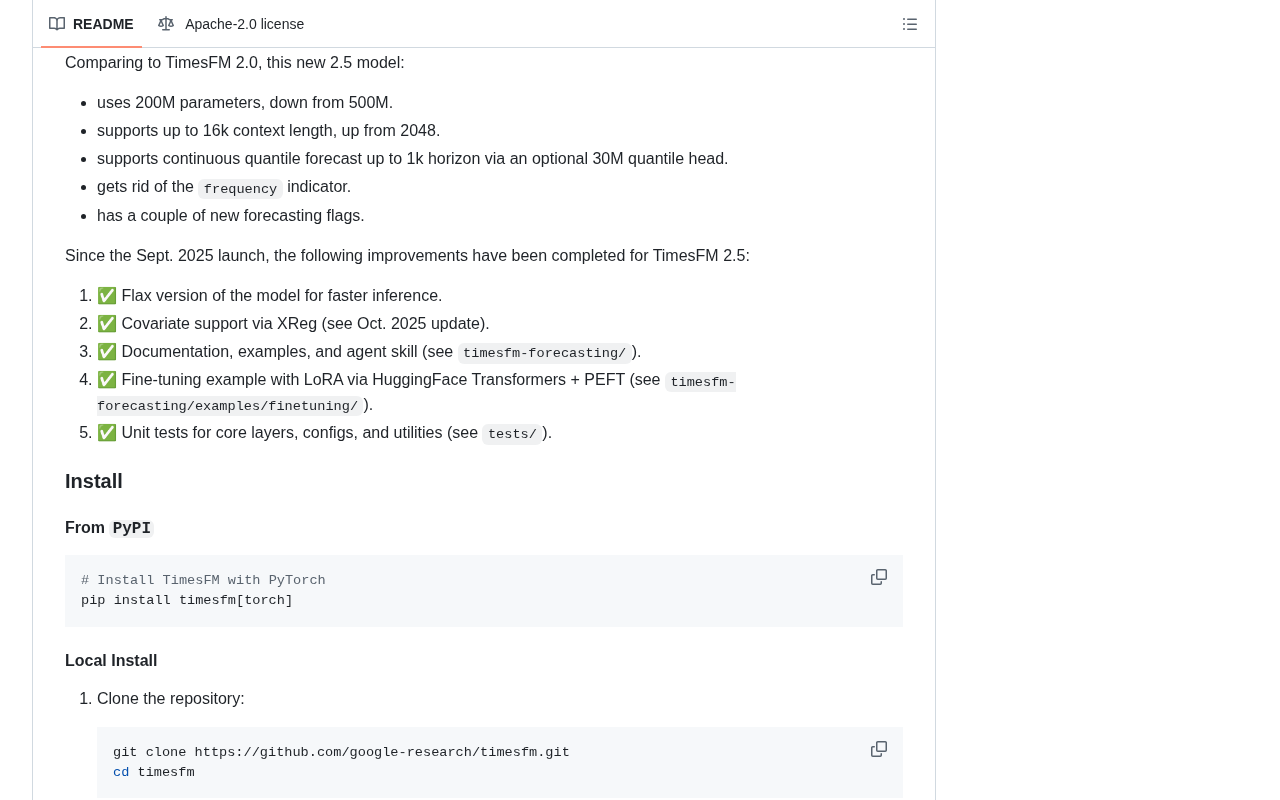
TimesFM is implemented entirely in Python and released as open source on GitHub. This aligns with Google's consistent strategy — advancing research and adoption across the entire field by opening up core models, while continuously improving them through community feedback. Developers can obtain the source code and pre-trained weights directly from GitHub and integrate them into their own data analysis and forecasting workflows. As the de facto standard language for data science and machine learning, Python boasts a mature ecosystem including NumPy, Pandas, Scikit-learn, and more — TimesFM can seamlessly integrate into existing data pipelines.
The open-source release also allows researchers to conduct secondary development, performance benchmarking, and method comparisons on top of TimesFM, significantly advancing academic progress in the emerging field of time series foundation models. Community contributors can optimize the model for specific industries, develop domain adaptation layers, and build benchmark datasets, accelerating technological iteration across the entire field.
Application Scenarios and Industry Value of TimesFM
Broad Potential for Multi-Industry Deployment
Time series forecasting permeates virtually every data-intensive industry:
-
Energy: Load forecasting for electricity and gas, renewable energy generation estimation. Accurate load forecasting optimizes power dispatch and reduces energy waste — prediction is especially critical for volatile energy sources like wind and solar.
-
Retail & Supply Chain: Inventory management, demand planning, and sales forecasting. Retailers need to balance inventory costs against stockout risks, and accurate demand forecasting can reduce inventory overstock by 30–50% while improving customer satisfaction.
-
Finance: Risk monitoring, market trend analysis, and quantitative analysis. From stock price prediction to credit risk assessment, from fraud detection to portfolio optimization, time series models are foundational tools in quantitative finance.
-
Industrial IoT: Equipment condition monitoring, predictive maintenance, and anomaly detection.
Deep Applications in Predictive Maintenance Predictive maintenance is one of the core applications of the Industry 4.0 era. By continuously monitoring equipment operational data, it anticipates maintenance needs before failures occur, thereby avoiding unexpected downtime, reducing maintenance costs, and extending equipment lifespan. Traditional methods rely on fixed-interval maintenance or simple threshold-based alarms, which are inefficient and prone to either over-maintenance or under-maintenance. Time series forecasting models can analyze historical trends in sensor data such as vibration, temperature, and pressure to identify early signals of equipment performance degradation. For example, a manufacturing company successfully predicted a bearing failure two weeks in advance by analyzing the vibration spectrum time series of electric motors, avoiding a production line shutdown. The value of foundation models like TimesFM lies in this: enterprises don't need to build separate models for each piece of equipment or each failure mode — they simply provide the equipment's historical operational data, and the model delivers health assessments and remaining useful life predictions, dramatically lowering the implementation barrier for predictive maintenance.
As a general-purpose foundation model, TimesFM can theoretically cover all of the above scenarios without requiring separate training for each one. This "one model serving multiple scenarios" characteristic is reshaping the cost structure and technical approach enterprises use to build forecasting systems.
A Paradigm Shift in Forecasting
From a deeper perspective, TimesFM represents the trend of forecasting migrating from "specialized models" to "general-purpose foundation models." Just as GPT transformed how NLP works, time series foundation models have the potential to reshape the daily toolchains of data analysts and operations research professionals. Before GPT, NLP practitioners needed to train specialized models for each task — text classification, named entity recognition, sentiment analysis, and so on. Now, a single general-purpose language model combined with prompt engineering can handle most tasks. The time series domain is undergoing a similar transformation.
Deep Learning Challenges in Time Series Applying deep learning to time series forecasting presents unique challenges. First, there's data scarcity: unlike computer vision or NLP which have massive public datasets like ImageNet and Common Crawl, many enterprises' time series data is private and fragmented, with individual datasets often containing only hundreds to thousands of data points. Second, there's heterogeneity: time series characteristics vary enormously across industries — retail data may exhibit clear weekly/annual seasonality, financial data is full of noise and non-stationarity, and sensor data may contain sudden changes and anomalies. Third, there's evaluation difficulty: evaluating time series forecasting must consider not just prediction accuracy, but also prediction intervals, trend capture, anomaly identification, and other multidimensional metrics. Traditional deep learning models (such as LSTM, GRU, and Temporal Convolutional Networks) can perform well in individual scenarios but have limited generalization. TimesFM attempts to address these issues through large-scale pre-training, but how to balance generality with domain-specific accuracy remains an open question.
Of course, this doesn't mean traditional methods will be immediately obsoleted. In scenarios with limited data or extremely distinctive domain characteristics, specifically optimized statistical models or deep learning solutions may still hold advantages. How foundation models and specialized models can complement each other will be a key topic for industry exploration in the coming period. Possible directions include: using TimesFM as a feature extractor and training lightweight domain adaptation layers on its outputs, or using TimesFM to generate initial forecasts that are then refined through post-processing with domain knowledge.
Conclusion
TimesFM's popularity is more than just another hot GitHub project story — it signals that the foundation model concept is extending from NLP into broader structured data domains. Backed by Google Research's deep technical expertise, an open-source strategy, and the practical value of zero-shot forecasting, TimesFM offers a brand-new and more efficient technical pathway for time series forecasting.
For developers and enterprises tracking AI evolution, TimesFM is worth following closely — it's very likely an important signal that the data forecasting field is entering the "foundation model era." Just as the Transformer architecture has unified NLP, computer vision, speech recognition, and other fields, time series foundation models may become the unified foundation of future forecasting systems, driving innovation across the entire chain from research to production.
Related articles
Vercel AI SDK TUI: A New Option for Terminal-Based AI Interaction
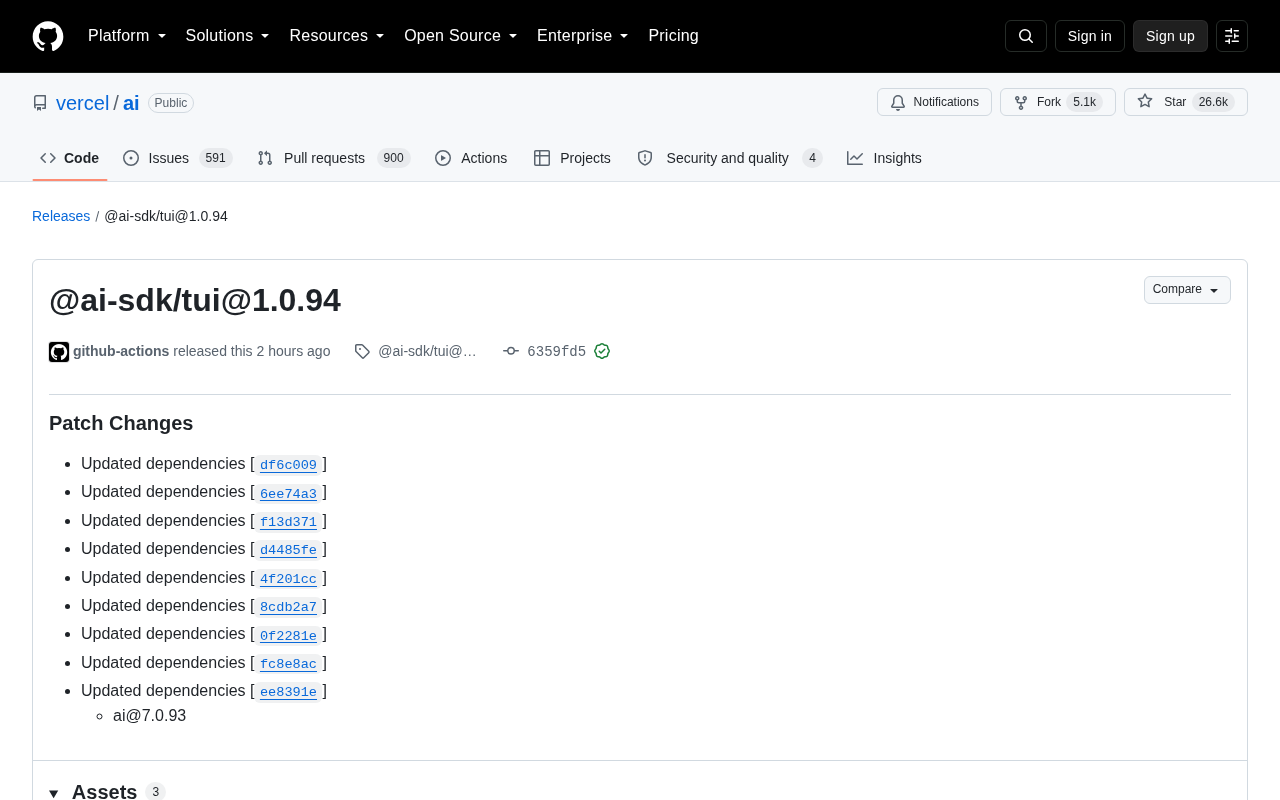
Vercel AI SDK introduces @ai-sdk/tui for terminal AI interactions, bringing streaming output, tool calling, and AI conversations to the command line.
Microsoft Copilot Copyright Lawsuit: 8.2 Million Conversations Reveal the Truth About AI Content Copying
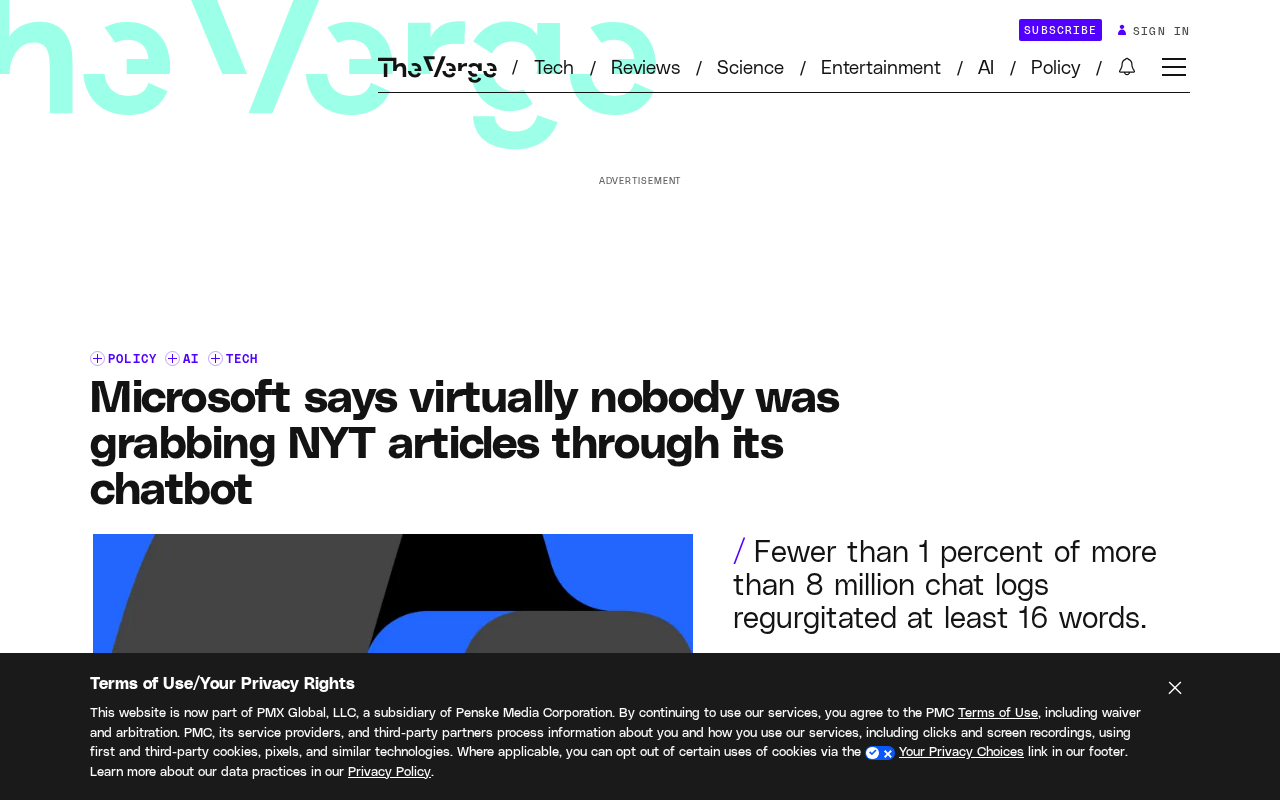
Microsoft discloses 8.2M Copilot conversations in NYT copyright lawsuit, claiming AI rarely copies news content. Explore the key data, legal disputes, and implications for the AI industry.
HydraFusion Explained: How GitHub Copilot's Multi-Model Orchestration Cuts Costs by 67%
Deep dive into GitHub Copilot's HydraFusion multi-model orchestration: its Plan-Build-Critique-Complete workflow, how it cuts costs by 67%, and the paradigm shift from model selection to orchestration.