Microsoft Copilot Copyright Lawsuit: 8.2 Million Conversations Reveal the Truth About AI Content Copying
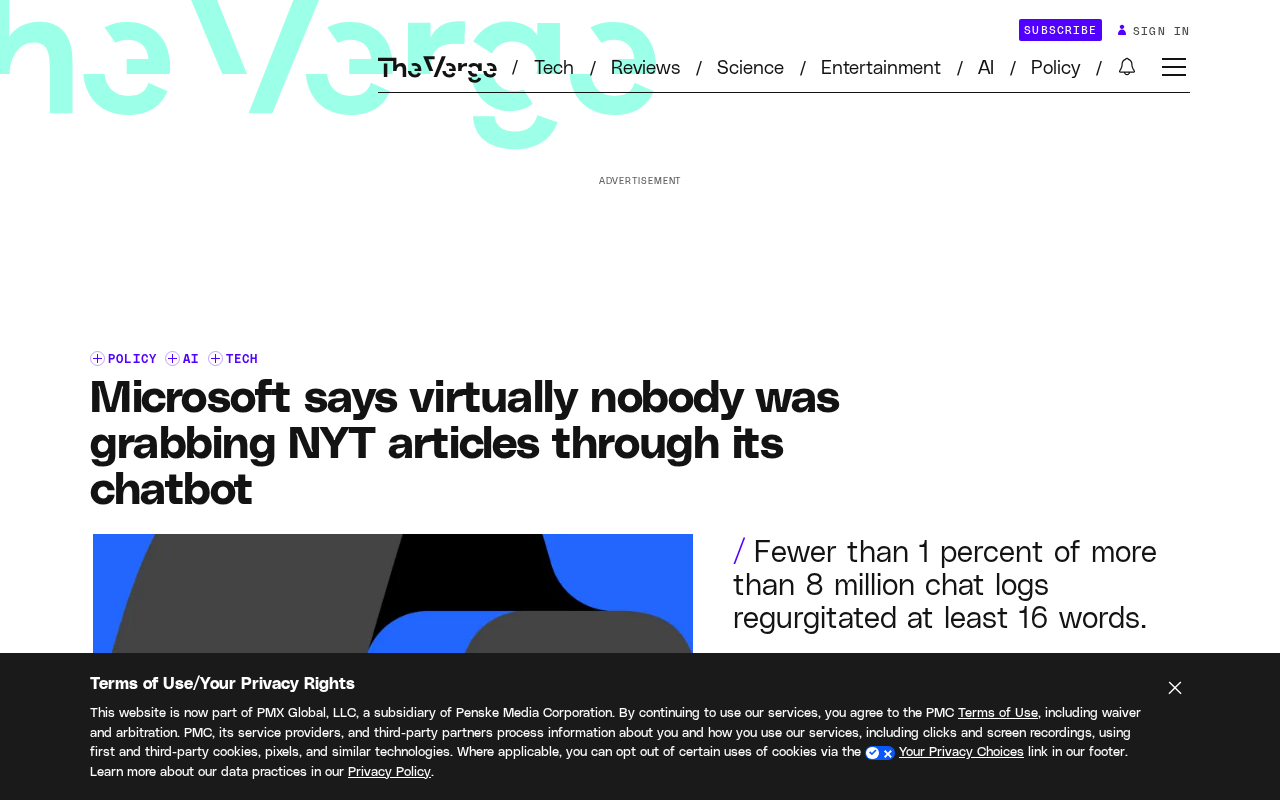
Microsoft's 8.2M conversation dataset aims to prove Copilot rarely copies copyrighted content amid NYT lawsuit.
In response to The New York Times' copyright lawsuit, Microsoft disclosed data from 8.2 million Copilot conversations, claiming its AI assistant very rarely reproduces complete copyrighted content. The case raises fundamental legal questions about AI training, fair use, derivative works, and market substitution effects. The outcome could set critical precedents for the entire AI industry's approach to copyrighted material.
Background: The New York Times vs. Microsoft Copyright Battle
Microsoft is facing copyright infringement lawsuits from The New York Times and multiple book authors. The core dispute centers on whether AI chatbots systematically copy copyrighted content at scale, thereby harming the interests of original creators and publishers.
Fundamental Concepts of Copyright Protection and AI Training
Copyright is a critical component of intellectual property, granting creators exclusive rights over their original works, including the rights to reproduce, distribute, and adapt. Traditional copyright law was primarily designed for human creation and usage scenarios, but the training process for large language models introduces new challenges: these models need to learn from billions to trillions of tokens of text data scraped from the internet, and whether this process constitutes "use" of copyrighted content remains legally contentious. AI companies typically argue this falls under "Fair Use" — a principle in U.S. copyright law that permits the use of copyrighted material without authorization under specific circumstances, particularly for transformative use. However, content creators argue that commercial AI training does not meet fair use standards and should require licensing and payment.
This isn't a challenge faced by Microsoft alone — the entire AI industry is closely watching the trajectory of this case, as it could set important legal precedents for AI model training and content output.
Where exactly should the copyright line be drawn between content creators and AI companies? Microsoft's latest legal filing offers a critical data-driven perspective.
Microsoft Discloses Key Data: Extremely Low Copying Rate Across 8.2 Million Conversations
An Explanation of the Discovery Process
Discovery is a critical phase in U.S. civil litigation where both parties must mutually disclose evidence relevant to the case before trial, including documents, data, witness lists, and more. This procedure is designed to prevent "ambush" tactics, allowing both sides to fully understand the other's evidence and arguments while promoting factual clarity. In this case, Microsoft's submission of 8.2 million conversation records is part of this discovery process. Such data disclosures are typically subject to a Protective Order that limits the scope and manner in which information can be made public. The discovery phase often spans months or even years, with both sides fiercely debating which information must be disclosed and which qualifies as trade secrets or attorney-client privilege. This process is not only a legal contest but also a crucial opportunity for both parties to probe each other's hand and assess litigation risks.
During the discovery phase of the lawsuit, Microsoft submitted a detailed usage data analysis report. Based on 8.2 million Copilot conversation records provided by the company, Microsoft claims that its AI assistant very rarely reproduces complete news articles or book content.
Specifically, Microsoft emphasized that Copilot "rarely copies complete sentences from news articles and books, let alone substantial passages that could substitute for the original content." The core logic behind this assertion is that even if the AI model used copyrighted material during training, its actual output does not constitute substantial copying of the original work and therefore should not be deemed infringement.
Technical Characteristics of AI-Generated Content
Modern large language models (such as the GPT series, Claude, and the models powering Copilot) are built on the Transformer architecture and generate content by learning statistical patterns from vast amounts of text data. Crucially, these models don't simply "memorize" and "retrieve" training data — they learn the probabilistic distribution of language: which words, phrases, and sentence structures are most likely to appear in a given context. As a result, model-generated content is typically "created" based on learned patterns rather than directly copied from the training set. However, research has shown that models can indeed output fragments of training data under certain conditions, particularly when the training set contains highly repetitive content or when user prompts are very specific. This phenomenon, known as "memorization," lies at the technical heart of the AI copyright debate: is the model engaging in transformative creation, or is it effectively copying protected content?
The disclosure of this dataset is highly significant. It serves not only as part of Microsoft's legal defense strategy but also provides the entire industry with empirical evidence about the characteristics of AI-generated content. If it can be demonstrated that AI systems very rarely copy protected content verbatim in actual use, this could significantly influence the court's ultimate judgment on the "Fair Use" doctrine.
Core Legal Disputes in AI Copyright Infringement
This lawsuit touches on several key questions about copyright law in the AI era:
The Boundary Between Training and Output
AI models require massive amounts of data for training — does this process itself constitute copyright use? Even if copyrighted content is used during training, if the final output doesn't directly copy it, does it still constitute infringement? This is the primary question the court needs to clarify.
The Standard for Determining Substantial Similarity
Traditional copyright law focuses on "substantial similarity," but how should this standard be defined in the context of AI-generated content? Microsoft's data shows that complete sentences are rarely copied, but plaintiffs may argue that even paraphrasing or summarizing could infringe on derivative work rights.
The Legal Implications of Derivative Work Rights
Derivative Work Rights are among the exclusive rights of copyright holders, referring to the right to create new works based on the original through adaptation, translation, rewriting, and similar transformations. Under U.S. copyright law, a derivative work must be based on one or more pre-existing works and contain sufficient original creative contribution. In the AI context, even if a chatbot doesn't copy a news article verbatim, if the summaries, rewrites, or paraphrases it generates are substantially derived from a protected original work and can be identified as being based on that work, this could constitute infringement of derivative work rights. This is a key legal basis for plaintiffs like The New York Times: they argue that AI output is essentially unauthorized adaptation of original content. The crux of this dispute lies in how to define the "based on" relationship between AI-generated content and training data, and what degree of similarity is required to constitute infringement.
Market Substitution Effect
What publishers like The New York Times are truly concerned about is that users might obtain information summaries through AI chatbots instead of visiting original news websites, directly impacting their advertising revenue and subscription businesses. Even without verbatim copying, does this usage pattern constitute unfair market competition?
Far-Reaching Implications for the AI Industry
The outcome of this lawsuit will directly shape the trajectory of the AI industry:
If the publishers prevail, AI companies may need to pay substantial licensing fees for training data or fundamentally change their data acquisition strategies. This would slow the pace of AI technology iteration to some degree but would effectively protect the legitimate rights of content creators.
If Microsoft prevails, it would provide stronger legal backing for AI companies to use publicly available data for model training. This could accelerate the widespread adoption of AI technology but would further squeeze the survival space for traditional media and publishers.
The Trend Toward Licensing Partnerships in the AI Industry
Facing pressure from copyright lawsuits, major AI companies are actively seeking licensing agreements with content providers. OpenAI has signed content licensing deals with the Associated Press (AP), Axel Springer (parent company of Business Insider, Politico, and others), France's Le Monde, Spain's Prisa Media, and several other media groups, allowing its AI models to use these organizations' news content for training and citation. Google is also exploring similar partnerships with news publishers and has introduced generative AI news display mechanisms. These agreements typically include financial compensation, content attribution, and provisions for linking to original articles in AI responses. However, issues such as licensing fee structures, long-term business model viability, and whether smaller content creators can receive fair treatment remain unresolved. This "build first, license later" model has also drawn criticism: detractors argue that AI companies built their commercial advantage using content without permission, only to offer limited compensation from an unequal negotiating position after the fact.
Notably, some AI companies have already begun proactively negotiating licensing agreements with publishers. OpenAI has signed content licensing deals with multiple news organizations, and Google is actively exploring similar partnership models. This may signal that a new industry equilibrium is forming — one where technology companies resolve copyright disputes through commercial collaboration rather than legal confrontation.
Finding the Balance Between AI and Copyright Protection
While Microsoft's data disclosure supports its defense, this legal battle is far from over. The court must find a reasonable balance between technological innovation and intellectual property protection, and the final ruling could redefine copyright rules for the digital age.
For content creators, the core issue goes beyond verbatim copying — it's about whether AI is exploiting their creative labor without compensation through other means. For AI companies, the challenge lies in proving that their technology genuinely creates new value rather than merely repackaging existing content.
The ultimate ruling in this lawsuit will establish an important legal framework for copyright protection in the AI era, with implications spanning hundreds of millions of content creators and an AI industry valued in the hundreds of billions of dollars.
Key Takeaways
Related articles
Vercel AI SDK TUI: A New Option for Terminal-Based AI Interaction
Vercel AI SDK introduces @ai-sdk/tui for terminal AI interactions, bringing streaming output, tool calling, and AI conversations to the command line.
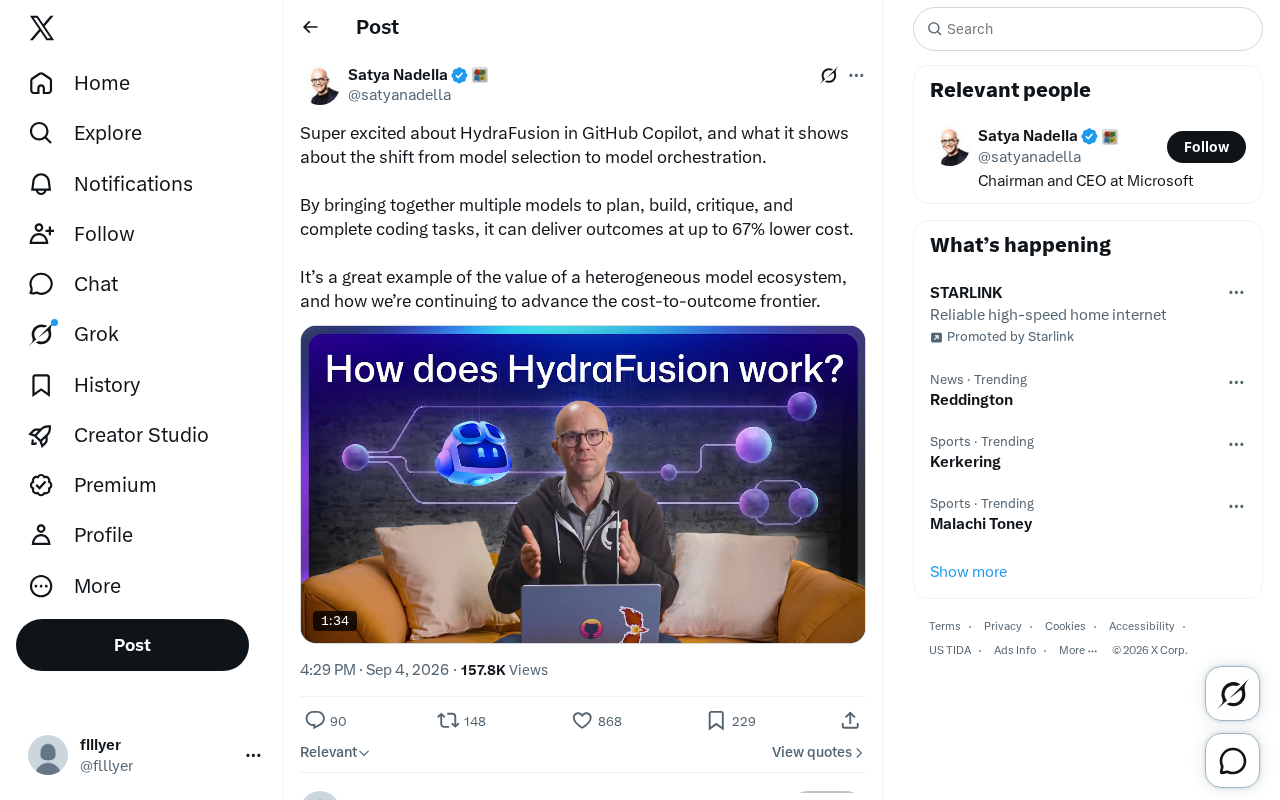
HydraFusion Explained: How GitHub Copilot's Multi-Model Orchestration Cuts Costs by 67%
Deep dive into GitHub Copilot's HydraFusion multi-model orchestration: its Plan-Build-Critique-Complete workflow, how it cuts costs by 67%, and the paradigm shift from model selection to orchestration.
Can AI Design Circuit Boards? A Deep Dive into the Realities and Limitations of AI in PCB Design
Can AI design circuit boards? This deep dive examines AI's real capabilities and limitations in PCB design, covering component selection, layout, routing, and human-AI collaboration.