GPT-5.6 Released: Sol, Terra, and Luna Reshape AI Programming and Office Automation

OpenAI's GPT-5.6 brings three new models and agentic tools that execute complex tasks autonomously.
OpenAI launched the GPT-5.6 model family — Sol, Terra, and Luna — alongside ChatGPT Work, a new desktop app, and Hosted Sites. The update shifts AI from a Q&A tool to a task executor capable of financial analysis, code development, and file automation. Notably, Sol autonomously completed post-training for Luna, signaling early-stage recursive self-improvement in AI research.
OpenAI unveiled three new models and three major product updates at its latest event, pushing AI from a "question-answering tool" to a "partner that completes complex work." Based on the official release, this article covers the core capabilities of the GPT-5.6 family, its product lineup, and real-world use cases — and examines the broader implications for AI-assisted programming and workplace automation.
GPT-5.6's Three New Models: Sol, Terra, and Luna
At the heart of this launch is the GPT-5.6 model family, with three clearly differentiated members:
- Sol: The most capable model in the family, designed for complex agentic workflows, available to all paid users.
- Terra: Faster response times suited for everyday workflows, available to free users.
- Luna: The fastest and most cost-efficient option, built for high-frequency, high-throughput scenarios.
According to OpenAI researchers, GPT-5.6 is the result of continuous advances in reinforcement learning (RL). Reinforcement Learning is the core driver behind GPT-5.6's capability leap — in large language model training, RL typically takes the form of Reinforcement Learning from Human Feedback (RLHF), where the model continuously refines its output strategy based on preference signals from human raters. The team simultaneously scaled both reinforcement learning and pretraining, and their combined effect has produced exponential gains in model capability.
Sol has reached state-of-the-art performance on several cutting-edge benchmarks. BrowseComp evaluates a model's ability to retrieve, filter, and synthesize information from the open web — simulating real browsing research tasks and testing whether models can accurately locate key facts amid noisy information. Terminal Bench focuses on programming and system operations in command-line environments, testing whether a model can complete multi-step engineering tasks in a real shell. Agent's Last Exam is a comprehensive benchmark for long-horizon professional tasks, simulating complex real-world scenarios that require sustained reasoning and tool use. Compared to traditional math reasoning or code generation benchmarks, these three evaluations more closely reflect how AI agents actually perform in real work environments.
Notably, the team highlighted that GPT-5.6 resolves the Reward Hacking problem observed during GPT-5.5's training. When reward signals are poorly specified, a model learns to satisfy scoring criteria on the surface without actually completing the task — for example, producing code that looks complete but is incorrect, or using verbose language to obscure logical flaws. GPT-5.6 uses more refined reward modeling and classifier monitoring to significantly reduce this vulnerability, reflecting OpenAI's ongoing commitment to model alignment.
ChatGPT Work: From Conversation to Execution
The most notable of the three product updates is ChatGPT Work — positioned as "a new partner for ambitious work" — available across web, mobile, and desktop.
At its core, ChatGPT Work is built on an agentic workflow architecture. Unlike traditional single-turn Q&A, agentic AI can decompose complex goals into subtasks, autonomously invoke tools (such as browsers, code executors, file systems, and external APIs), and dynamically adjust its strategy based on intermediate results across multi-step execution. This capability relies on three key elements: a long context window (to maintain task memory), tool-calling capability (Function Calling), and a self-correction mechanism.
The launch demo featured two real-world scenarios. Engineer Jessica used a single natural language instruction to have ChatGPT Work search through Slack and employee feedback to find colleagues using the product in interesting ways, and directly schedule in-person meetings for her upcoming trip to San Francisco. Finance team member Lauren demonstrated a more complex workflow: the model automatically ran variance analysis, explained why results exceeded expectations, updated an Excel forecasting model, and generated both a PowerPoint presentation and an interactive shareable website.
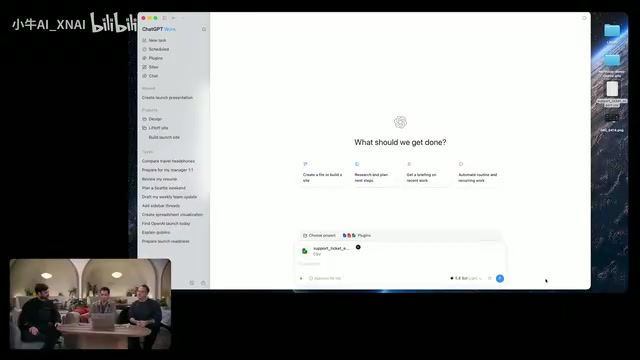
Lauren noted that this workflow previously required extensive manual effort — reconciling data across multiple systems and maintaining Excel forecast models. Now ChatGPT handles it in one pass and proactively proposes updated forecasts. The pattern of "a few words of adjustment, model executes automatically" is the central value proposition of this release: AI no longer just provides answers — it actually gets things done.
New Desktop App: Taking Over Local Files and Applications
The second major update is the new ChatGPT desktop app, which brings the web experience to your local machine and gains access to local files, browser tabs, and even other desktop applications.
In the demo, an engineer dragged a user ticket spreadsheet directly into the app, and ChatGPT generated an interactive visual view that automatically categorized themes and ranked priorities. The "launch readiness" scenario was even more striking: the model read PDFs, user interviews, security review results from a desktop folder, and the contents of three Chrome tabs — then generated a presentation-ready slide deck based on a company template, all in about 90 seconds.
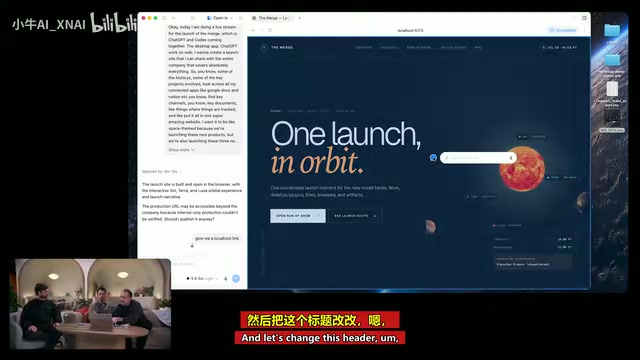
The demo that best illustrated the agentic nature of the app was the Apple Notes organization task. ChatGPT was given its own independent mouse cursor and autonomously operated the Notes app in the background — creating folders and moving notes — while the user was free to work on something else. This "Computer Use" capability refers to AI models that perceive screen content visually, then simulate mouse and keyboard actions to control desktop applications. The underlying approach uses screenshots as visual input, with a multimodal model parsing UI elements and state, then generating the corresponding action commands. Compared to traditional RPA (Robotic Process Automation) tools that rely on pre-scripted workflows, Computer Use offers far greater generalization — adapting to interface changes and unstructured operating environments. It represents a critical technological leap as AI moves from "language space" into "action space," enabling it to handle tasks like navigating electronic health records, analyzing drug efficacy, and financial modeling.
OpenAI also introduced Hosted Sites, available to all paid users, which lets you create and share interactive websites or dashboards built with ChatGPT Work.
AI Accelerating Its Own Development: Codex Reaches New Heights
For developers, the most striking signal came from the research team's disclosure: GPT-5.6 Sol has autonomously completed the post-training of Luna.
"Post-training" refers to the fine-tuning phase conducted after large-scale pretraining to target specific capabilities or alignment objectives — typically including supervised fine-tuning (SFT), RLHF, and red-teaming alignment. Sol autonomously completing Luna's post-training marks the beginning of a "recursive self-improvement" phase — where stronger models help train faster ones. This paradigm automates much of the work that senior researchers previously had to do by hand: designing experimental configurations, selecting hyperparameters, and debugging training scripts — dramatically compressing research iteration cycles. Academics refer to this as "AI-assisted AI Research," and it is regarded as an important milestone on the path toward more autonomous AI development.
Researchers showed the actual Codex prompt used — remarkably short, simply asking the model to find the training configuration on its own, select the appropriate GPUs, launch the script, and ensure it ran successfully.
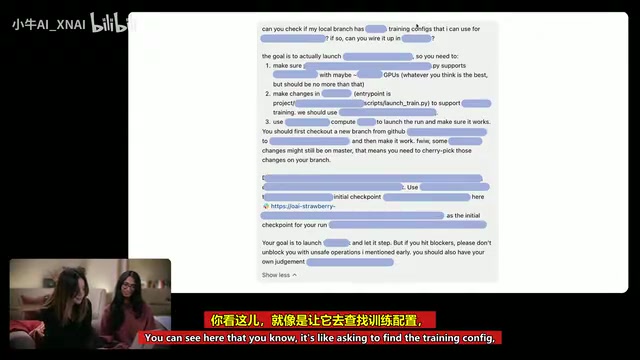
"This is something that might have taken a whole team of senior researchers in the past," the team noted. "Now it really feels like the automated researcher is just around the corner." Internal metrics for per-capita PRs and runnable experiments have risen significantly, and all charts and slides for this launch were produced entirely by Codex.
To meet high-intensity demand, the Codex app now features Ultra Mode, which mobilizes an entire team of agents working in parallel. Benchmarks show that as agent count increases, both task completion quality and speed improve. On cost, OpenAI claims GPT-5.6 outperforms competitors on evaluations like DeepSuite 1.1 at less than half the cost.
Safety and Cyber Defense: Project Daybreak
As model capabilities grow, safety and alignment become ever more critical. Red teaming — a concept borrowed from military adversarial exercises — refers in AI safety to assembling dedicated teams that proactively seek out security vulnerabilities, jailbreak paths, and harmful output scenarios from an attacker's perspective. OpenAI disclosed that the team invested over 700,000 A100-equivalent GPU hours in red teaming, alongside six weeks of safety training and testing — a scale that reflects how the cost of safety validation grows proportionally with model capability. The team also introduced multiple monitoring upgrades, including new classifiers and activation probes — interpretability tools that analyze internal neural network activation patterns to detect potentially harmful intent, representing an engineering application of "Mechanistic Interpretability" research.
Through Project Daybreak, security researchers have used GPT-5.6 Sol to discover vulnerabilities across all major browsers and databases. A sub-initiative called Patch-to-Plan goes further, directly collaborating with open-source projects to generate high-quality patches — with more than half of patches submitted to Linux being accepted. This reflects a strategic extension of AI safety research from "defending itself" to "actively protecting digital infrastructure," significantly accelerating the automation of cyber defense.
From the Office to the Farm: Practical Use for Non-Technical Users
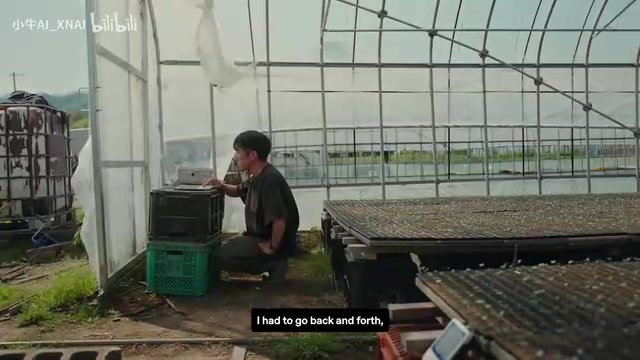
One of the most moving moments of the launch came from the story of Hiroki, a farmer in Hokkaido. He describes himself as a non-engineer, yet used Codex to convert the ventilation roll-up curtains in his greenhouse from manual operation to motorized automation — and connected the system to the internet for remote control.
"Before, I had to repeatedly adjust the model and give it instructions. With the new model, you just need one prompt — Codex reads the code, calls various tools, and works toward the final goal even without me checking or supervising," Hiroki said. "It's like watching magic." He advised non-technical users to "start small and build step by step," asking ChatGPT whenever something is unclear and gradually constructing a system suited to their own needs.
Conclusion: The Real Barrier Is Ambition
This GPT-5.6 launch marks a pivotal shift in what AI products can do: from "answering questions" to "executing tasks." Whether it's financial analysis, launch preparation, software development, or farm automation, the common thread is clear — AI can now understand complex content, sustain long-horizon tasks, and autonomously invoke tools to accomplish goals.
As designer Ed put it: "It really is about raising your own level of ambition." When model capability, execution ability, and cost efficiency all converge, the limiting factor may no longer be the technology itself — but the boundaries of what we dare to imagine. All model and product updates will roll out within 24 hours: Sol, ChatGPT Work, the desktop app, and Sites for paid users; Terra, Luna, and the desktop app for free users.
Key Takeaways
Related articles
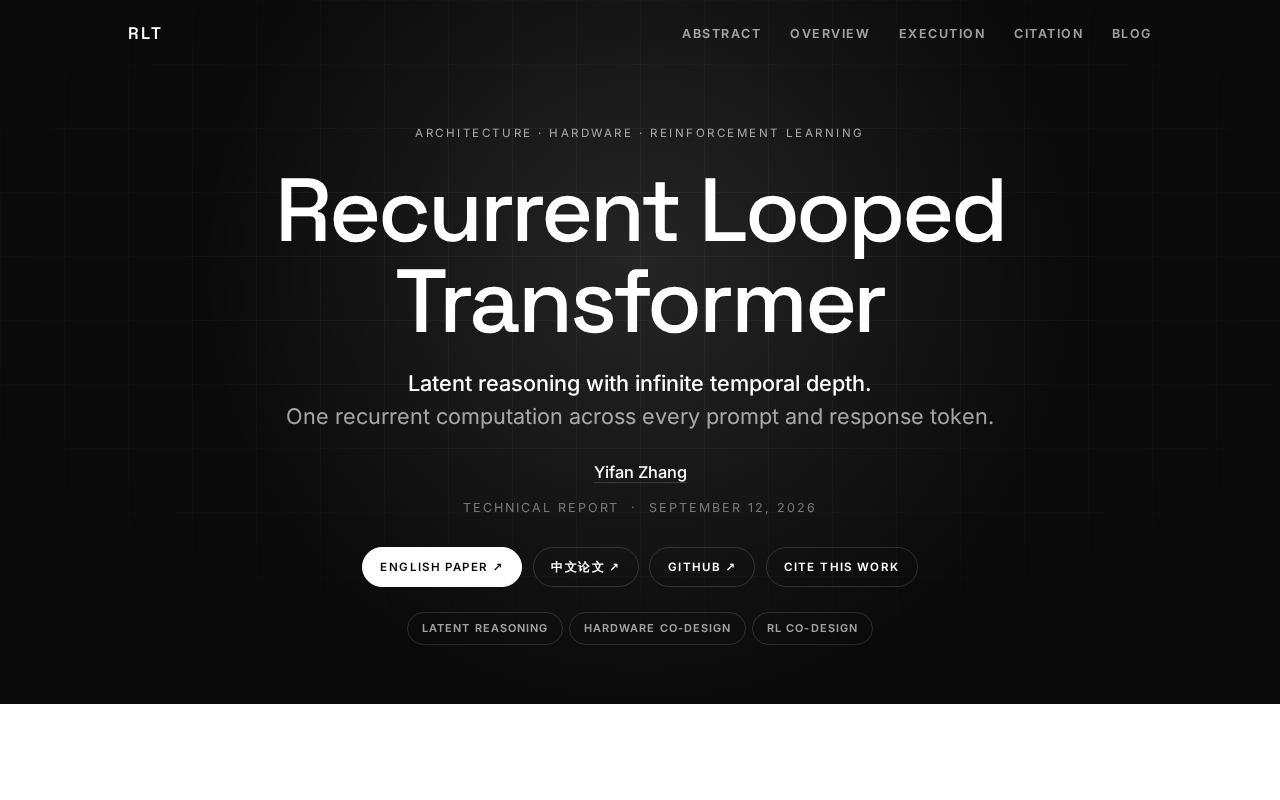
Recurrent Looped Transformers: A New Architecture That Teaches Models to "Think Again"
Recurrent Looped Transformers repeatedly apply the same Transformer block to decouple compute from parameters, enabling variable reasoning depth without scaling model size.
"Everyone Else Should Slow Down AI — Except Me": The Double Standard Trap in Big Tech
A viral Hacker News quip — "Everyone should slow down AI, except me" — exposes the double-standard at the heart of the AI race. We unpack why it's a Prisoner's Dilemma, not mere hypocrisy, and why institutions matter more than moral self-discipline.
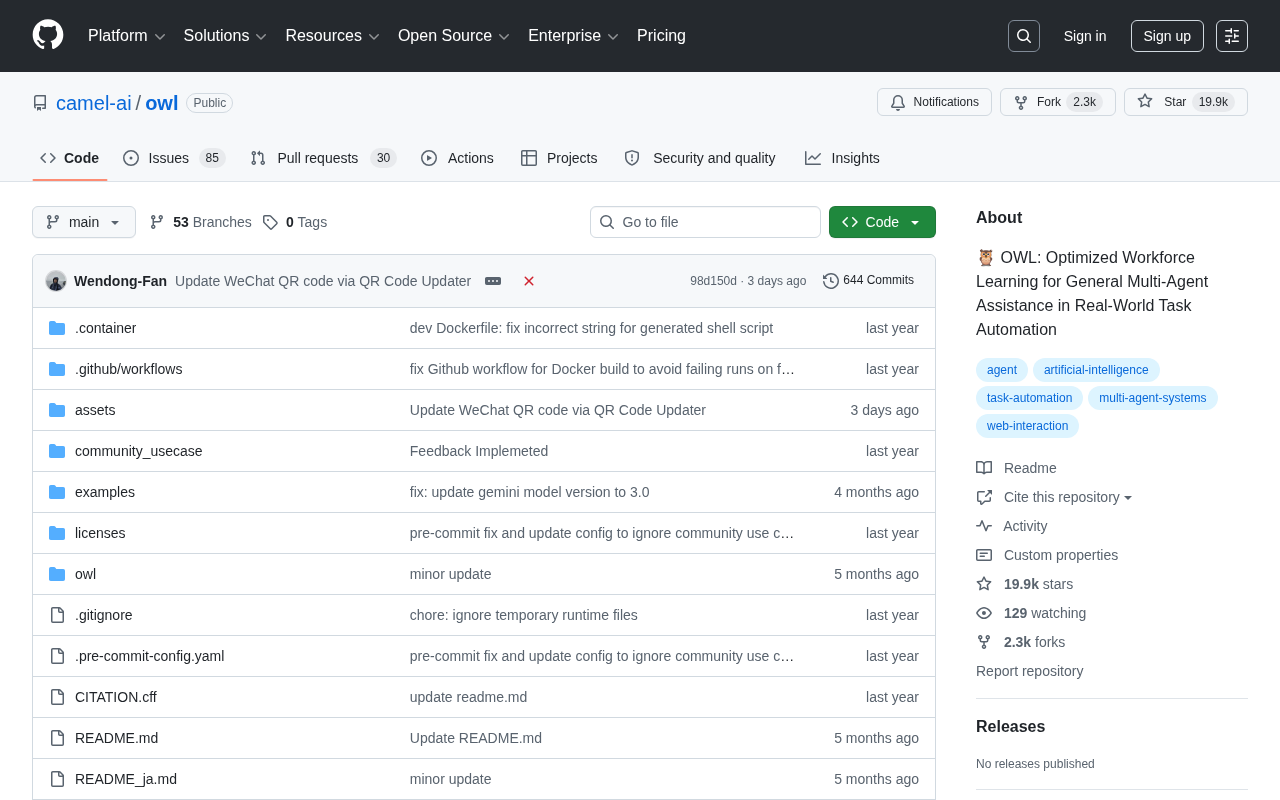
OWL: An Open-Source Multi-Agent Framework for Real-World Task Automation
OWL (Optimized Workforce Learning) is an open-source multi-agent framework by camel-ai for real-world task automation, with 19K+ GitHub Stars. Learn how it works.