GPT-5.6 Three-Model Family Launch: A Complete Breakdown of Sol/Terra/Luna Capabilities and the Government Restriction Incident

OpenAI releases the GPT-5.6 model family and, for the first time, publicly opposes government restrictions on model releases.
OpenAI officially launches the GPT-5.6 family: the Sol flagship, Terra balanced, and Luna lightweight models. It sets new coding benchmarks—generating a Minecraft clone in 90 minutes—and demonstrates powerful 3D and game generation. Meanwhile, OpenAI publicly opposes U.S. government restrictions on the model's release, marking the arrival of the frontier AI regulation era.
OpenAI Launches the GPT-5.6 Family: No Longer a Single Model
OpenAI has officially released the GPT-5.6 series. The most noteworthy aspect of this launch is that GPT-5.6 is not a simple upgrade of GPT-5.5, but rather a complete model family.
OpenAI has adopted a product-line design philosophy similar to that of cloud computing providers, splitting GPT-5.6 into three models with clear positioning:
- Sol (Flagship): A true frontier model, focused on maximum capability, the largest context window, and the most complex reasoning—priced accordingly at the highest tier.
- Terra (Balanced): Focused on cost-effectiveness. According to official data, its performance is already close to the advanced GPT-5.5 model, but at nearly half the price. It is expected to become the mainstream choice for enterprise API calls.
- Luna (Lightweight): Focused on low latency and low cost, purpose-built for chatbots, AI agent customer service, batch processing, and mobile scenarios.
This tiered strategy was not pioneered by OpenAI; rather, it draws deeply on the mature business models of the cloud computing and chip industries. NVIDIA has long served different customer segments through three product lines: consumer (GeForce), professional (Quadro/RTX), and data center (A100/H100). Cloud providers like AWS and Azure also use different instance types to meet the full spectrum of needs, from lightweight web applications to high-performance scientific computing. The tiering of AI models is essentially the inevitable result of the commoditization of compute—when model performance matures, the core of differentiated competition shifts from "who is stronger" to "who is best suited for a particular scenario." The Sol/Terra/Luna naming draws on celestial naming conventions, hinting at a capability gradient from "stellar-class" to "satellite-class," and foreshadowing that OpenAI is treating models as infrastructure for long-term operation, rather than as one-off technology releases.
From a deep learning engineering perspective, Sol/Terra/Luna are very likely derived from the same base pretrained weights through knowledge distillation, quantization, or selective layer pruning, rather than being trained independently from scratch as three separate models.
Technical Background: Model Distillation and Quantization
Knowledge distillation was proposed by Hinton et al. in 2015. Its core idea is to use the output probability distribution (soft labels) of a large "teacher model" to train a smaller "student model," enabling the latter to approximate the teacher's reasoning ability with fewer parameters. Quantization compresses model weights from 32-bit floating point (FP32) to 16-bit (FP16) or even 8-bit integer (INT8) representations, reducing model size by 50%-75% with almost no loss in precision, while significantly lowering memory bandwidth requirements during inference. Layer pruning identifies and removes the neural network layers that contribute least to the final output, analogous to "trimming redundant neural synapses." The combined application of these three techniques allows the same base model to be derived into deployment versions targeting different compute budgets while maintaining knowledge consistency—which also explains why Sol/Terra/Luna remain highly consistent in core reasoning logic and differ only along the speed and cost curves.
This approach ensures cross-model reasoning consistency while dramatically reducing R&D and maintenance costs—essentially a precise slicing of the "Pareto Frontier." Across the three dimensions of performance, cost, and latency, the optimal solution differs for each scenario, and the three models each anchor a different optimal trade-off point. The Pareto Frontier is a core concept in multi-objective optimization theory, referring to the set of solutions where no objective can be further improved without sacrificing another—Sol/Terra/Luna represent the three Pareto-optimal points of "performance-first," "balanced," and "efficiency-first," respectively.
This tiered strategy shows that OpenAI is shifting from "one GPT" to "a family of GPTs," allowing different scenarios to get exactly what they need.
Performance Benchmarks: Coding Capabilities Set a New Standard
According to the officially released performance data, the GPT-5.6 flagship model set new records on benchmarks such as Terminal Bench, with particularly outstanding performance in coding workflows.
Both Sol Ultra and the standard Sol version scored higher in coding performance than the previously acknowledged strongest coding models. In the field of biological engineering, GPT-5.6 Sol achieved better results than GPT-5.5 on GeneBench—which evaluates long-form genomics and quantitative biology analysis—using fewer tokens.
Understanding the deeper meaning of this metric is crucial. Tokens are the basic units by which large language models process text. Typically, one English word is roughly equivalent to 1-1.5 tokens, and one Chinese character to about 1-2 tokens. Since API calls are billed by token, token efficiency directly determines an enterprise's AI usage costs.
Technical Background: Token Economics and Inference Efficiency
The token measurement system's design can be traced back to the Byte Pair Encoding (BPE) algorithm, first introduced to the NLP field by Sennrich et al. in 2016. BPE iteratively merges high-frequency character pairs to split text into subword units between characters and whole words, striking a balance between vocabulary size and expressive power. OpenAI's tiktoken tokenizer is based on this principle. On the commercial side, current mainstream large model API pricing structures bill input tokens and output tokens separately, with output tokens typically costing 3-5 times as much as input tokens, because output generation involves serial autoregressive decoding that cannot be fully parallelized. Therefore, "completing the same task with fewer output tokens" not only represents improved reasoning quality but also directly translates into lower enterprise AI procurement costs—for large enterprise customers making millions of calls per day, every 10% improvement in token efficiency could mean savings of millions of dollars in annual API fees.
At the technical level, completing equally complex tasks with fewer tokens means the model's "chain of thought" is more refined—it can skip redundant intermediate reasoning steps and go straight to the core logic. This is similar to the difference between how human experts and novices solve problems: novices must reason step by step, while experts can often intuitively pinpoint the key path.
From a training mechanism perspective, this capability improvement likely stems from OpenAI introducing an explicit reward signal for "reasoning conciseness" during the reinforcement learning post-training (RLHF/RLAIF) phase, prompting the model to actively suppress redundant reasoning steps. This aligns closely with the Minimum Description Length (MDL) principle in information theory—shorter reasoning paths mean the model's internal representation of the problem structure is closer to the "true underlying pattern" rather than surface-level pattern matching. The MDL principle was proposed by statistician Jorma Rissanen in 1978 and is the mathematical formalization of Occam's Razor: among hypotheses that explain the data equally well, the model requiring the fewest bits to describe usually has the strongest generalization ability. Applying MDL to reasoning evaluation means that a shorter reasoning chain is itself quantitative evidence of the model's depth of understanding. This is precisely why professional benchmarks like GeneBench incorporate token efficiency into their scoring: in long-form scientific tasks such as genomics analysis, the redundancy of a reasoning path is an important proxy metric for measuring the depth of a model's intelligence.
Fewer tokens mean lower cost and higher inference efficiency—the model is not only "smarter" but also "more economical."
Real-World Cases: From Code Generation to Independent Project Development
Several third-party real-world tests collectively demonstrate GPT-5.6's leap in capability for game and 3D scene generation.
3D Animal Racing Game
One developer asked GPT-5.6 Pro to design a 3D game: different animals racing on bicycles, with the player competing against three AI opponents for gold coins. The highlight is that it directly generated the character models, animations, map, and game logic, rather than calling on ready-made assets. It simultaneously understood the 3D scene, animation, collision detection, and game rules, and GPT-5.6 completed all the work in one go.

Cloning Teenage Mutant Ninja Turtles in 30 Minutes
The developer provided only a single game reference image, with no original code and no assets, and GPT-5.6 generated a runnable game within 30 minutes. It not only recognized the on-screen layout but also inferred the character interaction relationships and overall functional design—this goes beyond image recognition and constitutes an understanding of game design itself.
3D Cutscenes and Film Previz
GPT-5.6 can directly generate complete 3D cutscenes, automatically handling everything from character modeling and scene construction to camera transitions, without using any external web assets. It can design "cinematographic language" according to the prompt, and may in the future become an important tool for game design or film previsualization.

From a technical depth perspective, the capabilities demonstrated in these cases essentially represent a breakthrough in Multi-modal Program Synthesis. Traditional code generation is a single-step mapping of "given a specification, output code." But generating a complete game requires the model to simultaneously maintain four-dimensional consistency across system architecture design, cross-module dependencies, state machine logic, and user experience semantics—this is precisely the core challenge of "program synthesis" that computer science has long struggled to automate.
Technical Background: The Historical Challenge of Program Synthesis
Program Synthesis is a classic problem in computer science, dating back to the automatic program-writing system proposed by Waldinger and Lee in 1969. Its core difficulty lies in the "Specification Gap": there is a huge semantic gap between natural language descriptions and formal, executable code, and humans often cannot exhaustively enumerate all boundary conditions and implicit constraints. Traditional approaches such as Programming by Example (PBE) have been applied in Microsoft Excel's Flash Fill feature, but are limited to simple data transformation scenarios. The challenge of game generation goes far beyond this: a game is a composite of a State Machine and an Event-Driven Architecture, requiring simultaneous guarantees of the physics engine's numerical stability, the AI behavior's strategic rationality, and the user interface's responsiveness consistency. GPT-5.6's ability to generate runnable game code that satisfies multiple constraints in a single pass means large language models are approaching the vision of "Intent-Aware Programming" that computer scientists have dreamed of for decades.
Taking on Minecraft: Building a Complete Game World
The following cases reach the level of "complete world construction," representing a new height in AI code generation capabilities.
Generating a Minecraft Clone in 90 Minutes
GPT-5.6 took about 90 minutes to generate a Minecraft clone with basic gameplay including a day-night cycle, a creature system, and a crafting system. Players can explore the map, place blocks, and interact. The real difficulty lies in getting these systems to work together in concert, not in implementing any single feature in isolation.
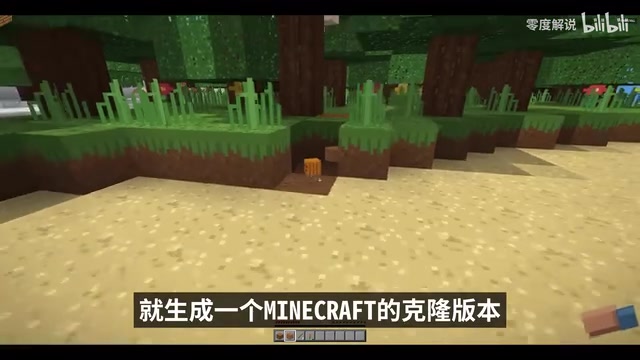
The coordinated operation of the day-night cycle, creature AI, and crafting system means GPT-5.6 can now implicitly maintain a global state model spanning thousands of lines of code—a typical scenario in which GPT-4-level models generally failed on long-context tasks. This breakthrough is likely directly related to the model's deep learning from large-scale open-source game code repositories (such as Minecraft-related projects on GitHub) during pretraining, as well as its stronger cross-file dependency reasoning capabilities.
Technical Background: The Bottleneck of Long-Context Code Reasoning
Long-context tasks have always been the Achilles' heel of large language models. Research shows that even models supporting a 128K context window suffer from significant "Lost in the Middle" problems in actual testing—the model's retrieval accuracy for information located in the middle of the context window is far lower than for the beginning and end. For large code repositories, this means a model might "remember" the class definition at the start of a file but forget that class's interface constraints thousands of lines later, leading to type errors or logical inconsistencies in cross-module calls. The successful generation of a Minecraft clone suggests GPT-5.6 may have introduced a mechanism resembling a "working memory index" at the architectural level, or trained stronger cross-section dependency tracking capabilities through reinforcement learning—closely aligning with DeepMind's 2024 research direction on "memory-augmented Transformers."
Generating a Pokémon Park in 60 Minutes
GPT-5.6 took 60 minutes to generate an entire cartoon-style Pokémon park containing 25 different characters, all placed in the same three-dimensional scene and arranged sensibly according to each character's traits. Simultaneously managing dozens of 3D objects while maintaining a consistent style is an extremely complex task.
A 3D Building in a Single HTML File
GPT-5.6 can also generate a three-dimensional house in a short time, with the entire model contained in a single HTML file, fully rendered based on WebGL, running directly in the browser, freely rotatable and zoomable, with the ability to enter and view the interior.
It is necessary to explain the complexity of WebGL technology here. WebGL (Web Graphics Library) is a JavaScript API based on OpenGL ES that allows browsers to directly invoke the GPU for hardware-accelerated 3D rendering without plugins.
Technical Background: WebGL and the Complexity of Low-Level Graphics
WebGL was officially released by the Khronos Group in 2011. Its design is directly inherited from the desktop-grade OpenGL ES 2.0 specification, exposing a graphics pipeline that originally had to be written in C++ to JavaScript developers. Unlike high-level graphics libraries such as three.js and Babylon.js, native WebGL requires developers to directly manipulate every stage of the graphics pipeline: the Vertex Buffer Object (VBO) is responsible for uploading 3D coordinate data to GPU memory; the Vertex Shader, written in GLSL, performs coordinate transformations on each vertex; the Fragment Shader computes the final color of each pixel; Texture Mapping "wraps" 2D images onto the surface of 3D geometry; and the Model-View-Projection Matrix transformation projects 3D world coordinates onto 2D screen space. This technology stack requires developers to master knowledge across four domains simultaneously: linear algebra, computer graphics, GPU architecture, and asynchronous JavaScript programming. MIT's computer graphics course (6.837) typically takes an entire semester to cover the above concepts, and GPT-5.6's ability to integrate this knowledge into a single HTML file means its understanding of graphics knowledge has reached an engineering level where it can autonomously combine and apply concepts, rather than merely retaining surface-level memory of API calls.
The technical difficulty lies in the fact that developers must manually manage low-level graphics concepts such as the Vertex Buffer, Shader programs, Texture Mapping, and Matrix Transformation, with an extremely steep learning curve. Compressing a complex 3D scene into a single HTML file means the model must simultaneously handle geometric modeling logic, GLSL shader code, user interaction events, and the rendering loop. In the past, such work typically required professional frontend engineers familiar with graphics libraries such as three.js or Babylon.js. GPT-5.6's ability to generate runnable code in one pass marks that AI's understanding of the graphics domain has moved beyond surface-level API calls into the stage of comprehensively applying low-level technology—which overlaps heavily with the knowledge system that undergraduate graphics courses usually take an entire semester to cover.
The shared significance of these cases is that AI is moving from being an "assistive development tool" to a stage of "independently completing full projects." For independent developers, in the future perhaps just a few people could accomplish large projects that once required dozens of people.
The Biggest Controversy: The U.S. Government Restricted the Release of GPT-5.6
What truly shook the global AI community about this launch was not the model's capabilities, but the fact that OpenAI officially publicly acknowledged: the U.S. government requested restrictions on the release of the GPT-5.6 model.
Even more rare, OpenAI explicitly stated in the release announcement that such restrictions "should not become the new normal for future AI releases"—this is the first time in OpenAI's history that it has publicly opposed government restrictions in a model release announcement.

Why did the government intervene? This incident is not isolated but rather an inevitable friction against the backdrop of the accelerating construction of the global AI governance system. In 2023, the U.S. Department of Commerce added certain AI chips to its export control list. In 2024, the Biden administration signed an AI executive order requiring frontier models with "dual-use" risks to submit safety testing reports to the government. The EU's AI Act went further by incorporating generative foundation models into a strict regulatory framework. Given GPT-5.6's significant improvements in bioengineering and genomics analysis, biosecurity became the core sensitive point of this regulatory intervention—regulators have legitimate concerns about the risk that high-capability models could assist in "bioweapon design."
Background Knowledge: The Assessment Framework for AI Biosecurity Risks
Biosecurity risk is one of the core concerns of current frontier AI regulation. A 2023 government-funded report from the RAND Corporation noted that large language models could lower the knowledge barrier for non-experts to synthesize dangerous pathogens, simultaneously amplifying both the positive value of "democratizing expertise" and the negative externality of bioterrorism risk. In its 2024 threat assessment report, the U.S. Office of the Director of National Intelligence (ODNI) listed "AI-assisted development of weapons of mass destruction" as one of the highest-priority emerging threats. Notably, AI risk assessment in the biosecurity field is extremely complex: the same model capable of analyzing protein folding structures can be used both for new drug development and for enhancing pathogen virulence—this is precisely the new dilemma of the "Dual-Use Research of Concern" (DURC) framework in the AI era. The improved genomics analysis capabilities that GPT-5.6 demonstrated on the GeneBench test are exactly the direct technical signal that triggered regulators' vigilance.
This regulatory logic has clear historical precedents. In the 1990s, the U.S. government classified strong encryption algorithms as munitions subject to export controls, and cryptographer Phil Zimmermann faced a three-year criminal investigation for releasing the PGP encryption software. These "Crypto Wars" ultimately ended with commercial pressure forcing the government to lift restrictions, but it took a full decade to settle.
Historical Background: The Deeper Lessons of the Crypto Wars
The Crypto Wars of the 1990s are the best historical mirror for understanding the current AI regulatory dilemma. At the time, the U.S. government defined encryption algorithms above 128 bits as "Munitions," invoking the Arms Export Control Act (AECA) to prohibit their export abroad, on the logic that strong encryption technology could be used by terrorists or hostile governments for covert communication. However, the actual effect of this policy backfired: European software vendors quickly filled the market gap left by U.S. companies due to export controls, and the flourishing of internet e-commerce (the SSL/TLS protocols rely on strong encryption) ultimately forced the Clinton administration to significantly relax restrictions in 1999. This history reveals the core paradox of technology regulation: when the regulated technology has broad civilian value and competitors are not subject to the same constraints, unilateral controls often both harm the domestic industry's competitiveness and fail to achieve security goals. OpenAI's choice to publicly oppose government restrictions follows a strategic logic highly similar to the lobbying efforts of crypto companies like RSA Security and Netscape before Congress back then—all using "harming America's global competitiveness" as their core argument to win policy support from the tech community and commercial interests.
The current AI regulatory dilemma is highly isomorphic to this: the dual-use nature means frontier models possess both civilian value and potential threat, and the tension between the Precautionary Principle and freedom to innovate is destined to be an ongoing tug-of-war. OpenAI's public statement is essentially a bid to capture the tech community's narrative on public opinion, while signaling to policymakers the strategic message that "excessive regulation will harm America's global AI competitiveness."
The far-reaching significance of this incident may exceed the model itself: it marks that frontier AI releases have officially entered an era of government regulatory intervention. The tug-of-war between tech companies and governments over the "right to release" will become a core issue the AI industry cannot avoid in the future.
Conclusion
GPT-5.6's three-model strategy reflects OpenAI's maturing, commercialization-oriented product philosophy—Sol, Terra, and Luna cover the complete demand spectrum from scientific research reasoning to high-frequency business use. Its breakthroughs in game and 3D generation foreshadow a key turning point for AI from "assistance" to "independent creation."
But what deserves even more reflection from every practitioner is that rare official statement. When technological progress and regulatory boundaries meet head-on, the next stage of the AI industry's development may no longer be determined by compute and parameters alone.
(Note: This article is compiled based on the analysis of the Bilibili content creator Zero Commentary. Some performance data and case details await further official confirmation.)
Key Takeaways
Key Takeaways
Related articles

The Shoggoth Metaphor: Deep Anxieties and Reflections on AI Alignment
The Shoggoth metaphor compares LLMs to Cthulhu monsters wearing smiley masks, revealing core AI alignment challenges. Explore this AI cultural symbol's origins and its implications for RLHF limitations and the capability-understanding gap.

A Beginner's Guide to AI Economics Research: A Systematic Roadmap for Economics PhD Students
How should economics PhD students systematically enter the vast field of AI economics? This guide maps four research threads, literature methods, and technical priorities for building expertise.

Self-Hosted ASR Models vs. Cloud APIs: A Comprehensive Cost and Reliability Comparison
In-depth analysis comparing self-hosted ASR open-source models vs. cloud speech recognition APIs like Google, covering cost differences, reliability, and break-even calculations for Whisper, IBM Granite, and more.