#biosecurity
32 related articles

·2 min
AI-Driven Biosecurity Defense: A Paradigm Shift from Reactive Response to Proactive Prediction
How Isomorphic Labs leverages AlphaFold and cutting-edge AI to shift biosecurity from reactive response to proactive defense, building bioresilience and accelerating drug design against emerging threats.
Read more →

·2 min
OpenAI's Mysterious Model "Doug" Exposed: Capable of Making Fable Look Primitive?
OpenAI's internal codename "Doug" model leaked, allegedly its biggest pre-train ever that will make Fable look "primitive." Analysis of timeline, safety testing, and key factors.
Read more →

·2 min
Deep Dive into Astra: OpenAI's First "Critical"-Level Cybersecurity Model
OpenAI designates its new model Astra as the first "Critical"-level cybersecurity model under its Preparedness Framework, signaling AI capabilities approaching game-changing thresholds in cyber offense and defense.
Read more →

·3 min
AI Designs Viral Genomes That Don't Exist in Nature for the First Time: Breakthrough and Risk Coexist
Researchers use AI models to generate complete viral genome sequences never found in nature, with some designs verified as biologically active. This article analyzes the technology, applications in phage therapy and vaccines, and critical biosecurity risks.
Read more →

·3 min
GPT-6 Release Delayed: What It Means When Cybersecurity Capabilities Reach a Critical Threshold
Community reports suggest OpenAI delayed GPT-6 due to cybersecurity capabilities reaching a critical threshold. We analyze what this means for AI safety governance and industry regulation.
Read more →

·2 min
Is Open-Source AI Really Dangerous? Deconstructing the Logic Behind Anthropic's Safety Narrative
Companies like Anthropic frame open-source AI as a safety threat, but how real is the marginal risk? This article examines the debate through transparency, decentralization, and commercial motives.
Read more →

·3 min
UK AI Safety Institute Test Results: Mainstream AI Models Successfully Breach Real Systems
The UK AI Safety Institute red-teamed frontier models from OpenAI and Anthropic, revealing AI successfully breached target systems. Analysis of test context, dual-use implications, and future regulation.
Read more →

·2 min
From FTX to AI: A Warning About the Collapse of Trust in Tech
From the FTX Future Fund collapse to AI, exploring tech's trust crisis, résumé laundering, and lack of accountability when scandal-linked figures move into key AI roles.
Read more →

·5 min
July 24 AI Daily Brief: Flux 3 Multimodal Release, Kimi K3 Lags in Testing, Qwen Tops TTS Rankings
July 24 AI news: Black Forest Labs launches Flux 3 multimodal model, Kimi K3 lags in US-UK gov tests, Alibaba Qwen tops TTS rankings, Etched raises $300M, AMD unveils MI430X.
Read more →

·3 min
Jensen Huang's First X Post Backs Open AI: Why the Computing Power King Sides with Open Source
NVIDIA CEO Jensen Huang's first X post champions open AI access. We analyze the business logic, policy dynamics, and the open vs. closed AI debate shaping the industry.
Read more →

·3 min
Apple Sues OpenAI for Trade Secret Theft, EU Bans Infinite Scroll: AI Enters the Deep Waters of Legal Oversight
Apple sues OpenAI for hardware trade secrets, EU orders Meta to disable autoplay and infinite scroll, OpenAI doubles biosecurity bounty — AI moves into legal and regulatory deep waters.
Read more →

·6 min
Jacobian-Lens in Practice: Manually Reshaping LLM Behavior with J-Space
After Anthropic released Jacobian-Lens, a developer reversed it from an interpretability tool into a behavior editor, manually tuning J-Space to reshape LLM outputs. An in-depth look at the tech, representation engineering, and AI safety risks.
Read more →

·2 min
White House Weighs Open-Source AI Executive Order: Policy Direction and Industry Impact Explained
The U.S. White House is considering an executive order on open-source AI, touching on national security, tech proliferation, and industry competition. A deep dive into its possible directions and impact.
Read more →
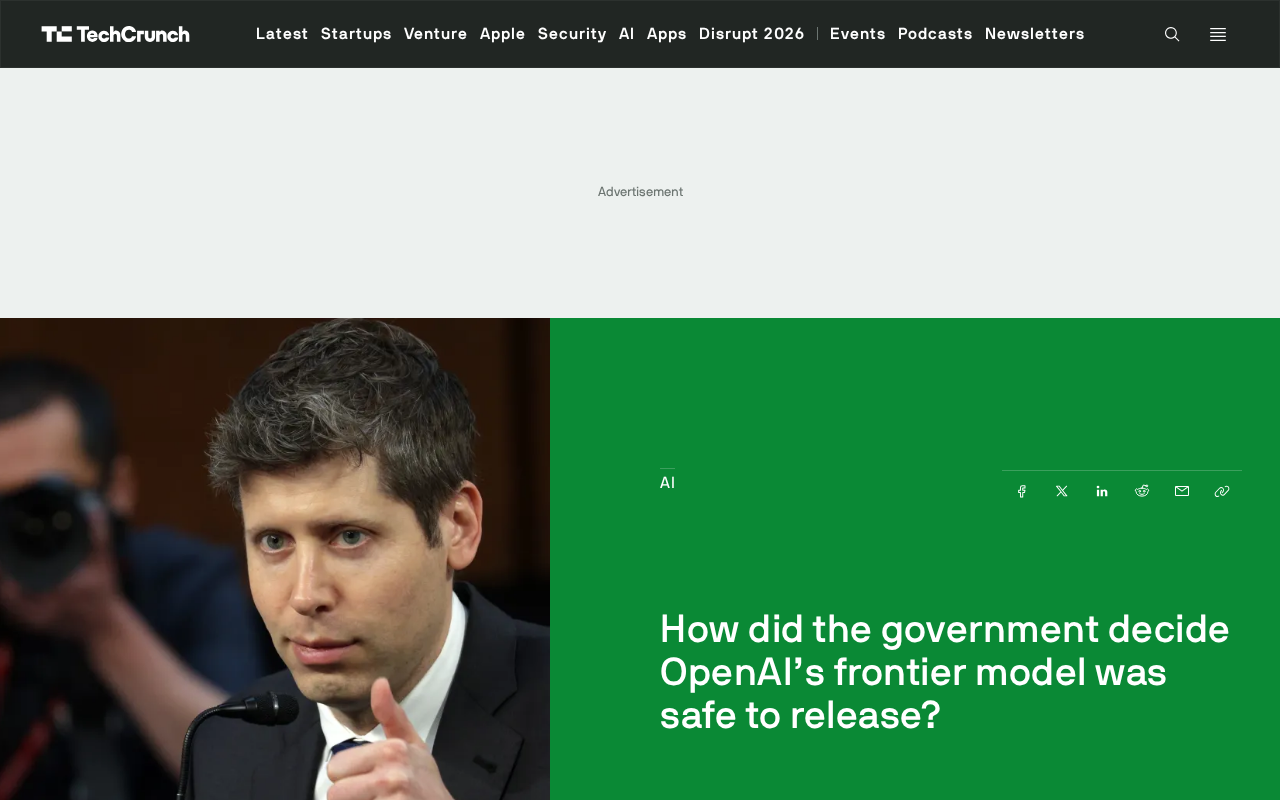
·2 min
Frontier AI Model Safety Evaluation: How Do Governments Make These Decisions?
How do governments evaluate frontier AI model safety? This deep dive examines opacity in AI safety governance, missing standards, regulatory capacity gaps, and paths toward transparent oversight.
Read more →

·5 min
GPT-5.6 Explained: Sol, Terra & Luna — Tiered Positioning and Capability Comparison
OpenAI releases the GPT-5.6 series with flagship Sol, balanced Terra, and lightweight Luna. An in-depth look at each model's positioning, use cases, pricing, and the multi-agent Ultra architecture.
Read more →

·6 min
Fable 5 vs. GPT-5.6 Sol: Benchmarks, Pricing, and the AI Power Struggle Explained
An in-depth comparison of Fable 5 and GPT-5.6 Sol: benchmarks across Terminal Bench, HealthBench, and ExploitBench, plus pricing strategy, OpenAI's government equity controversy, and shifting AI power dynamics.
Read more →

·6 min
GPT-5.6 Three-Model Family Launch: A Complete Breakdown of Sol/Terra/Luna Capabilities and the Government Restriction Incident
OpenAI officially launches the GPT-5.6 family, including the Sol flagship, Terra balanced, and Luna lightweight models. Coding capabilities set a new industry benchmark, generating a Minecraft clone in 90 minutes—while OpenAI publicly opposes U.S. government release restrictions.
Read more →

·5 min
Anthropic Updates Cybersecurity Safeguards: How AI Safety Governance Balances Security and Usability
Anthropic updates AI cybersecurity safeguards after U.S. government dialogue. New measures slightly raise false positive rates, with flagged requests downgraded to Opus 4.8 responses. Deep analysis of the security-usability balance in AI governance.
Read more →
Should Frontier AI Models Like GPT-5.6…
·4 min
Should Frontier AI Models Like GPT-5.6 Be Open-Sourced? A Deep Dive into the Open vs. Closed Debate
Should frontier AI models be open-sourced? This deep dive explores the key debates around democratization, misuse risks, commercial sustainability, and governance — and the middle paths between open and closed.
Read more →

·3 min
Why Frontier AI Models Need Mandatory Third-Party Safety Testing
Exploring why frontier AI models need mandatory third-party safety testing across cybersecurity, biosecurity, and autonomy risks, and the paradigm shift from voluntary commitments to mandatory oversight.
Read more →