GPT-5.6 Triple Launch: Understanding the Positioning and Key Differences of Sol, Terra, and Luna
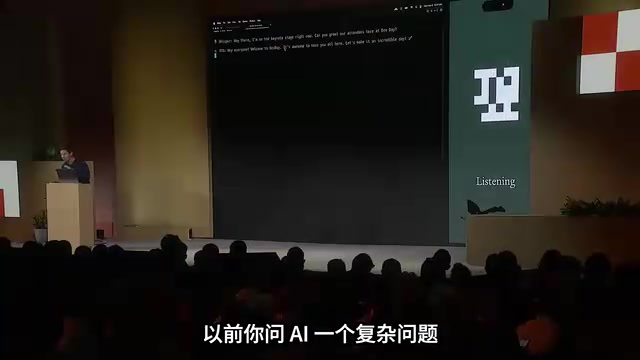
OpenAI launches three GPT-5.6 models—Sol, Terra, and Luna—spanning flagship reasoning to lightweight speed.
OpenAI released three GPT-5.6 models at once: the flagship Sol with multi-agent reasoning and a 1.5M-token context window, the balanced Terra, and the lightweight, low-cost Luna. This article analyzes their positioning, performance differences, pricing strategy, and deeper signals like government security review and the shift to monthly AI iteration.
On July 9, 2026, OpenAI released three brand-new models all at once: GPT-5.6 Sol, GPT-5.6 Terra, and GPT-5.6 Luna. This isn't a minor patch update, but a heavyweight release that had been in the works for over a year—three models, three positionings, three price points, spanning an entire product line from flagship to entry-level. Drawing on a Bilibili content creator's launch analysis, this article breaks down the core changes in this release and the signals behind them.
Three Models, Three Positionings
The most obvious change in this release is that OpenAI has abandoned the "one giant model to rule them all" approach, opting instead for a differentiated product line to cover different needs. The flagship Sol focuses on ultimate reasoning capability, the balanced Terra targets most everyday scenarios, and the lightweight Luna pursues speed and low cost.
These three aren't simply arranged by performance tier—they're clearly segmented for different use cases. This layered strategy essentially commoditizes "intelligence"—you pay for exactly how much capability you need, no longer paying for compute you won't use. The underlying business logic is an extension of the mature software industry's "version-based differential pricing" into the AI era: the flagship model establishes a technological benchmark and brand prestige, the lightweight model rapidly penetrates the long-tail market with its extremely low unit price, and the balanced model shoulders the primary commercialization revenue. Token-based pricing enables enterprises to charge precisely according to actual compute resource consumption, rather than relying on coarse subscription models, allowing users of all scales to find their most cost-optimal access method.
It's worth noting that this strategy wasn't pioneered by OpenAI, but is a collective consensus already formed among the AI industry's leading players. Anthropic explored it first with its three-tier Claude Haiku/Sonnet/Opus, Google followed with Gemini Flash/Pro/Ultra, and now OpenAI echoes the pattern with Luna/Terra/Sol, marking that leading players have essentially completed their strategic transformation from a "single flagship model race" to "ecosystem product-line competition." The deeper driver behind this transformation is that as foundation model capabilities mature, the marginal returns of a pure performance arms race diminish, while differentiated market coverage and ecosystem-building capabilities are becoming the new competitive moats.
Flagship Sol: From "Impatient Intern" to "A Room Full of PhDs"
Sol's biggest highlight isn't its parameter scale, but that it truly "thinks." It has two built-in reasoning modes: Max and Ultra.
In Max mode, the model spends more time in the background reasoning step by step, like a person sitting down to seriously analyze a problem. Ultra mode goes further—rather than a single model reasoning, a group of AI Agents collaborate in the background with divided responsibilities: some research, some verify, some correct errors, and finally they synthesize a deeply examined conclusion.
Here's an analogy: previously, when you asked AI a complex question, it was like a smart but impatient intern blurting out an answer. Now when you ask Sol, it's like a room full of PhDs first discussing for five minutes, then giving you a well-considered answer. This "Multi-Agent Collaborative Reasoning" is precisely one of the most watched technical directions in the AI field over the past year.
Its core idea stems from the wisdom of human organizational division of labor: breaking complex tasks into multiple subtasks, executed by specialized AI Agents, then integrating the results through a coordination mechanism. The theoretical foundation of this architecture traces back to Distributed Artificial Intelligence (DAI) and the Mixture of Experts (MoE) system. In an MoE architecture, the model consists of multiple "expert sub-networks," and only the most relevant portions are activated during each inference, improving specialization while controlling overall compute overhead. Unlike a single model's linear reasoning, a multi-agent framework allows parallel processing, mutual verification, and iterative error correction, significantly reducing the probability of model hallucination—because when one Agent reaches a wrong conclusion, the verification step of another Agent can often intercept it.
OpenAI's previously launched o1 and o3 series had already introduced "Chain-of-Thought" reasoning at the single-model level, requiring the model to explicitly list its reasoning steps before giving a final answer. Ultra mode further extends this capability to the multi-agent collaboration level, representing a paradigm leap from "a smarter single brain" to "more efficient team collaboration." From an engineering implementation standpoint, multi-agent systems must solve complex problems such as inter-agent communication protocols, task scheduling priorities, and result aggregation strategies, and the coordination overhead itself introduces additional latency costs—which is precisely why Ultra mode is suited to deeply complex tasks rather than high-frequency lightweight queries.
In concrete terms, Sol scored 9019 on the Terminal Bench 2.1 programming test, with coding capabilities approaching those of a senior engineer. Terminal Bench is a benchmark suite specifically designed to evaluate AI models solving programming tasks in real command-line environments. Unlike traditional algorithm-problem evaluations (such as LeetCode-style closed problems), it places greater emphasis on the model's comprehensive capabilities in actual engineering scenarios—including debugging, file system operations, multi-step task planning, and error recovery—requiring the model to understand the context of real codebases and produce directly runnable solutions. It's worth mentioning that benchmarks themselves carry "overfitting" risks: if model vendors specifically optimize for a particular test set, high scores may not fully represent real engineering capability, which is why continuous updates to test content by independent third parties are crucial. This score means the ceiling of AI programming assistants is rising dramatically as foundation model capabilities leap forward.
Even more notable is its context window reaching 1.5 million tokens—you could throw the entire Three-Body trilogy at it, and after reading it, it would still remember every detail and cite them at any time. Whether you send dozens of pages of contracts, hundreds of lines of code, or a dozen research papers, it won't "lose its memory."
A token is the basic unit through which large language models process text. Roughly speaking, in Chinese about 1-2 characters correspond to 1 token, while in English about 3-4 letters correspond to 1 token. The context window is the maximum number of tokens a model can "remember" and process in a single conversation—once this limit is exceeded, the model begins to "forget" the earliest input. Early GPT-3 had a context window of only 4,096 tokens, GPT-4 Turbo expanded to 128K, and 1.5 million tokens means it can process about 1 million Chinese characters at once.
Expanding the context window isn't simply a matter of stacking hardware—the self-attention computation of the original Transformer architecture grows quadratically with sequence length, meaning doubling the sequence length quadruples the compute cost. Engineering teams must introduce technical optimizations such as Sparse Attention, Sliding Window Attention, and linear attention approximations to keep compute costs within an acceptable range while maintaining long-text comprehension. Additionally, ultra-long contexts face the "Lost in the Middle" problem—experiments show that models remember content at the beginning and end of ultra-long inputs significantly better than content in the middle. How to maintain uniform attention distribution across a 1.5-million-token span remains an engineering challenge yet to be fully conquered. Achieving 1.5 million tokens is the product of a dual breakthrough in algorithmic innovation and engineering optimization, and an important milestone for "long-document understanding"—a key enterprise application scenario—to truly become practical.
Balanced and Lightweight: Covering the Real Majority of Users
If Sol is prepared for professional developers and heavy users, then Terra and Luna are the choices that cover the real majority of people.
Terra: The Value Sweet Spot, Solid and Sufficient
Terra's name is aptly chosen—earth, solid, reliable. Its price is about half that of Sol, and while its performance doesn't reach Sol's extremes, it's more than sufficient for the vast majority of everyday needs: writing copy, making spreadsheets, translating, drafting emails—it handles them all.

In one sentence: if you're not battling code every day, Terra is that "value sweet spot"—getting a good-enough experience at the most reasonable cost.
From a product strategy perspective, the "balanced tier" where Terra sits is often the most commercially efficient layer of the entire product line—it gathers professional users who have certain performance requirements yet remain cost-sensitive. This user group has high stickiness and stable usage frequency, making it the core source of subscription revenue. In classic SaaS pricing theory, this tier is typically called the "Anchor Middle Tier"—its pricing both captures overflow demand from the flagship and creates upgrade pull for lightweight-tier users, playing a crucial traffic-hub role in the product matrix. The "Extremeness Aversion" effect from behavioral economics also comes into play here: when facing high, medium, and low tier options, consumers tend to avoid the two extreme options and choose the middle tier, which naturally gives Terra a higher conversion advantage.
Luna: Fast Response, Extremely Low Cost
Luna focuses on speed and cost control. Ask it something, and it replies almost instantly, unlike Sol which still needs to "hold a meeting." It's suited for high-frequency scenarios that don't require deep thinking, such as quick research, rewriting sentences, and asking simple questions.

On pricing, Luna costs about ¥1 per million tokens for input and ¥6 for output, only a fraction of Sol's cost. Here's a detail: free users are very likely using Luna by default in daily use—if you've recently opened ChatGPT and felt the response speed picked up, this is very likely the reason.
Luna's extremely low latency doesn't rely purely on compressing the model's parameter count, but is the result of multiple inference-acceleration techniques working in concert. Speculative Decoding is one of the core techniques: a lightweight Draft Model first rapidly generates candidate token sequences, then the main model verifies them in parallel and accepts or rejects them, delivering a 3-5x speedup compared to serial token-by-token generation. Quantization compresses model weights from the 32-bit or 16-bit floating-point representation used during training down to 8-bit or even 4-bit integers, shrinking model size by 50%-75% with minimal precision loss, drastically reducing VRAM footprint and memory bandwidth requirements.
Additionally, KV Cache management strategies optimized for high-concurrency scenarios can reuse already-computed attention key-value pairs when multiple users request simultaneously, avoiding redundant computation. Continuous Batching technology allows the inference server to dynamically merge requests from different users into the same batch for processing, rather than waiting for one batch of requests to fully complete before starting the next, boosting GPU utilization from the 30%-40% of traditional static batching to over 80%. The coordinated use of these techniques enables lightweight models to compress Time to First Token (TTFT) to the millisecond level while maintaining usable quality, truly delivering a smooth "ask-and-answer" experience.
Rollout Cadence: Phased Deployment, Developers First
Regarding the rollout cadence, this release adopts a phased deployment strategy. On launch day, enterprise developers can access it first via API; ordinary web users will be gradually covered over the following weeks. Users who haven't received the update yet aren't forgotten—they're just still in the queue.
This "developer first" release strategy has become standard practice in the AI industry, with clear business logic behind it: API users are typically paying enterprise customers, and the stress-testing of their real workloads exposes model edge cases far more effectively than internal testing. At the same time, the early feedback, integration cases, and technical articles produced by the developer community also warm up the market and reduce support costs for the full consumer release. From a traffic management perspective, phased releases also effectively avoid the impact of sudden traffic surges on inference infrastructure—incidents where user influx after a major model release causes service outages are common in the industry, and gradual scaling is a mature engineering practice for controlling service quality risks.
An Intriguing Backdrop: Government Security Review Intervenes
Why did GPT-5.6 take so long to launch?
According to the launch analysis, OpenAI had originally planned to release it a few weeks earlier, but the U.S. government required a security review first—the Department of Commerce convened experts to conduct attack testing on the model, releasing it only after confirming it wouldn't produce uncontrollable risks.

This intervention has a deep institutional backdrop. The 2023 Executive Order on Safe, Secure, and Trustworthy AI (Executive Order 14110) signed by the U.S. President requires large AI models trained above a certain compute threshold to submit safety test reports to the government before release, including Red Teaming—where professional security researchers play the role of malicious attackers, systematically attempting to induce the model into producing harmful outputs, with testing spanning high-risk scenarios such as biochemical weapons synthesis assistance, cyberattack code generation, and identity fraud. NIST (the National Institute of Standards and Technology), under the U.S. Department of Commerce, simultaneously released the AI Risk Management Framework (AI RMF 1.0), providing a standardized technical basis for government intervention and evaluating AI risks across multiple dimensions including trustworthiness, fairness, explainability, privacy, and security.
Meanwhile, the global regulatory landscape is rapidly taking shape: the EU AI Act officially took effect in 2024, classifying large General-Purpose AI (GPAI) models as a category requiring special transparency requirements, with systemic-risk models mandated to submit third-party audits. China, through its Interim Measures for the Management of Generative AI Services, requires service providers to complete a security assessment filing before launching to the public. The UK has chosen a more flexible "principles-based" regulatory path, with existing sector regulators individually responsible for AI compliance oversight in their respective domains, avoiding the innovation suppression that establishing a standalone AI regulator might bring. The world's major economies are accelerating the construction of their respective AI governance frameworks, and a "rules competition" for dominance over AI regulatory standards has quietly begun.
Sam Altman's response is worth noting: he stated that they complied with the review this time, but clearly opposed "government pre-approval" becoming the norm. The implication is clear—once this door opens, every future model launch would first have to pass government scrutiny, profoundly changing the industry's iteration pace. The deeper anxiety in the tech industry is: if a pre-review mechanism becomes routine, U.S. AI companies' iteration speed could be constrained relative to competitors in more loosely regulated regions, and the resulting "Regulatory Arbitrage" problem—where companies shift R&D or deployment to loosely regulated jurisdictions—will become a core issue in the tug-of-war between policymakers and industry. The tension between AI regulation and industry speed is becoming an unavoidable core proposition as large models enter the mainstream.
Conclusion: AI's Iteration Cadence Has Shifted from "Yearly" to "Monthly"
Looking back at this release: the flagship Sol thinks the deepest, the balanced Terra is good enough and easy to use, and the lightweight Luna is fast and cheap—three product lines each performing their role, with clear division of labor.
But more worthy of attention than the models themselves is the change in industry cadence they reflect. AI's iteration speed has shifted from "measured in years" to "measured in months"—just as you adapt to the previous version, the next one has already arrived. For ordinary users and developers, choosing the right tools and mastering their capabilities amid such a fast pace is becoming a new essential skill. This acceleration is itself reshaping the product development paradigm: applications built on AI capabilities may see their underlying models iterate several times within months, and products whose design depends on specific model behaviors need to establish stronger capability abstraction layers and fallback strategies to cope with the uncertainty brought by continuously shifting capability boundaries.
Note: This article is compiled based on a Bilibili content creator's launch analysis. For specific model parameters and pricing, please refer to OpenAI's official announcements.
Key Takeaways
Related articles
What Is Vibe Coding? The AI Programming Skill Every Developer Needs
What is Vibe Coding? Learn how AI programming is reshaping dev teams, why traditional programmers face displacement, and why Cursor & Claude Code matter.
Making Rocks Think: A Philosophical Exploration of Generative AI and Information Compression
From a viral Reddit post to deep AI theory: why compression equals understanding, the Library of Babel thought experiment, semantic compression, and the Hutter Prize.
Irregular Warns: Four AI Lab Security Breaches Traced to the Same Root Cause
Irregular reveals four AI lab security breaches share a single root cause, exposing systemic risks from technology stack homogeneity across the AI industry.