GPT-6.2 Astra Hands-On Test: Office, Gaming, 3D and Video All Conquered

Hands-on test of GPT-6.2 Astra: independent multi-task delivery with significantly better token efficiency
After OpenAI released the GPT-6.2 series, a Bilibili creator ran multi-scenario hands-on tests of GPT-6.2 Astra. It tied for first on Epoch AI's comprehensive leaderboard with 174 points and topped Artificial Analysis's 3D generation leaderboard with 1318 points. In testing, it completed an investment analysis set of Excel, Word, and PPT in 11 minutes, generated a playable racing game in 16 minutes, produced an interactive 3D mechanical model in 21 minutes, fixed a real open-source Snake food overlap bug in 8 minutes, and generated an animated short in 18 minutes, using nearly 25% fewer tokens than GPT-6.1. The author sees agent autonomy and token efficiency as the two biggest improvements, though complex tasks are time-consuming and real-time interaction remains limited.
OpenAI has officially released the GPT-6.2 series, which includes two models: GPT-6.2 Astra and GPT-6.2 Asset. According to hands-on testing by a Bilibili creator, the Astra version scored 174 points on the Epoch AI comprehensive capability leaderboard, tying for first place with CloudFable 5.2; it also took the top spot on Artificial Analysis's interactive 3D generation leaderboard with 1318 points. These numbers come from third-party evaluations, but what the creator cared about more was: how strong is it really on real-world tasks?
The Office Trifecta: A Complete Investment Analysis Package in 11 Minutes
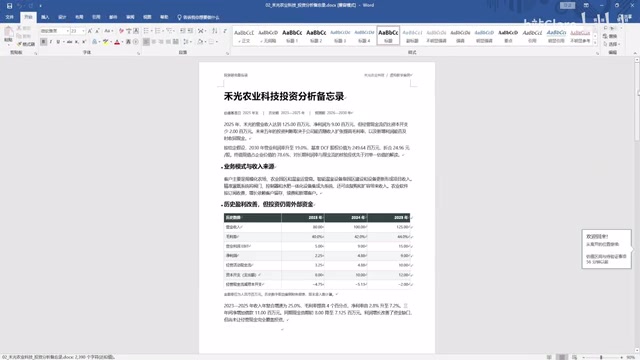
The creator first dragged an Excel spreadsheet, a Word document, and a PPT template into ChatGPT, asking it to forecast the company's future revenue, build a financial model, generate an investment analysis report, and produce an investor presentation PPT based on the template. The model was switched to GPT-6.2 Astra with performance maxed out.
Processing took only 11 minutes, all three output files were delivered, and the PPT content was fully populated. By comparison, the results were intuitive and highly complete. More importantly, the creator noted that GPT-6.2 consumed nearly 25% fewer tokens than 6.1, which means a significant cost reduction for long-workflow office tasks. This "single input, multi-file output" capability already approaches the combination of a junior analyst plus a designer.
Token consumption is the basic unit of billing for large model APIs; one token roughly corresponds to 0.75 English words or 1–2 Chinese characters. For agent-type long-workflow tasks, the model needs to repeatedly read and write files, call tools, and maintain context, so the cumulative token consumption is often far higher than in single-turn Q&A. Token efficiency therefore directly determines the actual cost of a single task. The article mentions that GPT-6.2 consumes nearly 25% fewer tokens than 6.1, which in scaled usage scenarios (such as enterprises batch-processing documents or continuously running coding agents) will bring considerable cost differences and also make long autonomous runs more economically viable.
Code and 3D: Racing Games and Mechanical Models Both Handled
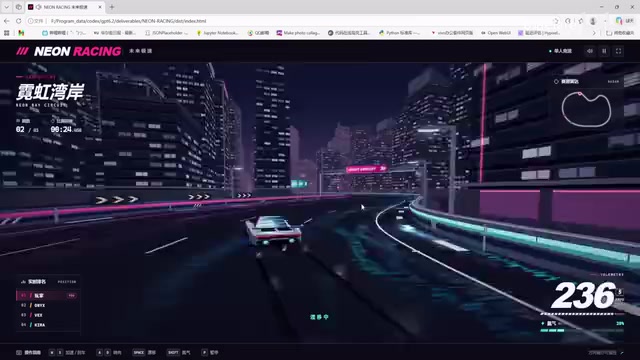
The coding task was handed to Codex, with GPT-6.2 Astra also selected and maximum performance enabled. The creator requested a racing game in a futuristic city style, and the game was generated in about 16 minutes. After opening it locally, WASD controls, Shift nitro boost, drifting, and pause all worked properly, and the side game window could also pop up directly for a test play.
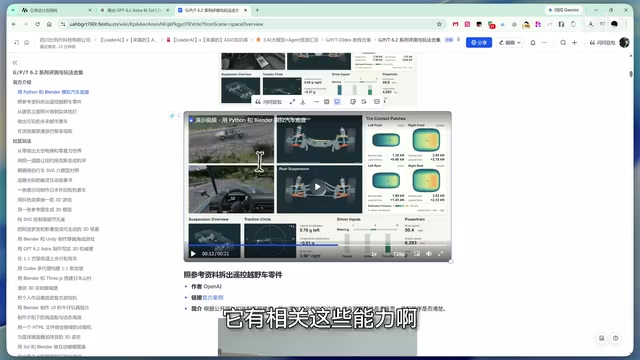
In the spatial understanding and design capability test, the creator asked the model to generate a 3D interactive model of an off-road vehicle. It was completed in about 21 minutes; the model supports free rotation, viewpoint switching, exploded views, and assembly demonstrations, and all individual parts and design notes can be viewed. The creator specifically mentioned that this step also saved more tokens than GPT-6.1. From games to industrial-grade 3D presentations, what Astra demonstrates is not just code writing, but an understanding of spatial structure and interaction logic.
Codex is OpenAI's agent product form for coding scenarios. Its difference from an ordinary chat window is that it can directly read and write project files, run commands, and iterate debugging, rather than merely outputting code snippets. In the article, handing the coding task "to Codex" means the model autonomously completes the closed loop from writing to verification in a workspace with an execution environment, which is also the prerequisite for it to produce a directly runnable game in 16 minutes and later fix a real open-source bug.
Fixing a Real Open-Source Bug: Locating Snake Food Overlap in 8 Minutes
The creator found an open-source Snake project on GitHub, where an issue reported that food occasionally spawned on the snake's body. As a "veteran player," the streamer first manually reproduced it once and indeed found the bug.
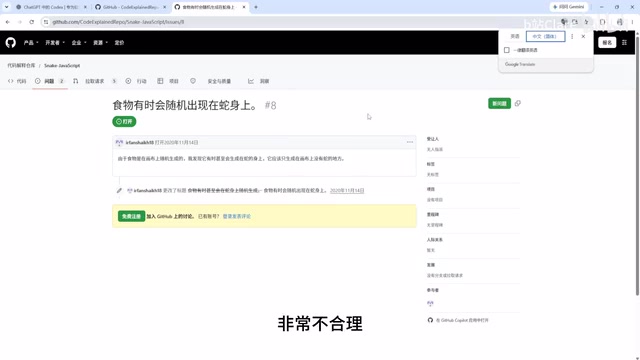
Back in Codex, the prompt asked it to fix the bug based on the project and the problem. The fix was completed in about 8 minutes, and the model provided before-and-after screenshots. The creator ran it locally and tested it multiple times; the food overlap problem did not recur. The value of this test lies in the fact that it is not building a demo from scratch, but locating and solving a problem within the code context of a real open-source project, which is more meaningful as a reference for developers.
Repository-level code understanding is a key dimension for evaluating coding agents. Real open-source projects often contain dozens of files, multiple layers of dependencies, and existing code style, and the root cause of a bug may be hidden in logic far from the location of the error. The model needs to search within the full code context, locate the problem point, and provide a modification that does not break other functionality, which is completely different in difficulty from generating a demo in a blank environment. The fix for the Snake food overlap in the article is precisely a test of this capability: it requires the model to understand the coupling between the food generation logic and the snake body coordinate checks.
Video Generation: An Animated Short in 18 Minutes
The final test was video generation. The creator entered a prompt requesting an animated short of someone riding a bicycle. GPT-6.2 took 18 minutes to complete it, and the result made the creator exclaim, "very good."
From office documents to game development, from 3D modeling to bug fixing, and then to video generation, GPT-6.2 Astra covered a variety of complex tasks in the creator's hands-on test. Its standout features can be summarized in two points: first, stronger agent autonomous working capability, able to stay on target throughout longer workflows; second, lower token consumption, making high-intensity use more sustainable.
Test Conclusions and Points to Watch
This hands-on test comes from a single creator's personal experience and has a limited sample, but the task design covers four directions—office, coding, 3D, and video—so its reference value is not low. The leaderboard results from Epoch AI and Artificial Analysis provide third-party corroboration, showing that Astra's comprehensive capability is indeed in the top tier. However, video generation took 18 minutes and the 3D model took 21 minutes, indicating that complex tasks still require waiting, and real-time interactive scenarios are not yet realistic.
For developers and creative workers, the appeal of GPT-6.2 Astra lies in its potential to "handle multiple types of tasks with one model" and in the cost optimization brought by improved token efficiency. As for whether it is "absurdly strong," the test results at least prove that on structured tasks, it can already independently complete the full chain from input to delivery.
Epoch AI and Artificial Analysis are two frequently cited third-party model evaluation organizations. The former is known for comprehensive capability benchmarks and trend analysis, while the latter focuses on horizontal comparisons of multimodal and interactive tasks, and its leaderboard scores are usually aggregated from standardized test sets. It should be noted that leaderboard scores reflect average performance under controlled conditions and do not fully correspond to the completion quality, time, and cost of specific tasks. Therefore, the creator's hands-on test and the leaderboard results complement each other: the leaderboard shows that the model is in the top tier, while the test reveals its usability and limitations in real workflows.
One-line Summary
Bilibili creator tests GPT-6.2 Astra: independent multi-task delivery with significantly improved token efficiency
Paragraph Summary
After OpenAI released the GPT-6.2 series, a Bilibili creator conducted multi-scenario hands-on tests of GPT-6.2 Astra. The model tied for first with 174 points on the Epoch AI comprehensive capability leaderboard and ranked first with 1318 points on Artificial Analysis's 3D generation leaderboard. In the tests, it completed an Excel, Word, and PPT investment analysis set in 11 minutes, generated a playable racing game in 16 minutes, produced an interactive and disassemblable 3D mechanical model in 21 minutes, fixed the food overlap bug in a real open-source Snake project in 8 minutes, and generated an animated short in 18 minutes, while consuming nearly 25% fewer tokens than GPT-6.1. The author believes that agent autonomous working capability and token efficiency are the two most notable improvements, but complex tasks take a long time, and real-time interactive scenarios remain limited.
Related articles
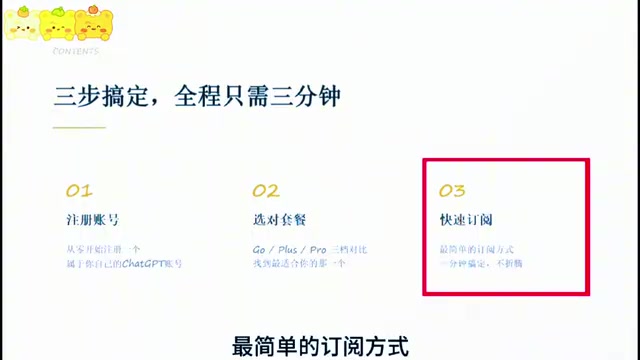
GPT-6.2 Sol/Astra Released: ChatGPT Plus Subscription Guide and Plan Comparison
After GPT-6.2 Sol/Astra's release, how should you choose a ChatGPT membership? This article distills a Bilibili tutorial's key points, explaining the differences between Go, Plus, and Pro tiers and who each suits, plus practical steps for account registration and quick subscription—helping you pick the right plan without wasting money.
GPT 6.2 Astra/Sol Community Use Cases and In-Depth Review
GPT 6.2 Astra/Sol review: strong in 3D modeling and Computer Use, but weak in aesthetic alignment and intent understanding. Benchmarks vs Claude Fable 5.2 and value analysis.

Anthropic IPO Explained: $104B Loss, $1T Valuation — How to Make Sense of It?
Anthropic IPO deep dive: $33B revenue, $104B loss, near-$1T valuation. Decode paper losses from convertible notes, 29x P/S, $900B commitments, and founder control.