GPT-6.2 Astra Leaked: SVG Generation and OpenAI's Hardware Ambitions

Model capabilities keep climbing, but competitive focus is shifting to hardware, trustworthiness, and engineering efficiency.
AI developments over the past 24 hours show model capabilities still improving, but the competitive focus is shifting. The rumored GPT-6.2 Astra's lowest reasoning tier already exceeds the previous generation's full-power level, though some SVG demos were found to use image or video tools, requiring a discount on demo results. Anthropic open-sourced Flash Proof, using cryptographic proofs to verify model response authenticity with orders-of-magnitude efficiency gains, while updating Claude Code. Tencent HY4 adds vision capabilities and plans to open-source weights, and anonymous model Cruton Alpha is suspected to be from Meta. At the infrastructure level, Anthropic and OpenAI are developing their own chips, DeepSeek plans to train V5 primarily on Huawei Ascend 950, and Musk warns chip production and power generation will collide by end of 2026.
GPT-6.2 Astra: Capability Rumors and Authenticity Verification
According to WorldofAI's roundup, GPT-6.2 Astra has been spotted in the model selector of the Codex desktop app, and two candidate IDs briefly appeared on a model tracker before vanishing within minutes. The creator remains cautious in interpreting these IDs, suggesting "rc" may stand for release candidate and "vm" may hint at some kind of computer-use environment, while noting the precedent of Aurora Alpha being mistakenly reported as Astra—showing that name-based speculation is unreliable.
More noteworthy are the capability data. According to reports cited in the video, on the Bench 2.0 benchmark, an internal model scored 0.875 while Astra scored 0.594; more critically, that internal model's lowest reasoning tier already scored 0.758, surpassing Astra's full-power performance. This pattern of "the floor exceeding the previous generation's ceiling" corroborates the description of a breakthrough related to the Navier-Stokes equations mentioned in the video.
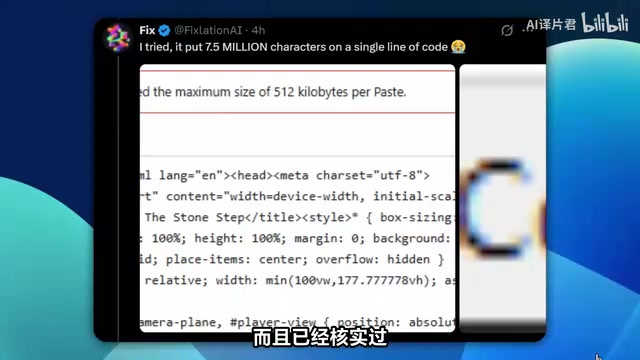
SVG generation is the most eye-catching part of this round of demos. GPT-6.2 Astra can generate classic game screenshots, cell structure diagrams, and even animatable pixel scenes via code, with one demo described as packing roughly 7.5 million characters into a single line of code. However, the creator also performed an important cross-check: some works circulating on X were flagged by AI image detection tools as carrying OpenAI watermarks, indicating these images were not purely SVG-generated but relied on 3D tools, Python tools, and even OpenAI's own video models. This detail reminds us that demo results and native model capabilities require a discount.
From Code to Physical Objects: OpenAI's Hardware Experiments and Ecosystem Expansion
In this update, OpenAI demonstrated how ChatGPT and Codex can participate in real-world hardware design. Two employees used GPT-6 Astra to design a prototype device communicating with Codex in under a week, with Astra involved in almost every design stage—enclosure, circuit board, user interface, and software—though the final product still required multiple rounds of human review and revision. OpenAI also partnered with Chip Ganassi Racing to convert 3D scans into editable CAD models, and with Mazda to explore AI-driven vehicle design simulation.
On the ecosystem side, Unity launched an official plugin for Codex, available directly through the OpenAI plugin directory, allowing Codex to invoke Unity's specialized skills. ChatGPT's financial management feature added voice mode, letting users connect financial accounts and directly query spending and savings via conversation—the creator explicitly expressed personal reservations about this, stating they would not hand financial data to ChatGPT.
Anthropic's Dual Track: Flash Proof and Claude Code Updates
Anthropic open-sourced Flash Proof, a technology attempting to solve a long-standing trust problem: when you pay to use a premium model, how do you verify the provider hasn't secretly swapped in a cheaper one? Flash Proof uses cryptographic proofs to mathematically verify that a response genuinely came from the model claimed to be running. Tested on Meta's Llama 4 Maverick (400 billion parameters), a single NVIDIA H100 GPU generated proofs at 110 tokens per second, with each proof about 19MB. By comparison, the creator mentioned an earlier system called Burlab generated proofs of about 93.6GB, with verification taking nearly a full day. Claude itself participated in building Flash Proof, and its security guarantees were formally verified using the Lean mathematical proof assistant.
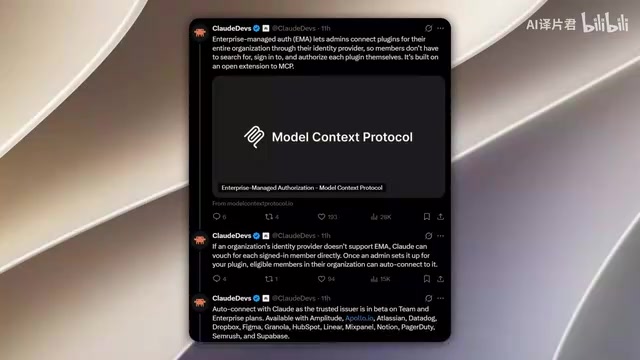
Claude Code summarized a batch of October updates: long conversations can be automatically compacted before prompt cache expiration to reduce token consumption, UltraThink support temporarily enables maximum reasoning intensity with per-subagent reasoning levels, a slash Usage command shows quota consumption, and long-running terminal commands that time out convert to background execution. Enterprise-side improvements extend via MCP to let the cloud act as a trusted identity issuer, with administrators able to centrally configure plugin access permissions.
Cryptographic Proofs and Model Verification: Flash Proof relies on cryptographic proofs, essentially an engineering variant of zero-knowledge proof (ZKP) ideas—the prover (model provider) demonstrates to the verifier (user) that a given output was genuinely computed by a specific model without revealing model weights. The traditional approach reruns the model and compares, but this is costly and cannot prevent cheating; cryptographic schemes use verifiable computation to transform the inference process into a mathematically checkable proof. Such schemes have long been constrained by proof generation overhead, and Flash Proof's value lies in pushing per-token proof cost down to a usable level (110 tokens/sec on H100, ~19MB per proof), moving it from theory to engineering feasibility.
Lean Mathematical Proof Assistant: Lean is an interactive theorem prover widely used in formalized mathematics. In the AI safety context, its role is to transform "this code satisfies this security property" into a machine-checkable mathematical proposition, then complete the proof manually or with tools. Compared to testing and auditing, formal verification covers all inputs rather than sampling, at the cost of requiring precise modeling of system behavior. Claude participating in building Flash Proof and using Lean for formal verification of security guarantees means the verification chain itself has undergone rigorous scrutiny.
Tencent HY4 and the Mysterious Model Cruton Alpha
Tencent released HY4, adding vision capabilities, covering front-end development, finance, game research, and office productivity scenarios. By Tencent's own tests, HY4 scored 75.2 on Apex Agents, exceeding DeepSeekAd 4.1 Flash's October version at around 72-73, though the creator noted the two models trade wins on other benchmarks. Pricing is 83 cents per million input tokens and $2.50 per million output tokens, and Tencent plans to release model weights. A notable detail is the training data strategy: Tencent removed training data used for offensive cybersecurity while retaining defensive security data, focusing the model on finding vulnerabilities and threat analysis rather than launching attacks. The most stunning demo was a playable first-person shooter built by bridging Unreal Engine through MCP, requiring multiple rounds of prompt iteration to reach that level of detail.
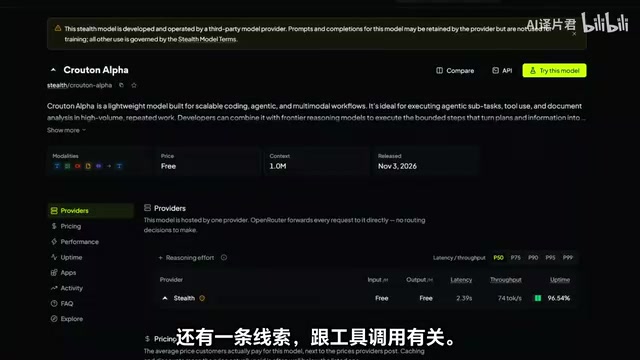
Another anonymous model, Cruton Alpha, appeared on OpenRouter, completely free, supporting 1 million token context and multimodal input. Multiple clues point to Meta: the blocked country list matches Meta's API, an error on a rare Japanese word matches Meta's Muse model, and the tool-calling setting that only accepts auto-selection matches the Muse Spark 1.3 API. But the creator also noted counter-evidence—its tokenizer doesn't match Meta's published one. Actual performance excels at agentic coding, with speed approaching GPT-6.1 level, working better with frameworks like OpenCode.
Chips, Compute, and Regulation: The Infrastructure Layer Game
According to The Information, Anthropic is using Claude to help design its own AI chips, with a chip design team of only 15 engineers; Claude's understanding of chips and model architecture lets the company bring new accelerator platforms online in far less time than traditionally required. OpenAI is also developing its own chips. Meanwhile, DeepSeek reportedly plans to train its next-generation large model primarily on Huawei Ascend 950 chips, having worked closely with Huawei since April to optimize the software stack, released multiple Ascend optimization tools in September, and launched an inference engine supporting both NVIDIA and Huawei hardware in October. DeepSeek V5 may become the first major model trained primarily on domestic chips, with a target set for 2027.
Musk issued a warning on another dimension: AI chip production is growing at an astonishing rate, but power generation capacity outside China cannot keep up, and the two trends may collide by the end of 2026, when companies may hold chips they can't run due to insufficient electricity. This is a prediction, not fact, but the underlying power bottleneck is real. On the regulatory front, Texas—one of America's largest data center hubs—turned blue, and the incoming governor supports pausing data center development before stricter regulation is established, while Microsoft just announced a local gigawatt-scale data center project and Google committed $40 billion through 2027.
Ascend 950 and the Domestic Compute Stack: Huawei's Ascend series represents domestic AI accelerators, with its software stack CANN benchmarked against NVIDIA's CUDA. Migrating large model training to Ascend, the difficulty isn't single-card compute but the maturity of compilers, operator libraries, communication libraries, and framework adaptation—which is why DeepSeek worked with Huawei since April to jointly optimize the software stack, released optimization tools in September, and launched a dual-hardware inference engine in October. The inference engine supporting both NVIDIA and Huawei indicates hybrid deployment in the short term, and if V5 truly trains primarily on Ascend 950, it would be the first complete validation of domestic chips in ultra-large-scale training.
Power Constraints on AI Data Centers: Musk's "power wall" refers to the mismatch between AI cluster power density and grid expansion speed. A gigawatt-scale data center equals the electricity consumption of hundreds of thousands of households, while new generation, transmission, and grid connection approvals typically take years, whereas chip production scales by quarters. Texas, as a data center hub, its regulatory shift will directly affect project implementation pace; whether Google's $40 billion commitment can be fulfilled also depends on power and permits. Electricity is transforming from a back-end cost item into a first-order constraint on site selection and expansion.
Other Noteworthy Developments
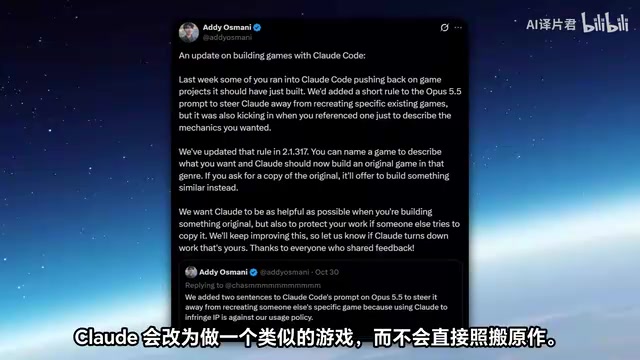
Anthropic's copyright rules added in Opus 5.5 initially overcorrected, refusing even completely original games. According to Claude Code developers, the rule has been updated in version 21.3.1.7: now you can reference existing games to describe desired gameplay mechanics, and Claude will create inspired but original works, only making similar games when explicitly asked to replicate.
The open-source project Terminal Mac allows running a full macOS environment within an existing terminal, supporting computer operation through MCP and agent skills, letting tools like Claude Code operate applications in isolated environments without disturbing the main desktop. ZIFO's hierarchical attention mechanism organizes information into a tree structure and searches only relevant branches, reportedly up to 35x faster at 10 million tokens and up to 400x at 1 billion tokens, and can adapt to existing models without retraining from scratch. Xiaomi's CyberOne humanoid robot completed an 8-hour shift at its own EV factory, disassembling and replacing car parts and coordinating with autonomous mobile robots, backed by the RoboticsOne foundation model pre-trained on over 100,000 hours of real robot data.
On the security front, Binance admitted to a serious security incident on October 29, reportedly leading to approximately $6.34 billion in digital assets being stolen, with reports linking it to a vulnerability introduced by a developer installing Homebrew while setting up a project. This reminds everyone using AI-assisted coding: the development toolchain itself is an attack surface.
Looking across this round of updates, the absolute improvement in model capabilities remains the most visible part, but what truly determines the next stage's landscape may be trust infrastructure like Flash Proof, the in-house chip paths of DeepSeek and Anthropic, and the power wall Musk speaks of. Demos can be stunning, but implementation depends on these less photogenic things.
One-line Summary
Model capabilities continue climbing, but the competitive focus is shifting toward hardware, trustworthiness, and engineering efficiency.
Paragraph Summary
AI developments over the past 24 hours show model capabilities still improving, but the competitive focus is shifting. The rumored GPT-6.2 Astra's lowest reasoning tier already exceeds the previous generation's full-power level, though some SVG demos were found to use image or video tools, requiring a discount on demo results. Anthropic open-sourced Flash Proof, using cryptographic proofs to verify model response authenticity with orders-of-magnitude efficiency gains over earlier schemes, while updating Claude Code. Tencent HY4 adds vision capabilities and plans to open-source weights, and anonymous model Cruton Alpha is suspected to be from Meta. At the infrastructure level, Anthropic and OpenAI are developing their own chips, DeepSeek plans to train V5 primarily on Huawei Ascend 950, and Musk warns chip production and power generation will collide by end of 2026.
Related articles

9 AI Subscription Plans Compared: The Real Cost Per 100M Tokens Revealed
Bilibili creator tests 9 AI subscription plans from Volcano, Alibaba, Tencent, Baidu, Zhipu, Xiaomi, MiniMax and more, converting them all to real cost per 100M tokens, breaking down fixed-quota vs. three-tier coefficient billing and how caching, time-of-day discounts, and window limits affect actual quota.

Vibe Coding for Beginners: Expressing Intent Instead of Handwriting Code
What is Vibe Coding? A 137-episode Bilibili course defines it: the core is expressing intent, not writing code. This article analyzes Vibe Coding's productivity logic, target audience, and entry expectations to help beginners decide if it's worth learning.

LangChain Beginner's Guide: An Agent Development Roadmap from LangGraph to Deep Agents
Clarify the encapsulation relationship among LangChain, LangGraph, and Deep Agents, and master the learning path and selection logic for agent development frameworks—suitable for beginners in large model development.