GPT-6.2 Dual Models Astra vs Soul: 3D Interaction Testing and Pricing Analysis

GPT-6.2 makes 3D scenes playable in the browser and covers complex projects and everyday efficiency with the dual lines Astra and Soul.
OpenAI's GPT-6.2 advances 3D scene generation to interactive control within the browser, with officially showcased aircraft tracks and community-generated metallic track scenes from image references both runnable directly. More importantly, the product line splits into Astra and Soul: Astra targets hardcore projects, improving 6.2 percentage points over its predecessor in professional work evaluations with 22% fewer output tokens; Soul trails by less than 0.5 points in coding tests and costs about one-fifth as much, with both supporting the highest reasoning effort level. Early feedback praises the 3D effects but notes the model tends to stick to its own style when adding components to existing webpages, requiring repeated adjustments. Astra is priced at $8 per million input tokens and $40 per million output tokens, 20% cheaper than its predecessor, and both models are already available in ChatGPT WorkCodec and the API.
OpenAI's latest GPT-6.2 release brings "3D scene generation" from demo videos into the browser: aircraft weave through glowing tracks in a futuristic city, and you can control them directly just by opening a webpage. Beyond the visual spectacle, what's more noteworthy this time is the splitting of the model matrix—two product lines, Astra and Soul, respectively targeting hardcore projects and everyday efficiency.

3D Interaction: From "Viewable" to "Playable"
The racing aircraft scene showcased by the official team is the most直观 selling point this time. The glowing track, futuristic city backdrop, and aircraft control logic are all integrated into a 3D interactive page that runs in the browser—users are no longer bystanders but can actually operate it. Some in the community have also used images as references to generate 3D scenes with metallic tracks, which likewise run in a desktop browser.

This means GPT-6.2 has made substantive progress in spatial understanding and interaction logic generation. There are also new cases on the web design side, such as a camper van website where users can interactively configure the vehicle—adjusting options directly and seeing the feedback. For front-end developers and interaction prototypers, this kind of "one-sentence playable demo" capability is changing the speed at which ideas can be validated.
The reason 3D scene generation being "playable" in the browser is so much harder than being "viewable" comes down to additional engineering constraints. The model must not only generate geometry and materials but also output a scene structure that can be consumed by rendering pipelines like WebGL/Three.js, including object hierarchy, coordinate transformations, collision and boundaries, and the handling logic for camera and control inputs. In traditional workflows, these tasks are split between artists and front-end developers, whereas generative models attempt to deliver a runnable whole in one shot.
Astra vs Soul: The Trade-offs of Two Paths
The positioning difference between the two models is clear: Astra targets harder projects, while Soul focuses on efficiency for everyday use.
In the official professional work evaluation, Astra improved by 6.2 percentage points over its predecessor while using 22% fewer output tokens. This combination is noteworthy—stronger and more economical means that on complex tasks not only are results better, but token consumption actually drops.
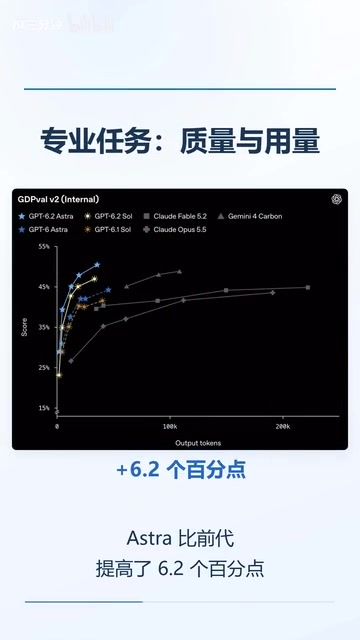
Soul's positioning is more pragmatic. In coding tests, Soul and Astra differ by less than 0.5 points, while the cost is about one-fifth of Astra. Both support the highest reasoning effort level, meaning Soul is not a "crippled version" but rather maximizes cost-effectiveness for most everyday coding tasks.
Reasoning effort refers to the amount of thinking the model is allowed to invest before producing an answer. The higher the level, the more the model tends to unfold additional intermediate reasoning steps, typically improving accuracy on complex tasks but increasing latency and token consumption. The article mentions that both models can be set to the highest level, meaning Soul's capability ceiling has not been artificially lowered; its cost advantage mainly comes from differences in model size or inference efficiency, not from disabling deep thinking.
Early User Feedback: Strengths and Friction Coexist
The 3D effects have generally received positive reviews, but community experiences are not uniformly positive. Some early users point out that when adding components to an existing webpage, the model tends to stick to its own style, requiring repeated adjustments to fit the original design.

This feedback points to a real issue: generating from scratch and making incremental modifications are two different capabilities. In the former, the model can freely express itself; in the latter, it must work under existing constraints, and style consistency becomes the test. If your workflow heavily involves iterating on existing projects, this is something to verify carefully during trials.
The difference between from-scratch generation and incremental modification corresponds in engineering to two classes of problems: "unconstrained generation" and "constraint satisfaction." The former only needs to produce a reasonable result, while the latter must work under existing code structure, naming conventions, style systems, and other conditions—the model needs to understand the context before making changes. Style drift is a common failure mode in such tasks, and in practice it is usually mitigated by providing component examples, specifying design guidelines, or making small step-by-step changes.
Pricing and Use Cases
On pricing, Astra costs $8 per million input tokens and $40 per million output tokens, both 20% cheaper than its predecessor. Both models are already available in ChatGPT WorkCodec and the API, so developers can integrate them directly.
The selection logic can be simplified into two rules: for 3D interaction projects, Astra is worth trying first; for everyday coding tasks, start with the lower-cost Soul—given a test score gap of less than 0.5 points, one-fifth the price is hard to ignore.
What really needs weighing is task complexity and tolerance for error—when a project is extremely sensitive to output quality and rework costs are high, Astra's premium is justified; when task volume is large and iterations are frequent, Soul's unit-cost advantage is amplified.
Choosing models priced by token is essentially a trade-off between unit cost and rework probability. If the rework cost caused by one subpar output (manual review, retry consumption, time delays) exceeds the price difference between models, the higher-priced model is more cost-effective; conversely, when task volume is large and the cost of a single error is low, the lower-cost model has a lower total cost. This is also the economic basis for the article's recommendation to try Soul first for everyday coding and prioritize Astra for complex projects.
One-line Summary
GPT-6.2 makes 3D scenes playable in the browser and covers complex projects and everyday efficiency with the dual lines Astra and Soul.
Paragraph Summary
OpenAI's GPT-6.2 advances 3D scene generation to the point of interactive control within the browser; the officially showcased aircraft track and community-generated metallic track scenes from image references both run directly. More importantly, the product line is split into Astra and Soul: Astra targets hardcore projects, improving 6.2 percentage points over its predecessor in professional work evaluations while using 22% fewer output tokens; Soul trails Astra by less than 0.5 points in coding tests and costs about one-fifth as much, with both supporting the highest reasoning effort level. Early feedback praises the 3D effects, but when adding components to existing webpages the model tends to stick to its own style, requiring repeated adjustments. On pricing, Astra costs $8 per million input tokens and $40 per million output tokens, 20% cheaper than its predecessor, and both models are already available in ChatGPT WorkCodec and the API.
Related articles

Jingle Jam 2026 Registration Opens: Lewis Uses Old Footage to Rally Volunteers for Fundraising
Jingle Jam 2026 fundraising registration is open. Lewis uses old footage edited into a new video, calling on viewers to create fundraising pages at jingle jam.tiltify.com to support eight charities. The event takes place in the first two weeks of December.
Gemini 4 Neon Hands-On Test: Can It Replace Claude Opus 5.5?
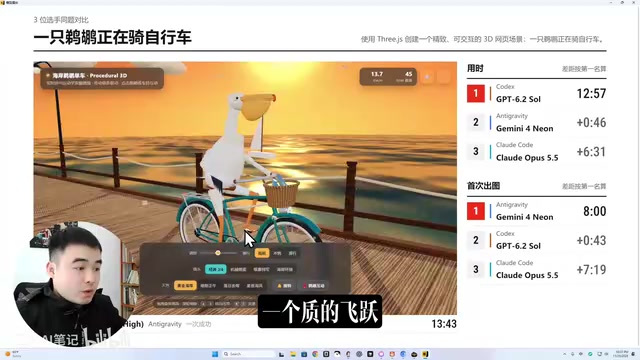
A Bilibili creator tests Gemini 4 Neon, Claude Opus 5.5, and GPT 6.2 across three coding Agent challenges—pelican animation, 3D racing, and code-generated video—to see if Gemini can replace Opus.
FBI-Warned Artex: How an AI Attack Framework With No In-House Model Pries Open Enterprise Doors
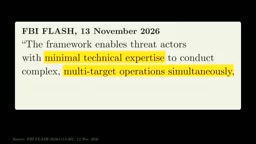
The FBI-warned open-source AI attack framework Artex has no model of its own—it plugs into Claude, GPT, and other external LLMs to drive an agent loop, turning ordinary tools like Nmap into an automated attack pipeline. This article examines three real cases—South Korean finance, ConnectWise, and Barracuda—analyzes the three drivers of speed, cost, and noise, and outlines defenses such as exposure inventory and short-lived credentials.