GPT-6 Reportedly Completed, Claude Opus 5 Leaked: The AI Model Race Accelerates

GPT-6 reportedly finished, Claude Opus 5 leaked, and Google Gemini delayed as AI model competition intensifies.
The AI model race is accelerating dramatically. Anthropic's mysterious Claude Honeycomb model—likely an early Opus 5 checkpoint—briefly leaked in Cursor, while GPT-6 may already be completed with capabilities reportedly far exceeding competitors. Google's Gemini 3.5 Pro faces yet another delay, Chinese models like Kimi K3 prepare for imminent launch, and the NEO humanoid robot achieves a 25-DOF hand breakthrough.
A New Round of the AI Model Race Begins
This week's AI industry news has been overwhelmingly dense. From Anthropic's unexpected leak of its next-generation Opus model, to OpenAI's rumored completion of GPT-6, to the imminent release of Kimi K3—the pace of competition among leading companies is clearly accelerating. Meanwhile, Google Gemini's continued delays, the public clash between Elon Musk and Sam Altman, and the hand upgrade for the NEO humanoid robot together paint a picture of today's AI landscape: intense and multifaceted.
This article is based on overseas AI news content reposted on Bilibili, and it should be noted that much of this information remains at the leak and rumor level without official confirmation. Readers should exercise cautious judgment.
Claude Honeycomb Leaked: Is This an Early Version of Opus 5?
One of the most closely watched events this week was the brief appearance—and swift removal—of a mysterious Anthropic model codenamed "Claude Honeycomb" in Cursor. According to Cursor's internal list, Honeycomb was labeled as an Anthropic research model, currently available as an early preview. Cursor, as an AI-assisted coding tool, typically gets first access to the latest model APIs from various providers, which is why leaks of unreleased models often surface first on such integration platforms.
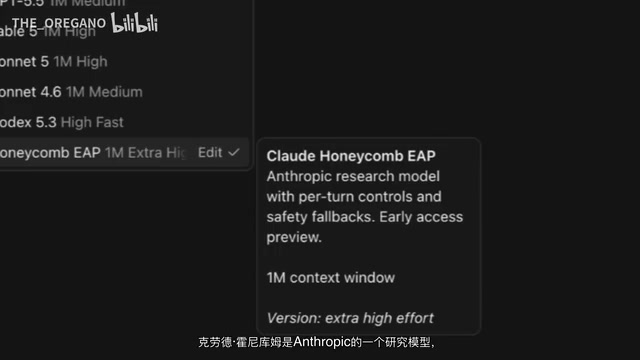
Reportedly, the model features a massive 1-million-token context window, a safety fallback mechanism, and an additional high-thrust mode. A 1-million-token context window means the model can process approximately 750,000 English words (or about 1.5 million Chinese characters) at once—equivalent to the information in over ten full-length novels. This is crucial for applications that need to analyze entire codebases, lengthy legal documents, or collections of academic papers. For comparison, GPT-4 Turbo's context window is 128K tokens, and Claude 3.5 Sonnet's is 200K tokens. The safety fallback mechanism is a layered protection design: when the primary model detects a request that might violate safety policies, the system doesn't simply refuse—instead, it automatically switches to a backup model with stricter safety alignment to handle the request, ensuring both continuity of user experience and adherence to safety standards.
On paper, the specs look impressive, but actual test results were somewhat underwhelming—for example, generating an Xbox 360 controller took 2 minutes and 40 seconds, and visual quality didn't even match earlier models like Muse Spark 1.0. This raises questions about whether it truly represents a flagship-level Opus 5.
Key Clues About Anthropic's Internal Model Hierarchy
A well-known leaker discovered an interesting phenomenon while testing Honeycomb: after bypassing safety measures, the model triggered a fallback message and automatically switched to Claude Opus 4.8. This behavior suggests that Honeycomb may sit above Opus 4.8 in Anthropic's internal model hierarchy—since 4.8 appears to be designed as a safer "alternative" that only activates when Honeycomb refuses or gets flagged.
Anthropic's model naming system (Haiku, Sonnet, Opus) corresponds to different tiers from lightweight to flagship. The appearance of version number Opus 4.8 suggests Anthropic may internally employ a continuous version iteration development process—meaning numerous intermediate checkpoints exist between publicly released integer versions. Checkpoints are state snapshots periodically saved during model training; research teams can resume training or conduct evaluations from any checkpoint. This practice is extremely common in large model training, both to prevent progress loss from training interruptions and to facilitate comparison of model performance across different stages.
While this doesn't directly prove Honeycomb is more capable, it reinforces the speculation that "it may be an early checkpoint of Opus 5." Of course, as an incomplete internal version, the final released model will likely show significant improvements. The industry also widely speculates that Anthropic is shifting more attention toward the Fable and Mythos series, potentially adjusting the update cadence of the Opus line.
GPT-6 Rumors: OpenAI May Reclaim AI Technology Leadership
OpenAI released the GPT-5.6 series this week, including three new models. But the more explosive news is that GPT-6 may arrive sooner than expected—and might even be completed already.
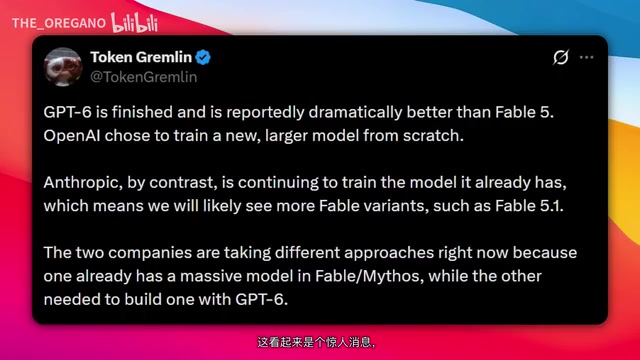
According to leaked information, GPT-6's capabilities reportedly "far exceed Fable 5." Particularly noteworthy are the starkly different strategic choices of the two companies: OpenAI has chosen to train a completely new and larger model from scratch, while Anthropic prefers to continue improving and expanding its existing medium-scale Fable base model (such as the upcoming Fable 5.1, with improvements in reasoning, coding efficiency, and reliability).
Training from scratch means using an entirely new model architecture, entirely new datasets, and entirely new training processes to build the model, without relying on any predecessor model's weight parameters. The advantage of this approach is breaking free from the limitations of older architectures and introducing fundamental innovations (such as new attention mechanisms or more efficient parameter organization), at the cost of requiring massive computational resources and longer development cycles. In contrast, iterative refinement involves fine-tuning, distillation, and reinforcement learning alignment on an already-trained base model—more resource-efficient but limited in improvement ceiling by the underlying architecture.
OpenAI vs. Anthropic: A Deep Comparison of Two Technical Approaches
These two approaches represent the two major directions in current large model development:
- OpenAI's "Rebuild" approach: Abandoning the originally planned ~4-trillion-parameter base to train an entirely new architecture from scratch, pursuing generational leaps. It's rumored that GPT-5.6 will be the final version in the 5.0 series, with GPT-6 potentially releasing in the near future. If the ~4-trillion-parameter scale is accurate, it would be more than double GPT-4's rumored 1.8 trillion parameters, with computational costs potentially reaching billions of dollars—which explains OpenAI's recent massive fundraising rounds.
- Anthropic's "Iterate" approach: Continuously refining on top of a mature large model foundation, releasing more polished variants without switching to an entirely new architecture in the short term. This strategy's advantages include controllable risk, stable delivery cadence, and faster responsiveness to user feedback.
If GPT-6 rumors prove true, OpenAI could re-establish its technological leadership in the field. However, it must be emphasized that these claims currently remain at the insider rumor level, lacking official corroboration.
Google Gemini 3.5 Pro Delayed Again: The Catch-Up Struggle Intensifies
In stark contrast to the aggressive pace of the other two companies, Google is clearly falling behind. Reports indicate that Gemini 3.5 Pro has been delayed again, with end of month currently set as the target.
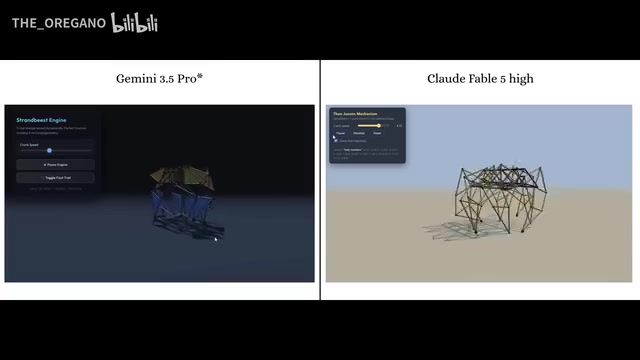
The latest internal checkpoint is based on new "Muse 25" building blocks, tagged as a Gemini-related version. Google's so-called "Muse 25 building blocks" likely refers to major updates to the underlying Transformer architecture or training infrastructure. Swapping out foundational building blocks is like changing an engine while driving at high speed—while the new engine may be more powerful, compatibility issues are extremely prone to emerge during the adaptation and debugging process. Google's predicament is also compounded by its organizational structure: since the merger of DeepMind and Google Brain in 2023, team integration and technology stack unification are still ongoing, which has to some extent affected iteration efficiency.
Feedback indicates the model remains weak in coding capabilities, and there are knowledge cutoff date issues. The knowledge cutoff date refers to the latest time point covered by the model's training data—events occurring after this point are unknown to the model. This issue typically arises when the training data pipeline fails to update in a timely manner. Google currently faces a difficult situation: on one hand, OpenAI and Anthropic are pulling ahead, making it harder to catch up; on the other hand, the new base model isn't yet mature, and the window of opportunity is narrowing.
From one perspective, the strong releases of Fable 5 and OpenAI's new models have objectively put pressure on Gemini while also giving it more time to strengthen training during the delay. But as of now, Gemini's declining trajectory in this round of competition is quite evident.
Kimi K3 Imminent Release and Latest Developments in Chinese AI Models
The domestic model camp is also making frequent moves. According to insider information, Kimi K3 could be announced as early as late next week. Previous reports also indicated that Moonshot AI employees disclosed Kimi K3 would launch in July, which carries high credibility. Moonshot AI was founded by Yang Zhilin, a former Tsinghua University professor, and previously attracted widespread attention for Kimi's long-context technology and user growth rate. Its product Kimi Chat quickly gained popularity in the Chinese market with its ability to process documents of up to 200,000 characters.
Additionally, DeepSeek is preparing a new version reportedly comparable to GLM 5.2, while also developing a larger-scale model to compete with MiniMax's 2.7-trillion-parameter Pro model. DeepSeek is known for its open-source strategy and high cost-effectiveness, with its models performing well across multiple benchmarks. MiniMax's 2.7-trillion-parameter Pro model represents one of the highest parameter scales among current Chinese large models.
It's worth noting that parameter count is not the sole metric for measuring model capability—training data quality, training methods (such as Mixture of Experts/MoE architecture, which allows actual activated parameters to be far fewer than total parameters, maintaining high performance while dramatically reducing inference costs), and alignment techniques are equally critical. Against the backdrop of limited computing resources (due to chip export controls), Chinese companies place greater emphasis on algorithmic efficiency innovation and architecture optimization, which has spawned many unique technical approaches.
Industry Sidebar: Musk and Altman Clash Over AI Again
Beyond technical competition, the "off-field drama" among AI giants is equally compelling. The catalyst was Apple suing OpenAI for allegedly stealing AI hardware development trade secrets. Musk quickly joined the discussion, publicly mocking Altman and supporting Apple's allegations, with Altman responding in kind.

This confrontation once again escalated into a public showdown between the two. The feud between Musk and Altman traces back to OpenAI's founding—Musk was a co-founder and major early funder of OpenAI, but after leaving the board in 2018, their relationship gradually deteriorated. Musk subsequently founded xAI and launched the Grok model to compete with OpenAI, while repeatedly challenging OpenAI's for-profit transition on both legal and public opinion fronts. Today's AI competition extends far beyond model-to-model rivalry—it encompasses lawsuits, social media narratives, and full-scale corporate strategic confrontation, with drama rivaling the technical advances themselves.
NEO Humanoid Robot Hand Upgrade: The Breakthrough of 25 Degrees of Freedom
In the hardware domain, 1X Technologies, the developer of the NEO humanoid robot, released a new upgrade—a mechanically-driven hand with 25 degrees of freedom, designed to approach or even exceed human-level dexterity, strength, speed, and reliability.
Degrees of Freedom (DOF) refers to the number of independent directions in which a robot's joints can move. The human hand has approximately 27 degrees of freedom (including the wrist), with the fingers providing about 20. NEO's 25 DOF hand means it can achieve movement complexity approaching that of a human hand. Traditional industrial robot end effectors typically have only 1-3 degrees of freedom (such as simple parallel grippers), because each additional degree of freedom requires extra actuators, sensors, and control algorithms, while maintaining sufficient torque output and structural integrity within a compact space.
1X Technologies is a Norwegian company backed by the OpenAI Fund, with its NEO robot positioned for home service scenarios. Choosing mechanical actuation (rather than hydraulic or pneumatic) means quieter operation, greater precision, and lower maintenance costs, but requires more ingenious engineering design for force density.
For decades, robotics companies have avoided hand design because manufacturing truly dexterous mechanical hands is extremely difficult. But for humanoid robots, their practical utility ultimately depends on what their fingertips can grasp and manipulate. The significance of this upgrade is that the hand isn't just hardware—it's an "interface." Just as software APIs enable generative AI to interact with digital applications, NEO's hand enables AI to interact with the physical world—grasping objects, opening doors, folding laundry, converting intelligence into real physical action. This is why the industry widely believes that breakthroughs in dexterous hand technology represent one of the final key bottlenecks for humanoid robots transitioning from laboratories to homes.
Conclusion: Uncertainty Amid Rapid Iteration
Summarizing this week's developments, the AI industry is in a phase of rapid iteration filled with variables. OpenAI and Anthropic are further extending their lead, Google faces catch-up pressure, Chinese models are accelerating to keep pace, and robotics hardware is quietly breaking through critical bottlenecks.
It bears repeating that much of the information discussed here regarding GPT-6, Opus 5, and other developments comes from leaks and rumors—official announcements will be the final word. But regardless of specific details, one thing is certain: the curtain has risen on the next round of the AI model race.
Key Takeaways
Related articles

NeurIPS Submissions Reveal New Trends in Research Collaboration in the AI Era
Analyzing a Reddit recruitment post to explore NeurIPS Workshop submission strategies, how AI coding tools reshape research productivity, and the opportunities and risks of global collaboration for young researchers.

Lincoln's Great Speeches: Historical Echoes of Leadership and Courage
Deep analysis of the leadership wisdom behind Lincoln's Second Inaugural and Gettysburg Address—from listening skills and bearing immense pressure to the courage to speak truth in moments of victory.

A Non-Programmer's Complete Guide to Building a Hugo Website from Scratch with Claude
How a non-web developer used Claude AI to build a custom Hugo website theme from scratch, with org format support, dark theme, card layouts, and more—from prototype in 5 minutes to polished site in days.