GPT-6 Sol Released: Prices Slashed in Half, Benchmarks Hit 95 Points to Match Top-Tier Rivals

GPT-6 Sol cuts output pricing to $10/M tokens and scores 95 points on real-world benchmarks, matching top rivals.
OpenAI released GPT-6 Sol and the lightweight GPT-6 Luna, with output pricing slashed to $10 and $0.50 per million tokens respectively — roughly half the previous generation and cheaper than Kimi K3. A 9-question benchmark covering 3D games, parametric modeling, frontend dev, DevOps automation, and code review gave GPT-6 Sol a weighted score of 95 points, tying Cloud Ops 5 and Grok 4.6 for just ¥17 RMB total. Top scores went to the landing page (99), 3D printing (98), and financial reconciliation (100), while stop-motion animation (86) and complex urban scene rendering (92) were weaker spots.
OpenAI quietly dropped GPT-6 Sol in the early hours, bringing frontier-level capabilities down to the mainstream model tier while cutting API prices in half. For developers and teams handling heavy workloads who care more about cost-efficiency, this may be more meaningful in practice than GPT-6 Extra — the model that supposedly achieves AGI. Bilibili creator "进化中的阿诚" ran it through a rigorous 9-question benchmark suite and landed a weighted total score of 95 points.
Prices Slashed: Bringing API Costs Into Practical Range
Cost is the real story of this release. The previous GPT-5.6 Sol's promotional pricing sat at $4 per million tokens for input and $20 for output. GPT-6 Sol cuts input to $2 and slashes output all the way to $10 per million tokens — roughly ¥67 RMB. That's not only lower than Kimi K3's $15 per million tokens for output; it's about one-third cheaper on the output side.
The lightweight GPT-6 Luna sees an even more dramatic drop: input falls from $0.20 to $0.10 per million tokens, and output plummets from $1.20 to just $0.50 — barely over ¥3 RMB. When top-tier output quality and rock-bottom API costs exist simultaneously, the widespread adoption of AI productivity tools finally has a real economic foundation — and that's the core logic behind OpenAI's "more for less" strategy this time around.
The official blog post notes that both new models use training methods similar to GPT-6 Astra. On Automation Bench, a cross-software business process automation test, Sol's top tier outscored Cloud Ops 5's highest tier while costing only 9% as much per task. On Deep SW1, a real-codebase evaluation, Sol's top tier scored 68.8% — right behind the leading model Cloud Fable 5's 69.9% — at roughly 80% lower cost.
Tokens are the basic unit large language models use to measure text — roughly 1–1.5 tokens per English word, and about 1.5–2 tokens per Chinese character. "Per million tokens" is the standard API pricing metric. In practice, a complex conversation with context or a mid-length code review task typically consumes thousands to tens of thousands of tokens. At $10 per million output tokens, generating a 1,000-character report costs less than ¥0.10 RMB, making high-frequency, large-scale automated workflows economically viable. Automation Bench and Deep SW1 are industry benchmarks that evaluate model performance in real engineering scenarios — the former simulates multi-step cross-software business automation, the latter tests code comprehension and modification on real codebases. Both are far closer to production environments than simple Q&A tasks.
Nine Hard Benchmark Questions: Games, 3D Modeling, and Frontend All Covered
Official metrics only tell part of the story — real tasks are the true test. Each question is scored out of 100 (70 points for correctness, 30 for quality), with different questions carrying different weights. Notably, Cloud Ops 5.5 was also put through the same test but its thinking time ran so long that the entire benchmark had finished before it even completed its run in the background.
Question 1: A Halo-inspired 3D web-based shooter (3× weight). The overall style resembled GPT-6 Astra — a neon arena with energy shields, dynamic radar, an intro prompt, and background sound effects. The physics of a hand grenade rolling across the floor were impressively realistic. Score: 96 points.
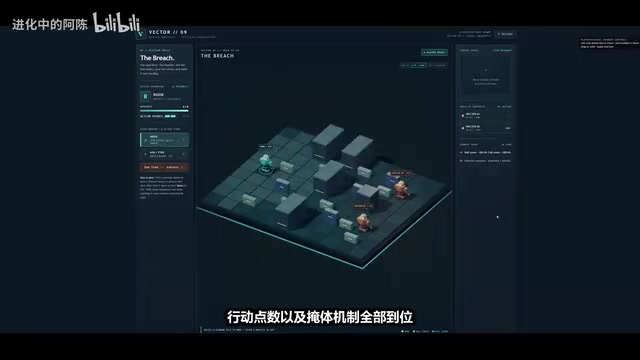
Question 2: A turn-based tactical strategy game (3× weight). Isometric grid, action points, and cover mechanics were all implemented, but there were logic flaws — characters clipping through cover, and a melee hit rate of only 66%. Score: 94 points.
Question 3: A Doctor Who TARDIS-shaped phone stand (4× weight). Required parametric design, watertight geometry, and print-without-support 3D printability. Imported into Bambu slicer for inspection — dimensions roughly 12×21×23 cm — with doors, windows, door handle, phone slot, and charging cutout all accounted for. Correctness: 68 points, quality: full 30 points. Total: 98 points.
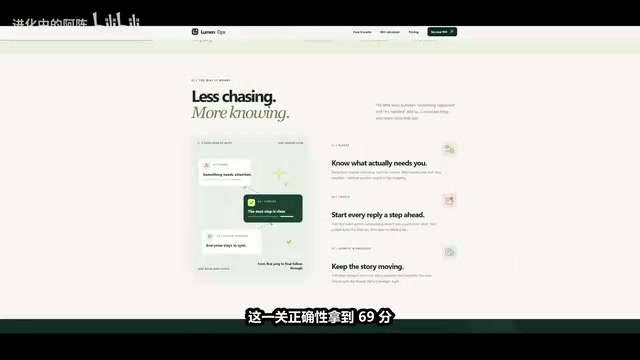
Question 4: A sales landing page for LumenOps, a DevOps assistant (2× weight). The dark green color scheme looked nearly identical to the Astra frontend style, and the page included a draggable interactive ROI calculator that computes labor hours and costs in real time. Score: 99 points.
High-Difficulty Tasks and Auto-Grading: Strengths and Weaknesses
Question 5: A Diablo-style isometric dungeon action game (3× weight). Skills, dodge mechanics, and a rage system were all implemented, but the atmosphere felt flat and movement was sluggish. Score: 93 points.
Question 6: A drone flight along Fifth Avenue from 42nd Street to Central Park (hardest question). The New York Public Library, St. Patrick's Cathedral, and the Plaza Hotel were constructed in sequence; the gold reflections on Trump Tower's exterior were detailed. But there were significant issues: the ice rink's orientation was reversed, a gold statue was planted in the middle of the ice, all buildings lacked collision volumes (letting the drone fly straight through them), and every car on the street was completely static. Score: 92 points.
Question 7: A 12-second stop-motion animation (1× weight) — the lowest score of the set. The penguin's tongue came out of its nose, the ice cream's fall animation was choppy, the penguin froze in place after landing while background clouds kept moving, and the crying expression's lines extended past the character's outline. Score: 86 points.

The final two questions were graded automatically by script. Q3Close required organizing messy quarterly closing vouchers into a reconciliation and anomaly report — Sol scored a perfect 100 points. In Skepticism Audit, a code review report filled with false positives required the model to correct only genuine bugs without making unnecessary changes. Sol scored 90 points, getting only the second report wrong — a question that almost every major LLM trips up on.

Q3Close and Skepticism Audit represent two fundamentally different auto-grading scenarios. Q3Close is a structured data processing task: can the model accurately extract, categorize, and generate a reconciliation report from messy financial vouchers? The grading criteria are objective, so a perfect score here is highly credible. Skepticism Audit is more challenging — it requires the model to read a code review report and both identify real vulnerabilities and resist being misled by deliberately planted false positives into making unnecessary changes. This tests a model's capacity for "critical restraint": too conservative and real bugs slip through; too aggressive and new problems are introduced. The fact that nearly every major LLM fails on the second report highlights that distinguishing genuine security threats from false positives remains a universal weakness at the current frontier. Sol's 90 points here places it firmly in the first tier.
What 95 Points Means: The Gap Is All in the Price
After all nine questions, GPT-6 Sol landed at a weighted total of 95 points. The entire test cost $2.49 — about ¥17 RMB — averaging just ¥1.9 per task. On the 34-model leaderboard, this score directly ties Cloud Ops 5 and Grok 4.6, edges out the previous GPT-5.6 Sol's 94 points by one, and beats the Xiaomi MiMo flagship V2.6 Pro's 93 points tested the day before.
To be fair, 95 versus 94 across two generations is extremely close — the practical difference in experience is minimal. What truly sets them apart is the price: output at $10 per million tokens is half the cost of the previous generation and roughly one-third cheaper than Kimi K3. A model has to not only get the job done — it has to be accessible. When practical intelligence is priced into a clear cost-efficiency sweet spot, the value of this release goes far beyond that one extra point on the leaderboard.
The 34-model leaderboard uses a weighted scoring system, assigning higher weights to more complex or valuable task types (e.g., 4× for the 3D printing question, 3× for game development questions). This means performance on high-weight questions has a disproportionate impact on the final score — by design, to better reflect a model's real-world capability on high-value production tasks rather than a simple average. Cloud Ops 5 and Grok 4.6 are the current top competitors on this leaderboard, representing Anthropic's and xAI's strongest flagship-level outputs respectively. GPT-6 Sol matching both at a lower price means OpenAI has achieved a significant lead on the "capability-per-dollar" dimension. For enterprise users making large-scale API calls, cutting costs in half for equivalent results directly affects the economic viability of product business models.
Related articles

GPT-Next Leak, Gemini 4 Argon Imminent: AI News Roundup
GPT-Next leak suggests extreme efficiency; OpenAI's 28-day shipping pledge boosts speed 50%; Gemini 4 Argon nears release; Anthropic subscription value report sparks debate.

GPT-Next Leaked, Gemini 4 Argon Speeds Up, Fable 5.5 May Launch Today
OpenAI's GPT-Next model leaks, expected to be extremely low-cost and possibly part of the 28-day release plan; Gemini 4 Argon internal testing accelerates, NanoBanana 2.1 is live; Semi Analysis tests show Claude Max's equivalent API value is about 5 times that of ChatGPT Pro; Fable 5.5 may launch today.

Gemini 4 Argon Launches Globally: Key Highlights from the AI Daily Brief
Google opens Gemini 4 Argon globally across Pro and Ultra subscriptions and the API, and demonstrates robot control. This article rounds up open-source models, Agent infrastructure, cost transparency, and safety governance updates.