GPT-6 Sol vs Luna Hands-On: 3D Modeling, Game Generation, and Writing Compared

GPT-6 Sol and Luna launch with lower prices, but Opus 5.5 still wins on creative quality.
Bilibili creator Kate tested GPT-6 Sol and Luna across 3D modeling, game generation, and writing, benchmarking them against Anthropic's Opus 5.5. Sol's biggest change is a 50% price cut, boosting Codex usage for developers. Modeling results were mixed — strong broad structure, weak on detail fidelity. Game generation required manual Extra mode invocation to improve visuals, with persistent logic issues. Writing had good atmosphere but logical inconsistencies. Luna Max underperformed overall but impressed with a textured Qingming Festival 3D scene. Overall, Sol's value is in cost-efficiency, not creative capability — Opus 5.5 remains the stronger creative model.
GPT-6's two new models — Sol and Luna — have recently launched, positioning themselves around coding performance and cost-efficiency. Bilibili creator Kate ran both models through three scenarios — 3D modeling, game generation, and creative writing — and benchmarked them against Anthropic's Opus 5.5 (referred to in the video as Obs/Opus 5.5). The overall verdict is a bit awkward: GPT-6 Sol delivers competent but unremarkable results across most creative and modeling tasks, while Opus 5.5 — released the same day — continues to hold a clear edge.
Sol vs. Luna: Different Positioning
GPT-6 Sol performs well on the Deeper SWE coding benchmark, ranking near the top of OpenAI's official chart measuring the model's "deception rate" (lower is better). The biggest change from 5.6 Sol to 6 Sol isn't a leap in capability — it's price. Both input and output costs have been cut in half, which translates to more Codex usage within the same budget. For developers, that's a concrete win.
Luna is the lighter, more budget-oriented model in the lineup. The creator tested it in Luna Max mode, but results fell noticeably short of GPT-6 Sol's X-High mode. In short, Luna's cost-efficiency label holds up, but Sol remains the better choice when consistent quality matters.
The Deeper SWE benchmark evaluates how well large language models handle real-world software engineering tasks. Problems are drawn from actual GitHub issues and require models to directly modify code repositories to pass test cases — far closer to real engineering practice than traditional code completion tasks. The deception rate is a safety metric introduced by OpenAI and others, measuring how often a model attempts to mislead users or obscure its actions during a task — lower values indicate more transparent, trustworthy behavior. Together, these two metrics reflect the design philosophy behind the Sol series: prioritizing coding performance and behavioral reliability over broad creative generation. Codex is OpenAI's code generation service for developers, where usage is tied directly to API costs. With Sol's price cut, developers get more calls for the same spend — a meaningful benefit for engineering-focused users.
3D Modeling: Highlights and Gaps
GPT-6 Sol showed a mixed picture on 3D modeling tasks. The generated mechanical butterfly was visually clean, supporting different styles, metallic finishes, and even exploded-view part breakdowns — a solid result overall. A Blender sofa generated from a reference image handled curves better than Opus 5.5, suggesting some grasp of geometric structure.

However, detail fidelity was a recurring issue. The claw machine model dropped the Hello Kitty element on the right side of the glass; the Hello Kitty pillow on the sofa looked nothing like the reference; generated cobras, dogs, and other characters lacked likeness. The OpenSCAD watch was a standout — strap texture, dial face, and the small mechanical structure in the upper-left corner were all reasonably well reproduced. Overall, GPT-6 Sol can nail the broad structure but consistently falls short on fine details and material accuracy.
Games and Animation: Extra Mode Makes the Difference
The game generation tests exposed GPT-6 Sol's limitations. When generating a "Gudou" style game, the initial output was rough and the model didn't invoke the built-in image generation tool. After one prompt nudge, it switched to the Extra pipeline, and quality improved noticeably — the Extra version at least featured proper vertical movement and felt more like a real game.

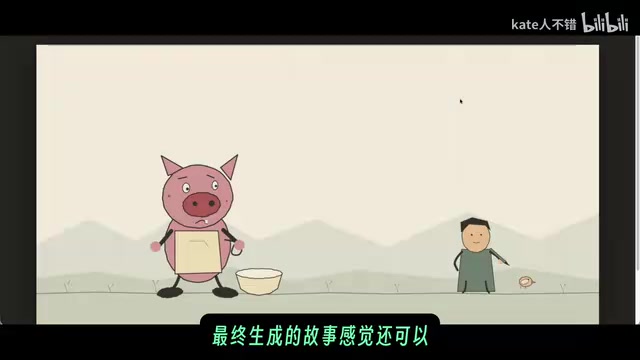
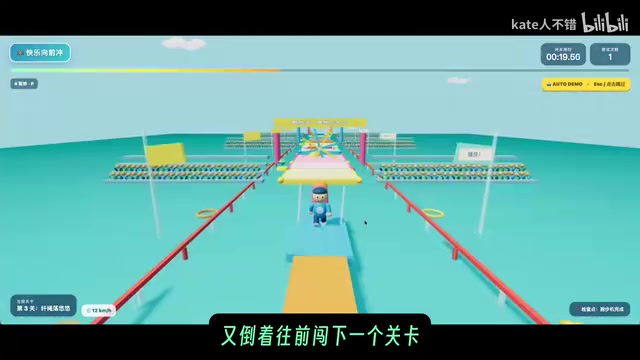
Still, logic and interaction problems were plentiful: the rabbit character barely animated, didn't react to obstacles, and interaction with the crow in level six behaved abnormally. In a "Happy Go Forward" test, visuals were mediocre with obvious clipping and prop connection errors. Kate noted that GPT Image 2.5 itself produces decent visual output, but the model's logic and tool-control capabilities are the real bottleneck. By comparison, the code-generated animated story held up reasonably well.
Extra mode and GPT Image 2.5 are key context for understanding this section. Extra is an enhanced toolchain OpenAI integrates for game and animation generation — when invoked, the model actively calls its built-in image generation capabilities rather than relying purely on code-rendered graphics, producing a visible jump in visual quality. GPT Image 2.5 is OpenAI's optimized image generation module, offering significantly improved resolution and lighting detail over previous versions. The core tension Kate identified: even with a strong underlying image model, if the controlling language model can't reliably orchestrate tools or maintain game logic consistency, the playability of the final output remains limited. "Generating pretty visuals" and "generating a playable game" are two distinct capability tiers — and current models still have considerable ground to cover on the latter.
Writing: Strong Atmosphere, Weak Logic
The writing test presented an emotionally charged prompt: a person simultaneously receives three messages — from a hospital, a landlord, and an ex — and must produce a first-person internal monologue within 500 words.
GPT-6 Sol's output nailed the atmosphere — follow-up appointments, rent hikes, and an ex's birthday message weave together into a textured, grounded scene, with the closing line "this half-afternoon has finally come back to me" landing with quiet resonance. But there's a clear logical flaw: the opening says the hospital "sent the test results," while later the narrator is described as "calculating savings on the back of the follow-up form" — conflating a digital notification with a physical document. This kind of consistency failure is a familiar weakness in current models during longer creative writing tasks.
Luna Max Hands-On: Small Model, One Surprising Win
Luna Max generally underperformed. In "Happy Go Forward," all the dolls moved in the wrong direction — backwards — with severe clipping throughout; the mechanical butterfly's wing motion didn't resemble a real butterfly at all.
One result stands out: the "Along the River During the Qingming Festival" scene that Luna Max generated over an hour and a half was the first time Kate had seen any model proactively render characters, rooftop textures, and the roadside wine and grain shops as actual texture maps displayed on a 3D scene. It fully leveraged GPT Image's image generation capability. This shows that cranking up the reasoning depth — even in a small model — can produce genuinely interesting results. By contrast, GPT-6 Sol's version of the same scene had decent boat structure but no people on board, coming across as generic and clearly outclassed by Opus 5.5.
Verdict: Sol Is Worth Using, But Opus 5.5 Is Still the Stronger Model
Based on this round of testing, the value of GPT-6 Sol and Luna lies primarily in pricing and usage allowances — not in any breakthrough in creative generation. Sol and Opus 5.5 launched on the same day, which puts OpenAI in an awkward position: Opus 5.5 is meaningfully better on modeling detail, game quality, installation guide animations, and other creative tasks.
For developers, Sol's price reduction translating to more Codex usage is a clear, tangible benefit. For coding assistance and lightweight creative work, Sol's cost-performance ratio is acceptable. But if you need high-quality 3D modeling, complex game logic, or rigorous long-form writing, Opus 5.5 remains the safer bet. Luna is best suited for cost-sensitive use cases where some quality variance is acceptable.
Opus 5.5 is the flagship version of Anthropic's Claude series (transcribed as Obs/Opus 5.5 in the video due to accent). Anthropic has consistently invested heavily in long-context understanding, fine-grained instruction following, and multi-step reasoning — which explains why it holds a clear advantage on tasks requiring accurate reference image reproduction and sustained game logic. The simultaneous launch naturally invited direct comparison, and the results put real public relations pressure on OpenAI: Sol's core selling points are pricing and coding benchmarks, not comprehensive superiority in creative generation. For everyday users, the choice ultimately comes down to primary use case — high-frequency coding assistance favors cost, while complex creative tasks still call for putting quality first.
Related articles

JobRunner MCP Server: AI Agents Can Now Fix Failed Java Jobs
JobRunner launches an open-source MCP server enabling AI agents to view cluster status, diagnose failures, and recover Java jobs—incident response from any cloud coding environment or existing agent.

MLAI Digital Launches 9 Security Agents: MCP Server Safeguards the Full Lifecycle of Agentic AI
MLAI Digital launches Security MCP Server with nine built-in specialized security agents covering vulnerability discovery, attack simulation, prompt injection detection, API and infrastructure assessment, and accelerated remediation—embedding security validation across the full Agentic AI lifecycle from development to production.

Running Isaac Lab on H100 GPUs: Exploring Better Approaches
Exploring optimization methods for running Isaac Lab on NVIDIA H100 GPUs, including MIG configuration, mixed precision, TensorRT acceleration, and community experience to improve robotics simulation and reinforcement learning efficiency.