GPU-Accelerated Quantum Simulation Gets an Open Benchmark: Inside the FINAL-Bench Challenge

Open Quantum Challenge uses GPU-accelerated quantum simulation to test the boundaries of AI reasoning with physically verifiable tasks.
Open Quantum Challenge is a public benchmark competition centered on GPU-accelerated quantum simulation, with FINAL-Bench providing the evaluation framework and leaderboard, and Korean Pre-AGI startup VIDRAFT competing on physically grounded tasks. Quantum simulation is essentially highly parallel linear algebra naturally suited to GPUs, and its verifiable physical answers make it harder to game than language benchmarks. No specific results or public repos/datasets/APIs have been disclosed yet.
Classical GPU compute is becoming a new proving ground for testing AI models' physical reasoning abilities. A public benchmark project called Open Quantum Challenge aims to evaluate the capabilities and limits of AI systems using quantum simulation tasks.
Why Quantum Simulation Became AI's New Exam Room
The core work of quantum simulation is representing quantum states (such as wave functions or density matrices) as large-scale numerical tensors, then performing evolution calculations on these tensors using the rules of quantum mechanics. These operations are essentially highly parallel linear algebra operations—exactly the type of workload GPU architectures excel at.
Using classical hardware to simulate quantum systems is not a new idea; the computational physics and quantum chemistry communities have accumulated decades of methodology. But its significance as an evaluation scenario for AI models is different. Language benchmarks and reasoning benchmarks can often be partially "gamed" through statistical patterns, whereas quantum simulation tasks have clear physical constraints and verifiable numerical answers—a model's prediction is either right or wrong, leaving very little room for "looking plausible."
According to ZiratAI's report, Open Quantum Challenge is a public competition built around this idea. ZiratAI describes itself as Israel's leading non-commercial AI knowledge center, founded by academic researchers, focusing on AI news, model benchmarks, and research analysis.
Quantum states, wave functions, and density matrices are the three cornerstones for understanding quantum simulation. A wave function is a complex-valued function describing the state of a quantum system, whose squared modulus gives the probability of finding a particle at a given location in space; for a system of n qubits, the dimension of the complete wave function is 2ⁿ—this is the fundamental reason why the computational cost of quantum simulation grows exponentially with scale. A density matrix is a generalized form of the wave function, used to describe mixed states—probability combinations of multiple pure states—commonly encountered in situations involving noise, decoherence, or coupling with an external environment. When simulating on classical hardware, wave functions are typically represented as one-dimensional complex arrays, while density matrices are two-dimensional Hermitian matrices; both must be decomposed into large-scale tensors that GPUs can process in batches. Understanding the difference between these two representations is a prerequisite for determining whether a simulation task involves unitary evolution of a pure state or solving the master equation for an open system.
Spin chains, molecular Hamiltonians, and quantum circuit simulation represent three typical forms of quantum simulation tasks, with vastly different levels of complexity. Spin chain models (such as the transverse-field Ising model or the Heisenberg model) arrange interacting spins on a one- or two-dimensional lattice—classic toy models for studying quantum phase transitions and entanglement—and even modest sizes can make exact diagonalization expensive. Molecular Hamiltonians come from quantum chemistry, typically aiming to find ground-state energies to predict chemical reaction pathways, requiring handling of Coulomb interactions between electrons—one of the earliest application areas where quantum computing was expected to excel. Quantum circuit simulation directly evolves the state after a sequence of quantum gates acts on it, commonly used to validate quantum algorithms. What all three share is that they can generate definite reference values—which is precisely why they are suitable as benchmark problems: AI predictions can be directly compared against exact solutions or high-precision numerical solutions.
FINAL-Bench and VIDRAFT: The Two Pillars of the Challenge
This challenge has two key participants.
FINAL-Bench is the framework and competition infrastructure for the entire benchmark, responsible for defining evaluation criteria, problem sets, and leaderboard mechanisms. Its role is similar to an evaluation protocol layer—specifying what problems count, how to submit, and how to score.
VIDRAFT is a Korean Pre-AGI-oriented AI startup participating as a competitor. This means its AI system is being tested on physically grounded simulation tasks, rather than simply scoring on conventional natural language processing or reasoning benchmarks. For a lab targeting Pre-AGI, demonstrating capability on diverse hard science problems is itself a statement about generalization.
That said, VIDRAFT's specific competition results and leaderboard ranking have not been disclosed in the currently available reporting. This article is positioned as an introduction and framing of the competition, rather than an announcement of final results.
How These Challenges Work
A competition built around GPU-accelerated quantum simulation typically consists of three layers.
Problem instances are the input end, involving quantum systems of varying complexity—such as spin chains, molecular Hamiltonians, or quantum circuit simulations. Model outputs are the AI or algorithm's predictions of physical quantities such as ground states, energy levels, or time evolution. The scoring stage compares prediction results against reference solutions generated by high-fidelity simulations or exact solvers, measuring accuracy.
The word "open" in open competition typically means the leaderboard is publicly visible, and at least a portion of the benchmark problems are publicly accessible. FINAL-Bench is responsible for defining the problem set, submission protocol, and evaluation metrics, while participants submit model predictions for scoring.
The value of this structure lies in establishing a public, reproducible evaluation surface for quantum simulation performance, allowing academic and industrial teams to compare their methods under the same standard.
High-fidelity simulations and exact solvers are the source of "standard answers" in the scoring stage, and their reliability directly affects the benchmark's credibility. Exact solvers generally refer to numerical tools based on methods such as exact diagonalization, tensor network contraction, or quantum Monte Carlo, which can provide reference solutions close to machine precision when system sizes are manageable. However, the Hilbert space of quantum many-body problems grows exponentially with particle number. Once beyond the reach of exact methods, reference solutions themselves must be generated using approximate techniques (such as density matrix renormalization group, DMRG, or variational Monte Carlo), and their error levels become part of the scoring baseline. Therefore, such competitions typically stratify their problem sets: small-scale systems are scored using exact solutions, while large-scale systems use controlled approximate solutions with clearly annotated confidence intervals for reference solutions. This is crucial for fairness among participants—if the reference solutions themselves are unreliable, the leaderboard rankings lose their physical meaning.
What This Means for Developers
Currently, the reporting has not disclosed specific open-access channels for FINAL-Bench or VIDRAFT's quantum simulation work—no GitHub repository URLs, no Hugging Face dataset links, no API endpoints or installation instructions.
If this challenge follows standard open benchmark practices, developer entry points would typically be announced through: a GitHub repository hosting benchmark problem sets and evaluation scripts, a leaderboard website or evaluation server for blind submission, and potentially Hugging Face datasets or model repositories if pre-trained components are released.
For developers interested in the intersection of classical GPU computing and the quantum problem space, this is worth keeping an eye on. The signal it sends is that the tooling ecosystem for GPU-accelerated quantum simulation has matured to the point of supporting public competitions, and AI model performance on physically grounded tasks is becoming an independent evaluation dimension.
Frequently Asked Questions
Is GPU quantum simulation the same as a real quantum computer? No. GPU quantum simulation uses classical parallel hardware to numerically approximate quantum system behavior. It has high computational costs and can only handle limited system sizes, but it doesn't require quantum hardware—it's a mature classical method in physics and chemistry research.
Why would an AI startup participate in a quantum simulation benchmark? Quantum simulation tasks are mathematically rigorous and physically grounded, making them a meaningful evaluation scenario beyond language benchmarks. For Pre-AGI labs, demonstrating capability on diverse hard science problems is directly relevant to the generalization challenges in long-term AI goals.
Can I access FINAL-Bench's problems or VIDRAFT's submissions now? Current reporting has not disclosed public access details—no available repository URLs, dataset links, or API endpoints. Watch for official channel announcements.
One-line Summary
Open Quantum Challenge uses GPU-accelerated quantum simulation as its exam room, evaluating the boundaries of AI reasoning with tasks that have definite physical answers.
Paragraph Summary
Open Quantum Challenge is a public benchmark competition centered on GPU-accelerated quantum simulation, with FINAL-Bench providing the evaluation framework and leaderboard mechanism, and Korean Pre-AGI startup VIDRAFT participating as a competitor tested on physically grounded tasks. The article notes that quantum simulation is essentially highly parallel linear algebra operations, naturally suited to GPU architectures, and its answers have clear physical constraints and are verifiable—making it harder to "game" with statistical patterns than language benchmarks. The challenge typically consists of three layers: problem instances, model outputs, and scoring, with reference solutions generated by high-fidelity simulations or exact solvers. Currently, reporting has not disclosed VIDRAFT's specific results, nor are there public GitHub repositories, datasets, or API entry points—but the competition signals that the GPU quantum simulation tooling ecosystem has matured enough to support public competitions.
Related articles
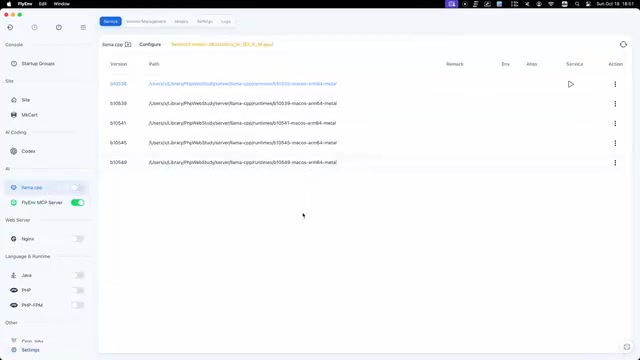
FlyEnv Plugin Review: Visually Running llama.cpp and Managing GGUF Models
FlyEnv launches the official llama.cpp plugin with side-by-side Metal runtime management, public GGUF repository indexing with file type labels, and visual configuration of context, threads, and GPU layers—saving templates and speculative decoding with each model for one-click local LLM inference.
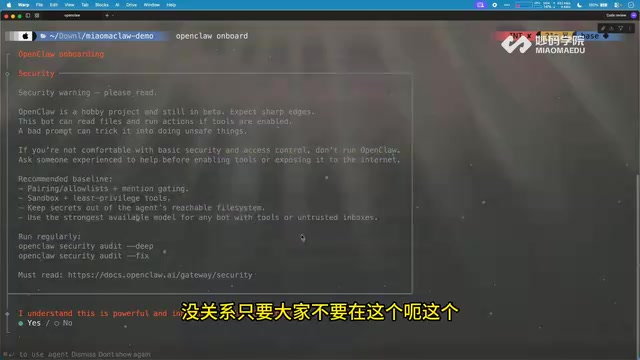
How Can Frontend Developers Advance into AI Agent Development? Deconstructing System-Level Agent Architecture from OpenClaw
Starting from the OpenClaw demo in a Bilibili open class, this article breaks down the three-layer architecture and universal formula of system-level AI agents, and analyzes the path for frontend developers to enter agent development based on TypeScript, including plugin-based design and security/memory layer challenges, with an interview answer framework.

WorkBuddy in Action: How AI Agents Automate Batch File Conversion and Archiving
Bilibili creator Teacher Shanyao tests WorkBuddy vs. Doubao on batch file conversion, showing how AI Agents move from "giving solutions" to "direct execution," with a full workflow and credit cost reference.