Green Status in n8n ≠ Success: SendCheck Adds an Independent Quality Check Layer

SendCheck adds an independent validation layer to catch silent failures that n8n's green status misses.
In low-code automation platforms like n8n, a successful node execution (green status) doesn't guarantee the output is actually correct. Empty responses, malformed JSON, unfilled template variables, and invalid AI outputs — these "silent failures" won't trigger errors in n8n's logs. Open-source tool SendCheck addresses this by acting as a standalone validation layer at the end of a workflow: after n8n finishes, results are sent via Webhook to SendCheck, which independently checks for common failure patterns and pushes alerts to email, Slack, or Discord while archiving a full run history for traceability.
The Green Status Trap
When building automated workflows in n8n, many people treat a green checkmark as a sign that everything went perfectly. But reality is often more complicated — a workflow completing without a technical error doesn't mean the output is actually correct.
An automation pipeline can run to completion and still return an empty response, malformed JSON, an unfilled template, or an invalid result from an AI model. None of these will be flagged in n8n's execution logs, because n8n only cares whether a node finished executing — not whether what it produced was correct. In other words, technical success and business success are two very different things.
This kind of "false success" is especially dangerous in production environments. An email template sent to customers with unrendered variables, an AI-generated content block that was supposed to be written to a database but was actually empty — the system keeps moving forward without noticing, and by the time the problem is discovered, real damage has often already been done.
This class of problem has a specific name in software engineering: Silent Failure. Unlike explicit errors that throw exceptions and halt execution, a silent failure means the program technically runs to completion, but the actual output is wrong, incomplete, or meaningless. In traditional software development, engineers typically catch these issues through unit tests, assertions, and data validation layers. But in low-code/no-code automation tools, these safeguards are often absent — users must build them manually or rely on external tools to fill the gap. n8n does provide an Error Workflow mechanism that can be triggered when a node throws an exception, but it cannot cover situations where execution succeeds yet the output is incorrect.
SendCheck Fills the Quality Check Gap
An open-source tool called SendCheck addresses this pain point by offering an additional validation approach. Its purpose is clear: not to replace n8n, but to act as an independent "inspector" at the end of an automated pipeline.
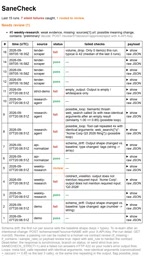
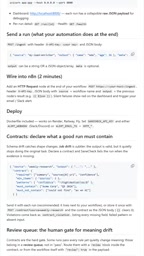
The way it works is straightforward. After the main workflow finishes running in n8n, the final output is sent to SendCheck via a Webhook. SendCheck independently analyzes the output and checks it against a list of common failure patterns — empty responses, field errors, unfilled templates, malformed JSON, AI refusals, and other types of anomalies.
The elegance of this design lies in the decoupling. n8n handles running the workflow; SendCheck handles validating the result. Their responsibilities are separate. n8n can show a green "execution successful" status, while SendCheck independently determines whether the result actually meets the mark — like adding a quality control checkpoint at the end of an assembly line.
The Webhook is the key integration point in this setup. It's essentially an HTTP callback interface — at the end of the workflow, n8n sends a POST request to the URL provided by SendCheck, passing the data to be validated as the request body. The advantage of this approach is complete decoupling from the main workflow: SendCheck doesn't need to be installed inside n8n, and it doesn't depend on n8n's plugin system. The two communicate solely via standard HTTP. This means that even if you switch automation platforms in the future, the validation layer itself can remain unchanged — it's genuinely platform-agnostic.
Alerts and Historical Traceability
Detecting a problem is only the first step — timely notification and traceability are equally important.
When a validation check detects an anomaly, SendCheck pushes an alert to email, Slack, or Discord, ensuring that the responsible person knows immediately which automation has a problem. For teams relying on automation for critical business processes, this kind of proactive alerting is far less painful than retroactive debugging.
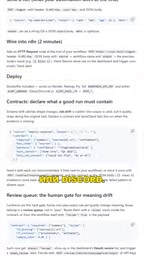
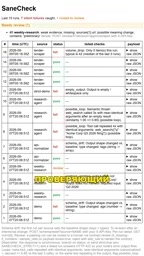
Beyond real-time alerts, SendCheck also provides an independent dashboard that archives execution history. Every run is logged, so users can look back and see exactly which step or which field caused the problem. This is extremely useful for diagnosing intermittent failures and reviewing failure patterns — after all, many automation errors don't occur on every run, making them nearly impossible to track down without historical records.
Why This Type of Tool Deserves Attention
Low-code automation platforms like n8n have lowered the barrier to building workflows, but they've also introduced a new challenge: the more complex a workflow becomes, and the more it relies on AI nodes, the higher the uncertainty in the output. LLMs may return content in the wrong format; template engines may silently fail when a variable is missing. None of these are "errors" in the traditional sense.
SendCheck represents an engineering philosophy worth adopting — extracting "output quality validation" from the main workflow and making it a pluggable, independent layer. This pattern isn't just applicable to n8n; it has reference value for any automated system involving AI generation and data processing.
As an open-source tool, the barrier to entry for SendCheck is low. The integration cost is essentially just adding one Webhook call at the end of your workflow. For teams already running automation in production and frustrated by the "green light but still wrong" problem, it provides a low-cost safety net.
It's worth noting that this article is based on a single source, and the tool's actual detection accuracy, false positive rate, and coverage of complex scenarios still need to be verified through real-world testing in your own workflows.
The output uncertainty of LLMs (large language models) is an important backdrop for the emergence of tools like this. Unlike traditional APIs that return structured, predictable data, LLM outputs are fundamentally probabilistic — even with identical inputs, the format and content can vary across calls. A model might refuse to execute on a given call (returning text like "I cannot help with that"), output truncated JSON, or provide a free-form answer with explanatory text when a specific field value is needed. As more and more automation workflows incorporate AI nodes, this uncertainty has shifted from an occasional edge case to a systemic engineering problem that must be addressed. The industry is converging on several approaches: structured output constraints (such as JSON Mode), post-generation result validation, and independent validation layers like SendCheck.
Related articles

Frontend to AI Agent Development: A Frontline Architect Explains Career Paths and Opportunities
A frontline AI architect explains the industry changes and practical paths for frontend developers transitioning to AI Agent development: why pure frontend jobs are disappearing, why Agent + full-stack has become mainstream in hiring, and three transformation routes—Agent development engineer, FDE, and remote contracting—along with corresponding learning strategies.

How to Choose an AI Agent Development Course: Five Pitfall-Avoidance Guidelines
A mechanical-engineering career changer's two-year pitfall-tested checklist for screening AI Agent development courses: complete delivery pipeline, resume-worthy projects, real development perspective, update frequency, and coaching feedback—with concrete judgment methods and pitfall-avoidance tips.

Coze AI Agent Building for Beginners: A Zero-Code AI Agent Development Guide
Coze, ByteDance's one-stop AI application development platform, supports zero-code drag-and-drop AI agent building. This article outlines Coze's core concepts, three advantages, differences between the domestic and international versions, and the distinction between agents and apps, helping beginners quickly get started with AI Agent development.