Grok 4.5 Review: A Full Breakdown of Elon Musk's Most Powerful AI Coding Model

Grok 4.5 tops SWE Marathon, beats Claude Opus in long-horizon coding tasks, and is free to try.
xAI's Grok 4.5 is its most capable model yet, designed for coding, Agent tasks, and knowledge work. It ranks #1 on SWE Marathon, scores competitively across DeepSWE and SWE Bench Pro, and offers strong Agent capabilities — from generating full games to producing research reports automatically. It's available free on any X or Grok account.
Grok 4.5: The Smartest Model xAI Has Built So Far
Elon Musk's xAI recently released what is currently its most capable AI coding model — Grok 4.5. It's available for free, and it has climbed to the top of several major coding leaderboards, outperforming Claude's flagship models on certain benchmarks.
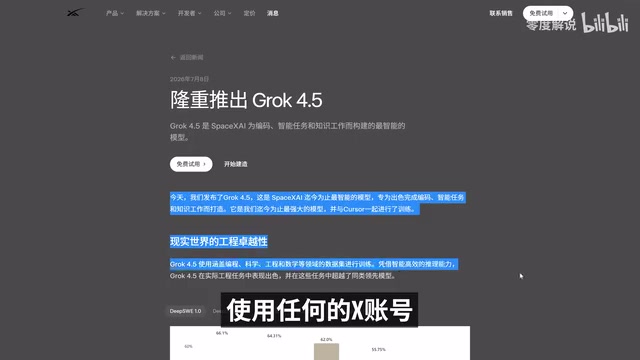
According to hands-on testing by Lingdu Jiedu, xAI officially claims Grok 4.5 is the most intelligent model it has ever built, designed specifically for coding, Agent tasks, and knowledge work.
Notably, Grok 4.5 wasn't developed by simply scaling up training data. Instead, xAI invested heavily in data cleaning, high-quality curation, and reinforcement learning for final-stage training — all aimed at improving the model's long-horizon reasoning on real-world engineering projects. This approach is less about scaling raw compute and more about scaling engineering quality.
Reinforcement learning plays a particularly critical role in the final training stage. Unlike traditional supervised fine-tuning (SFT), reinforcement learning (RL) uses reward signals to teach the model better output strategies through iterative trial and error. OpenAI's o-series, DeepSeekAd-R1, and others have adopted variants like RLHF (Reinforcement Learning from Human Feedback) or rule-based GRPO. Grok 4.5's "RL final-stage training" means that after pre-training and SFT, reward signals tied to real engineering tasks were introduced — such as whether code passes test cases or whether an Agent task meets its intended goal. This gives the model stronger long-horizon planning in complex, multi-step engineering scenarios, rather than just optimizing single-turn conversational fluency.
Coding Benchmark Performance: Entering the Global Top Tier
Grok 4.5 achieved impressive scores across four widely recognized coding benchmarks, with a very clear positioning — it's built for software engineering.
Understanding the industry context behind these benchmarks helps assess what the scores actually mean. SWE-Bench (Software Engineering Benchmark) was introduced by a Princeton research team in late 2023 and is one of the most authoritative AI software engineering evaluation standards in the industry. It pulls real Issues and their corresponding fix patches from open-source GitHub projects, requiring the model to autonomously locate the problem, modify the code, and pass unit tests — all without human intervention. SWE-Bench Verified and SWE-Bench Pro are progressively harder variants; the Pro version introduces more complex multi-file, cross-module modification tasks that more closely resemble real engineering environments. DeepSWE and SWE Marathon are derived from this framework for long-horizon evaluations, with SWE Marathon requiring the model to maintain stable output across marathon-style continuous engineering tasks — testing not just single-pass code generation quality, but multi-turn context management and engineering decision-making. Terminal Bench focuses on task execution in command-line environments, which is closely tied to Agent capabilities.
Benchmark Scores Breakdown
- DeepSWE 1.0: Scored 61%, ranking just behind Claude Opus Max and OpenAI GPT-5.x.
- SWE Marathon: Ranked #1 with the top score, beating Opus 4.x Max and Opus Max — the standout result from this release.
- Terminal Bench 2.1: Scored 83.3%, ranking 3rd.
- SWE Bench Pro: Scored 64.7%, ranking 3rd.
All figures come from system cards and benchmark leaderboards published by the respective developers. While benchmark scores are impressive, consistent real-world performance still requires broader validation. The trend is clear, though: Grok 4.5 has entered the global top tier, particularly excelling at long-horizon software engineering tasks.
Coding and Productivity: More Than Just Writing Code
Grok 4.5's coding capabilities span a wide range — from challenging Rust and C++ tasks to end-to-end application building from a prompt straight to production-ready output.
In hands-on testing, it generated a polished solar system simulation using only a minimal spec: adjustable simulation speed, realistic orbital trajectories, stellar effects, and a clean, modern UI — all from a brief prompt.
Beyond coding, Grok 4.5 can also directly generate Excel, PowerPoint, and Word documents — including complex formulas, charts, and full presentations. This extends its use cases from developers to everyday knowledge workers.
In terms of speed, response rates can reach up to 80 tokens per second, on par with today's leading fast models.
Free Access and Installation Guide
Grok 4.5 is currently available on the free tier — any X account or Grok account can access it for free under the Grok tab. Grok 4.5 and Super Grok also offer a 7-day free trial.
Command-Line Installation Steps
- Copy the one-click install command provided officially (compatible with PowerShell or Linux);
- Search for
PowerShellin the Windows search bar and open it; - Right-click to paste the install command and press Enter, then wait for the automatic download and installation;
- After installation, run with the
grokcommand, or enteragentto launch agent mode; - On first run, a login page will appear — log in to your xAI or Grok account in advance, and once authorized, the terminal will confirm a successful connection to the Grok 4.5 model.
Note: If you're not in an overseas location, be sure to configure your network environment with global proxy mode enabled beforehand, otherwise the download and installation may fail.

Agent Capabilities in Practice: From Game Dev to Research
AI Agents are fundamentally different from traditional code generation assistants — understanding this distinction helps evaluate Grok 4.5's real-world value. In Agent mode, the model can autonomously decompose goals, invoke external tools (browser, terminal, file system, APIs, etc.), and dynamically adjust its strategy based on intermediate results, forming a closed loop of "perceive → plan → execute → feedback." This aligns directly with the design philosophy of the ReAct (Reasoning + Acting) framework. Unlike traditional code generation assistants that only handle "single-turn completions," a true Agent means the user only needs to define the final objective — the model independently handles all tool selection and execution steps.
Game Cloning Test
Grok 4.5 was tasked with creating an Angry Birds clone. It automatically created a working directory on the desktop and generated a fully functional game complete with physics-based slingshot mechanics and three complete levels ("First Blood," "Tower Siege," and "Clock Tower Assault"). All three levels were playable in testing, with a high degree of functional completeness.
Deep Research Capability
After launching agent mode, Grok 4.5 was asked to investigate global AI Agent frameworks, read at least 50 pages, and output a Markdown or PDF report. It automatically selected its tools, rapidly crawled 19 web pages, collected sufficient material, and generated a well-structured Markdown document covering major Agent frameworks, their technical features, use cases, and trade-offs.
Even more impressively, it automatically exported a PDF version and organized each framework into a table — including framework name, development team, open-source license, GitHub link, programming language, and application domain — making it essentially ready for direct use in further analysis.
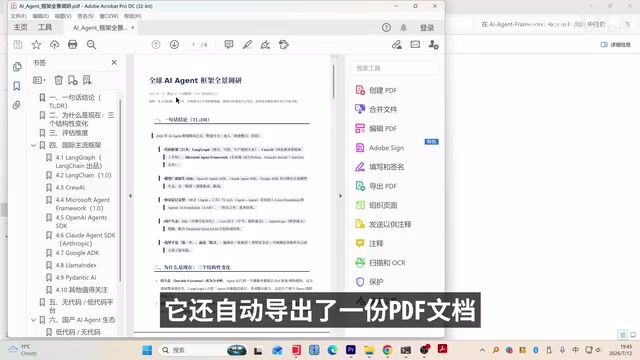
Throughout the entire process, Grok 4.5 wasn't just "answering a question" — it was more like completing actual research work on behalf of the user. From gathering sources and reading web pages to organizing information and generating multi-format reports, everything happened automatically. The user only needed to state the goal.
Complex Engineering and 3D Generation: Real Agent Capabilities
Grok 4.5 can be paired with Grok Build for more complex projects. One developer used it to build a cyberpunk-style L-shaped street corner scene from scratch in Unreal Engine 5.8 — complete with neon lighting, rain effects, street signage, and pedestrian crowds — with a remarkably convincing atmosphere.
The cost is the key takeaway: The entire task was completed end-to-end automatically, consuming over 10 million tokens in about 30 minutes, with an API cost of only around $12. LLM API pricing is typically calculated per million tokens. For reference, Anthropic's Claude Opus 4 costs approximately $15/million tokens (input) and $75/million tokens (output); OpenAI's GPT-4o is roughly $5 (input) and $15 (output). This real-world Grok 4.5 test works out to approximately $1.20/million tokens — significantly lower than comparable competitors. A 10-million-token task on a traditional model could easily run into hundreds of dollars, making the $12 real-world cost a sign that this kind of complex engineering automation is now economically viable.

Other developers have used Grok 4.5 to build a rocket launch simulator, a photorealistic 3D city walkthrough demo (using 3D Gaussian Splatting rendering), and a first-person shooter game incorporating multiple classic FPS elements.
3D Gaussian Splatting (3DGS) is a real-time 3D scene rendering technique introduced by the Inria team in 2023, quickly emerging as the next-generation 3D representation method after NeRF (Neural Radiance Fields). Unlike NeRF's implicit neural network modeling, 3DGS represents a scene as millions of 3D Gaussian ellipsoids, each with position, color, opacity, and shape parameters, projected to 2D images via rasterization — achieving real-time rendering speeds (tens of frames per second) with near-photorealistic visual quality. Its core advantages: fast training (in minutes), real-time rendering, and strong editability. In AI-driven 3DGS generation, the model must not only generate geometric structure but also coordinate lighting, materials, and viewpoint consistency — placing extremely high demands on the model's spatial reasoning capabilities.
The AI handles not just game logic but also full 3D scene design, automatically assembling enemies, weapons, items, terrain, and lighting and explosion effects. Content that once required a professional team can now often be kicked off with a single prompt.
Summary: A Direct Play for the AI Coding Tools Market
Based on official data, Grok 4.5's greatest strength has always been software engineering rather than conversation. It's clearly aimed at developer tools like Claude Code and OpenAI Codex, with its sights firmly set on the AI coding and Agent development space.
Whether it can truly challenge GPT-5.x and Claude Opus series will require more real-world validation. But one thing is clear: in long-horizon software engineering and Agent workflows, Grok 4.5 is already highly competitive. For developers and knowledge workers alike, the free trial period is a worthwhile window to evaluate it firsthand.
Key Takeaways
Related articles
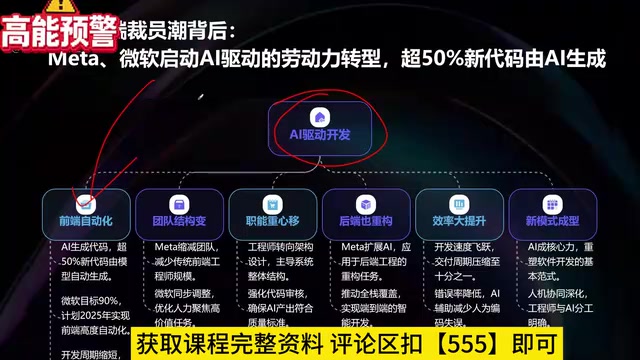
What Is Vibe Coding? The AI Programming Skill Every Developer Needs
What is Vibe Coding? Learn how AI programming is reshaping dev teams, why traditional programmers face displacement, and why Cursor & Claude Code matter.
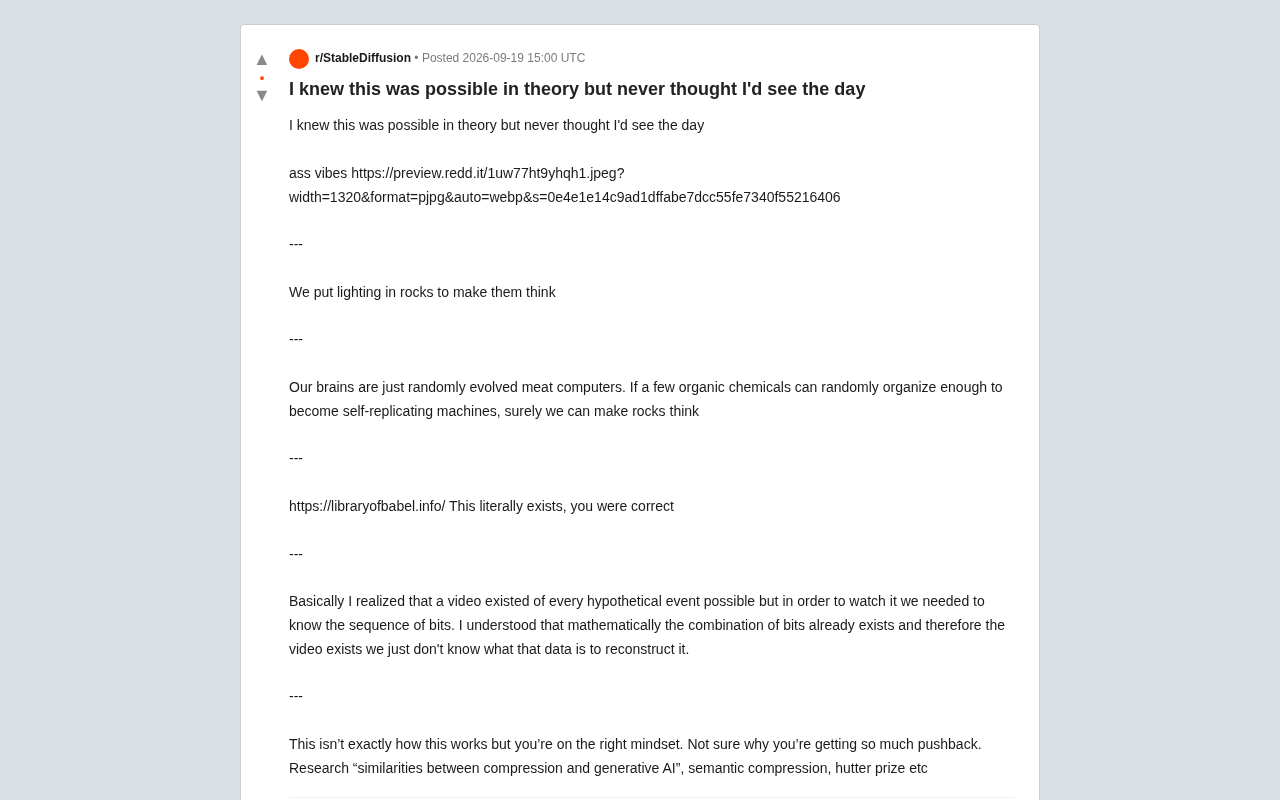
Making Rocks Think: A Philosophical Exploration of Generative AI and Information Compression
From a viral Reddit post to deep AI theory: why compression equals understanding, the Library of Babel thought experiment, semantic compression, and the Hutter Prize.
Irregular Warns: Four AI Lab Security Breaches Traced to the Same Root Cause
Irregular reveals four AI lab security breaches share a single root cause, exposing systemic risks from technology stack homogeneity across the AI industry.